Loading page, please wait…
Vaidra Logo
Vaidra

Top 4 items + smart groups

UPSC GPT
New
Current Affairs
Daily Solutions
Daily Puzzle
Mains Evaluator

Version 2.0.0 • Built with ❤️ for UPSC aspirants

Loading...
Loading...
Loading...
Loading...
Loading...
Loading...
Loading...
Loading...
Loading...
Loading...
Loading...
Loading...
Loading...
Back
All Subjects

Topics

0 topics • 0 completed

Loading topics...
Loading...
Loading...
Loading...
Loading...
Loading...
Overall Progress0%

Bone Grafting Technology - UPSC Science And Technology

What is Bone Grafting Technology in UPSC Science And Technology?

Bone Grafting Technology is a key topic under Science And Technology for UPSC Civil Services Examination. Key points include: Bone grafting is a surgical technique to repair and reconstruct damaged bones.. IIT Kanpur developed Nano Hydroxyapatite-based Porous Composite Scaffolds for enhanced bone healing and regeneration.. These scaffolds are biodegradable, biocompatible, osteoinductive, and osteopromotive.. Understanding this topic is essential for both UPSC Prelims and Mains preparation.

Why is Bone Grafting Technology important for UPSC exam?

Bone Grafting Technology is a Medium-level topic in UPSC Science And Technology. It is tested in both Prelims (factual MCQs) and Mains (analytical answer writing). Previous year UPSC questions have frequently covered aspects of Bone Grafting Technology, making it essential for comprehensive IAS preparation.

How to prepare Bone Grafting Technology for UPSC?

To prepare Bone Grafting Technology for UPSC: (1) Study the comprehensive notes covering all key concepts on Vaidra. (2) Practice previous year questions on this topic. (3) Connect it with current affairs using daily updates. (4) Revise using key takeaways and mind maps available for Science And Technology. (5) Write practice answers linking Bone Grafting Technology to related GS Paper topics.

Key takeaways of Bone Grafting Technology for UPSC

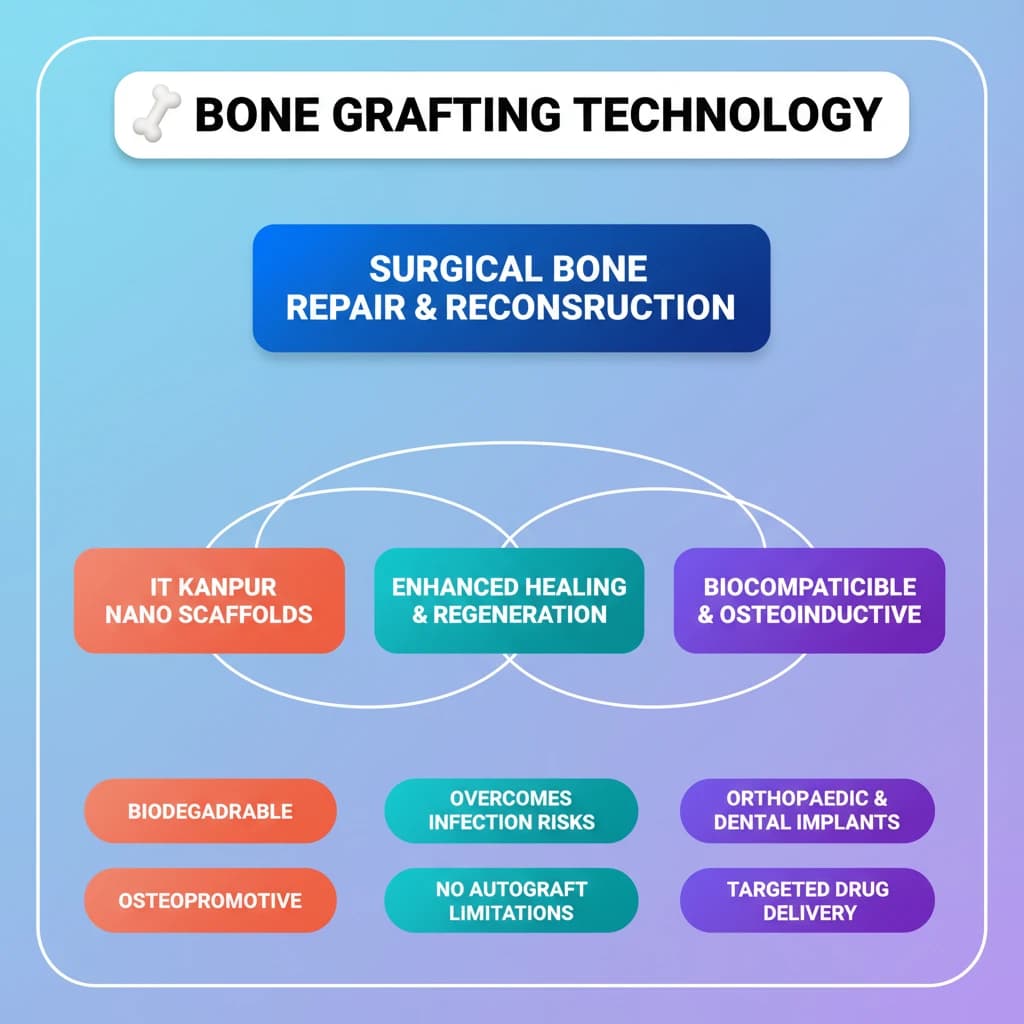
  • Bone grafting is a surgical technique to repair and reconstruct damaged bones.
  • IIT Kanpur developed Nano Hydroxyapatite-based Porous Composite Scaffolds for enhanced bone healing and regeneration.
  • These scaffolds are biodegradable, biocompatible, osteoinductive, and osteopromotive.
  • The technology overcomes drawbacks of existing remedies like infection and immune complications, and limitations of autografts.
  • Key applications include orthopaedic and dental implants, repair of large bone defects, and targeted drug delivery systems.
Bone Grafting Technology

Bone Grafting Technology

Medium⏱️ 8 min read✓ 90% Verified
science and technology

📖 Introduction

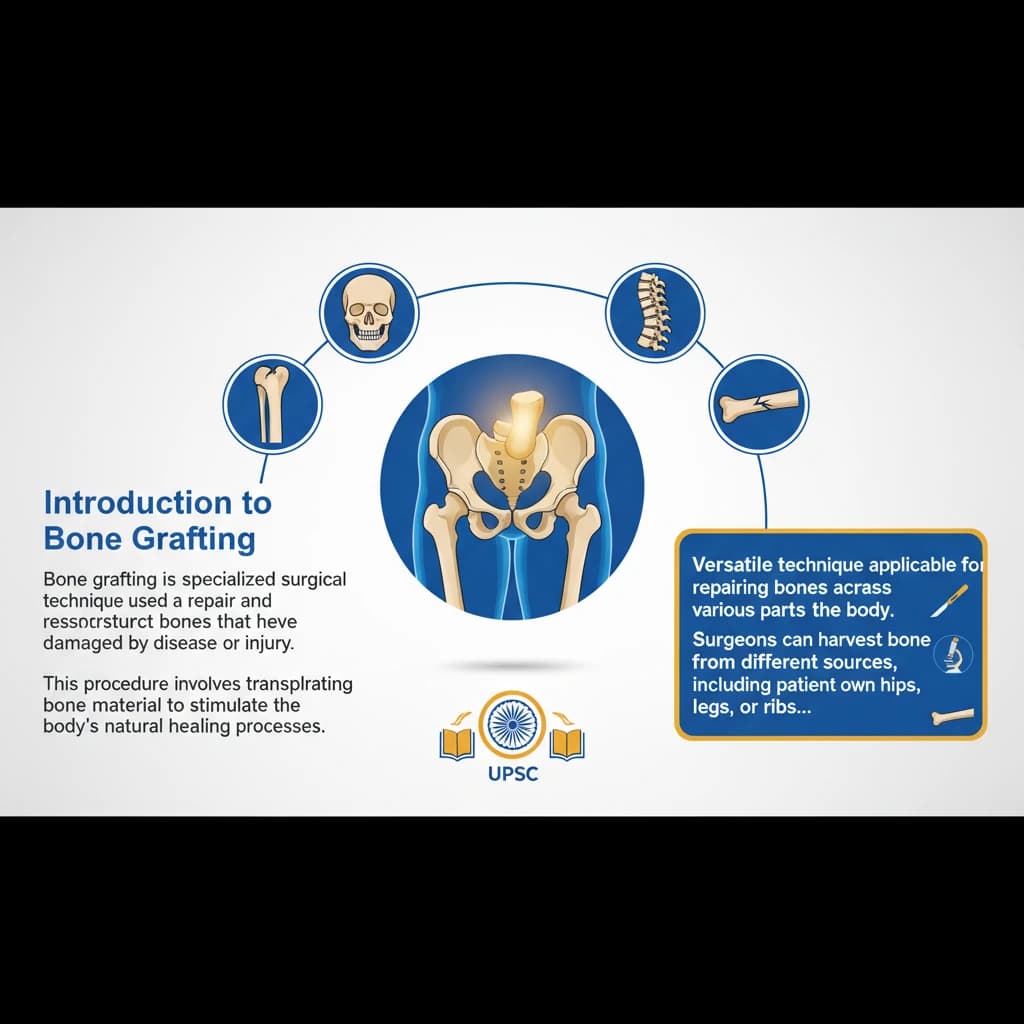
<h4>Introduction to Bone Grafting</h4><p><strong>Bone grafting</strong> is a specialized surgical technique used to repair and reconstruct bones that have been damaged by disease or injury. This procedure involves transplanting bone material to stimulate the body's natural healing processes.</p><p>It is a versatile technique applicable for repairing bones across various parts of the body. Surgeons can harvest bone from different sources, including the patient's own hips, legs, or ribs, for the grafting process.</p><h4>Why Bone Grafting Technology is in News?</h4><p>Recently, the <strong>Indian Institute of Technology (IIT) Kanpur</strong> signed a <strong>Memorandum of Understanding (MoU)</strong> with <strong>Cantiis Global</strong>, a Canadian-based biotechnology company. This MoU is for the licensing of an innovative and uniquely developed technology.</p><p>The licensed technology specifically promotes enhanced bone healing and regeneration, marking a significant advancement in medical science.</p><h4>Understanding Nano Hydroxyapatite-based Porous Composite Scaffolds</h4><p>These advanced materials, known as <strong>Nano Hydroxyapatite-based Porous Composite Scaffolds</strong>, are designed for effective bone regeneration. They are notably <strong>biodegradable</strong>, meaning they naturally break down in the body over time.</p><p>A key characteristic is their possession of both <strong>osteoinductive</strong> and <strong>osteopromotive</strong> properties. This means they can actively induce new bone formation and promote the growth of bone cells.</p><div class='info-box'><p><strong>Osteoblast cells</strong> are specialized cells crucial for the mineralization of bone. They play a vital role during both the initial bone formation and the ongoing process of bone remodelling.</p></div><p>The scaffolds are also highly <strong>biocompatible</strong>, ensuring excellent interaction with living cells, particularly <strong>osteoblast cells</strong>. They exhibit high mechanical strength and strong interaction between their polymer network and the biological environment.</p><h4>Applications of Advanced Bone Grafting Scaffolds</h4><p>The versatility of these scaffolds makes them highly valuable across several medical fields. They are commonly employed in <strong>orthopaedic and dental implants</strong>, serving as effective <strong>bone graft substitutes</strong>.</p><p>Furthermore, they are used as coatings for various <strong>prosthetic devices</strong> and form the foundation for <strong>tissue engineering scaffolds</strong>. Their functionalized nature allows them to act as fillers.</p><p>These functionalized scaffolds can be used in <strong>large-size bone defects</strong> without compromising the structural integrity, connectivity, oxygen supply, or blood circulation. This directly enhances tissue formation, mineralization, and rapid healing of defects.</p><h4>Objectives and Advantages of the New Technology</h4><p>The primary objective behind the development of this innovative technology is to overcome the inherent drawbacks associated with existing bone repair remedies. Traditional alternatives have often been linked with complications such as infection and immune-related issues.</p><div class='key-point-box'><p>This new technology offers a unique advantage by providing a sophisticated delivery system. It can deliver <strong>bone-active molecules</strong>, antibiotics, or other drugs directly to the site of an implant.</p></div><p>This targeted delivery mechanism is crucial for combating various bone pathologies, facilitating the reconstruction of regular bone defects, and enhancing outcomes in dental applications.</p><p>The material acts as a carrier, facilitating bone regeneration in a highly <strong>biocompatible</strong> manner. It represents a promising approach for reconstructing and repairing bone defects, effectively addressing the limitations and complications seen with currently available market technologies.</p><div class='exam-tip-box'><p>This technology also addresses the limitations of <strong>autografts</strong>, which require harvesting bone from another site in the patient's body, by providing a superior bone substitute.</p></div>
Concept Diagram

💡 Key Takeaways

  • •Bone grafting is a surgical technique to repair and reconstruct damaged bones.
  • •IIT Kanpur developed Nano Hydroxyapatite-based Porous Composite Scaffolds for enhanced bone healing and regeneration.
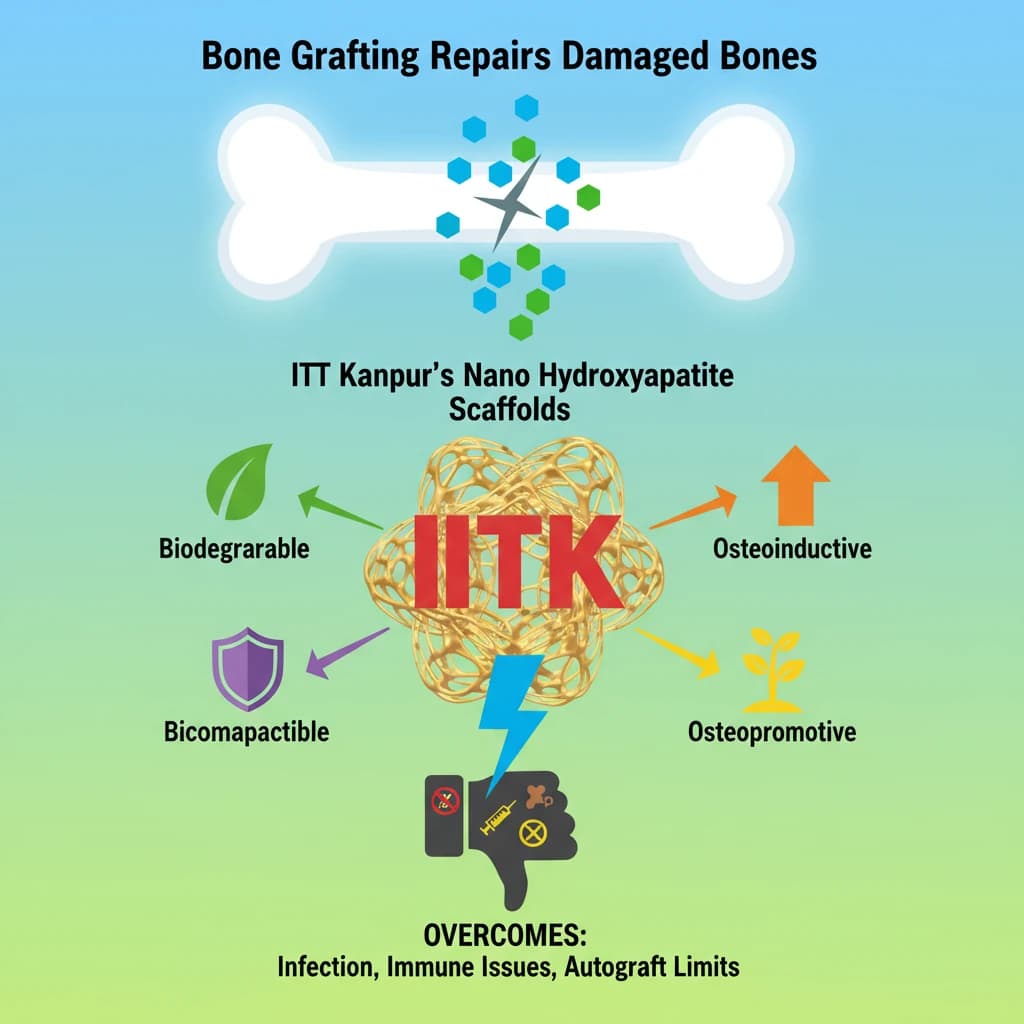
  • •These scaffolds are biodegradable, biocompatible, osteoinductive, and osteopromotive.
  • •The technology overcomes drawbacks of existing remedies like infection and immune complications, and limitations of autografts.
  • •Key applications include orthopaedic and dental implants, repair of large bone defects, and targeted drug delivery systems.

🧠 Memory Techniques
Memory Aid
90% Verified Content

Related Topics

Loading related topics...
Explore:Science And Technology Topics·All Subjects·Daily Current Affairs·Editorial Analysis·Previous Year Questions·UPSC GPT
Bone Grafting Technology - UPSC Science And Technology