Loading page, please wait…
Vaidra Logo
Vaidra

Top 4 items + smart groups

UPSC GPT
New
Current Affairs
Daily Solutions
Daily Puzzle
Mains Evaluator

Version 2.0.0 • Built with ❤️ for UPSC aspirants

Loading...
Loading...
Loading...
Loading...
Loading...
Loading...
Loading...
Loading...
Loading...
Loading...
Loading...
Loading...
Loading...
Back
All Subjects

Topics

0 topics • 0 completed

Loading topics...
Loading...
Loading...
Loading...
Loading...
Loading...
Overall Progress0%

Mpox Virus & Snakebite Envenoming: Recent Developments & Global Impact - UPSC Science And Technology

What is Mpox Virus & Snakebite Envenoming: Recent Developments & Global Impact in UPSC Science And Technology?

Mpox Virus & Snakebite Envenoming: Recent Developments & Global Impact is a key topic under Science And Technology for UPSC Civil Services Examination. Key points include: Mpox is a DNA virus (Poxviridae family), formerly known as monkeypox, renamed to avoid stigma.. Primarily zoonotic, but recent outbreaks (2022-2023) showed significant human-to-human transmission.. Symptoms include fever, muscle aches, and a characteristic rash progressing from macules to pustules.. Understanding this topic is essential for both UPSC Prelims and Mains preparation.

Why is Mpox Virus & Snakebite Envenoming: Recent Developments & Global Impact important for UPSC exam?

Mpox Virus & Snakebite Envenoming: Recent Developments & Global Impact is a Medium-level topic in UPSC Science And Technology. It is tested in both Prelims (factual MCQs) and Mains (analytical answer writing). Previous year UPSC questions have frequently covered aspects of Mpox Virus & Snakebite Envenoming: Recent Developments & Global Impact, making it essential for comprehensive IAS preparation.

How to prepare Mpox Virus & Snakebite Envenoming: Recent Developments & Global Impact for UPSC?

To prepare Mpox Virus & Snakebite Envenoming: Recent Developments & Global Impact for UPSC: (1) Study the comprehensive notes covering all key concepts on Vaidra. (2) Practice previous year questions on this topic. (3) Connect it with current affairs using daily updates. (4) Revise using key takeaways and mind maps available for Science And Technology. (5) Write practice answers linking Mpox Virus & Snakebite Envenoming: Recent Developments & Global Impact to related GS Paper topics.

Key takeaways of Mpox Virus & Snakebite Envenoming: Recent Developments & Global Impact for UPSC

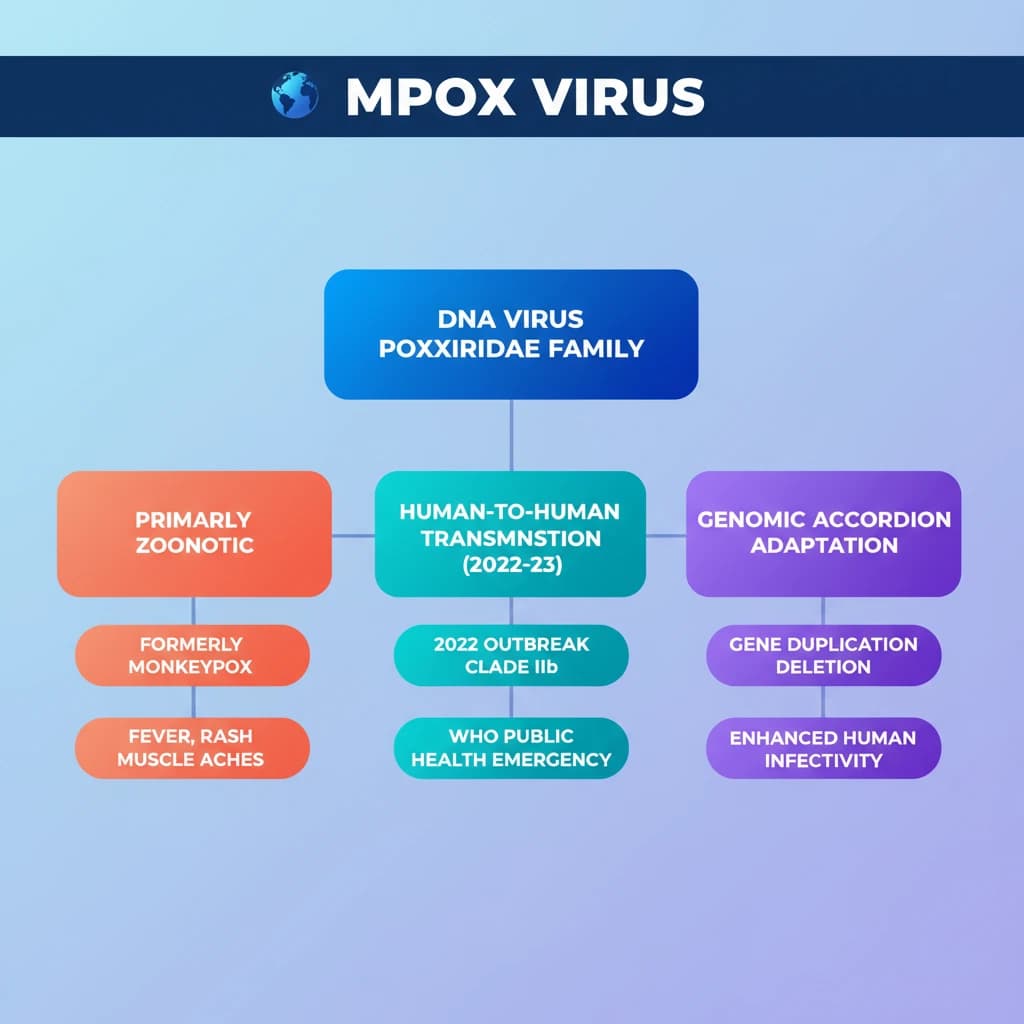
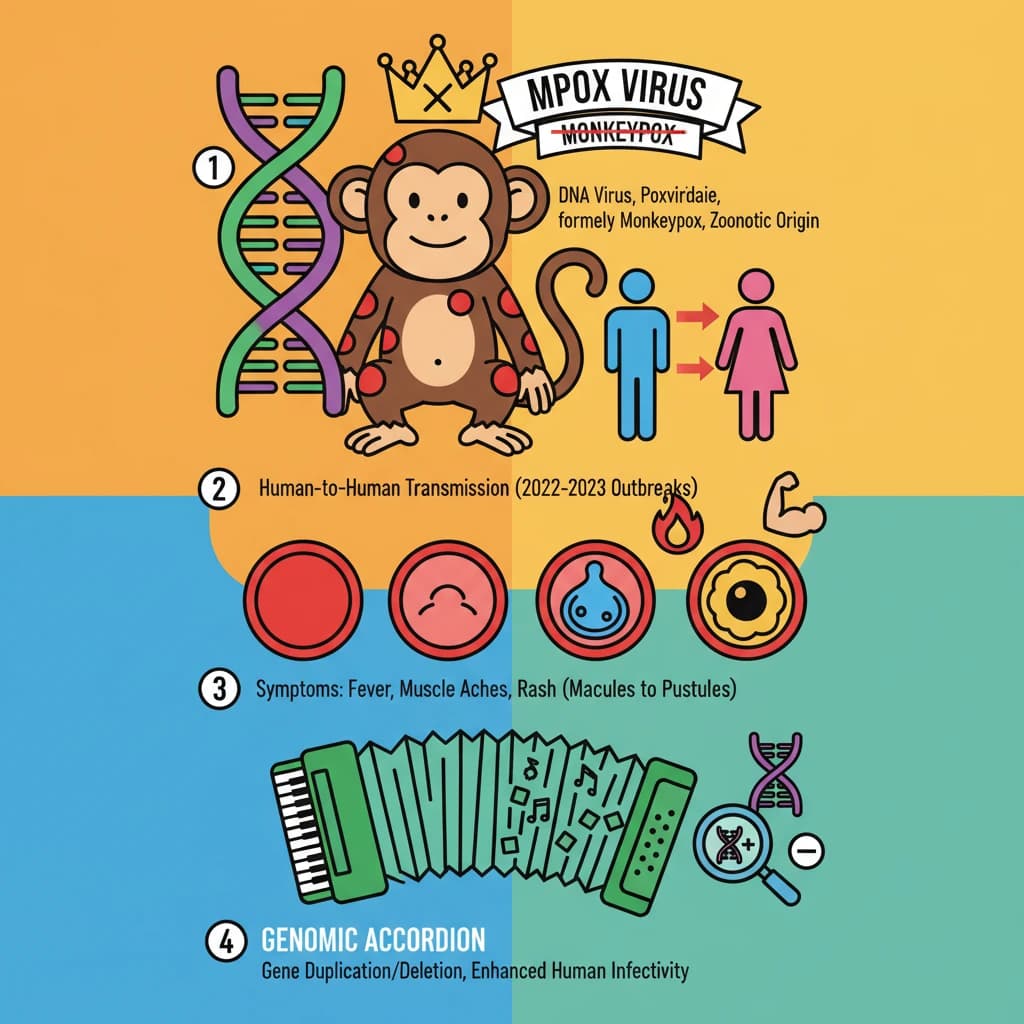
  • Mpox is a DNA virus (Poxviridae family), formerly known as monkeypox, renamed to avoid stigma.
  • Primarily zoonotic, but recent outbreaks (2022-2023) showed significant human-to-human transmission.
  • Symptoms include fever, muscle aches, and a characteristic rash progressing from macules to pustules.
  • Genomic accordion is a key evolutionary adaptation mechanism, involving gene duplication/deletion, enhancing human infectivity.
  • The 2022 outbreak (Clade IIb lineage) led WHO to declare a Public Health Emergency, highlighting global health challenges.
Mpox Virus & Snakebite Envenoming: Recent Developments & Global Impact

Mpox Virus & Snakebite Envenoming: Recent Developments & Global Impact

Medium⏱️ 8 min read✓ 98% Verified
science and technology

📖 Introduction

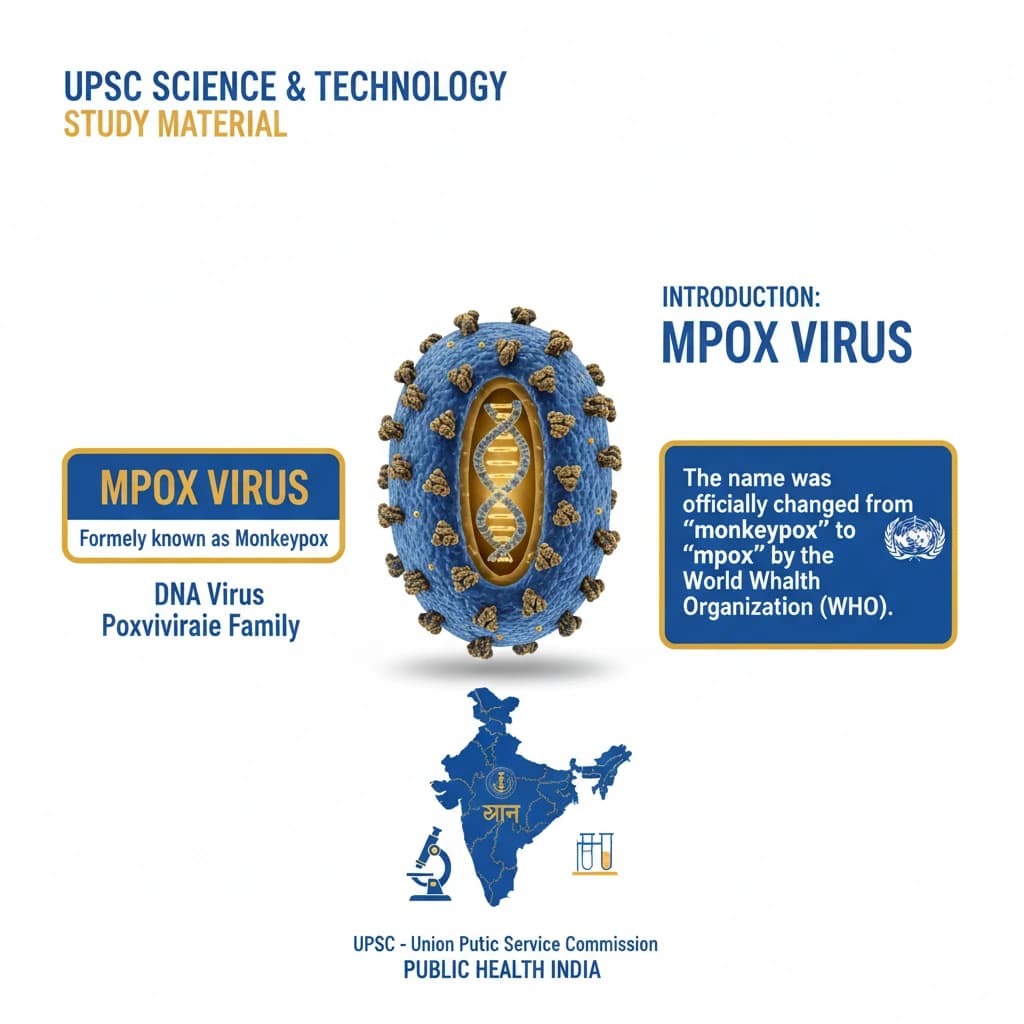
<h4>Introduction: Mpox Virus</h4><p>The <strong>Mpox virus</strong>, formerly known as <strong>monkeypox</strong>, has garnered significant global attention due to recent outbreaks. This DNA virus belongs to the <strong>Poxviridae family</strong>, which is known for its large, double-stranded DNA viruses.</p><div class='info-box'><p>The name was officially changed from <strong>“monkeypox”</strong> to <strong>“mpox”</strong> by the <strong>World Health Organization (WHO)</strong>. This change was implemented to avoid stigma associated with monkeys and to accurately reflect the virus's direct human infectivity, especially during recent outbreaks.</p></div><h4>Recent Developments: Novel Adaptation</h4><p>A recent study has shed light on a novel <strong>adaptation mechanism</strong> of the <strong>Mpox virus</strong>. This mechanism significantly enhances its ability to infect humans, which is a critical factor in understanding recent outbreaks.</p><div class='key-point-box'><p>Understanding these <strong>evolutionary adaptations</strong> is crucial for developing more effective prevention and control measures against the virus.</p></div><h4>What is Mpox?</h4><p><strong>Mpox</strong> is a <strong>DNA virus</strong> that was first identified in <strong>monkeys in 1958</strong>. While initially found in animals, it has since been confirmed to infect humans as well.</p><h5>Transmission Routes</h5><ul><li><strong>Animal-to-human transmission:</strong> Primarily occurs through direct contact with infected animals, particularly <strong>rodents and primates</strong>. It can also spread via contaminated objects.</li><li><strong>Human-to-human transmission:</strong> The 2022-2023 outbreak highlighted significant human-to-human spread, particularly through <strong>close contact</strong> and the <strong>sexual route</strong>.</li></ul><h5>Common Symptoms</h5><p>Symptoms of <strong>Mpox infection</strong> in humans typically include <strong>fever, headache, and muscle aches</strong>. A characteristic rash then develops, progressing through stages from <strong>macules to papules, vesicles, and pustules</strong>.</p><h5>Vaccination and Global Response</h5><p>A vaccine for <strong>Mpox</strong> does exist, but its availability and overall effectiveness are often limited. This limitation underscores the urgent need for improved global prevention and control strategies.</p><div class='info-box'><p>The <strong>2022–2023 global outbreak</strong> of <strong>Mpox</strong> affected over <strong>100,000 people</strong> across more than <strong>118 countries</strong>. The <strong>WHO</strong> declared this outbreak a <strong>Public Health Emergency of International Concern</strong>, prompting coordinated global efforts.</p></div><h4>Genomic Features and Evolution</h4><p>The genomic structure of <strong>Mpox viruses</strong> provides crucial insights into its adaptability and transmission patterns. Researchers analyze these features to track its evolution.</p><h5>Clades and Lineages</h5><ul><li><strong>Clade I and Clade II:</strong> <strong>Mpox genomes</strong> are categorized into two main clades, <strong>Clade I</strong> and <strong>Clade II</strong>. Evidence suggests that <strong>Clade I</strong> is associated with higher mortality rates.</li><li><strong>Clade IIb:</strong> The significant <strong>2022 outbreak</strong> involved a new lineage, specifically <strong>Clade IIb</strong>. This lineage demonstrated enhanced adaptation for efficient <strong>human-to-human transmission</strong>.</li></ul><h5>Genomic Analysis Findings</h5><p>Recent genomic analysis revealed a distinct lineage of <strong>Clade I</strong> linked to human-to-human transmission. This finding suggests a relatively recent <strong>zoonotic spillover event</strong> into human populations.</p><h5>Evolutionary Adaptations: Genomic Accordion</h5><p><strong>Mpox viruses</strong> exhibit a unique evolutionary mechanism known as <strong>genomic accordion</strong>. This process involves the duplication or deletion of genes within the viral genome.</p><div class='key-point-box'><p>The <strong>genomic accordion</strong> allows the virus to rhythmically expand and contract its genome size, enabling it to adapt effectively to different hosts and environmental conditions.</p></div><p>A study published in <strong>Nature Communications</strong> sequenced the <strong>Mpox virus genome</strong> from the <strong>2022 outbreak</strong>. It identified specific sections that strongly influence human-to-human transmission, confirming these as the virus’s <strong>genomic accordions</strong>.</p><div class='exam-tip-box'><p>For <strong>UPSC Mains (GS-III Science & Technology)</strong>, understanding viral evolution mechanisms like <strong>genomic accordion</strong> and their impact on disease transmission is critical. Be prepared to discuss the implications for public health and vaccine development.</p></div>
Concept Diagram

💡 Key Takeaways

  • •Mpox is a DNA virus (Poxviridae family), formerly known as monkeypox, renamed to avoid stigma.
  • •Primarily zoonotic, but recent outbreaks (2022-2023) showed significant human-to-human transmission.
  • •Symptoms include fever, muscle aches, and a characteristic rash progressing from macules to pustules.
  • •Genomic accordion is a key evolutionary adaptation mechanism, involving gene duplication/deletion, enhancing human infectivity.
  • •The 2022 outbreak (Clade IIb lineage) led WHO to declare a Public Health Emergency, highlighting global health challenges.

🧠 Memory Techniques
Memory Aid
98% Verified Content

📚 Reference Sources

•World Health Organization (WHO) - Mpox (Monkeypox) Fact Sheets and Outbreak Updates
•Nature Communications - Study on Mpox genomic adaptation (general reference, specific paper not named in source)
•Centers for Disease Control and Prevention (CDC) - Mpox Information

Related Topics

Loading related topics...
Explore:Science And Technology Topics·All Subjects·Daily Current Affairs·Editorial Analysis·Previous Year Questions·UPSC GPT
Mpox Virus & Snakebite Envenoming: Recent Developments & Global Impact - UPSC Science And Technology