Loading page, please wait…
Vaidra Logo
Vaidra

Top 4 items + smart groups

UPSC GPT
New
Current Affairs
Daily Solutions
Daily Puzzle
Mains Evaluator

Version 2.0.0 • Built with ❤️ for UPSC aspirants

Loading...
Loading...
Loading...
Loading...
Loading...
Loading...
Loading...
Loading...
Loading...
Loading...
Loading...
Loading...
Loading...
AR Gene Transfer Mechanism - UPSC Science And Technology
Back
All Subjects

Topics

0 topics • 0 completed

Loading topics...
Loading...
Loading...
Loading...
Loading...
Loading...
Overall Progress0%

AR Gene Transfer Mechanism - UPSC Science And Technology

What is AR Gene Transfer Mechanism in UPSC Science And Technology?

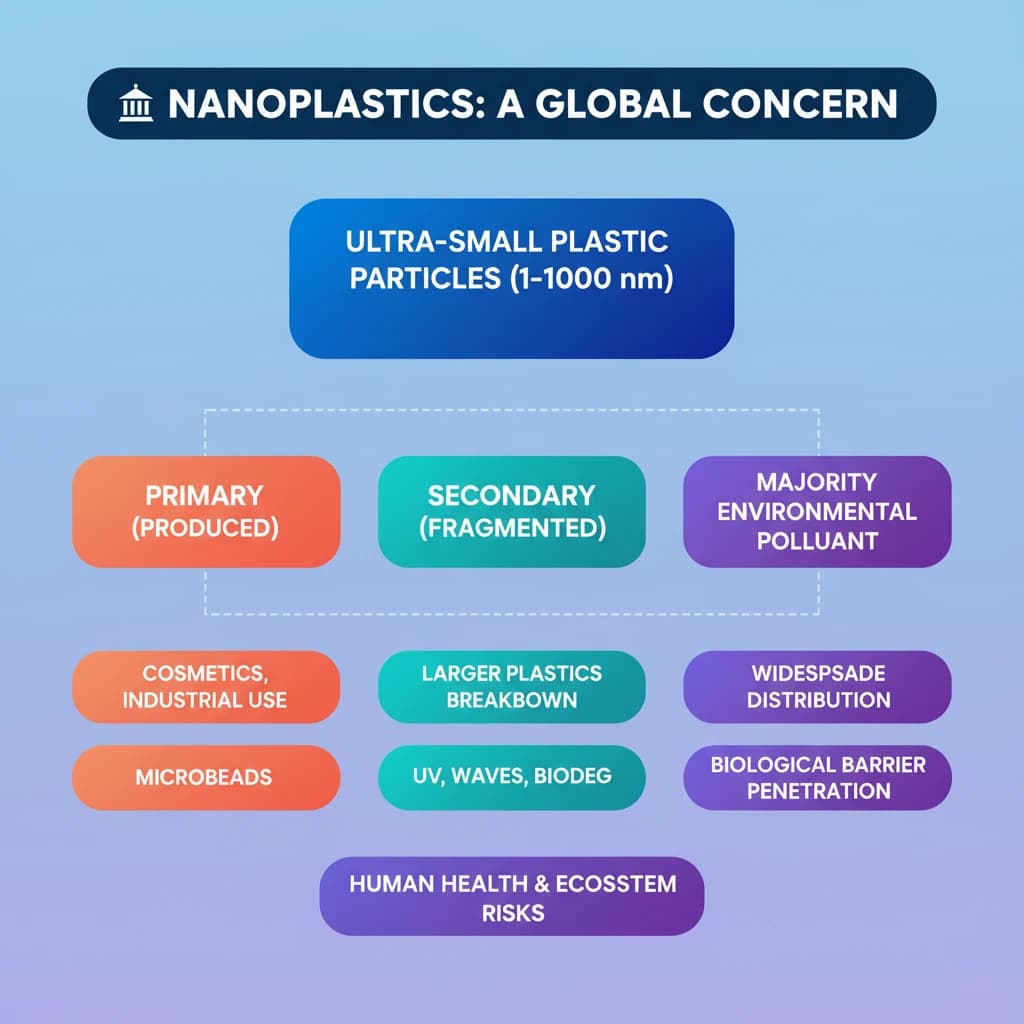
AR Gene Transfer Mechanism is a key topic under Science And Technology for UPSC Civil Services Examination. Key points include: Nanoplastics are solid plastic particles ranging from 1 to 1000 nanometers.. They are categorized into Primary (intentionally produced) and Secondary (from fragmentation of larger plastics).. Secondary nanoplastics constitute the majority and are a major environmental pollutant.. Understanding this topic is essential for both UPSC Prelims and Mains preparation.

Why is AR Gene Transfer Mechanism important for UPSC exam?

AR Gene Transfer Mechanism is a Medium-level topic in UPSC Science And Technology. It is tested in both Prelims (factual MCQs) and Mains (analytical answer writing). Previous year UPSC questions have frequently covered aspects of AR Gene Transfer Mechanism, making it essential for comprehensive IAS preparation.

How to prepare AR Gene Transfer Mechanism for UPSC?

To prepare AR Gene Transfer Mechanism for UPSC: (1) Study the comprehensive notes covering all key concepts on Vaidra. (2) Practice previous year questions on this topic. (3) Connect it with current affairs using daily updates. (4) Revise using key takeaways and mind maps available for Science And Technology. (5) Write practice answers linking AR Gene Transfer Mechanism to related GS Paper topics.

Key takeaways of AR Gene Transfer Mechanism for UPSC

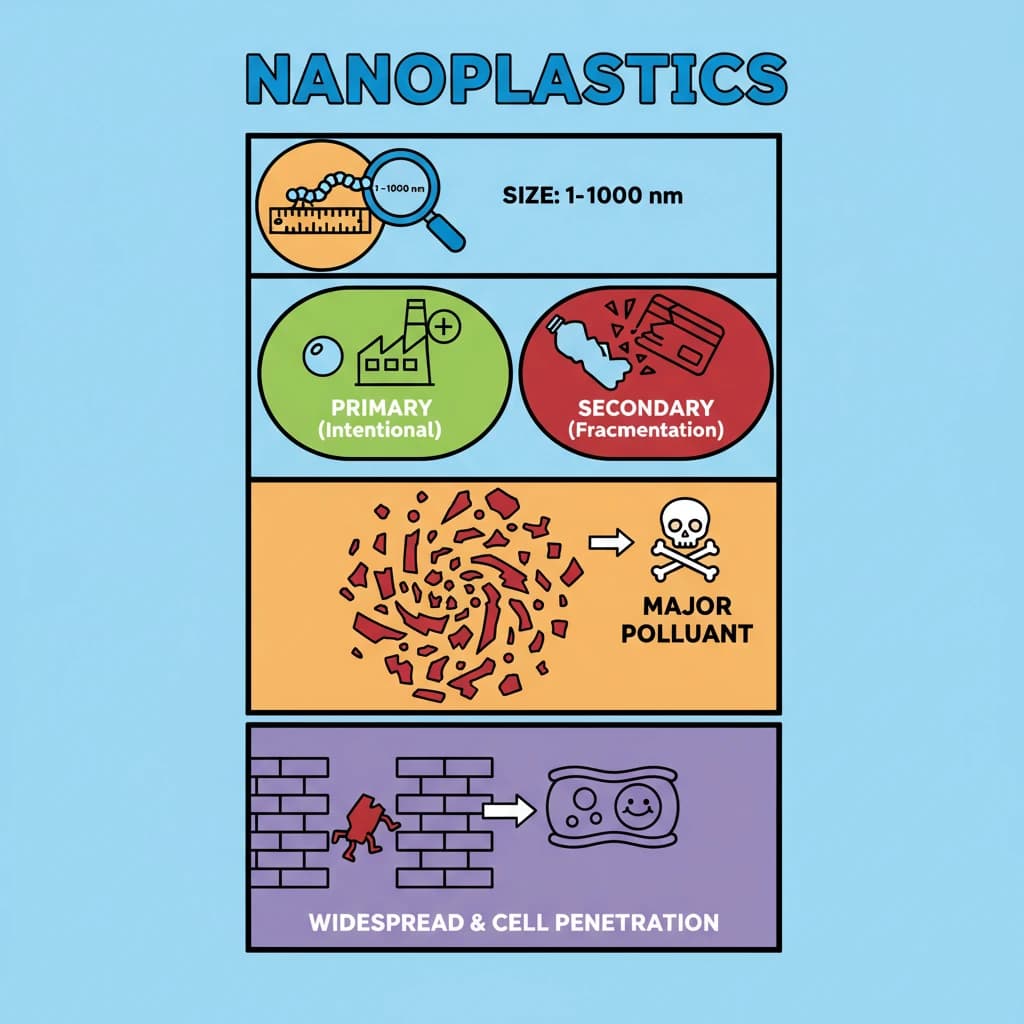
  • Nanoplastics are solid plastic particles ranging from 1 to 1000 nanometers.
  • They are categorized into Primary (intentionally produced) and Secondary (from fragmentation of larger plastics).
  • Secondary nanoplastics constitute the majority and are a major environmental pollutant.
  • Their small size allows widespread distribution and potential penetration of biological barriers.
  • Pose significant environmental and emerging human health concerns.
  • Addressing nanoplastics requires global efforts in waste reduction, recycling, and material innovation.
AR Gene Transfer Mechanism

AR Gene Transfer Mechanism

Medium⏱️ 8 min read✓ 95% Verified
science and technology

📖 Introduction

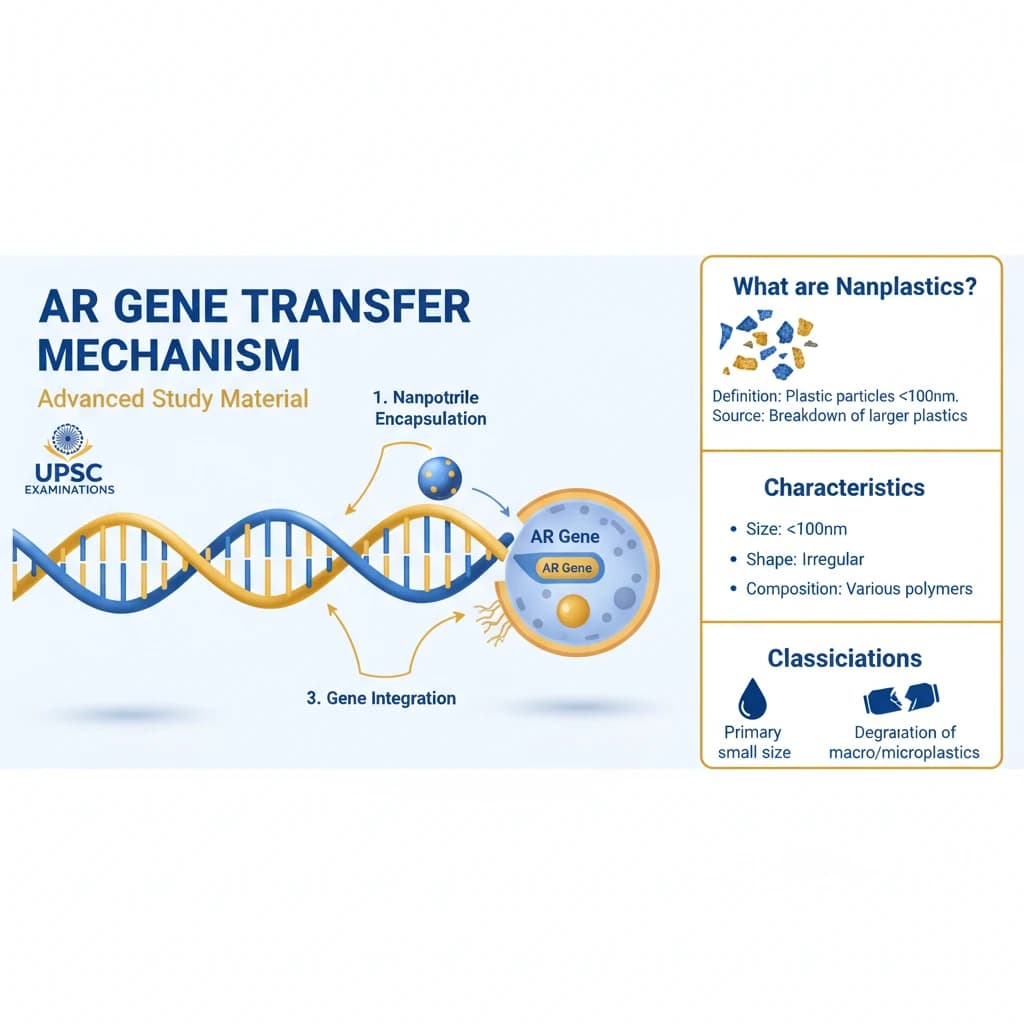
<h4>Understanding Nanoplastics: A Key Environmental Concern</h4><p>While the broader topic mentioned is <strong>AR Gene Transfer Mechanism</strong>, the provided content specifically details <strong>Nanoplastics</strong>. This section will elaborate on what nanoplastics are, their characteristics, and their primary classifications, which are crucial for understanding contemporary environmental challenges.</p><h4>Definition and Characteristics of Nanoplastics</h4><p><strong>Nanoplastics</strong> are defined as minute solid particles composed of <strong>synthetic</strong> or <strong>heavily modified natural polymers</strong>. These particles possess an extremely small size, placing them within a specific range.</p><div class='info-box'><p><strong>Size Range:</strong> Nanoplastics typically measure between <strong>1 nanometer (nm)</strong> and <strong>1000 nanometers (nm)</strong>. This microscopic scale makes them particularly challenging to detect and manage in various environments.</p></div><p>Their polymeric nature means they originate from plastic materials, which are ubiquitous in modern society. Understanding their composition is vital for addressing their environmental impact.</p><h4>Types of Nanoplastics: Primary and Secondary</h4><p>Nanoplastics are broadly categorized into two main types based on their origin: <strong>Primary Nanoplastics</strong> and <strong>Secondary Nanoplastics</strong>. This distinction is critical for developing targeted mitigation strategies.</p><div class='key-point-box'><p><strong>Primary Nanoplastics:</strong> These are <strong>intentionally produced</strong> nanometer-sized plastic particles. They are manufactured for specific industrial or commercial applications, where their small size offers unique functional properties.</p></div><ul><li>Examples of applications include cosmetics, medical diagnostics, and advanced material coatings, where their nanoscale properties are leveraged.</li></ul><div class='key-point-box'><p><strong>Secondary Nanoplastics:</strong> Constituting the vast majority of nanoplastics found in the environment, these particles are <strong>not intentionally produced</strong>. Instead, they arise from the <strong>fragmentation</strong> of larger plastic items.</p></div><ul><li>This fragmentation process occurs due to various environmental factors such as UV radiation, mechanical abrasion, and biological degradation, breaking down macro and microplastics into nanoscale particles.</li><li>They represent a significant environmental concern due to their widespread and unintentional release into ecosystems globally.</li></ul><div class='exam-tip-box'><p><strong>UPSC Insight:</strong> Questions on environmental pollution often feature topics like <strong>microplastics</strong> and <strong>nanoplastics</strong>. Understanding their definition, types, and sources is fundamental for GS3 (Environment) and essay papers. Focus on the distinction between primary and secondary sources.</p></div>
Concept Diagram

💡 Key Takeaways

  • •Nanoplastics are solid plastic particles ranging from 1 to 1000 nanometers.
  • •They are categorized into Primary (intentionally produced) and Secondary (from fragmentation of larger plastics).
  • •Secondary nanoplastics constitute the majority and are a major environmental pollutant.
  • •Their small size allows widespread distribution and potential penetration of biological barriers.
  • •Pose significant environmental and emerging human health concerns.
  • •Addressing nanoplastics requires global efforts in waste reduction, recycling, and material innovation.

🧠 Memory Techniques
Memory Aid
95% Verified Content

📚 Reference Sources

•General scientific literature on nanoplastics and microplastics (e.g., UNEP reports, peer-reviewed journals)
•Environmental Protection Agency (EPA) resources on plastic pollution

Related Topics

Loading related topics...
Explore:Science And Technology Topics·All Subjects·Daily Current Affairs·Editorial Analysis·Previous Year Questions·UPSC GPT