Initiatives Related to TB - UPSC Science And Technology
What is Initiatives Related to TB in UPSC Science And Technology?
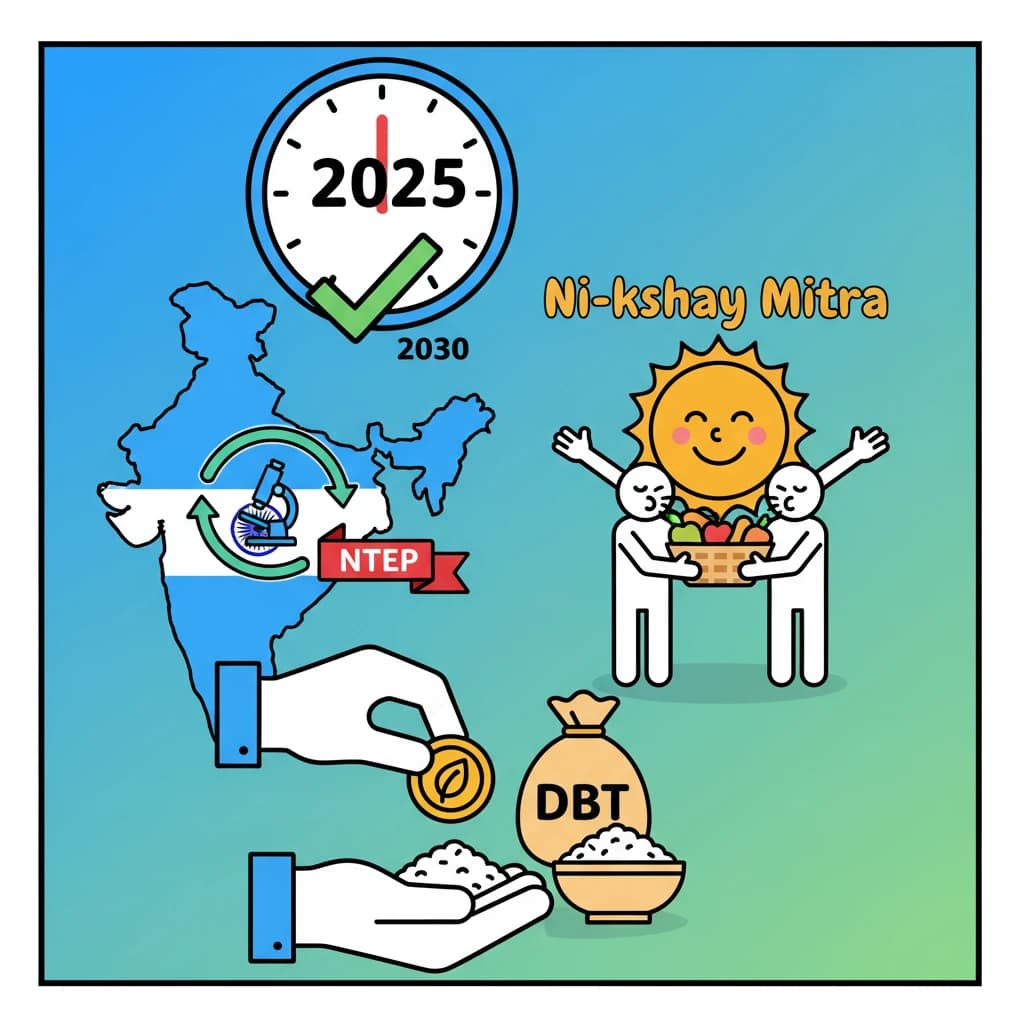
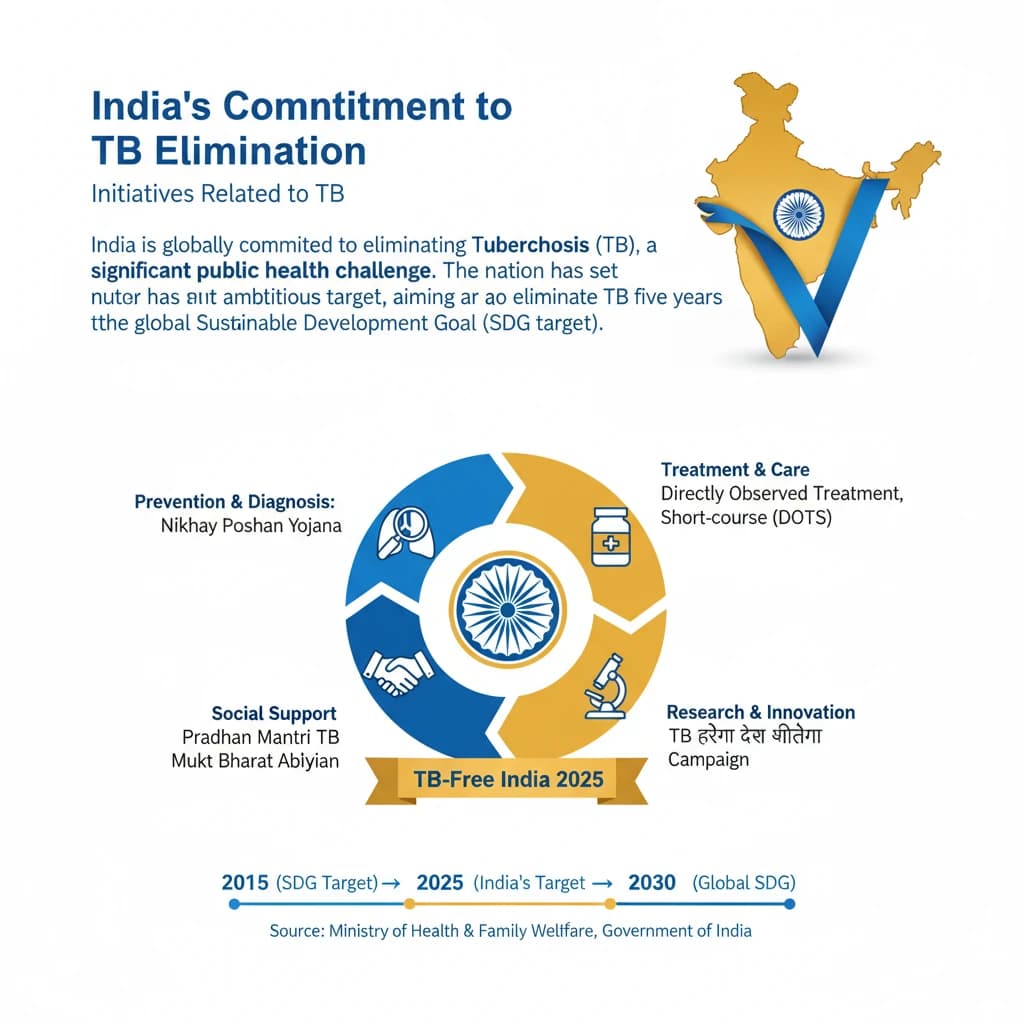
Initiatives Related to TB is a key topic under Science And Technology for UPSC Civil Services Examination. Key points include: India aims to eliminate TB by 2025, five years ahead of the global SDG target.. NTEP is the national flagship program, providing universal access to diagnosis and treatment.. Ni-kshay Mitra fosters community support for TB patients, offering nutritional and other aid.. Understanding this topic is essential for both UPSC Prelims and Mains preparation.
Why is Initiatives Related to TB important for UPSC exam?
Initiatives Related to TB is a Medium-level topic in UPSC Science And Technology. It is tested in both Prelims (factual MCQs) and Mains (analytical answer writing). Previous year UPSC questions have frequently covered aspects of Initiatives Related to TB, making it essential for comprehensive IAS preparation.
How to prepare Initiatives Related to TB for UPSC?
To prepare Initiatives Related to TB for UPSC: (1) Study the comprehensive notes covering all key concepts on Vaidra. (2) Practice previous year questions on this topic. (3) Connect it with current affairs using daily updates. (4) Revise using key takeaways and mind maps available for Science And Technology. (5) Write practice answers linking Initiatives Related to TB to related GS Paper topics.
Key takeaways of Initiatives Related to TB for UPSC
- India aims to eliminate TB by 2025, five years ahead of the global SDG target.
- NTEP is the national flagship program, providing universal access to diagnosis and treatment.
- Ni-kshay Mitra fosters community support for TB patients, offering nutritional and other aid.
- DBT provides direct financial assistance to TB patients for nutritional support.
- TB-Mukt Panchayat leverages local bodies (Gram Panchayats) for awareness and service uptake.
- Pradhan Mantri TB Mukt Bharat Abhiyan is an overarching campaign to galvanize societal commitment.
- India's strategy is multi-pronged: patient-centric, community-driven, and technology-enabled.
Initiatives Related to TB
📖 Introduction
💡 Key Takeaways
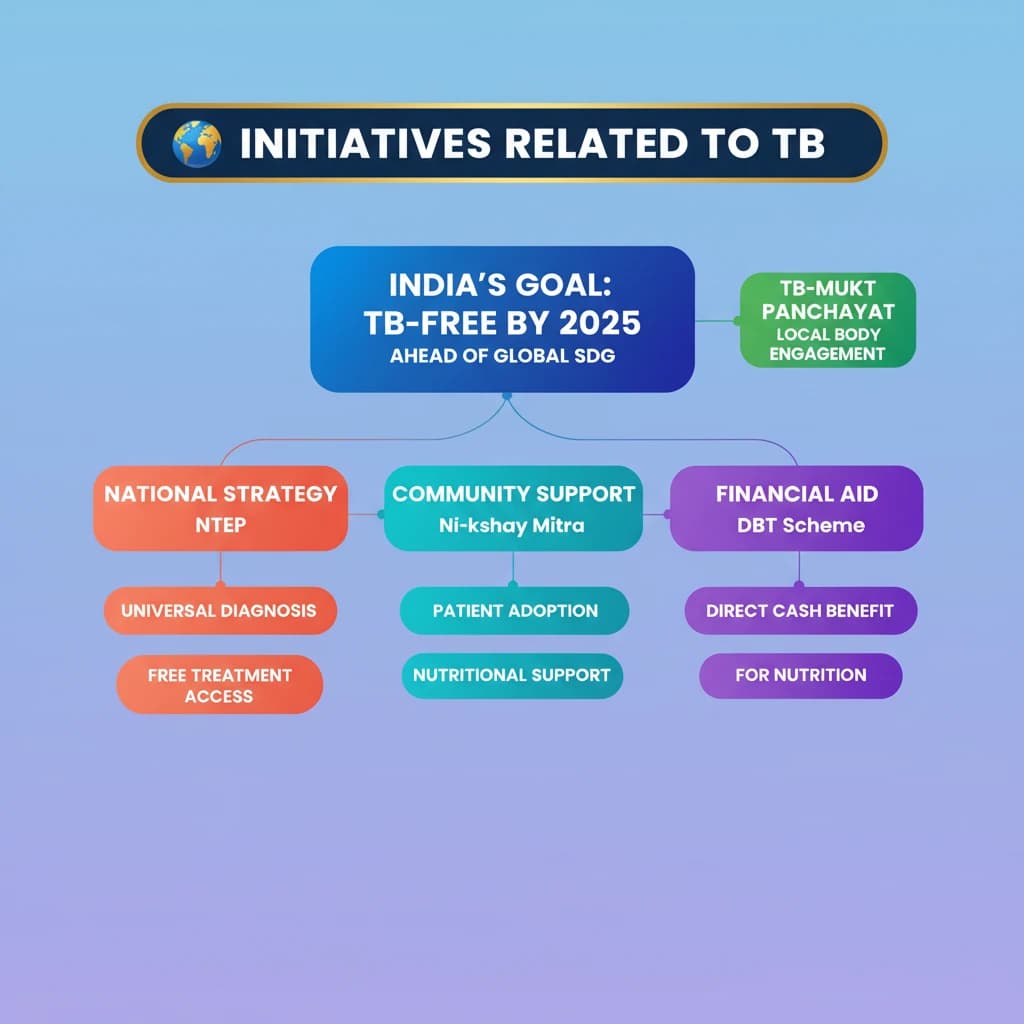
- •India aims to eliminate TB by 2025, five years ahead of the global SDG target.
- •NTEP is the national flagship program, providing universal access to diagnosis and treatment.
- •Ni-kshay Mitra fosters community support for TB patients, offering nutritional and other aid.
- •DBT provides direct financial assistance to TB patients for nutritional support.
- •TB-Mukt Panchayat leverages local bodies (Gram Panchayats) for awareness and service uptake.
- •Pradhan Mantri TB Mukt Bharat Abhiyan is an overarching campaign to galvanize societal commitment.
- •India's strategy is multi-pronged: patient-centric, community-driven, and technology-enabled.
🧠 Memory Techniques