Loading page, please wait…
Vaidra Logo
Vaidra

Top 4 items + smart groups

UPSC GPT
New
Current Affairs
Daily Solutions
Daily Puzzle
Mains Evaluator

Version 2.0.0 • Built with ❤️ for UPSC aspirants

Loading...
Loading...
Loading...
Loading...
Loading...
Loading...
Loading...
Loading...
Loading...
Loading...
Loading...
Loading...
Loading...
Nobel Prize 2024 in Physiology or Medicine - UPSC Science And Technology
Back
All Subjects

Topics

0 topics • 0 completed

Loading topics...
Loading...
Loading...
Loading...
Loading...
Loading...
Overall Progress0%

Nobel Prize 2024 in Physiology or Medicine - UPSC Science And Technology

What is Nobel Prize 2024 in Physiology or Medicine in UPSC Science And Technology?

Nobel Prize 2024 in Physiology or Medicine is a key topic under Science And Technology for UPSC Civil Services Examination. Key points include: The 2024 Nobel Prize in Physiology or Medicine was awarded to Victor Ambros and Gary Ruvkun.. They were recognized for their discovery of microRNA and its role in post-transcriptional gene regulation.. MicroRNAs are small non-coding RNA molecules that regulate gene expression by silencing mRNA.. Understanding this topic is essential for both UPSC Prelims and Mains preparation.

Why is Nobel Prize 2024 in Physiology or Medicine important for UPSC exam?

Nobel Prize 2024 in Physiology or Medicine is a Medium-level topic in UPSC Science And Technology. It is tested in both Prelims (factual MCQs) and Mains (analytical answer writing). Previous year UPSC questions have frequently covered aspects of Nobel Prize 2024 in Physiology or Medicine, making it essential for comprehensive IAS preparation.

How to prepare Nobel Prize 2024 in Physiology or Medicine for UPSC?

To prepare Nobel Prize 2024 in Physiology or Medicine for UPSC: (1) Study the comprehensive notes covering all key concepts on Vaidra. (2) Practice previous year questions on this topic. (3) Connect it with current affairs using daily updates. (4) Revise using key takeaways and mind maps available for Science And Technology. (5) Write practice answers linking Nobel Prize 2024 in Physiology or Medicine to related GS Paper topics.

Key takeaways of Nobel Prize 2024 in Physiology or Medicine for UPSC

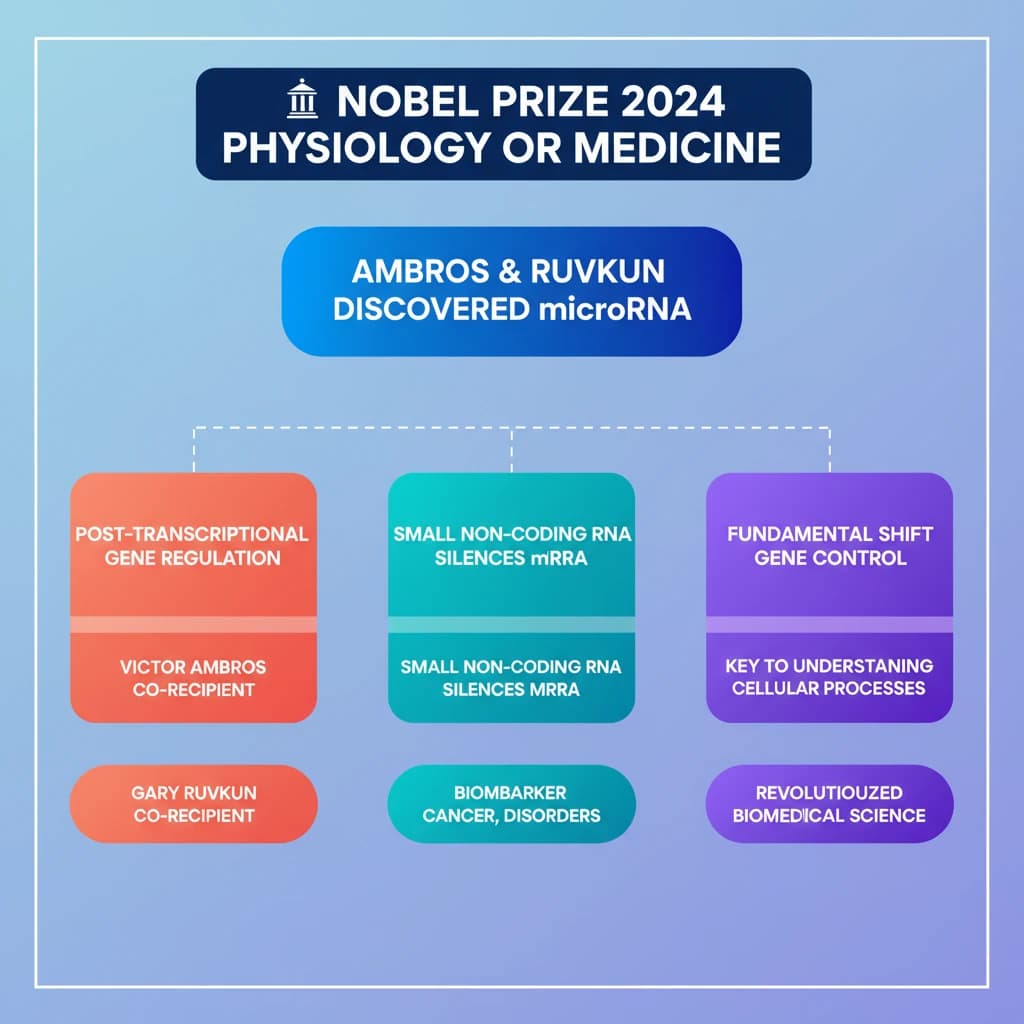
  • The 2024 Nobel Prize in Physiology or Medicine was awarded to Victor Ambros and Gary Ruvkun.
  • They were recognized for their discovery of microRNA and its role in post-transcriptional gene regulation.
  • MicroRNAs are small non-coding RNA molecules that regulate gene expression by silencing mRNA.
  • This discovery fundamentally changed our understanding of how genes are controlled in organisms.
  • MicroRNAs have significant current relevance as biomarkers for disease diagnosis and potential therapeutic targets, especially in cancer and developmental disorders.
Nobel Prize 2024 in Physiology or Medicine

Nobel Prize 2024 in Physiology or Medicine

Medium⏱️ 8 min read✓ 98% Verified
science and technology

📖 Introduction

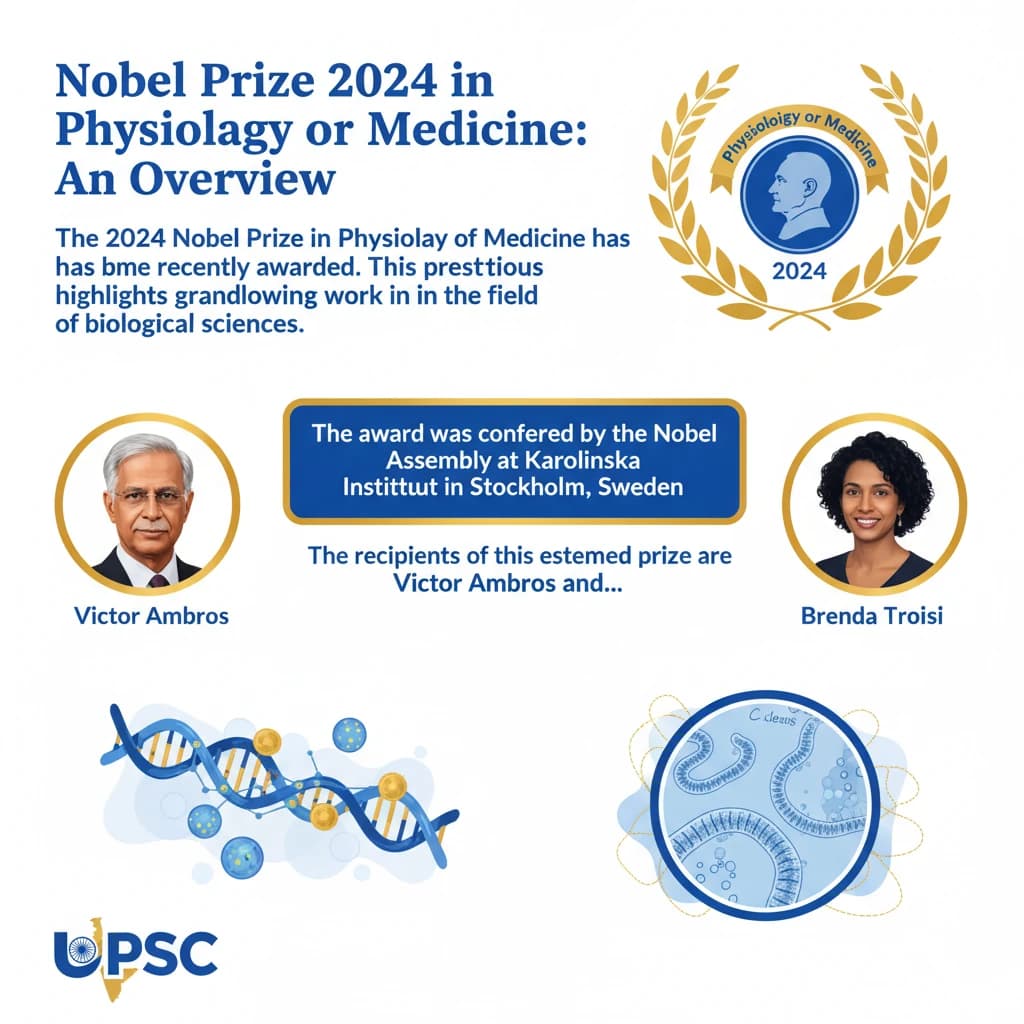
<h4>Nobel Prize 2024 in Physiology or Medicine: An Overview</h4><p>The <strong>2024 Nobel Prize in Physiology or Medicine</strong> has been recently awarded. This prestigious recognition highlights groundbreaking work in the field of biological sciences.</p><div class='info-box'><p>The award was conferred by the <strong>Nobel Assembly at Karolinska Institutet</strong> in <strong>Stockholm, Sweden</strong>.</p></div><p>The recipients of this esteemed prize are <strong>Victor Ambros</strong> and <strong>Gary Ruvkun</strong>. Their collaborative efforts have significantly advanced our understanding of gene regulation.</p><h4>Groundbreaking Discovery: MicroRNA</h4><p>Ambros and Ruvkun were honored for their pivotal discovery of <strong>microRNA</strong>. This finding revolutionized the understanding of how genes are controlled within organisms.</p><div class='key-point-box'><p>Their work specifically elucidated the role of <strong>microRNA</strong> in <strong>post-transcriptional gene regulation</strong>. This mechanism is crucial for the proper functioning of cells and organisms.</p></div><h4>Understanding Post-Transcriptional Gene Regulation</h4><p><strong>Post-transcriptional gene regulation</strong> refers to the control of gene expression after the process of transcription (DNA to RNA) but before translation (RNA to protein). <strong>MicroRNAs</strong> act as key regulators in this intricate process.</p><h4>Previous Nobel Recognitions Mentioned</h4><p>It is important to note the context of recent Nobel Prizes in related fields, as highlighted in the source material.</p><div class='info-box'><p>The <strong>2023 Nobel Prize in Physiology or Medicine</strong> was awarded to <strong>Katalin Karikó</strong> and <strong>Drew Weissman</strong>. Their recognition was for their work on <strong>messenger Ribonucleic Acid (mRNA)</strong>, which paved the way for effective mRNA vaccines against COVID-19.</p></div><div class='info-box'><p>The <strong>2022 Nobel Prize in Physics</strong> was awarded to <strong>John J. Hopfield</strong> and <strong>Geoffrey E. Hinton</strong>. They were recognized for their fundamental contributions to <strong>modern artificial neural networks (ANNs)</strong> and <strong>machine learning (ML)</strong>.</p></div><div class='exam-tip-box'><p><strong>UPSC Insight:</strong> While the primary focus is the 2024 prize, knowing previous years' laureates and their discoveries (like <strong>mRNA</strong> and <strong>ANNs</strong>) can provide broader context for science and technology questions in <strong>GS Paper III</strong>. Pay attention to the impact of these discoveries on society and future technologies.</p></div>
Concept Diagram

💡 Key Takeaways

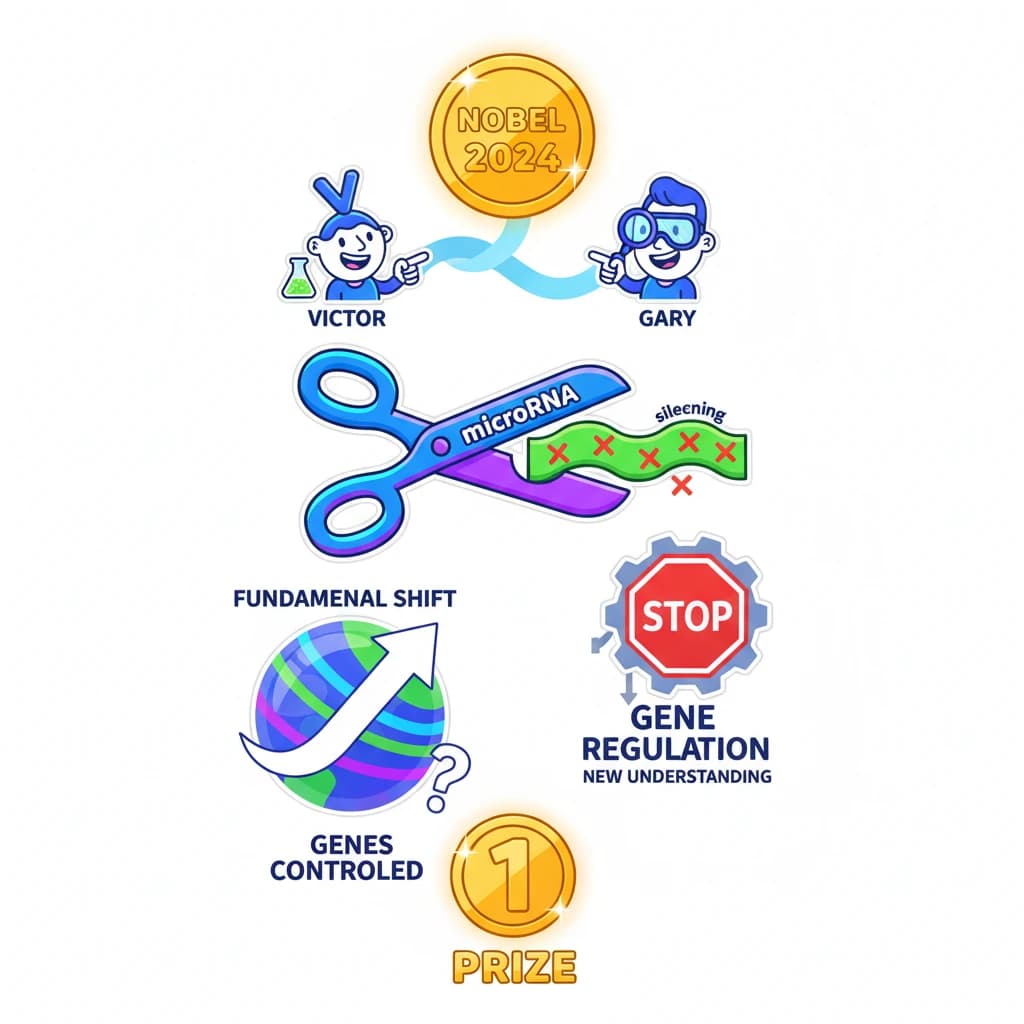
  • •The 2024 Nobel Prize in Physiology or Medicine was awarded to Victor Ambros and Gary Ruvkun.
  • •They were recognized for their discovery of microRNA and its role in post-transcriptional gene regulation.
  • •MicroRNAs are small non-coding RNA molecules that regulate gene expression by silencing mRNA.
  • •This discovery fundamentally changed our understanding of how genes are controlled in organisms.
  • •MicroRNAs have significant current relevance as biomarkers for disease diagnosis and potential therapeutic targets, especially in cancer and developmental disorders.

🧠 Memory Techniques
Memory Aid
98% Verified Content

📚 Reference Sources

•Karolinska Institutet press releases for Nobel Prize in Physiology or Medicine
•Drishti IAS Summary (provided source content)

Related Topics

Loading related topics...
Explore:Science And Technology Topics·All Subjects·Daily Current Affairs·Editorial Analysis·Previous Year Questions·UPSC GPT