Loading page, please wait…
Vaidra Logo
Vaidra

Top 4 items + smart groups

UPSC GPT
New
Current Affairs
Daily Solutions
Daily Puzzle
Mains Evaluator

Version 2.0.0 • Built with ❤️ for UPSC aspirants

Loading...
Loading...
Loading...
Loading...
Loading...
Loading...
Loading...
Loading...
Loading...
Loading...
Loading...
Loading...
Loading...
Back
All Subjects

Topics

0 topics • 0 completed

Loading topics...
Loading...
Loading...
Loading...
Loading...
Loading...
Overall Progress0%

Leptospirosis Outbreak in Kerala - UPSC Science And Technology

What is Leptospirosis Outbreak in Kerala in UPSC Science And Technology?

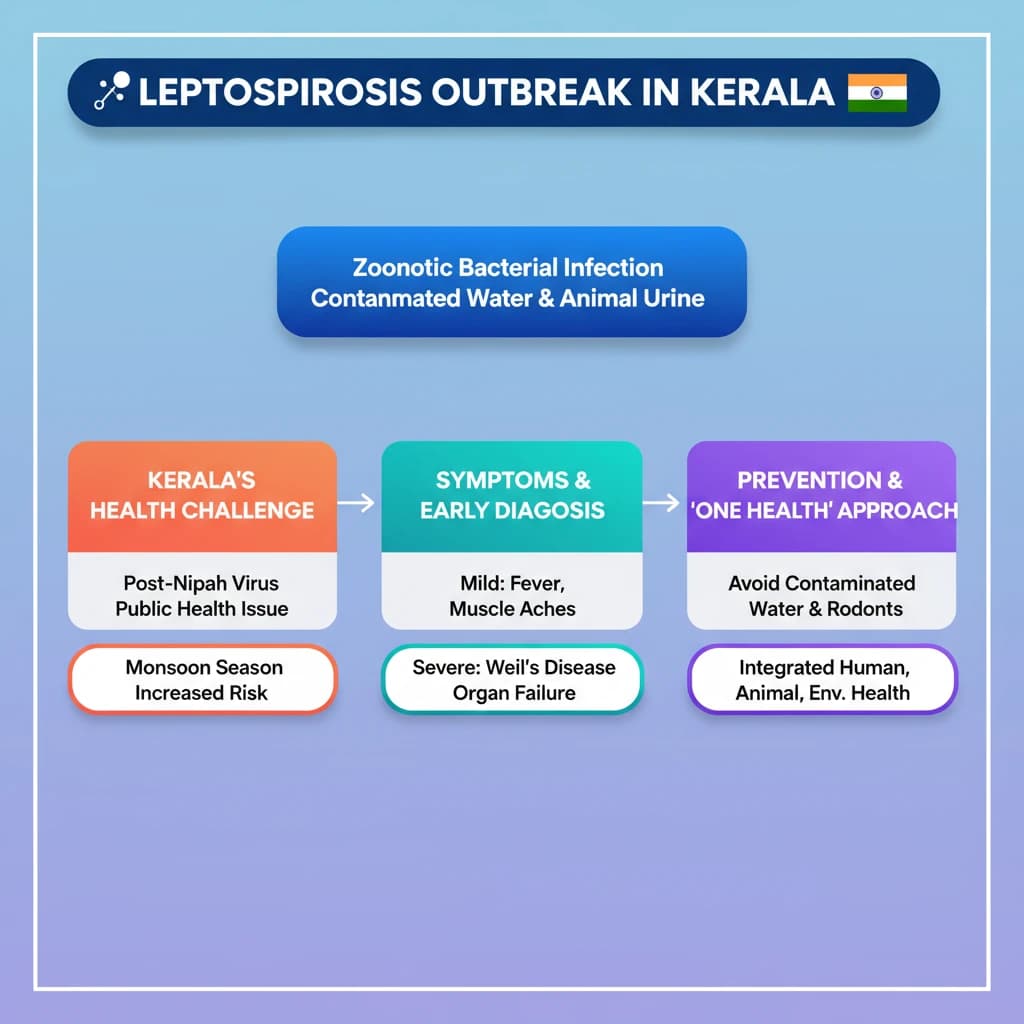
Leptospirosis Outbreak in Kerala is a key topic under Science And Technology for UPSC Civil Services Examination. Key points include: Leptospirosis is a zoonotic bacterial infection, often linked to contaminated water and animal urine.. Kerala's recent Leptospirosis outbreak followed the containment of a Nipah virus threat, highlighting ongoing public health challenges.. Symptoms range from mild (fever, muscle aches) to severe (Weil's disease, organ failure); early diagnosis is crucial.. Understanding this topic is essential for both UPSC Prelims and Mains preparation.

Why is Leptospirosis Outbreak in Kerala important for UPSC exam?

Leptospirosis Outbreak in Kerala is a Medium-level topic in UPSC Science And Technology. It is tested in both Prelims (factual MCQs) and Mains (analytical answer writing). Previous year UPSC questions have frequently covered aspects of Leptospirosis Outbreak in Kerala, making it essential for comprehensive IAS preparation.

How to prepare Leptospirosis Outbreak in Kerala for UPSC?

To prepare Leptospirosis Outbreak in Kerala for UPSC: (1) Study the comprehensive notes covering all key concepts on Vaidra. (2) Practice previous year questions on this topic. (3) Connect it with current affairs using daily updates. (4) Revise using key takeaways and mind maps available for Science And Technology. (5) Write practice answers linking Leptospirosis Outbreak in Kerala to related GS Paper topics.

Key takeaways of Leptospirosis Outbreak in Kerala for UPSC

  • Leptospirosis is a zoonotic bacterial infection, often linked to contaminated water and animal urine.
  • Kerala's recent Leptospirosis outbreak followed the containment of a Nipah virus threat, highlighting ongoing public health challenges.
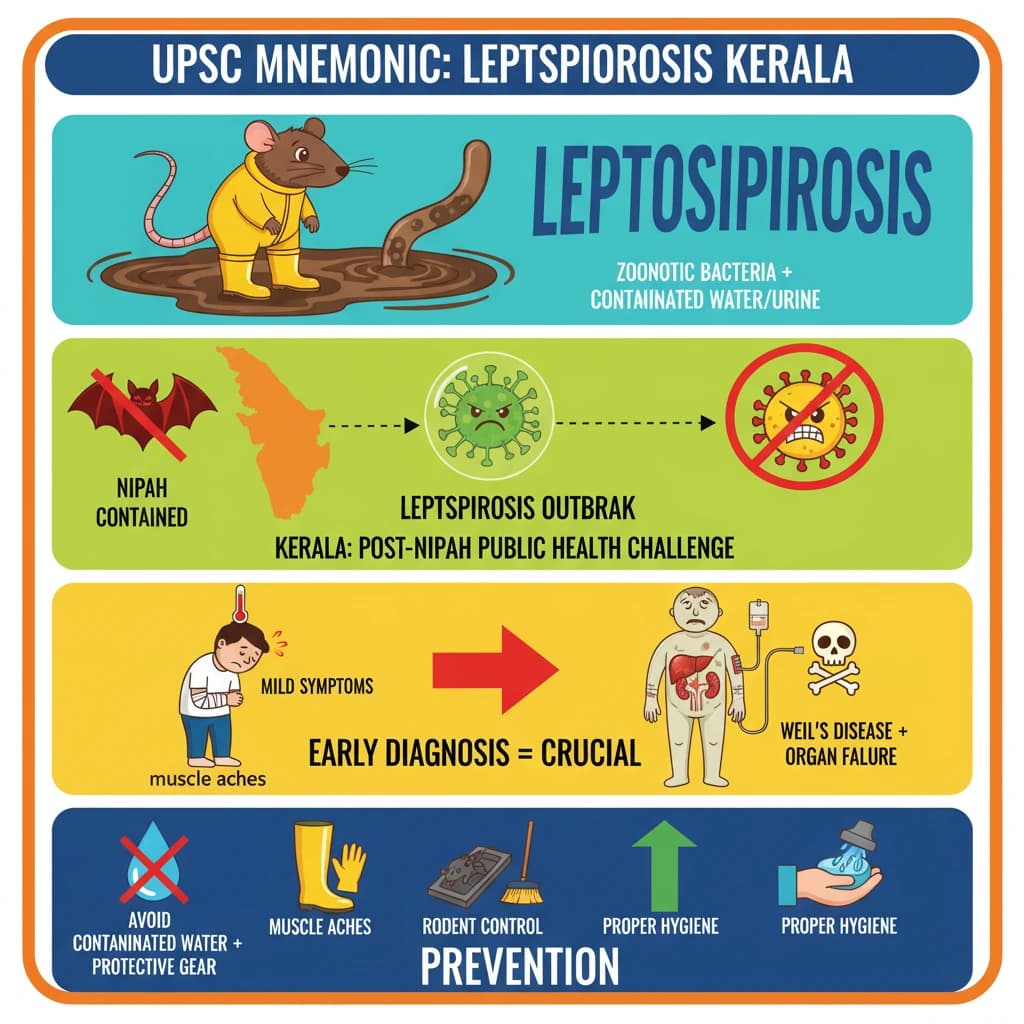
  • Symptoms range from mild (fever, muscle aches) to severe (Weil's disease, organ failure); early diagnosis is crucial.
  • Prevention involves avoiding contaminated water, protective gear, rodent control, and proper hygiene.
  • The 'One Health' approach is vital for managing zoonotic diseases, integrating human, animal, and environmental health strategies.
Leptospirosis Outbreak in Kerala

Leptospirosis Outbreak in Kerala

Medium⏱️ 7 min read✓ 95% Verified
science and technology

📖 Introduction

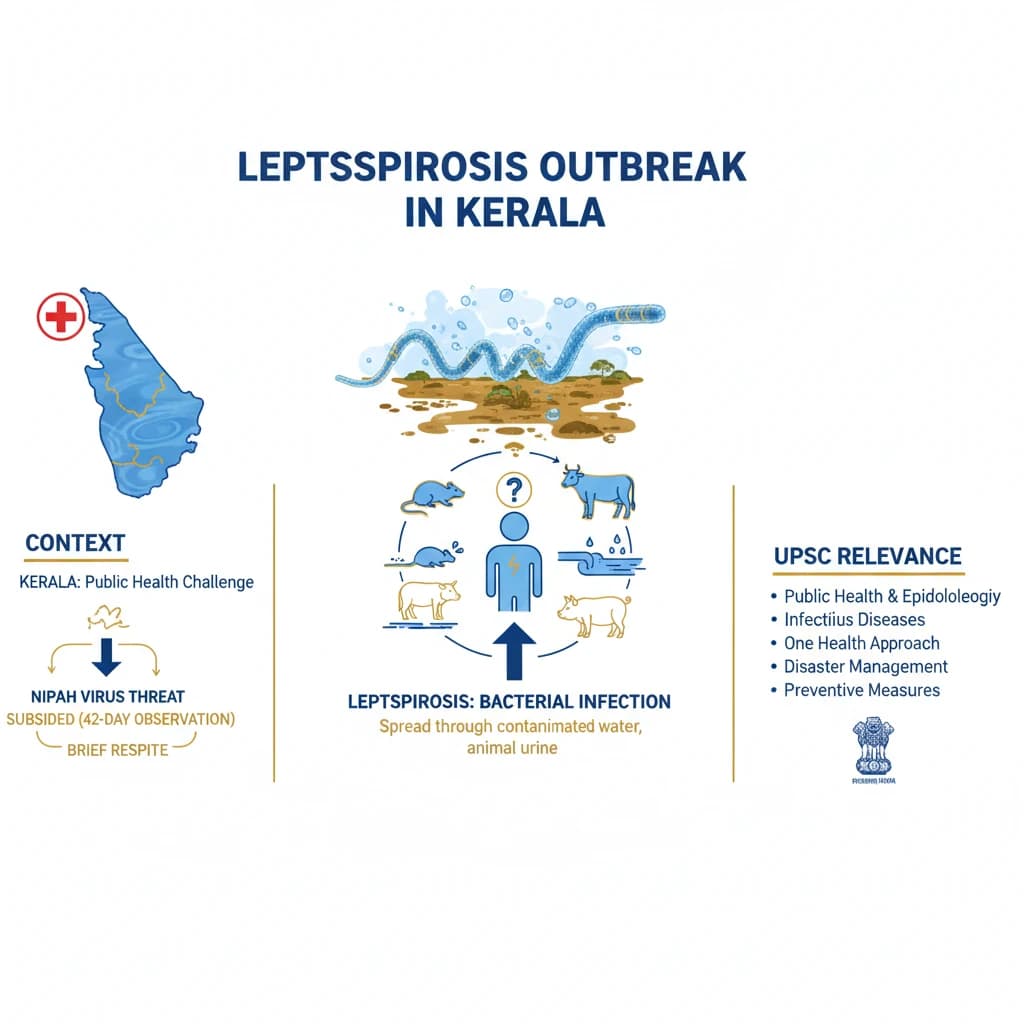
<h4>Context of the Outbreak in Kerala</h4><p>The state of <strong>Kerala</strong> recently faced a significant public health challenge with an outbreak of <strong>Leptospirosis</strong>. This emergence followed a period of relief, as the threat of a <strong>Nipah virus</strong> outbreak had subsided.</p><p>The <strong>Nipah virus</strong> situation was declared diminished after a crucial <strong>42-day observation period</strong> concluded with no new cases reported. This provided a brief respite before the new concerns regarding <strong>Leptospirosis</strong> surfaced.</p><div class='exam-tip-box'><p><strong>UPSC Insight:</strong> Understanding the sequence of public health events, like the transition from a <strong>Nipah threat</strong> to a <strong>Leptospirosis outbreak</strong>, highlights the dynamic nature of disease management and surveillance in states like <strong>Kerala</strong>, which are prone to such challenges.</p></div><h4>What is Leptospirosis?</h4><p><strong>Leptospirosis</strong> is a severe bacterial infection caused by bacteria of the genus <strong><em>Leptospira</em></strong>. It is a <strong>zoonotic disease</strong>, meaning it is primarily transmitted from animals to humans.</p><p>The bacteria are typically found in the urine of infected animals, including rodents, livestock, and pets. Humans can contract the infection through contact with contaminated water, soil, or animal urine.</p><div class='info-box'><p><strong>Key Fact:</strong> <strong>Leptospirosis</strong> is also known by various names such as <strong>Weil's disease</strong>, <strong>swineherd's disease</strong>, and <strong>rice field fever</strong>, reflecting its diverse sources and contexts.</p></div><h4>Transmission Pathways</h4><ul><li><strong>Direct Contact:</strong> Exposure to urine, blood, or tissues of infected animals.</li><li><strong>Indirect Contact:</strong> Contact with water or soil contaminated with infected animal urine. This often occurs during floods or heavy rainfall.</li><li><strong>Entry Points:</strong> The bacteria enter the body through cuts or abrasions in the skin, or through mucous membranes (eyes, nose, mouth).</li></ul><h4>Symptoms and Complications</h4><p>Symptoms of <strong>Leptospirosis</strong> can range from mild to severe and may appear 2 to 30 days after exposure. Initial symptoms often mimic other illnesses, making diagnosis challenging.</p><ul><li><strong>Mild Symptoms:</strong> Fever, headache, muscle aches (especially in calves and lower back), chills, red eyes, abdominal pain, diarrhea, and vomiting.</li><li><strong>Severe Symptoms (Weil's Disease):</strong> Can lead to severe forms affecting multiple organs, including kidney damage, liver failure (jaundice), meningitis, respiratory distress, and internal bleeding.</li></ul><div class='key-point-box'><p><strong>Important Concept:</strong> Early diagnosis and treatment are crucial to prevent severe complications and reduce mortality associated with <strong>Leptospirosis</strong>.</p></div><h4>Prevention and Control Measures</h4><p>Preventing <strong>Leptospirosis</strong> involves minimizing exposure to contaminated environments and infected animals. Public health strategies focus on awareness and hygiene.</p><ul><li><strong>Avoid Contaminated Water:</strong> Do not swim or wade in water that might be contaminated, especially after heavy rains or floods.</li><li><strong>Protective Gear:</strong> Use protective clothing, gloves, and footwear when working in areas with potential exposure (e.g., farmers, sanitation workers).</li><li><strong>Rodent Control:</strong> Implement effective rodent control measures in homes and communities.</li><li><strong>Animal Vaccination:</strong> Vaccinate pets and livestock where appropriate, and ensure proper disposal of animal waste.</li><li><strong>Hygiene:</strong> Wash hands thoroughly after contact with animals or potentially contaminated environments.</li></ul><h4>Treatment of Leptospirosis</h4><p><strong>Leptospirosis</strong> is treatable with antibiotics, which are most effective when administered early in the course of the disease. Common antibiotics include <strong>doxycycline</strong> or <strong>penicillin</strong>.</p><p>Severe cases may require hospitalization for intravenous antibiotics and supportive care, including management of kidney failure, respiratory distress, or other organ complications.</p>
Concept Diagram

💡 Key Takeaways

  • •Leptospirosis is a zoonotic bacterial infection, often linked to contaminated water and animal urine.
  • •Kerala's recent Leptospirosis outbreak followed the containment of a Nipah virus threat, highlighting ongoing public health challenges.
  • •Symptoms range from mild (fever, muscle aches) to severe (Weil's disease, organ failure); early diagnosis is crucial.
  • •Prevention involves avoiding contaminated water, protective gear, rodent control, and proper hygiene.
  • •The 'One Health' approach is vital for managing zoonotic diseases, integrating human, animal, and environmental health strategies.

🧠 Memory Techniques
Memory Aid
95% Verified Content

📚 Reference Sources

•World Health Organization (WHO) - Leptospirosis Fact Sheet
•Centers for Disease Control and Prevention (CDC) - Leptospirosis Information
•Ministry of Health & Family Welfare, Government of India - Public Health Guidelines
•National Centre for Disease Control (NCDC) - Annual Reports & Guidelines

Related Topics

Loading related topics...
Explore:Science And Technology Topics·All Subjects·Daily Current Affairs·Editorial Analysis·Previous Year Questions·UPSC GPT
Leptospirosis Outbreak in Kerala - UPSC Science And Technology