Gamma Rays and Related Health Hazards - UPSC Science And Technology
What is Gamma Rays and Related Health Hazards in UPSC Science And Technology?
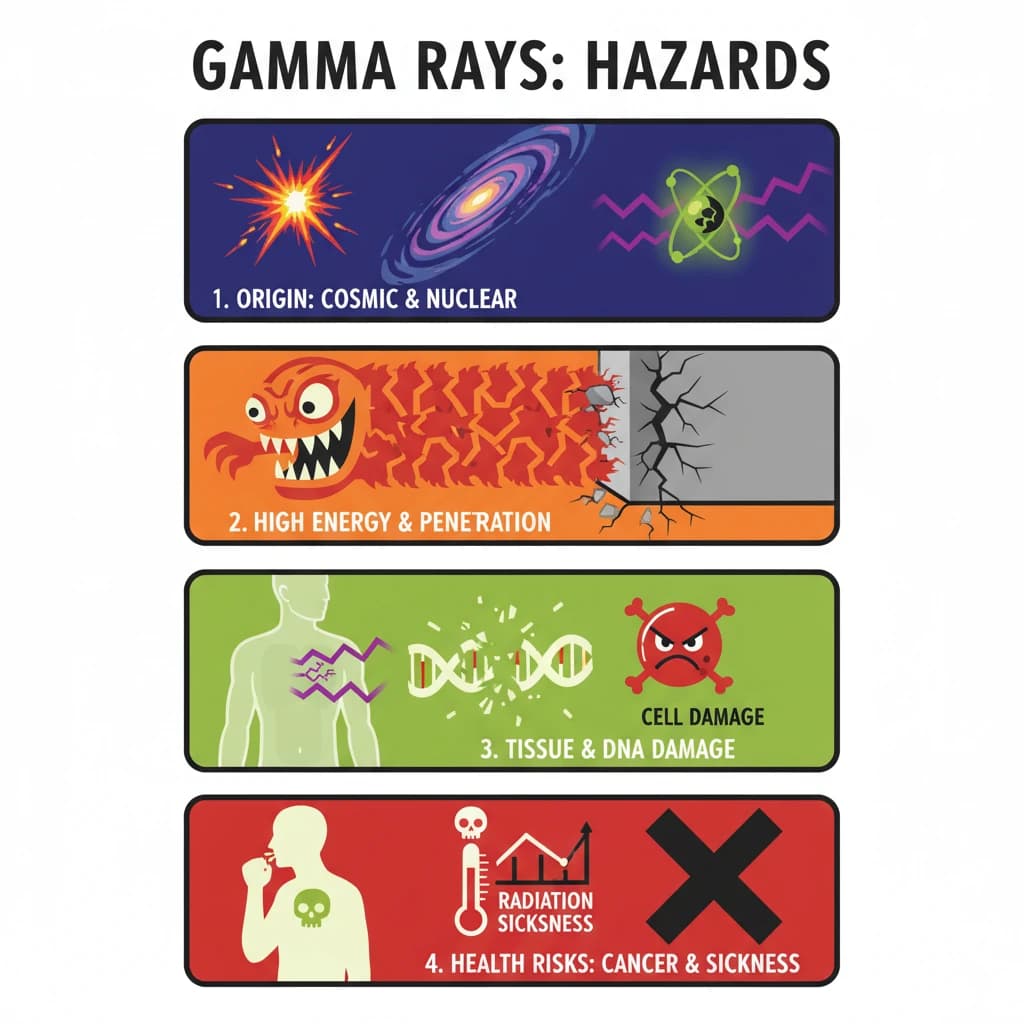
Gamma Rays and Related Health Hazards is a key topic under Science And Technology for UPSC Civil Services Examination. Key points include: Gamma rays are high-energy electromagnetic radiation with the shortest wavelength and highest energy.. They originate from cosmic events (pulsars, supernovae, black holes) and terrestrial nuclear processes (radioactive decay, nuclear reactions).. Gamma rays have high penetrating power, capable of damaging human tissue and DNA.. Understanding this topic is essential for both UPSC Prelims and Mains preparation.
Why is Gamma Rays and Related Health Hazards important for UPSC exam?
Gamma Rays and Related Health Hazards is a Medium-level topic in UPSC Science And Technology. It is tested in both Prelims (factual MCQs) and Mains (analytical answer writing). Previous year UPSC questions have frequently covered aspects of Gamma Rays and Related Health Hazards, making it essential for comprehensive IAS preparation.
How to prepare Gamma Rays and Related Health Hazards for UPSC?
To prepare Gamma Rays and Related Health Hazards for UPSC: (1) Study the comprehensive notes covering all key concepts on Vaidra. (2) Practice previous year questions on this topic. (3) Connect it with current affairs using daily updates. (4) Revise using key takeaways and mind maps available for Science And Technology. (5) Write practice answers linking Gamma Rays and Related Health Hazards to related GS Paper topics.
Key takeaways of Gamma Rays and Related Health Hazards for UPSC
- Gamma rays are high-energy electromagnetic radiation with the shortest wavelength and highest energy.
- They originate from cosmic events (pulsars, supernovae, black holes) and terrestrial nuclear processes (radioactive decay, nuclear reactions).
- Gamma rays have high penetrating power, capable of damaging human tissue and DNA.
- Exposure leads to health risks like radiation sickness and increased cancer risk.
- Despite hazards, gamma rays have crucial applications in medicine (radiation therapy, PET scans) and industry (sterilization, non-destructive testing).
- Managing gamma ray exposure requires strict safety protocols and robust regulatory frameworks.
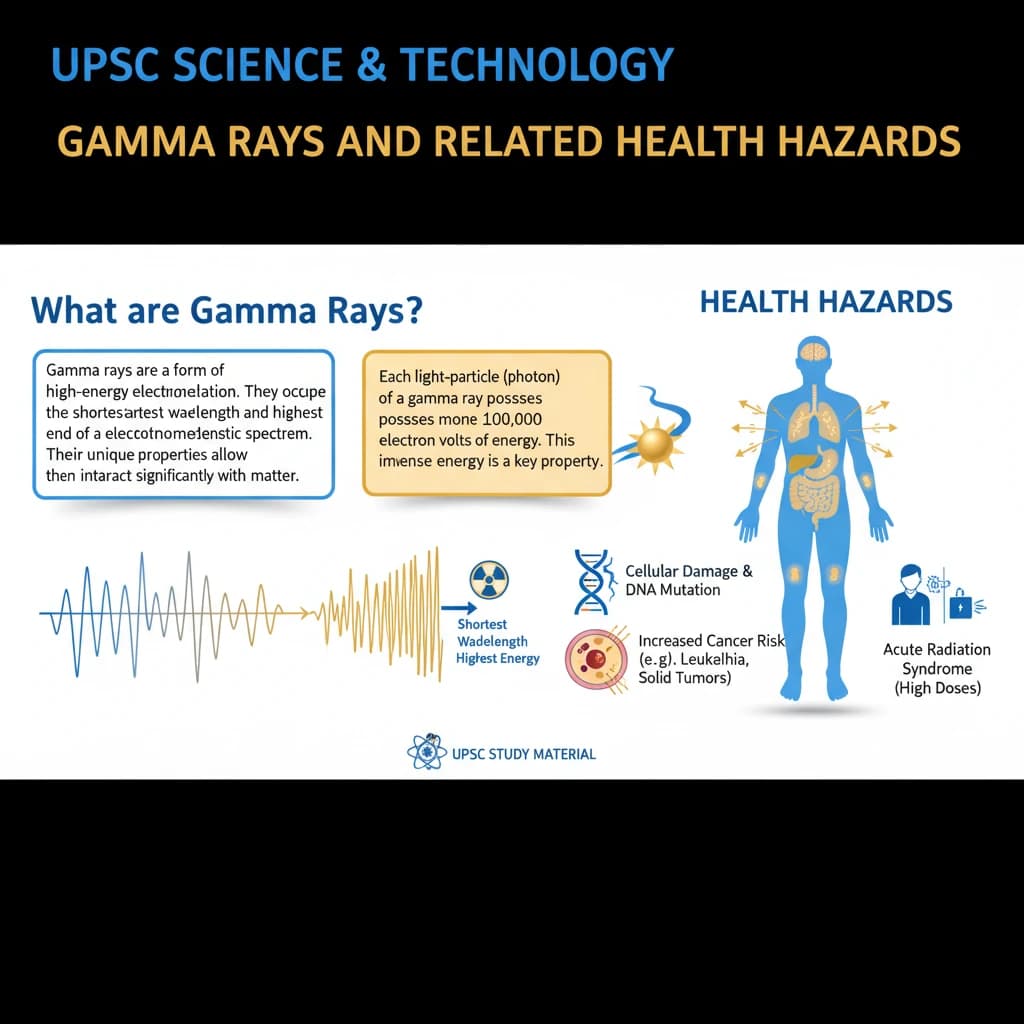
Gamma Rays and Related Health Hazards
📖 Introduction

💡 Key Takeaways
- •Gamma rays are high-energy electromagnetic radiation with the shortest wavelength and highest energy.
- •They originate from cosmic events (pulsars, supernovae, black holes) and terrestrial nuclear processes (radioactive decay, nuclear reactions).
- •Gamma rays have high penetrating power, capable of damaging human tissue and DNA.
- •Exposure leads to health risks like radiation sickness and increased cancer risk.
- •Despite hazards, gamma rays have crucial applications in medicine (radiation therapy, PET scans) and industry (sterilization, non-destructive testing).
- •Managing gamma ray exposure requires strict safety protocols and robust regulatory frameworks.
🧠 Memory Techniques