Loading page, please wait…
Vaidra Logo
Vaidra

Top 4 items + smart groups

UPSC GPT
New
Current Affairs
Daily Solutions
Daily Puzzle
Mains Evaluator

Version 2.0.0 • Built with ❤️ for UPSC aspirants

Loading...
Loading...
Loading...
Loading...
Loading...
Loading...
Loading...
Loading...
Loading...
Loading...
Loading...
Loading...
Loading...
Back
All Subjects

Topics

0 topics • 0 completed

Loading topics...
Loading...
Loading...
Loading...
Loading...
Loading...
Overall Progress0%
State of Biobanks in India - UPSC Science And Technology

State of Biobanks in India - UPSC Science And Technology

What is State of Biobanks in India in UPSC Science And Technology?

State of Biobanks in India is a key topic under Science And Technology for UPSC Civil Services Examination. Key points include: India is actively pursuing large-scale biobanking initiatives like Genome India and Phenome India.. These programs aim to map genetic diversity and understand disease predictors for precision medicine.. The PRaGeD Mission specifically targets rare genetic disorders in children.. Understanding this topic is essential for both UPSC Prelims and Mains preparation.

Why is State of Biobanks in India important for UPSC exam?

State of Biobanks in India is a Medium-level topic in UPSC Science And Technology. It is tested in both Prelims (factual MCQs) and Mains (analytical answer writing). Previous year UPSC questions have frequently covered aspects of State of Biobanks in India, making it essential for comprehensive IAS preparation.

How to prepare State of Biobanks in India for UPSC?

To prepare State of Biobanks in India for UPSC: (1) Study the comprehensive notes covering all key concepts on Vaidra. (2) Practice previous year questions on this topic. (3) Connect it with current affairs using daily updates. (4) Revise using key takeaways and mind maps available for Science And Technology. (5) Write practice answers linking State of Biobanks in India to related GS Paper topics.

Key takeaways of State of Biobanks in India for UPSC

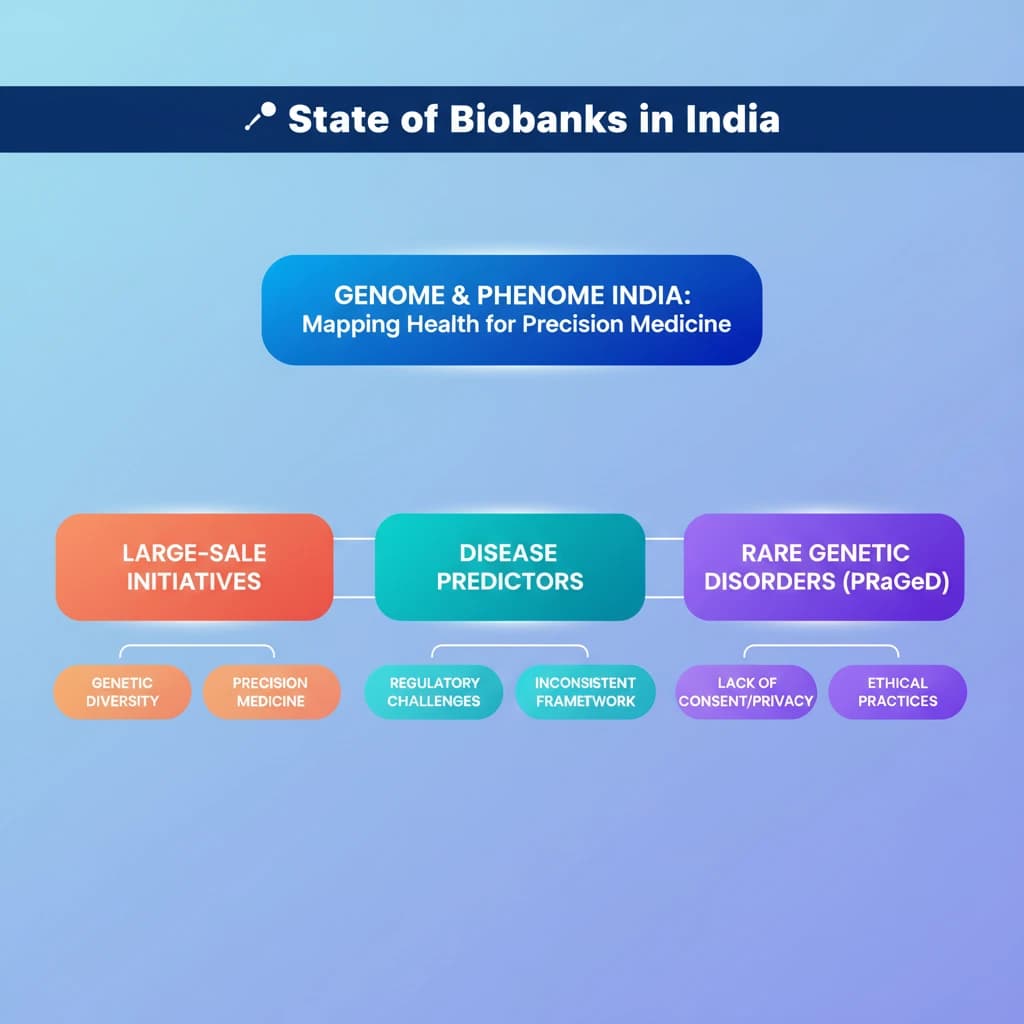
  • India is actively pursuing large-scale biobanking initiatives like Genome India and Phenome India.
  • These programs aim to map genetic diversity and understand disease predictors for precision medicine.
  • The PRaGeD Mission specifically targets rare genetic disorders in children.
  • A major challenge is India's inconsistent regulatory framework for biobanks, lacking comprehensive rules for consent, privacy, and data protection.
  • Robust regulations are crucial for realizing biobanking's full potential and ensuring ethical practices.
State of Biobanks in India

State of Biobanks in India

Medium⏱️ 8 min read✓ 95% Verified
science and technology

📖 Introduction

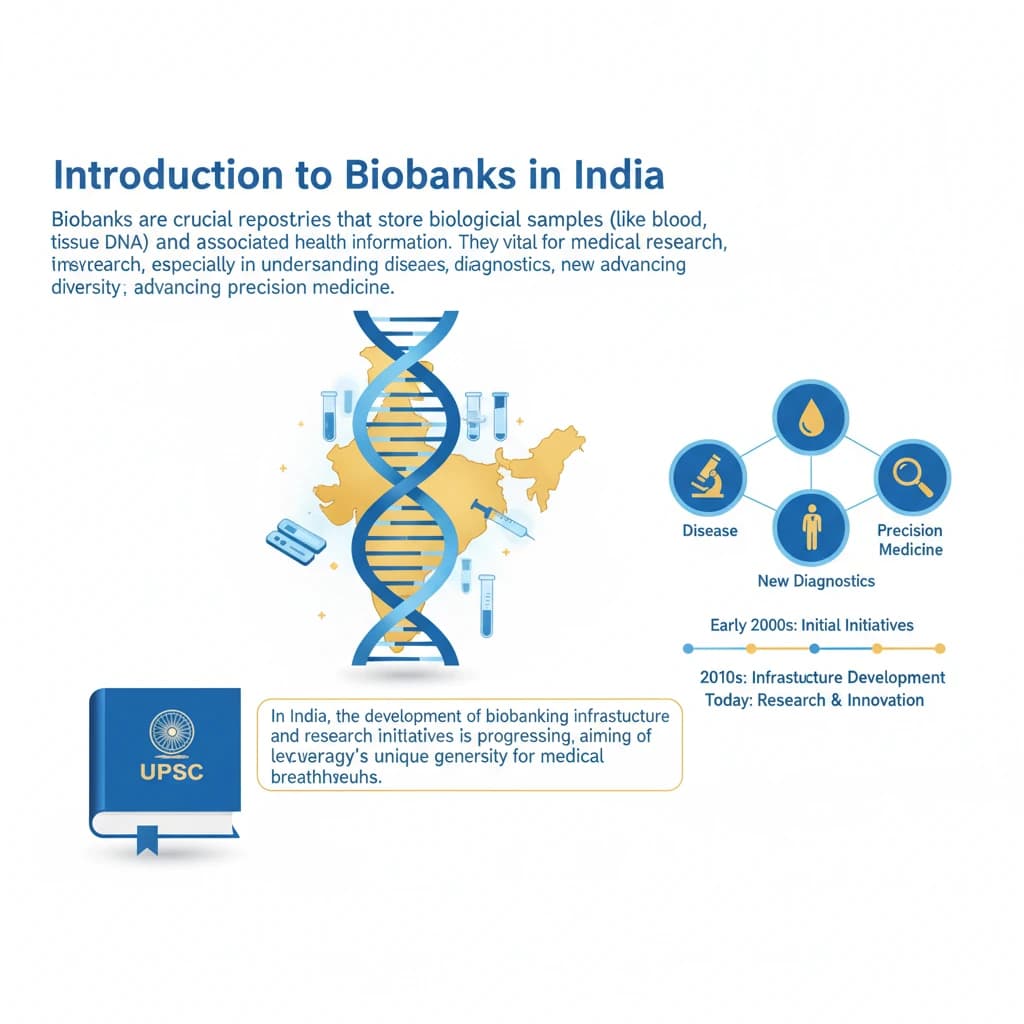
<h4>Introduction to Biobanks in India</h4><p><strong>Biobanks</strong> are crucial repositories that store biological samples (like blood, tissue, DNA) and associated health information. They are vital for medical research, especially in understanding diseases, developing new diagnostics, and advancing <strong>precision medicine</strong>.</p><div class='key-point-box'><p>In India, the development of biobanking infrastructure and research initiatives is progressing, aiming to leverage the country's diverse genetic landscape for healthcare advancements.</p></div><h4>Key Initiatives in Indian Biobanking</h4><p>India has launched several significant programs to bolster its biobanking capabilities and genetic research. These initiatives focus on different aspects of human health and genetic diversity.</p><h4>Genome India Programme</h4><p>The <strong>Genome India Programme</strong> is a flagship initiative focused on sequencing the genomes of a large and diverse Indian population. It aims to create a comprehensive map of genetic variations.</p><div class='info-box'><ul><li><strong>Scope:</strong> Completed sequencing of <strong>10,000 genomes</strong>.</li><li><strong>Diversity:</strong> Samples collected from <strong>99 distinct ethnic groups</strong> across India.</li><li><strong>Primary Goal:</strong> To identify genetic markers for rare genetic diseases and develop targeted treatments.</li></ul></div><div class='exam-tip-box'><p>This program is crucial for understanding India's unique genetic diversity and its implications for personalized medicine, a key topic for <strong>UPSC Mains GS-III Science & Technology</strong>.</p></div><h4>Phenome India Project</h4><p>Complementing genomic studies, the <strong>Phenome India Project</strong> focuses on collecting phenotypic data, which includes observable characteristics and health information of individuals.</p><div class='info-box'><ul><li><strong>Scope:</strong> Gathered <strong>10,000 samples</strong> across India.</li><li><strong>Objective:</strong> To enhance prediction models for complex diseases, particularly <strong>cardio-metabolic diseases</strong>.</li><li><strong>Significance:</strong> Links genetic information with lifestyle and environmental factors to provide a holistic view of disease risk.</li></ul></div><h4>Paediatric Rare Genetic Disorders (PRaGeD) Mission</h4><p>The <strong>PRaGeD Mission</strong> is specifically designed to address the challenges posed by rare genetic disorders affecting children in India. It focuses on early identification and therapeutic development.</p><div class='info-box'><ul><li><strong>Focus:</strong> Identifies new genes or genetic variants associated with paediatric rare genetic disorders.</li><li><strong>Aim:</strong> To develop <strong>targeted therapies</strong> and improve outcomes for affected children.</li></ul></div><h4>Regulatory Challenges in Indian Biobanking</h4><p>Despite significant research initiatives, India faces substantial hurdles in establishing a robust and consistent regulatory framework for biobanks. This inconsistency impedes the full realization of <strong>precision medicine's potential</strong>.</p><div class='key-point-box'><p>The absence of comprehensive regulations creates ambiguities concerning critical aspects of biobanking operations.</p></div><h4>Inconsistent Regulatory Framework</h4><p>India's regulatory landscape for biobanking is characterized by its fragmented and inconsistent nature. This contrasts sharply with many developed nations.</p><div class='info-box'><p>Key areas lacking comprehensive regulation in India include:</p><ul><li><strong>Informed Consent:</strong> Clear guidelines for obtaining and managing consent for sample collection and future use.</li><li><strong>Privacy:</strong> Robust measures to protect the personal and genetic information of donors.</li><li><strong>Data Protection:</strong> Legal frameworks to safeguard sensitive genetic data from misuse or breaches.</li></ul></div><h4>Global Comparison</h4><p>Many countries have established advanced and comprehensive regulatory frameworks for biobanking. These frameworks provide clarity and build public trust.</p><div class='info-box'><p>Countries with comprehensive biobanking regulations include:</p><ul><li><strong>United Kingdom (UK)</strong></li><li><strong>United States (US)</strong></li><li><strong>Japan</strong></li><li>Many <strong>European nations</strong></li></ul><p>These nations address issues like informed consent, privacy, and data protection through dedicated laws and guidelines.</p></div><div class='exam-tip-box'><p>Understanding these regulatory gaps is vital for policy-related questions in <strong>UPSC Mains GS-II Governance</strong> and <strong>GS-III Science & Technology</strong>, especially concerning ethical implications of emerging technologies.</p></div>
Concept Diagram

💡 Key Takeaways

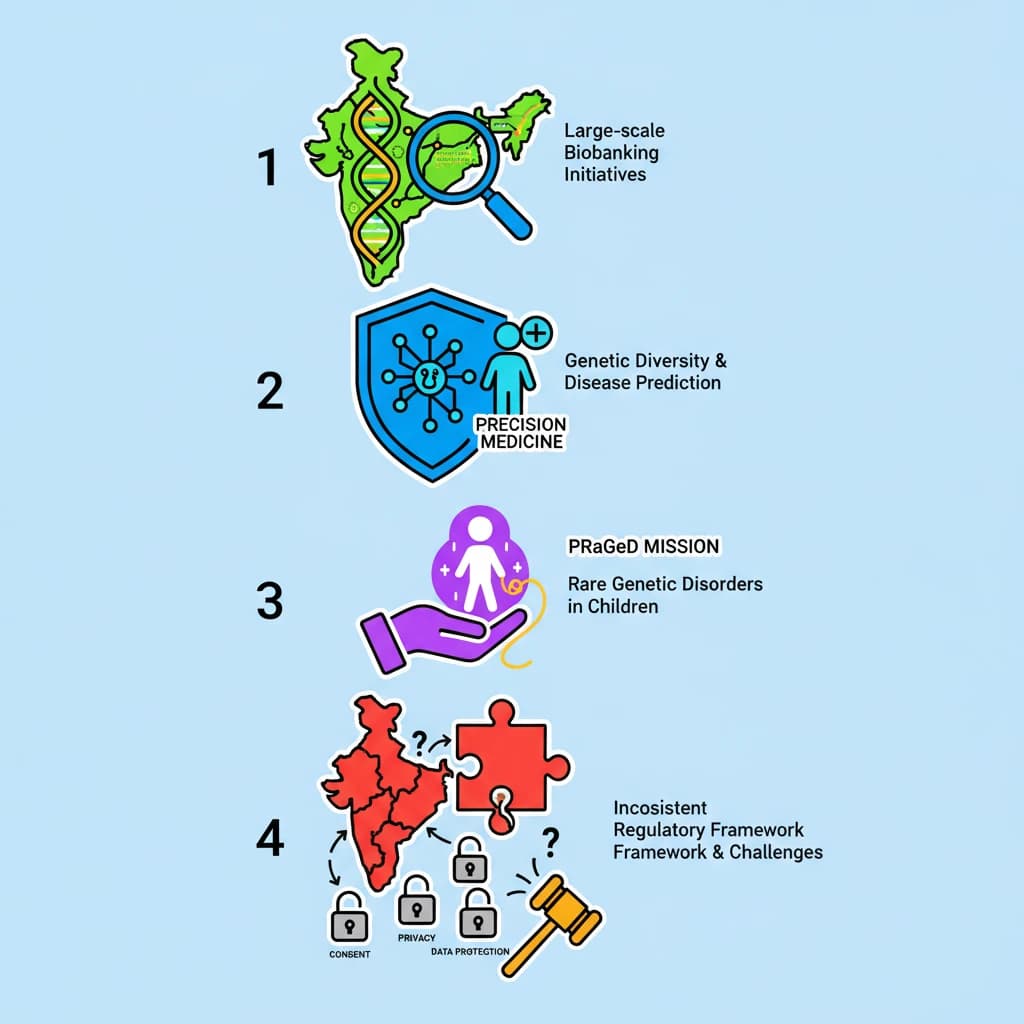
  • •India is actively pursuing large-scale biobanking initiatives like Genome India and Phenome India.
  • •These programs aim to map genetic diversity and understand disease predictors for precision medicine.
  • •The PRaGeD Mission specifically targets rare genetic disorders in children.
  • •A major challenge is India's inconsistent regulatory framework for biobanks, lacking comprehensive rules for consent, privacy, and data protection.
  • •Robust regulations are crucial for realizing biobanking's full potential and ensuring ethical practices.

🧠 Memory Techniques
Memory Aid
95% Verified Content

Related Topics

Loading related topics...
Explore:Science And Technology Topics·All Subjects·Daily Current Affairs·Editorial Analysis·Previous Year Questions·UPSC GPT