Loading page, please wait…
Comparison with Graphene Superconductors - UPSC Science And Technology
What is Comparison with Graphene Superconductors in UPSC Science And Technology?
Comparison with Graphene Superconductors is a key topic under Science And Technology for UPSC Civil Services Examination. Key points include: Graphene superconductors use electron-electron interactions and flat bands; WSe2 primarily uses electron-electron interactions, offering more stability.. Electron-lattice interactions describe forces between electrons and the atomic lattice, crucial for material properties.. Stable superconductivity is vital for quantum computing, advanced electronics, and designing new materials.. Understanding this topic is essential for both UPSC Prelims and Mains preparation.
Why is Comparison with Graphene Superconductors important for UPSC exam?
Comparison with Graphene Superconductors is a Medium-level topic in UPSC Science And Technology. It is tested in both Prelims (factual MCQs) and Mains (analytical answer writing). Previous year UPSC questions have frequently covered aspects of Comparison with Graphene Superconductors, making it essential for comprehensive IAS preparation.
How to prepare Comparison with Graphene Superconductors for UPSC?
To prepare Comparison with Graphene Superconductors for UPSC: (1) Study the comprehensive notes covering all key concepts on Vaidra. (2) Practice previous year questions on this topic. (3) Connect it with current affairs using daily updates. (4) Revise using key takeaways and mind maps available for Science And Technology. (5) Write practice answers linking Comparison with Graphene Superconductors to related GS Paper topics.
Key takeaways of Comparison with Graphene Superconductors for UPSC
- Graphene superconductors use electron-electron interactions and flat bands; WSe2 primarily uses electron-electron interactions, offering more stability.
- Electron-lattice interactions describe forces between electrons and the atomic lattice, crucial for material properties.
- Stable superconductivity is vital for quantum computing, advanced electronics, and designing new materials.
- Superconductivity means zero electrical resistance and expulsion of magnetic fields (Meissner effect) below a critical temperature (Tc).
- Discovered by Heike Kamerlingh-Onnes in 1911, superconductivity is applied in MRI machines (Niobium-Titanium alloy) and Maglev trains.
Comparison with Graphene Superconductors
Medium⏱️ 8 min read
science and technology
📖 Introduction
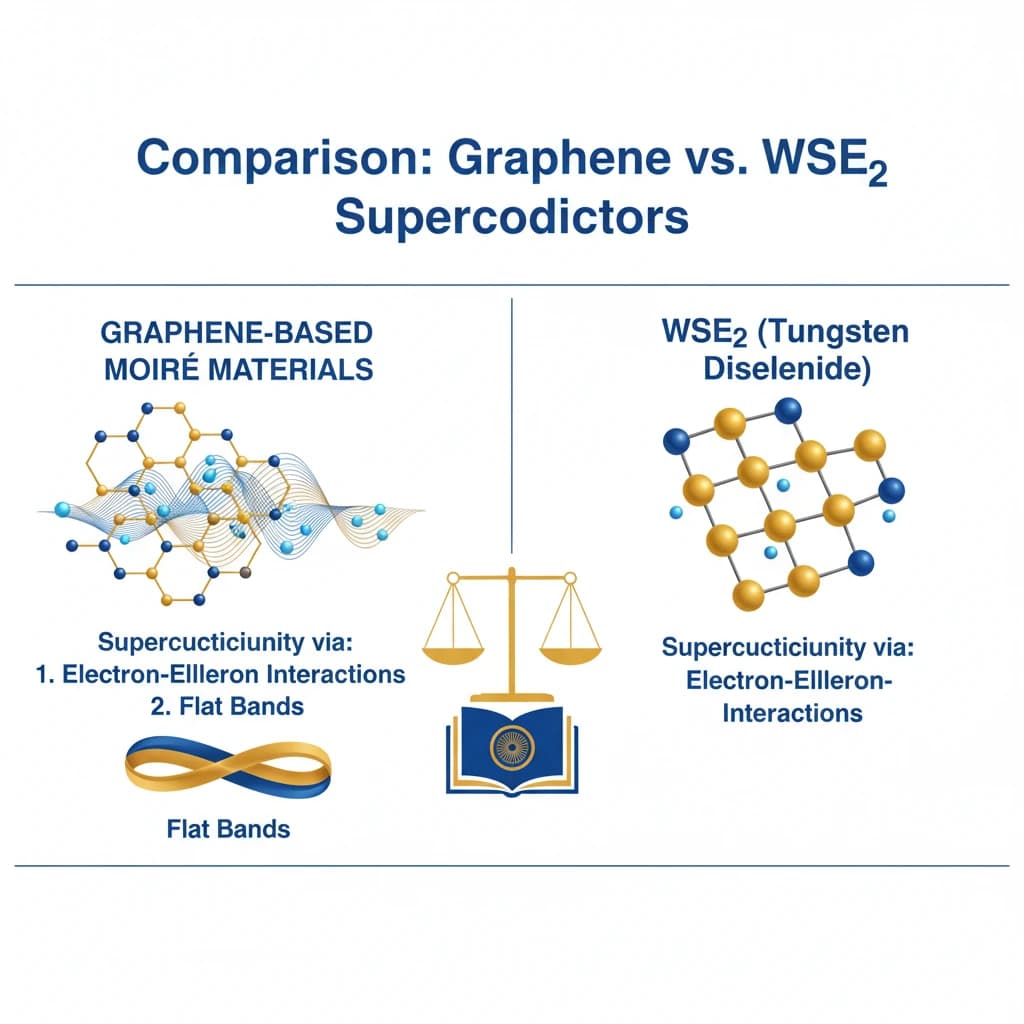
Comparison: Graphene vs. WSe2 Superconductors
Graphene-based moiré materials achieve superconductivity primarily through electron-electron interactions and the formation of flat bands. This mechanism is crucial for their unique superconducting properties.
In contrast, WSe2 (Tungsten Diselenide) relies mainly on electron-electron interactions for its superconductivity. This difference in mechanism makes WSe2 potentially more stable and robust.
The key distinction lies in Graphene's flat-band formation alongside electron interactions, while WSe2 focuses on the interactions alone, contributing to its enhanced stability.
Understanding Electron-Lattice Interactions
Electron-lattice interactions refer to the fundamental forces between electrons and the atomic lattice. The atomic lattice is the ordered arrangement of atoms within a material's crystal structure.
These interactions are vital in determining a material's electrical and thermal properties, including its ability to conduct electricity or exhibit superconductivity.
Significance of Superconducting Discoveries
The discovery of stable superconductivity, even at low temperatures, holds immense significance. It paves the way for practical applications in advanced technological fields.
Such findings are critical for advancements in quantum computing and next-generation electronics, offering pathways to more efficient and powerful devices.
Furthermore, understanding these superconducting mechanisms can greatly aid in the design of entirely new materials. These materials will be crucial for developing future technologies across various sectors.
What is Superconductivity?
Superconductivity is a remarkable physical property observed in certain materials. When cooled below a specific critical temperature (Tc), these materials can conduct direct current (DC) electricity with absolutely no energy loss.
This means that once a current is initiated in a superconducting loop, it can flow indefinitely without any resistance, unlike conventional conductors.
Another defining characteristic of superconductors is their ability to expel magnetic fields. This phenomenon, known as the Meissner effect, occurs as they transition into the superconducting state.
Historical Discovery of Superconductivity
The phenomenon of superconductivity was first discovered in 1911 by the Dutch physicist Heike Kamerlingh-Onnes. He observed it in mercury cooled to liquid helium temperatures.
For his groundbreaking discovery, Heike Kamerlingh-Onnes was awarded the prestigious Nobel Prize in Physics in 1913.
Practical Applications of Superconductivity
Superconductivity has already found significant practical applications in various fields. One prominent example is in Magnetic Resonance Imaging (MRI) machines.
MRI machines utilize powerful superconducting magnets, typically made from an alloy of niobium and titanium, to generate strong, stable magnetic fields for medical diagnostics.
💡 Key Takeaways
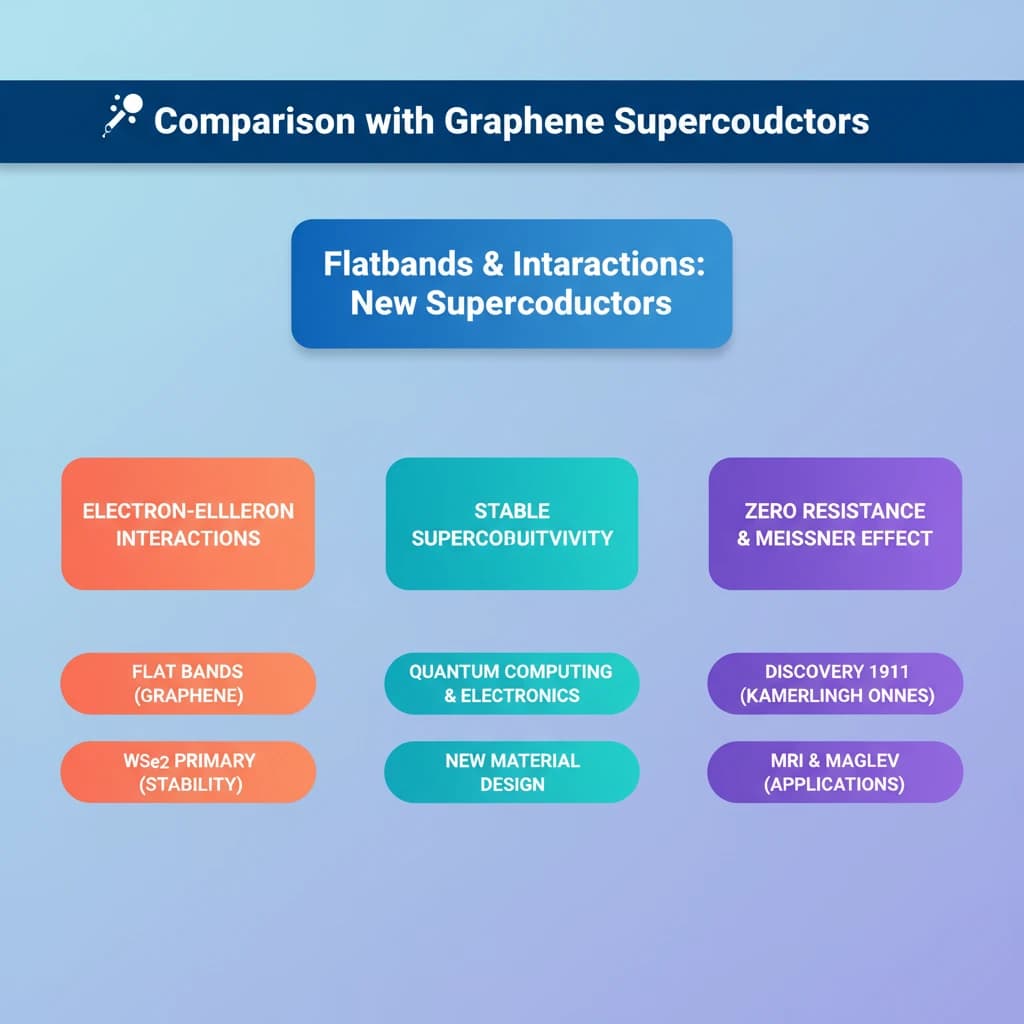
- •Graphene superconductors use electron-electron interactions and flat bands; WSe2 primarily uses electron-electron interactions, offering more stability.
- •Electron-lattice interactions describe forces between electrons and the atomic lattice, crucial for material properties.
- •Stable superconductivity is vital for quantum computing, advanced electronics, and designing new materials.
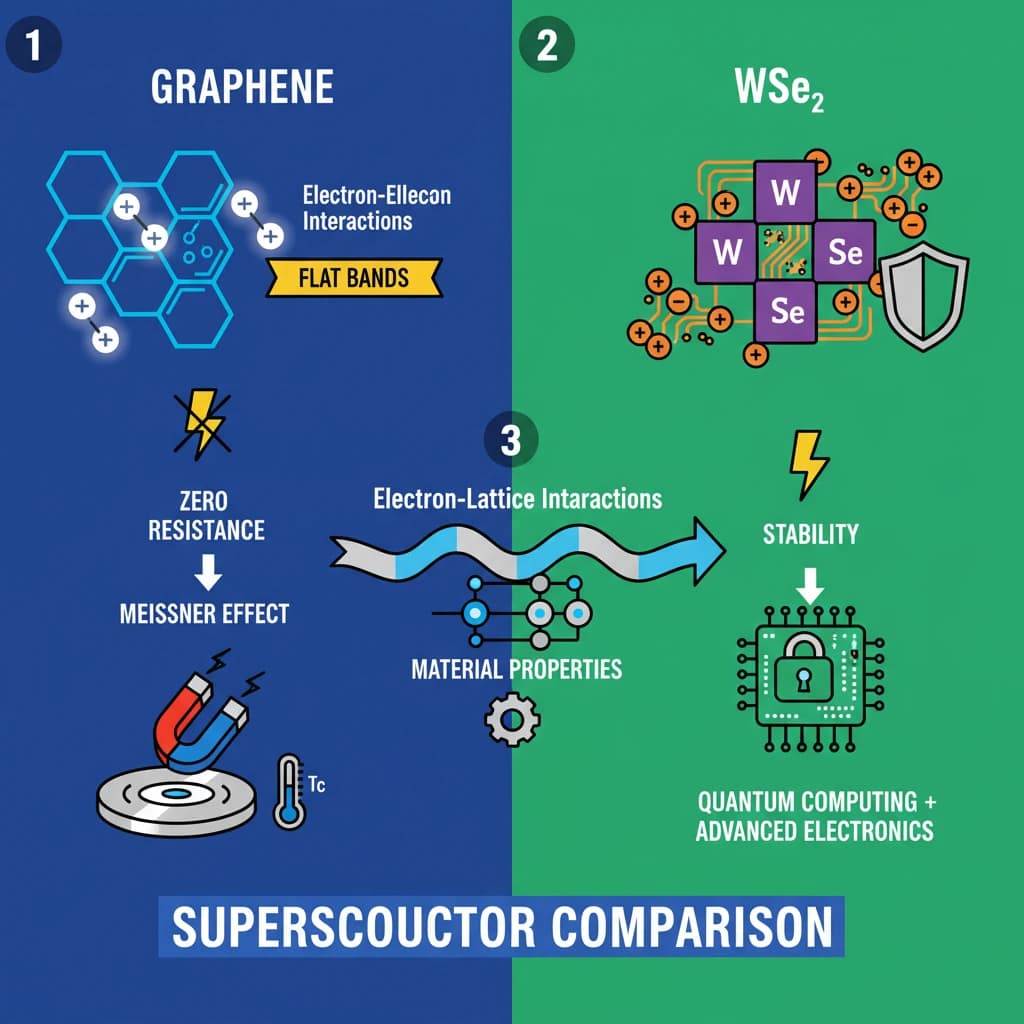
- •Superconductivity means zero electrical resistance and expulsion of magnetic fields (Meissner effect) below a critical temperature (Tc).
- •Discovered by Heike Kamerlingh-Onnes in 1911, superconductivity is applied in MRI machines (Niobium-Titanium alloy) and Maglev trains.
🧠 Memory Techniques
98% Verified Content
📚 Reference Sources
•Standard Physics Textbooks (e.g., Halliday, Resnick, Walker for Superconductivity basics)
•Scientific articles on Graphene and WSe2 superconductivity (general knowledge base)