Last Universal Common Ancestor (LUCA) - UPSC Science And Technology
What is Last Universal Common Ancestor (LUCA) in UPSC Science And Technology?
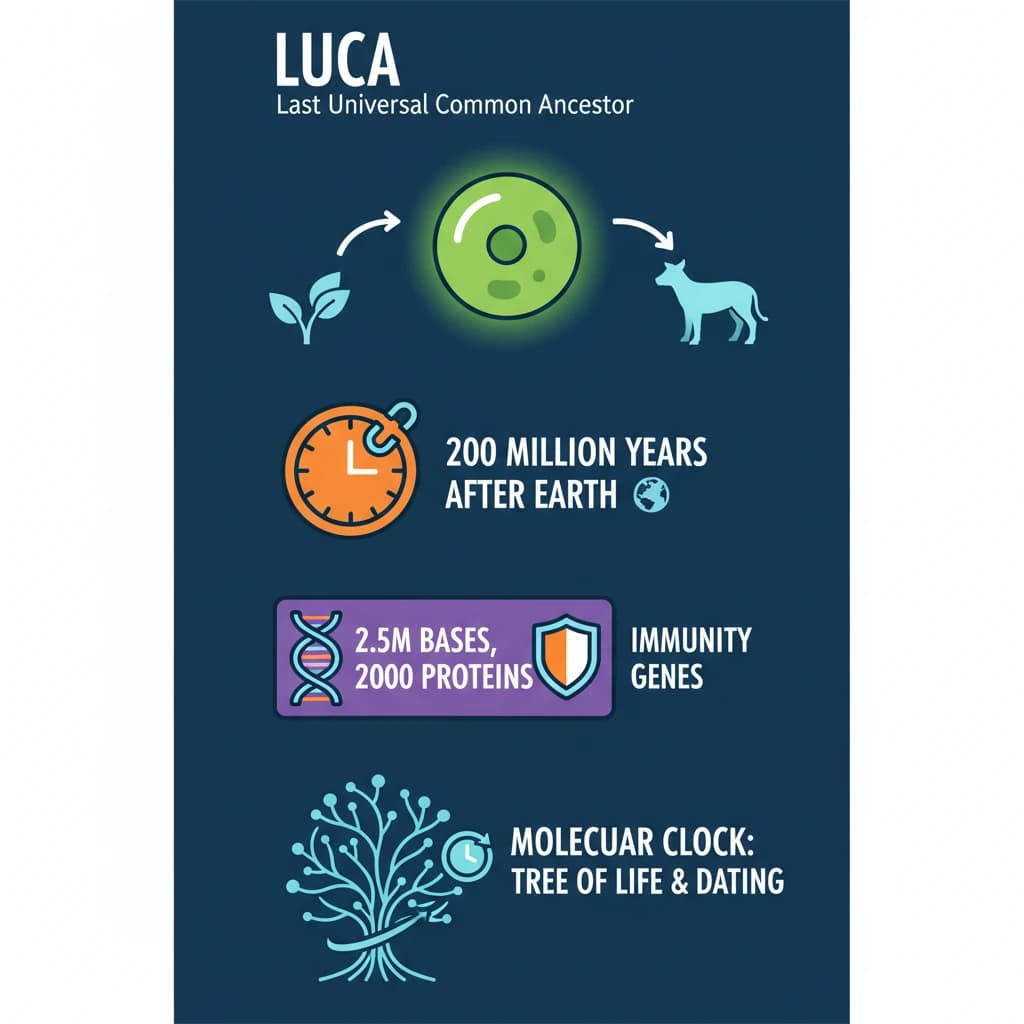
Last Universal Common Ancestor (LUCA) is a key topic under Science And Technology for UPSC Civil Services Examination. Key points include: LUCA is the Last Universal Common Ancestor, the single cell from which all life on Earth diverged.. Recent studies suggest LUCA formed about 200 million years after Earth, earlier than previously thought.. LUCA had a small genome (2.5M bases, 2000 proteins) and possibly immunity genes.. Understanding this topic is essential for both UPSC Prelims and Mains preparation.
Why is Last Universal Common Ancestor (LUCA) important for UPSC exam?
Last Universal Common Ancestor (LUCA) is a Medium-level topic in UPSC Science And Technology. It is tested in both Prelims (factual MCQs) and Mains (analytical answer writing). Previous year UPSC questions have frequently covered aspects of Last Universal Common Ancestor (LUCA), making it essential for comprehensive IAS preparation.
How to prepare Last Universal Common Ancestor (LUCA) for UPSC?
To prepare Last Universal Common Ancestor (LUCA) for UPSC: (1) Study the comprehensive notes covering all key concepts on Vaidra. (2) Practice previous year questions on this topic. (3) Connect it with current affairs using daily updates. (4) Revise using key takeaways and mind maps available for Science And Technology. (5) Write practice answers linking Last Universal Common Ancestor (LUCA) to related GS Paper topics.
Key takeaways of Last Universal Common Ancestor (LUCA) for UPSC
- LUCA is the Last Universal Common Ancestor, the single cell from which all life on Earth diverged.
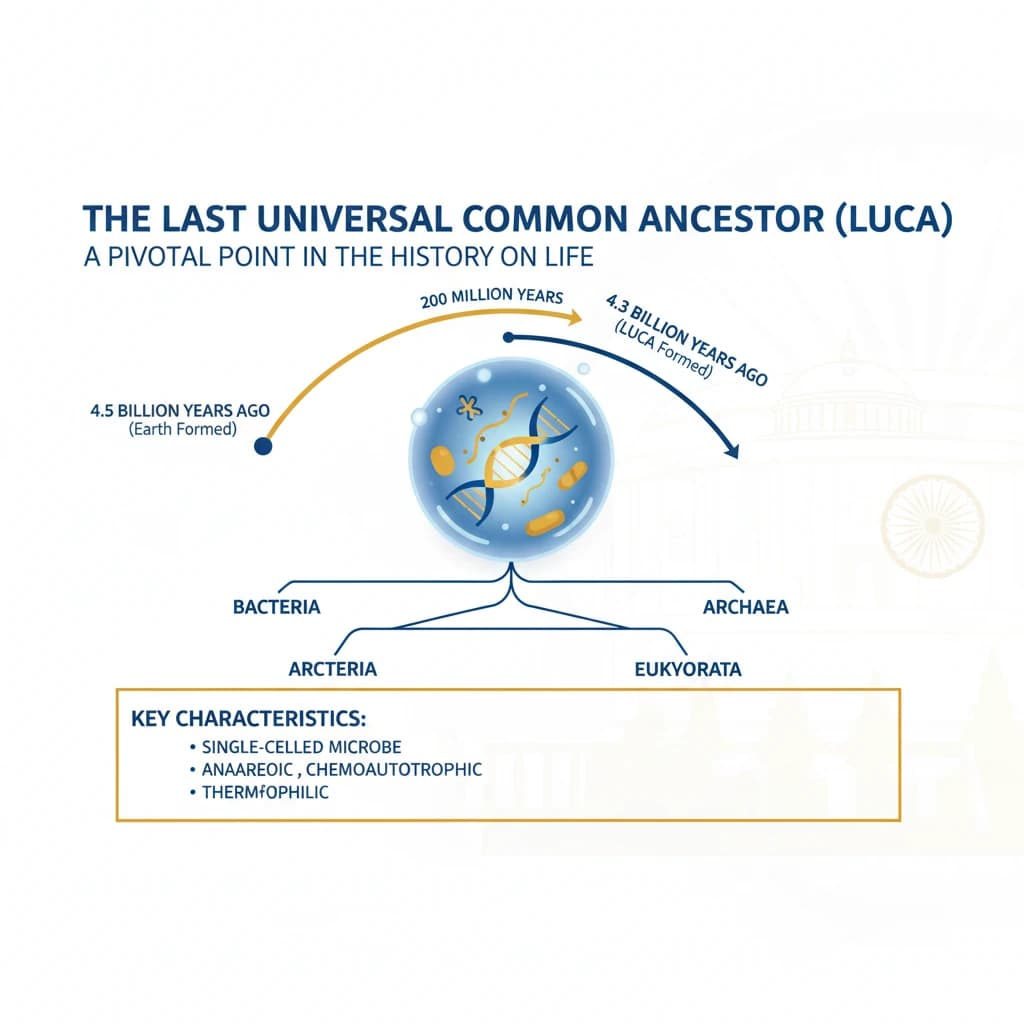
- Recent studies suggest LUCA formed about 200 million years after Earth, earlier than previously thought.
- LUCA had a small genome (2.5M bases, 2000 proteins) and possibly immunity genes.
- The Molecular Clock theory uses mutation rates to reconstruct the 'tree of life' and date evolutionary events.
- Competing theories for life's origin include Oparin-Haldane (primordial soup, supported by Miller-Urey experiment) and Panspermia (extraterrestrial origin).
- Research on LUCA is crucial for astrobiology, synthetic biology, and understanding Earth's evolutionary history.
- Recent discovery of "obelisks" highlights ongoing exploration of fundamental life forms.
Last Universal Common Ancestor (LUCA)
📖 Introduction
💡 Key Takeaways
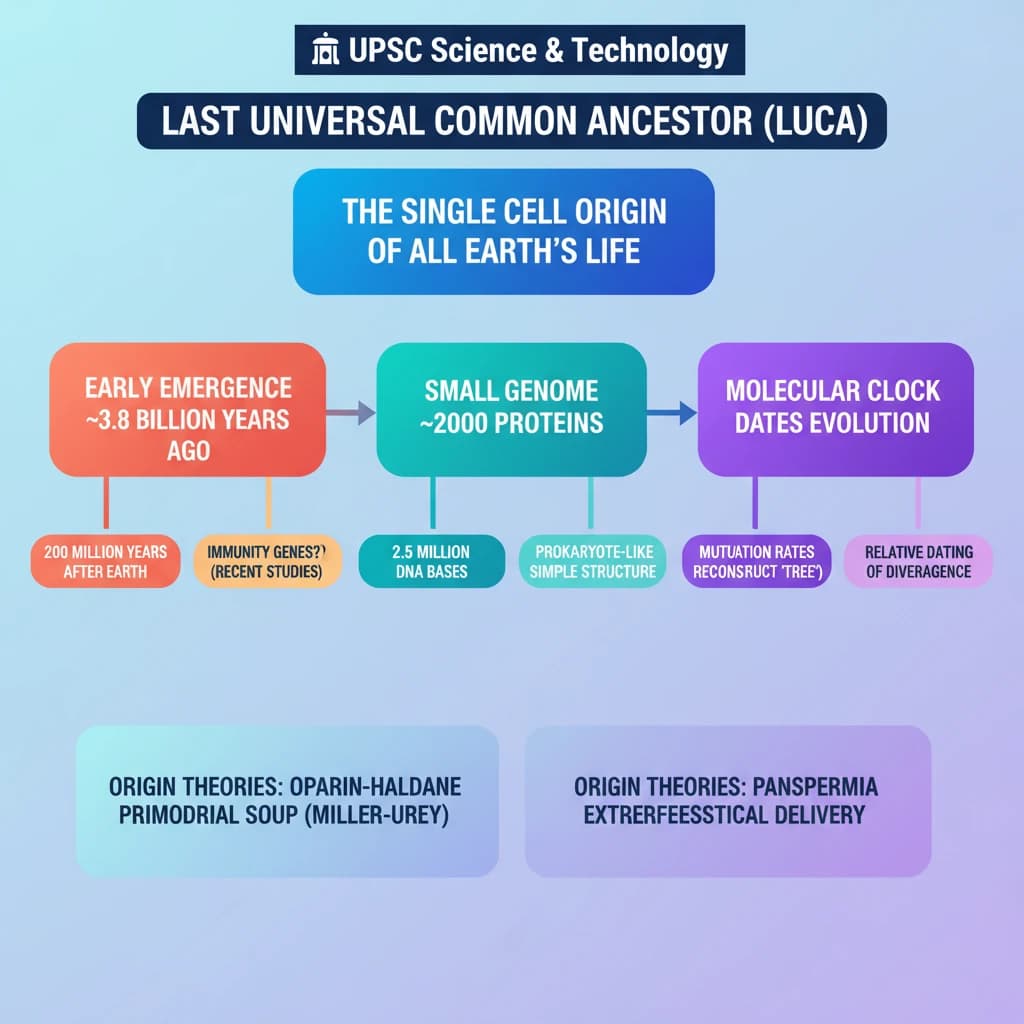
- •LUCA is the Last Universal Common Ancestor, the single cell from which all life on Earth diverged.
- •Recent studies suggest LUCA formed about 200 million years after Earth, earlier than previously thought.
- •LUCA had a small genome (2.5M bases, 2000 proteins) and possibly immunity genes.
- •The Molecular Clock theory uses mutation rates to reconstruct the 'tree of life' and date evolutionary events.
- •Competing theories for life's origin include Oparin-Haldane (primordial soup, supported by Miller-Urey experiment) and Panspermia (extraterrestrial origin).
- •Research on LUCA is crucial for astrobiology, synthetic biology, and understanding Earth's evolutionary history.
- •Recent discovery of "obelisks" highlights ongoing exploration of fundamental life forms.
🧠 Memory Techniques