Loading page, please wait…
Difference Between Small Pox, Chicken Pox, Mpox - UPSC Science And Technology
What is Difference Between Small Pox, Chicken Pox, Mpox in UPSC Science And Technology?
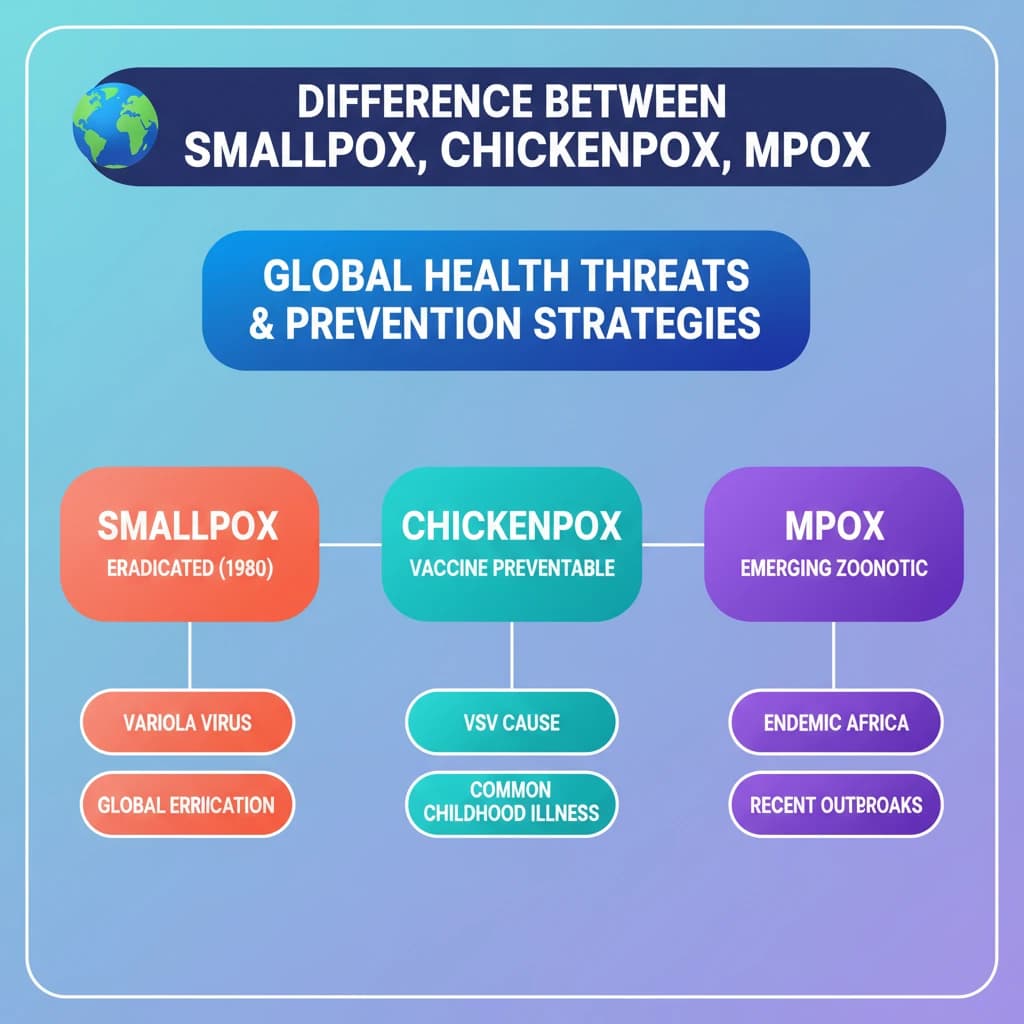
Difference Between Small Pox, Chicken Pox, Mpox is a key topic under Science And Technology for UPSC Civil Services Examination. Key points include: Smallpox is the only human disease eradicated globally (1980) by the Variola virus.. Mpox (Monkeypox) is an emerging zoonotic disease, endemic in Africa, with recent global outbreaks.. Chickenpox, caused by VZV, is a common childhood illness, now largely preventable by routine vaccination.. Understanding this topic is essential for both UPSC Prelims and Mains preparation.
Why is Difference Between Small Pox, Chicken Pox, Mpox important for UPSC exam?
Difference Between Small Pox, Chicken Pox, Mpox is a Medium-level topic in UPSC Science And Technology. It is tested in both Prelims (factual MCQs) and Mains (analytical answer writing). Previous year UPSC questions have frequently covered aspects of Difference Between Small Pox, Chicken Pox, Mpox, making it essential for comprehensive IAS preparation.
How to prepare Difference Between Small Pox, Chicken Pox, Mpox for UPSC?
To prepare Difference Between Small Pox, Chicken Pox, Mpox for UPSC: (1) Study the comprehensive notes covering all key concepts on Vaidra. (2) Practice previous year questions on this topic. (3) Connect it with current affairs using daily updates. (4) Revise using key takeaways and mind maps available for Science And Technology. (5) Write practice answers linking Difference Between Small Pox, Chicken Pox, Mpox to related GS Paper topics.
Key takeaways of Difference Between Small Pox, Chicken Pox, Mpox for UPSC
- Smallpox is the only human disease eradicated globally (1980) by the Variola virus.
- Mpox (Monkeypox) is an emerging zoonotic disease, endemic in Africa, with recent global outbreaks.
- Chickenpox, caused by VZV, is a common childhood illness, now largely preventable by routine vaccination.
- Prostate cancer is a rising NCD globally, particularly in India, with high mortality due to late-stage diagnosis.
- Key risk factors for prostate cancer include age, genetics, diet, and lifestyle.
- Early diagnosis and robust public health infrastructure are crucial for managing both infectious diseases and NCDs.
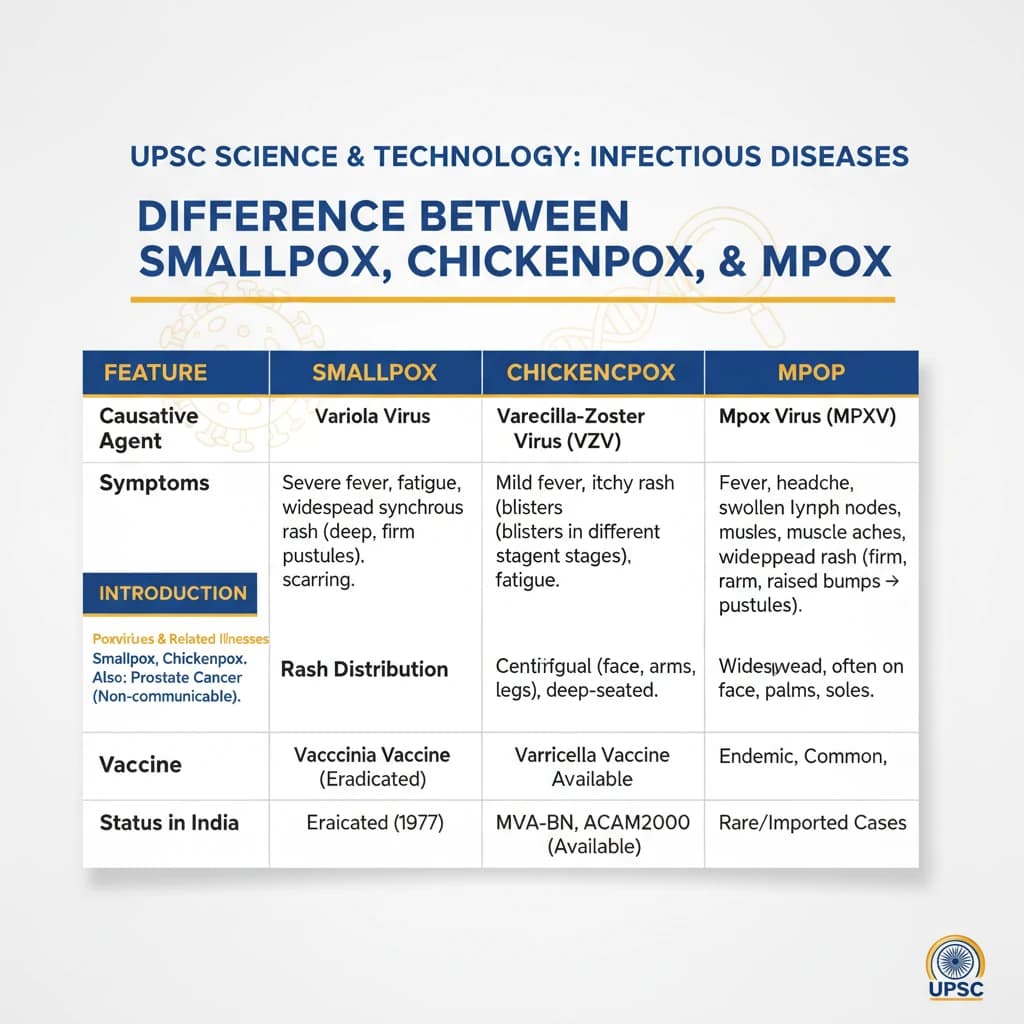
Difference Between Small Pox, Chicken Pox, Mpox
Medium⏱️ 12 min read
science and technology
📖 Introduction
Introduction to Poxviruses and Related Illnesses
This section provides a detailed comparison of three significant viral diseases: Smallpox, Mpox (formerly Monkeypox), and Chickenpox. Understanding their differences is crucial for public health and disease management.
We will also delve into Prostate Cancer, a non-communicable disease with a rising incidence globally, particularly in India.
Smallpox: The Eradicated Scourge
Smallpox was a highly contagious and often fatal infectious disease caused by the Variola virus. It was characterized by a distinctive, widespread rash.
Virus: Variola virus
Severity: Highly severe, often fatal
Status: Officially eradicated globally in 1980 following a successful worldwide vaccination campaign.
Its transmission was primarily through respiratory droplets and direct contact with infected lesions, making it highly contagious.
Chickenpox: A Common Childhood Illness
Chickenpox is a highly contagious disease caused by the Varicella-zoster virus (VZV). It is generally milder than smallpox or mpox.
Virus: Varicella-zoster virus (VZV)
Severity: Mild
Status: A common childhood illness, its prevalence has significantly decreased due to routine vaccination programs.
Transmission occurs through respiratory droplets and direct contact with the fluid from infected lesions. Symptoms include fever, fatigue, and an itchy, fluid-filled rash.
Mpox (Monkeypox): An Emerging Zoonotic Threat
Mpox is a viral zoonotic disease caused by the Monkeypox virus. It presents with symptoms similar to smallpox but is generally milder.
Virus: Monkeypox virus
Severity: Milder than smallpox, rarely fatal
Status: Endemic in Central and West Africa, with increasing cases emerging in other parts of the world, highlighting its potential for wider spread.
Transmission involves contact with infected animals, lesions, or bodily fluids. Symptoms include fever, headache, swollen lymph nodes, followed by a characteristic rash.
Comparative Analysis of Viral Diseases
Understanding the distinctions between these diseases is vital for accurate diagnosis, public health interventions, and vaccination strategies.
| Feature | Smallpox | Mpox | Chickenpox |
|---|---|---|---|
| Virus | Variola virus | Monkeypox virus | Varicella-zoster virus (VZV) |
| Severity | Highly severe, often fatal | Milder than smallpox, rarely fatal | Mild |
| Status | Eradicated in 1980 | Endemic in Central and West Africa, cases emerging elsewhere | Common childhood illness, less common due to vaccination |
| Transmission | Highly contagious through respiratory droplets and contact with infected lesions | Spread through contact with infected animals, lesions, or bodily fluids | Highly contagious through respiratory droplets and contact with infected lesions |
| Symptoms | Fever, headache, severe fatigue, vomiting, followed by a deep-seated, pus-filled rash | Fever, headache, swollen lymph nodes, followed by a rash that progresses through stages | Fever, fatigue, loss of appetite, followed by an itchy, fluid-filled rash |
| Vaccination | No longer needed | Not routinely recommended, may be given to high-risk individuals | Routine vaccination for children and adults who haven’t had chickenpox |
Prostate Cancer: An Overview
Prostate cancer is a significant public health concern, particularly in India, where a recent Lancet Commission paper highlighted an alarming rise in cases and associated mortality.
In India, a large number of patients are diagnosed with advanced-stage cancer, leading to a 65% mortality rate, underscoring the need for early detection and awareness.
What is Prostate Cancer?
Prostate cancer develops in the prostate, a small gland in the male reproductive system. This gland is located below the bladder and plays a crucial role in producing fluid that nourishes and transports sperm.
The prostate gland is vital for male reproductive health, and its malfunction can lead to significant health issues.
Global and Indian Prevalence of Prostate Cancer
Globally, prostate cancer cases are projected to double by 2040, with low and middle-income countries facing the most significant increase. India is expected to see new cases reach 71,000 annually.
In 2020, prostate cancer was responsible for approximately 375,000 deaths worldwide, making it the fifth leading cause of cancer-related deaths in men.
In India, prostate cancer currently accounts for 3% of all cancers, with an estimated 33,000-42,000 new cases annually.
Aging populations and increasing life expectancy contribute to a higher number of older men, which in turn increases the risk of developing prostate cancer.
Key Risk Factors for Prostate Cancer
Several factors can increase an individual's risk of developing prostate cancer:
- Age: Especially individuals over 50 years.
- Genetics: A family history of prostate cancer.
- Diet: Certain dietary patterns may increase risk.
- Obesity: Higher body mass index is linked to increased risk.
- Smoking: Tobacco use is a known carcinogen.
- Chemical exposure: Contact with certain chemicals.
- Prostate inflammation: Chronic inflammation of the prostate.
- Hormonal factors: Imbalances or specific hormonal profiles.
Symptoms of Prostate Cancer
Early-stage prostate cancer is typically asymptomatic, making early detection challenging. However, as the disease progresses, certain symptoms may appear:
- Difficulty urinating: Hesitancy or a weak stream.
- Frequent urination: Especially at night (nocturia).
- Blood in the urine: (hematuria) or semen.
- Erectile dysfunction: Problems achieving or maintaining an erection.
- Lower back or thigh pain: Indicative of advanced disease or metastasis.
UPSC Insight: Awareness of asymptomatic early stages and the importance of screening for diseases like prostate cancer is a critical public health concept for GS-II (Health).
💡 Key Takeaways
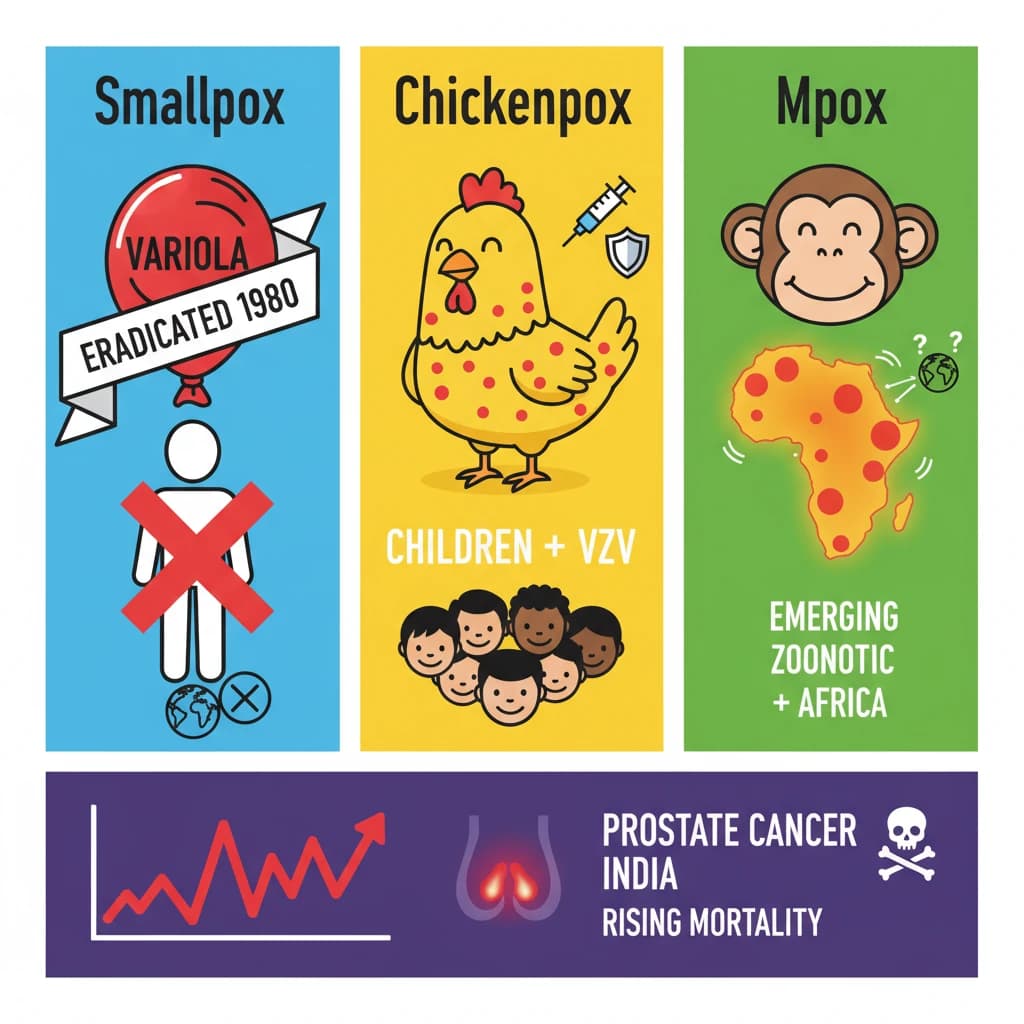
- •Smallpox is the only human disease eradicated globally (1980) by the Variola virus.
- •Mpox (Monkeypox) is an emerging zoonotic disease, endemic in Africa, with recent global outbreaks.
- •Chickenpox, caused by VZV, is a common childhood illness, now largely preventable by routine vaccination.
- •Prostate cancer is a rising NCD globally, particularly in India, with high mortality due to late-stage diagnosis.
- •Key risk factors for prostate cancer include age, genetics, diet, and lifestyle.
- •Early diagnosis and robust public health infrastructure are crucial for managing both infectious diseases and NCDs.
🧠 Memory Techniques
95% Verified Content
📚 Reference Sources
•The Lancet Commission on Prostate Cancer - Recent Reports
•Centers for Disease Control and Prevention (CDC) - Smallpox, Chickenpox, Mpox Information
•Drishti IAS - Original Summary
•Ministry of Health & Family Welfare, Government of India - National Programme for Prevention and Control of Cancer, Diabetes, Cardiovascular Diseases and Stroke (NPCDCS)