Loading page, please wait…
Vaidra Logo
Vaidra

Top 4 items + smart groups

UPSC GPT
New
Current Affairs
Daily Solutions
Daily Puzzle
Mains Evaluator

Version 2.0.0 • Built with ❤️ for UPSC aspirants

Loading...
Loading...
Loading...
Loading...
Loading...
Loading...
Loading...
Loading...
Loading...
Loading...
Loading...
Loading...
Loading...
Back
All Subjects

Topics

0 topics • 0 completed

Loading topics...
Loading...
Loading...
Loading...
Loading...
Loading...
Overall Progress0%

Light Pollution - UPSC Science And Technology

What is Light Pollution in UPSC Science And Technology?

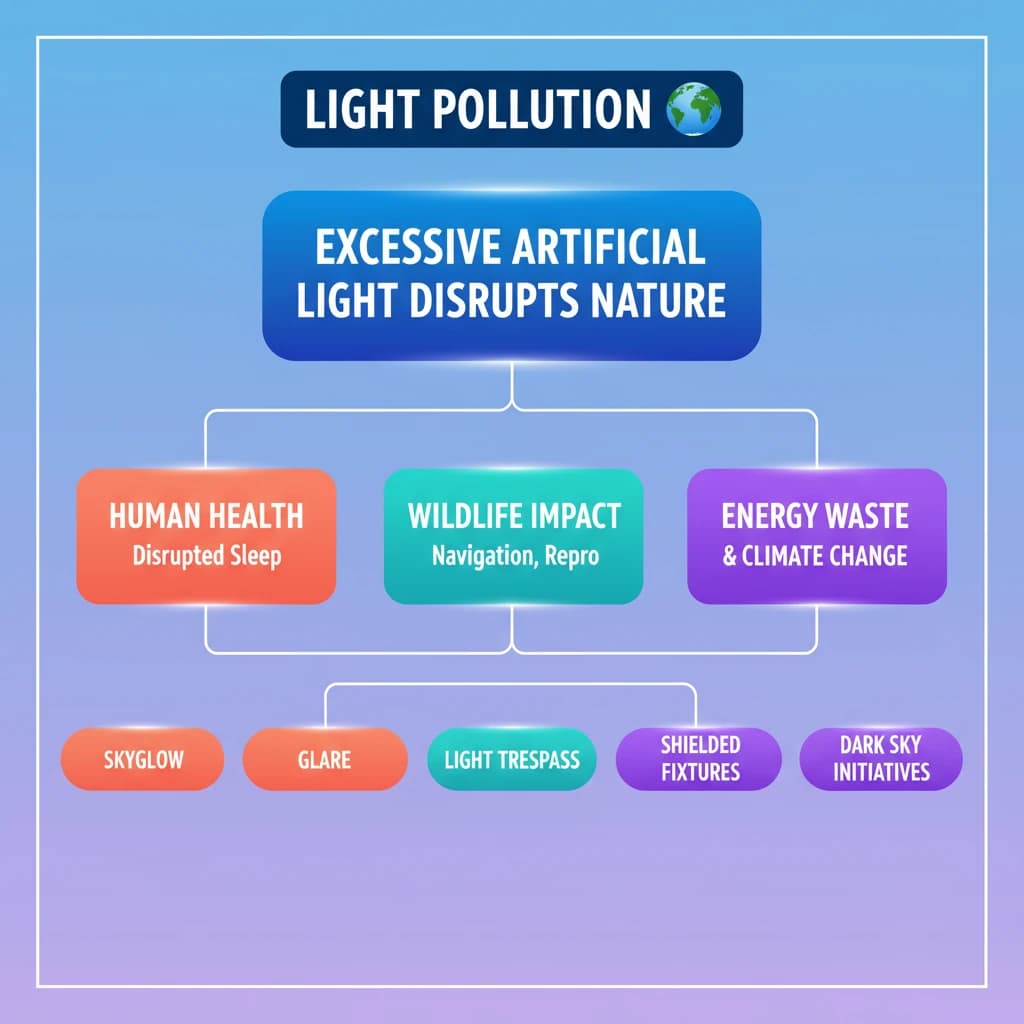
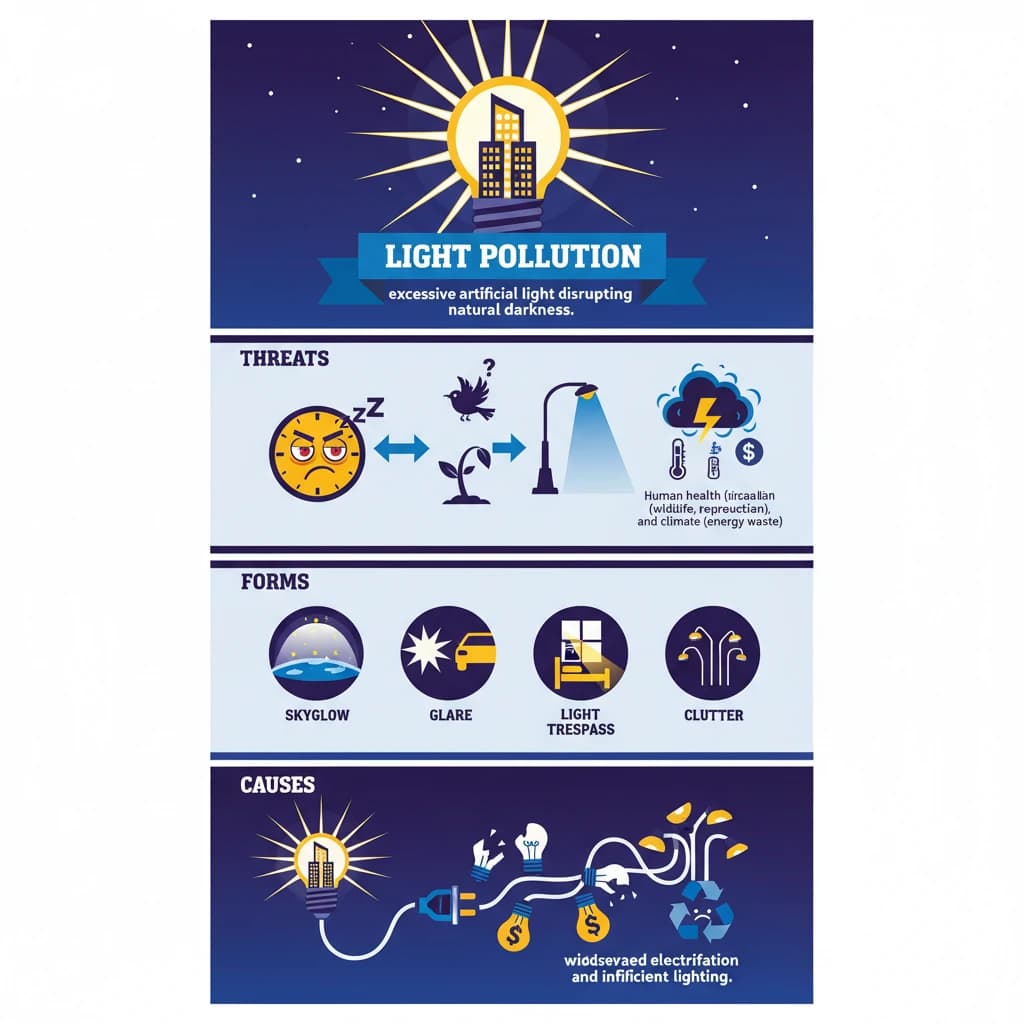
Light Pollution is a key topic under Science And Technology for UPSC Civil Services Examination. Key points include: Light Pollution is excessive or inappropriate artificial lighting disrupting natural darkness.. It poses significant threats to human health (circadian rhythm), wildlife (navigation, reproduction), and climate (energy waste).. Key forms include skyglow, glare, light trespass, and clutter.. Understanding this topic is essential for both UPSC Prelims and Mains preparation.

Why is Light Pollution important for UPSC exam?

Light Pollution is a Medium-level topic in UPSC Science And Technology. It is tested in both Prelims (factual MCQs) and Mains (analytical answer writing). Previous year UPSC questions have frequently covered aspects of Light Pollution, making it essential for comprehensive IAS preparation.

How to prepare Light Pollution for UPSC?

To prepare Light Pollution for UPSC: (1) Study the comprehensive notes covering all key concepts on Vaidra. (2) Practice previous year questions on this topic. (3) Connect it with current affairs using daily updates. (4) Revise using key takeaways and mind maps available for Science And Technology. (5) Write practice answers linking Light Pollution to related GS Paper topics.

Key takeaways of Light Pollution for UPSC

  • Light Pollution is excessive or inappropriate artificial lighting disrupting natural darkness.
  • It poses significant threats to human health (circadian rhythm), wildlife (navigation, reproduction), and climate (energy waste).
  • Key forms include skyglow, glare, light trespass, and clutter.
  • Its rise is linked to widespread electrification and inefficient lighting practices.
  • Mitigation involves responsible lighting design: shielded fixtures, dimmers, warm-spectrum lights, and dark sky initiatives.
Light Pollution

Light Pollution

Medium⏱️ 8 min read✓ 95% Verified
science and technology

📖 Introduction

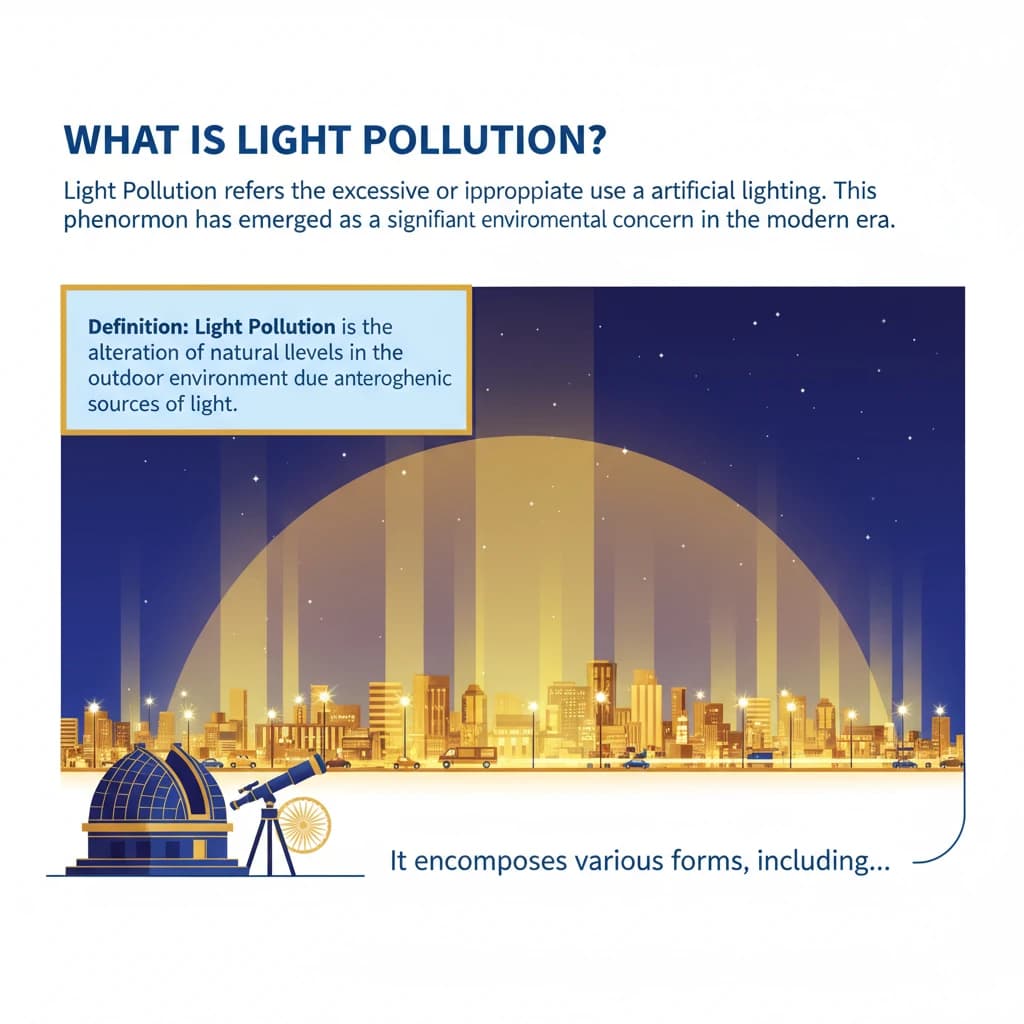
<h4>What is Light Pollution?</h4><p><strong>Light Pollution</strong> refers to the excessive or inappropriate use of <strong>artificial lighting</strong>. This phenomenon has emerged as a significant environmental concern in the modern era.</p><div class='info-box'><p><strong>Definition:</strong> <strong>Light Pollution</strong> is the alteration of natural light levels in the outdoor environment due to anthropogenic sources of light.</p></div><p>It encompasses various forms, including <strong>skyglow</strong>, <strong>glare</strong>, <strong>light trespass</strong>, and <strong>clutter</strong>. These forms collectively contribute to its detrimental effects on ecosystems and human well-being.</p><h4>Significant Environmental Threats</h4><p>The presence of excessive artificial light poses substantial threats across multiple domains. These impacts are often interconnected, creating a cascade of negative consequences.</p><ul><li><strong>Human Health:</strong> Disrupts the natural <strong>circadian rhythm</strong>, leading to sleep disorders, increased risk of certain diseases, and psychological stress.</li><li><strong>Wildlife:</strong> Affects nocturnal animals' navigation, foraging, reproduction, and predator-prey dynamics. It can disorient migratory birds and sea turtles.</li><li><strong>Climate and Energy:</strong> Wasted light often means wasted energy, contributing to higher carbon emissions. Inefficient lighting systems exacerbate this issue.</li><li><strong>Astronomical Observation:</strong> <strong>Skyglow</strong> significantly reduces the visibility of stars and other celestial objects, impacting scientific research and cultural heritage.</li></ul><div class='exam-tip-box'><p><strong>UPSC Insight:</strong> Understanding the multifaceted impacts of <strong>Light Pollution</strong> is crucial. Be prepared to discuss its environmental, social, and economic dimensions, linking it to topics like <strong>biodiversity conservation</strong>, <strong>public health</strong>, and <strong>sustainable urban planning</strong> in <strong>GS-III</strong> and <strong>GS-I (Geography)</strong>.</p></div>
Concept Diagram

💡 Key Takeaways

  • •Light Pollution is excessive or inappropriate artificial lighting disrupting natural darkness.
  • •It poses significant threats to human health (circadian rhythm), wildlife (navigation, reproduction), and climate (energy waste).
  • •Key forms include skyglow, glare, light trespass, and clutter.
  • •Its rise is linked to widespread electrification and inefficient lighting practices.
  • •Mitigation involves responsible lighting design: shielded fixtures, dimmers, warm-spectrum lights, and dark sky initiatives.

🧠 Memory Techniques
Memory Aid
95% Verified Content

📚 Reference Sources

•United Nations Environment Programme (UNEP) reports on environmental issues
•Scientific journals on ecology, chronobiology, and urban planning
•Government reports on energy efficiency and environmental conservation

Related Topics

Loading related topics...
Explore:Science And Technology Topics·All Subjects·Daily Current Affairs·Editorial Analysis·Previous Year Questions·UPSC GPT
Light Pollution - UPSC Science And Technology