Loading page, please wait…
Vaidra Logo
Vaidra

Top 4 items + smart groups

UPSC GPT
New
Current Affairs
Daily Solutions
Daily Puzzle
Mains Evaluator

Version 2.0.0 • Built with ❤️ for UPSC aspirants

Loading...
Loading...
Loading...
Loading...
Loading...
Loading...
Loading...
Loading...
Loading...
Loading...
Loading...
Loading...
Loading...
What are the Challenges Associated with LEO? - UPSC Science And Technology
Back
All Subjects

Topics

0 topics • 0 completed

Loading topics...
Loading...
Loading...
Loading...
Loading...
Loading...
Overall Progress0%

What are the Challenges Associated with LEO? - UPSC Science And Technology

What is What are the Challenges Associated with LEO? in UPSC Science And Technology?

What are the Challenges Associated with LEO? is a key topic under Science And Technology for UPSC Civil Services Examination. Key points include: LEO congestion is driven by increasing satellite launches, especially mega-constellations.. Space debris (defunct satellites, rocket stages, fragments) poses significant collision risks.. The Kessler Syndrome describes a cascade of collisions making LEO unusable.. Understanding this topic is essential for both UPSC Prelims and Mains preparation.

Why is What are the Challenges Associated with LEO? important for UPSC exam?

What are the Challenges Associated with LEO? is a Medium-level topic in UPSC Science And Technology. It is tested in both Prelims (factual MCQs) and Mains (analytical answer writing). Previous year UPSC questions have frequently covered aspects of What are the Challenges Associated with LEO?, making it essential for comprehensive IAS preparation.

How to prepare What are the Challenges Associated with LEO? for UPSC?

To prepare What are the Challenges Associated with LEO? for UPSC: (1) Study the comprehensive notes covering all key concepts on Vaidra. (2) Practice previous year questions on this topic. (3) Connect it with current affairs using daily updates. (4) Revise using key takeaways and mind maps available for Science And Technology. (5) Write practice answers linking What are the Challenges Associated with LEO? to related GS Paper topics.

Key takeaways of What are the Challenges Associated with LEO? for UPSC

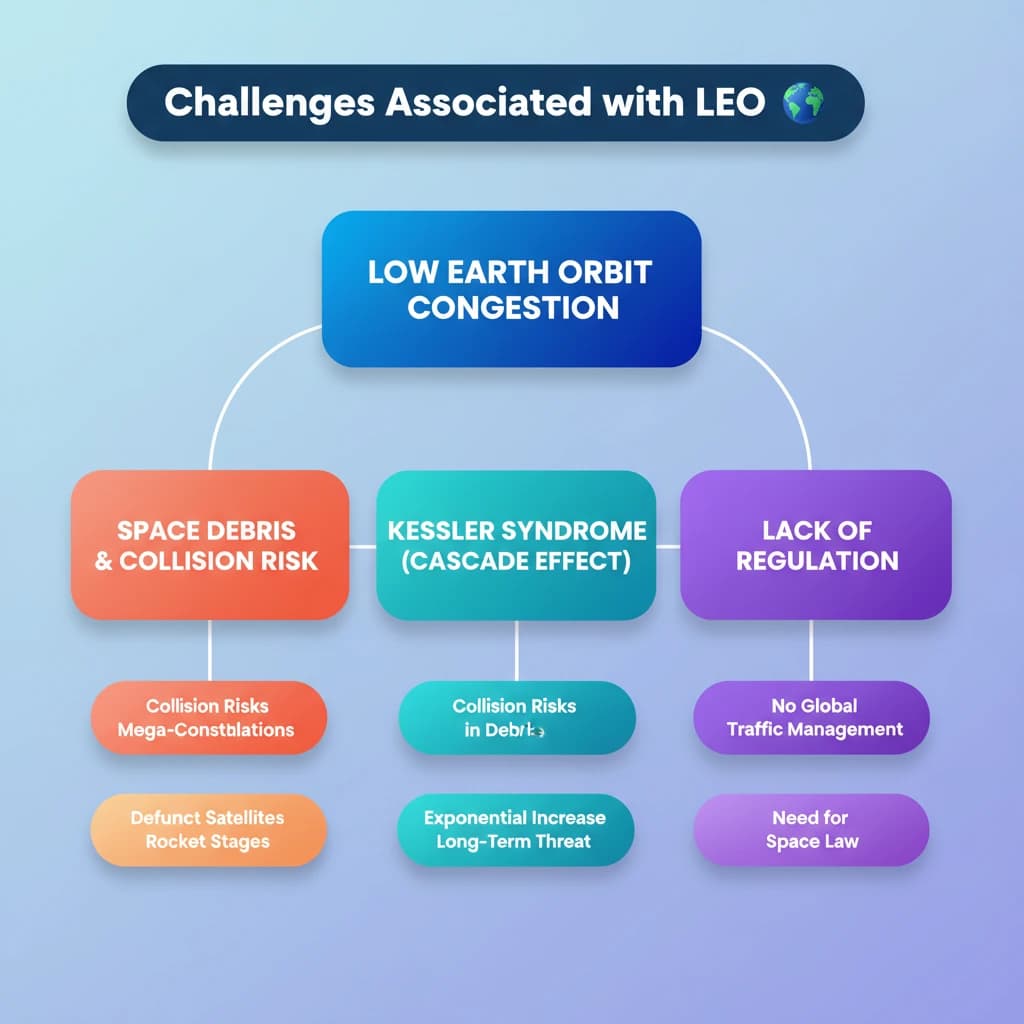
  • LEO congestion is driven by increasing satellite launches, especially mega-constellations.
  • Space debris (defunct satellites, rocket stages, fragments) poses significant collision risks.
  • The Kessler Syndrome describes a cascade of collisions making LEO unusable.
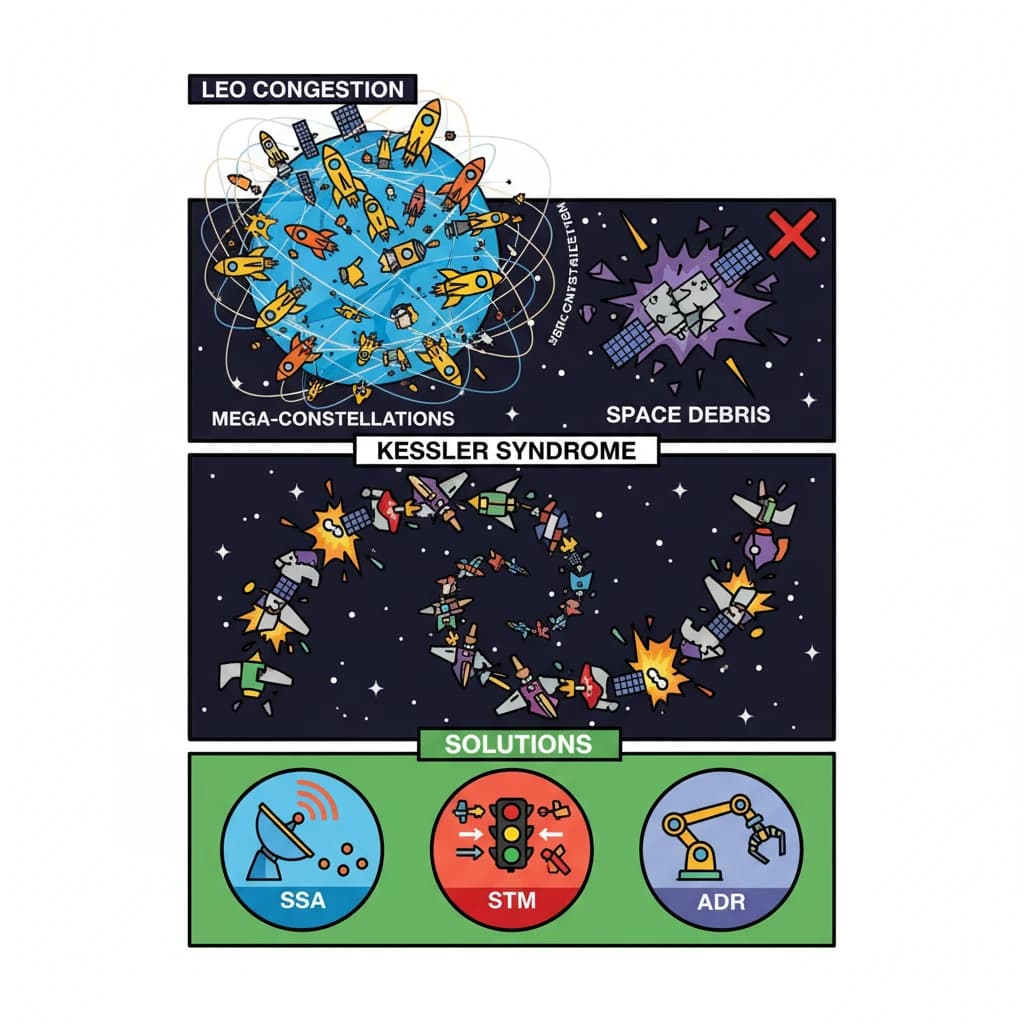
  • Solutions include Space Situational Awareness (SSA), Space Traffic Management (STM), and Active Debris Removal (ADR).
  • International cooperation and "design for demise" principles are crucial for LEO sustainability.
What are the Challenges Associated with LEO?

What are the Challenges Associated with LEO?

Medium⏱️ 8 min read✓ 95% Verified
science and technology

📖 Introduction

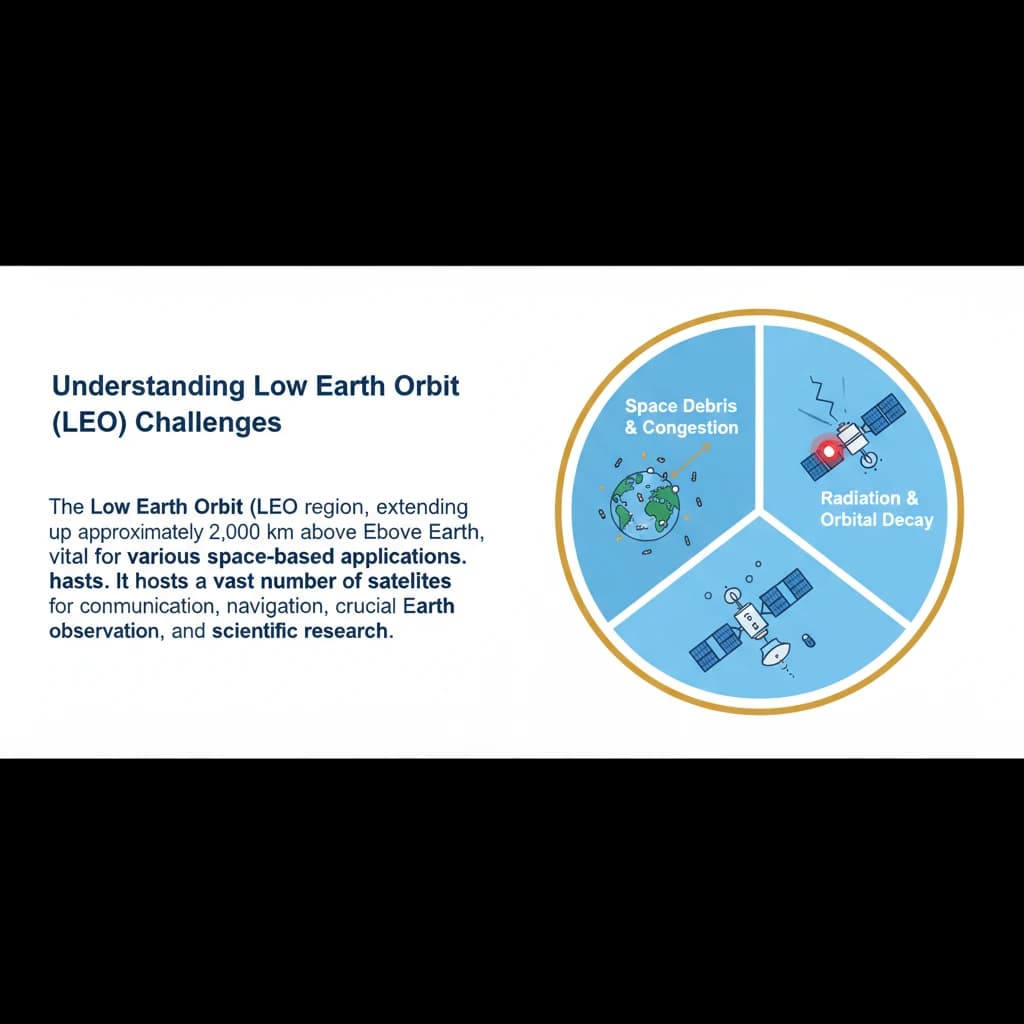
<h4>Understanding Low Earth Orbit (LEO) Challenges</h4><p>The <strong>Low Earth Orbit (LEO)</strong> region, extending up to approximately 2,000 km above Earth, is increasingly vital for various space-based applications. It hosts a vast number of <strong>satellites</strong> crucial for communication, navigation, Earth observation, and scientific research.</p><div class='info-box'><p><strong>LEO Definition:</strong> An orbit typically below 2,000 km altitude, characterized by relatively fast orbital periods and lower launch costs compared to higher orbits like GEO.</p></div><h4>The Problem of LEO Congestion</h4><p>The rapid proliferation of <strong>satellite constellations</strong>, particularly for broadband internet services, has led to significant <strong>congestion</strong> in LEO. This density of objects creates a complex and potentially hazardous environment for all space assets.</p><div class='key-point-box'><p><strong>Key Challenge:</strong> The sheer volume of operational and defunct objects in LEO poses a growing threat to sustainable space activities.</p></div><h4>Accumulation of Space Debris</h4><p>A primary concern associated with LEO congestion is the accumulation of <strong>space debris</strong>. This includes non-functional spacecraft, abandoned rocket stages, mission-related debris, and fragmentation products from collisions or explosions.</p><p>These fragments, ranging from microscopic paint flecks to large defunct satellites, travel at extremely high orbital velocities, making them dangerous projectiles.</p><h4>Sources of Space Debris in LEO</h4><ul><li><strong>Decommissioned Satellites:</strong> Old satellites that have reached the end of their operational life and remain in orbit.</li><li><strong>Broken Parts:</strong> Components that detach from active or defunct spacecraft due to wear, tear, or minor impacts.</li><li><strong>Spent Rocket Stages:</strong> The upper stages of launch vehicles that deliver payloads to orbit but then remain in space.</li><li><strong>Collision Fragments:</strong> Debris generated from accidental or intentional collisions between objects in orbit.</li></ul><h4>Collision Risks to Active Spacecraft</h4><p>The increasing amount of <strong>space debris</strong> significantly escalates the risk of <strong>collisions</strong>. Even small pieces of debris can cause catastrophic damage to operational satellites due to the immense kinetic energy involved at orbital speeds.</p><p>Such collisions can generate even more debris, leading to a cascading effect known as the <strong>Kessler Syndrome</strong>, where the density of debris becomes so high that further collisions become inevitable, rendering certain orbits unusable.</p><div class='exam-tip-box'><p><strong>UPSC Insight:</strong> Understanding the <strong>Kessler Syndrome</strong> and its implications is crucial for Mains answers on space policy and sustainability. Mentioning specific collision events can strengthen your arguments.</p></div>
Concept Diagram

💡 Key Takeaways

  • •LEO congestion is driven by increasing satellite launches, especially mega-constellations.
  • •Space debris (defunct satellites, rocket stages, fragments) poses significant collision risks.
  • •The Kessler Syndrome describes a cascade of collisions making LEO unusable.
  • •Solutions include Space Situational Awareness (SSA), Space Traffic Management (STM), and Active Debris Removal (ADR).
  • •International cooperation and "design for demise" principles are crucial for LEO sustainability.

🧠 Memory Techniques
Memory Aid
95% Verified Content

📚 Reference Sources

•NASA Orbital Debris Program Office
•European Space Agency (ESA) Space Debris Office
•United Nations Office for Outer Space Affairs (UNOOSA)
•ISRO publications on Space Situational Awareness

Related Topics

Loading related topics...
Explore:Science And Technology Topics·All Subjects·Daily Current Affairs·Editorial Analysis·Previous Year Questions·UPSC GPT