Loading page, please wait…
Earth’s Ancient Magnetic Field - UPSC Science And Technology
What is Earth’s Ancient Magnetic Field in UPSC Science And Technology?
Earth’s Ancient Magnetic Field is a key topic under Science And Technology for UPSC Civil Services Examination. Key points include: Earth's magnetic field existed at least 3.7 billion years ago, 200 million years earlier than previously thought.. Ancient rocks from the Isua Supracrustal Belt in Greenland revealed a field strength of at least 15 microtesla.. This early magnetic field was crucial for Earth's habitability, protecting its atmosphere and shielding from solar radiation.. Understanding this topic is essential for both UPSC Prelims and Mains preparation.
Why is Earth’s Ancient Magnetic Field important for UPSC exam?
Earth’s Ancient Magnetic Field is a Medium-level topic in UPSC Science And Technology. It is tested in both Prelims (factual MCQs) and Mains (analytical answer writing). Previous year UPSC questions have frequently covered aspects of Earth’s Ancient Magnetic Field, making it essential for comprehensive IAS preparation.
How to prepare Earth’s Ancient Magnetic Field for UPSC?
To prepare Earth’s Ancient Magnetic Field for UPSC: (1) Study the comprehensive notes covering all key concepts on Vaidra. (2) Practice previous year questions on this topic. (3) Connect it with current affairs using daily updates. (4) Revise using key takeaways and mind maps available for Science And Technology. (5) Write practice answers linking Earth’s Ancient Magnetic Field to related GS Paper topics.
Key takeaways of Earth’s Ancient Magnetic Field for UPSC
- Earth's magnetic field existed at least 3.7 billion years ago, 200 million years earlier than previously thought.
- Ancient rocks from the Isua Supracrustal Belt in Greenland revealed a field strength of at least 15 microtesla.
- This early magnetic field was crucial for Earth's habitability, protecting its atmosphere and shielding from solar radiation.
- The study used uranium-lead ratio analysis to date the magnetized minerals in the rocks.
- Understanding ancient magnetic fields is vital for studying planetary evolution and the search for life on exoplanets.
Earth’s Ancient Magnetic Field
Medium⏱️ 6 min read
science and technology
📖 Introduction
Recent Study on Earth's Ancient Magnetic Field
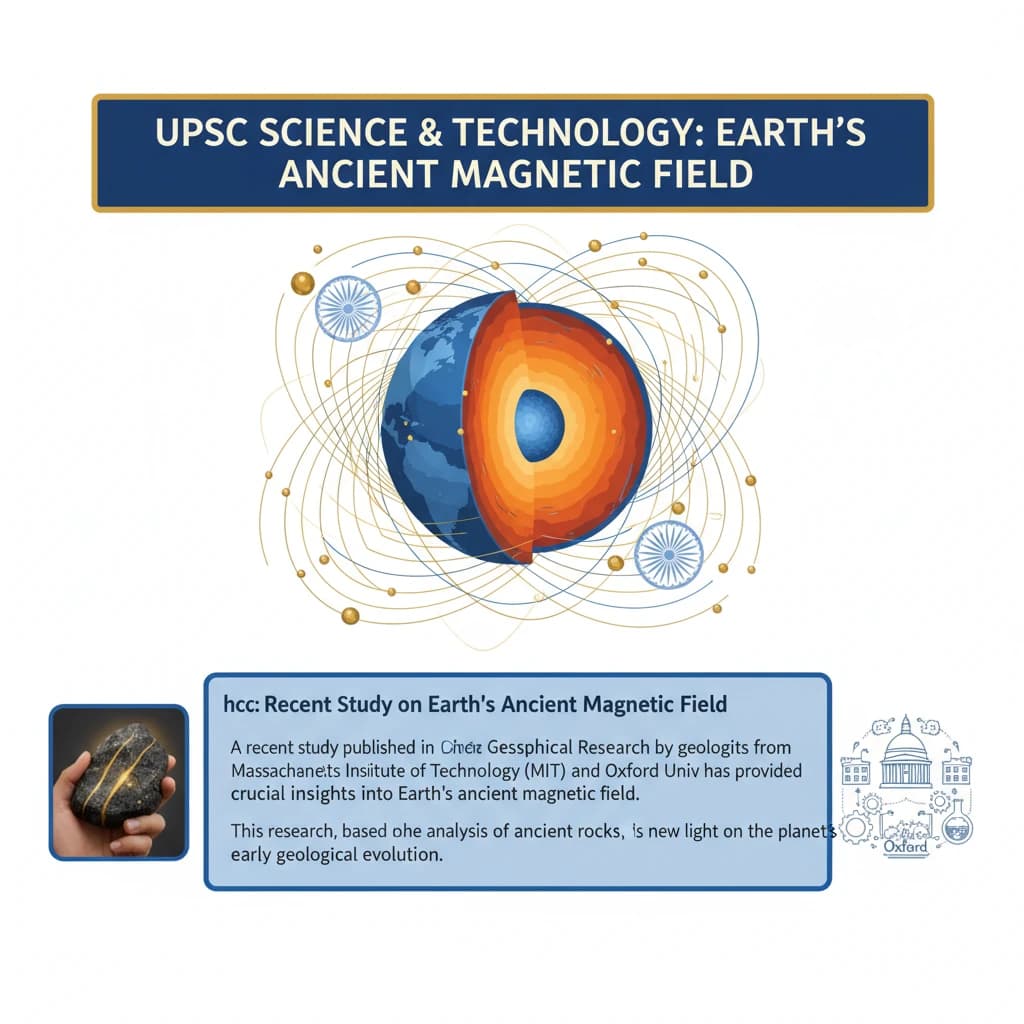
A recent study published in the Journal of Geophysical Research by geologists from the Massachusetts Institute of Technology (MIT) and Oxford University has provided crucial insights into Earth's ancient magnetic field.
This research, based on the analysis of ancient rocks, sheds new light on the planet's early geological evolution.
Source: Journal of Geophysical Research
Researchers: Geologists from MIT and Oxford University
Key Findings of the Study
Strength of the Magnetic Field
Geologists discovered ancient rocks within the Isua Supracrustal Belt in Southwestern Greenland.
These rocks date back approximately 3.7 billion years and contain the oldest known remnants of Earth's early magnetic field.
Location: Isua Supracrustal Belt, Southwestern Greenland
Age of Rocks: Approximately 3.7 billion years
The signatures in these rocks indicate a magnetic field strength of at least 15 microtesla.
This strength is comparable in magnitude to Earth's magnetic field today, which is around 30 microtesla.
Ancient Field Strength: At least 15 microtesla (roughly half of today's strength)
Extended Lifetime of the Magnetic Field
Previous studies had suggested the presence of a magnetic field on Earth dating back at least 3.5 billion years.
The new study significantly extends this known lifetime by an additional 200 million years, pushing it back to 3.7 billion years.
Researchers used uranium-lead ratio analysis to estimate the age of the magnetised minerals in the rocks, confirming their age at approximately 3.7 billion years.
UPSC Relevance: Understanding dating methods like Uranium-Lead dating is crucial for GS Paper 1 (Geology) and GS Paper 3 (Science & Technology).
Potential Role in Earth's Habitability
The existence of an early magnetic field may have played a critical role in establishing and maintaining Earth's habitability.
It is believed to have helped in retaining a life-sustaining atmosphere by preventing atmospheric stripping by solar winds.
Crucially, it shielded the planet from harmful and damaging solar radiation, creating a more conducive environment for the emergence and evolution of life.
Magnetic Field's Role:
- Retention of life-sustaining atmosphere
- Shielding from damaging solar radiation
💡 Key Takeaways
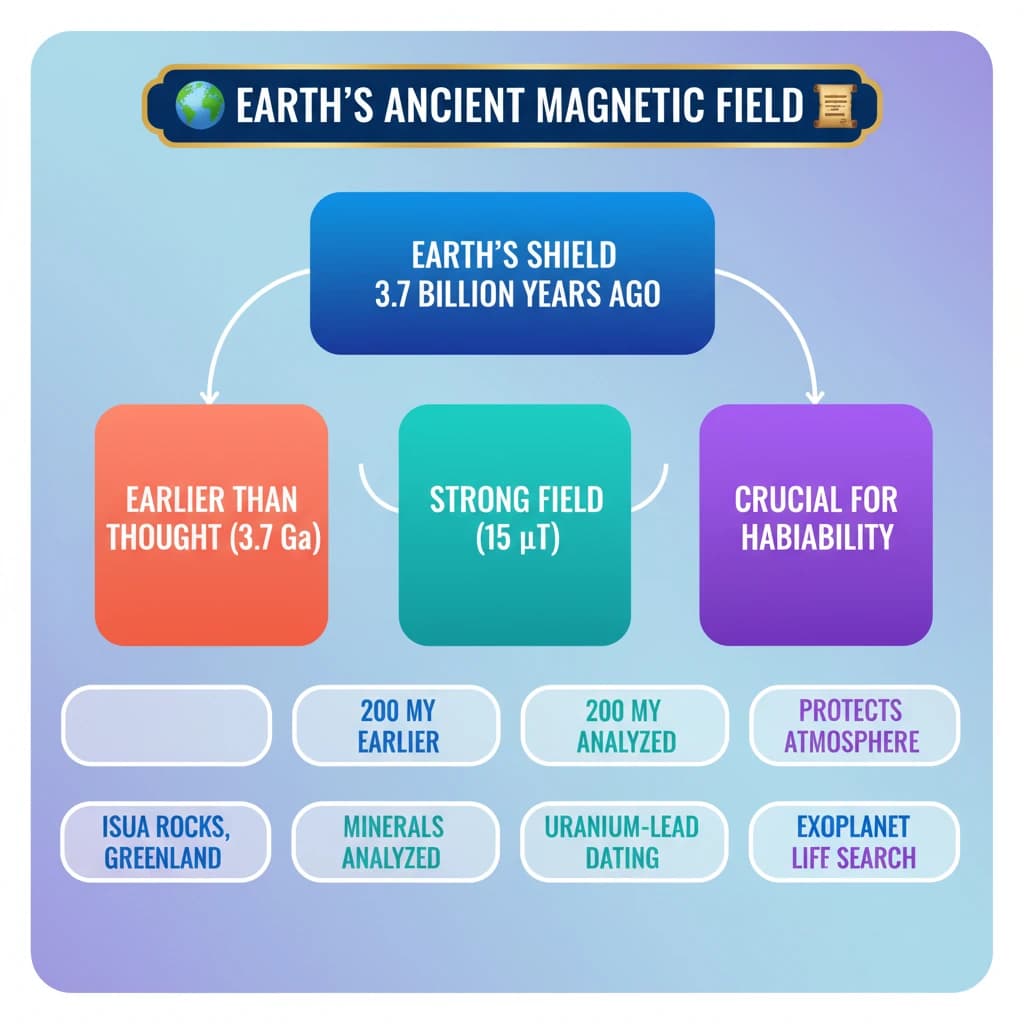
- •Earth's magnetic field existed at least 3.7 billion years ago, 200 million years earlier than previously thought.
- •Ancient rocks from the Isua Supracrustal Belt in Greenland revealed a field strength of at least 15 microtesla.
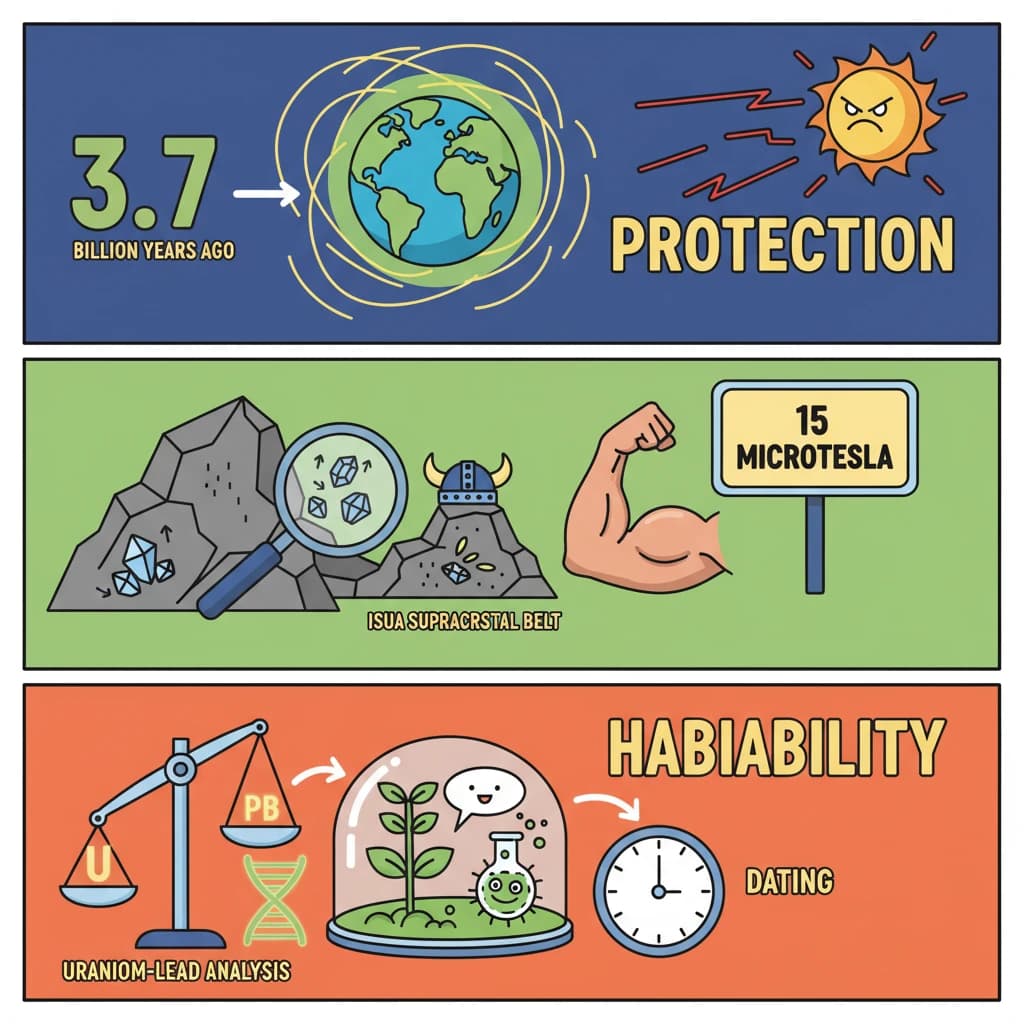
- •This early magnetic field was crucial for Earth's habitability, protecting its atmosphere and shielding from solar radiation.
- •The study used uranium-lead ratio analysis to date the magnetized minerals in the rocks.
- •Understanding ancient magnetic fields is vital for studying planetary evolution and the search for life on exoplanets.
🧠 Memory Techniques
95% Verified Content
📚 Reference Sources
•Massachusetts Institute of Technology (MIT) research
•Oxford University research summaries