Loading page, please wait…
Gamma Rays and Related Health Hazards - UPSC Science And Technology
What is Gamma Rays and Related Health Hazards in UPSC Science And Technology?
Gamma Rays and Related Health Hazards is a key topic under Science And Technology for UPSC Civil Services Examination. Key points include: Gamma rays are high-energy electromagnetic radiation with the shortest wavelength and highest energy.. They originate from cosmic events (pulsars, supernovae, black holes) and terrestrial nuclear processes (radioactive decay, nuclear reactions).. Gamma rays have high penetrating power, capable of damaging human tissue and DNA.. Understanding this topic is essential for both UPSC Prelims and Mains preparation.
Why is Gamma Rays and Related Health Hazards important for UPSC exam?
Gamma Rays and Related Health Hazards is a Medium-level topic in UPSC Science And Technology. It is tested in both Prelims (factual MCQs) and Mains (analytical answer writing). Previous year UPSC questions have frequently covered aspects of Gamma Rays and Related Health Hazards, making it essential for comprehensive IAS preparation.
How to prepare Gamma Rays and Related Health Hazards for UPSC?
To prepare Gamma Rays and Related Health Hazards for UPSC: (1) Study the comprehensive notes covering all key concepts on Vaidra. (2) Practice previous year questions on this topic. (3) Connect it with current affairs using daily updates. (4) Revise using key takeaways and mind maps available for Science And Technology. (5) Write practice answers linking Gamma Rays and Related Health Hazards to related GS Paper topics.
Key takeaways of Gamma Rays and Related Health Hazards for UPSC
- Gamma rays are high-energy electromagnetic radiation with the shortest wavelength and highest energy.
- They originate from cosmic events (pulsars, supernovae, black holes) and terrestrial nuclear processes (radioactive decay, nuclear reactions).
- Gamma rays have high penetrating power, capable of damaging human tissue and DNA.
- Exposure leads to health risks like radiation sickness and increased cancer risk.
- Despite hazards, gamma rays have crucial applications in medicine (radiation therapy, PET scans) and industry (sterilization, non-destructive testing).
- Managing gamma ray exposure requires strict safety protocols and robust regulatory frameworks.
Gamma Rays and Related Health Hazards
Medium⏱️ 8 min read
science and technology
📖 Introduction
What are Gamma Rays?
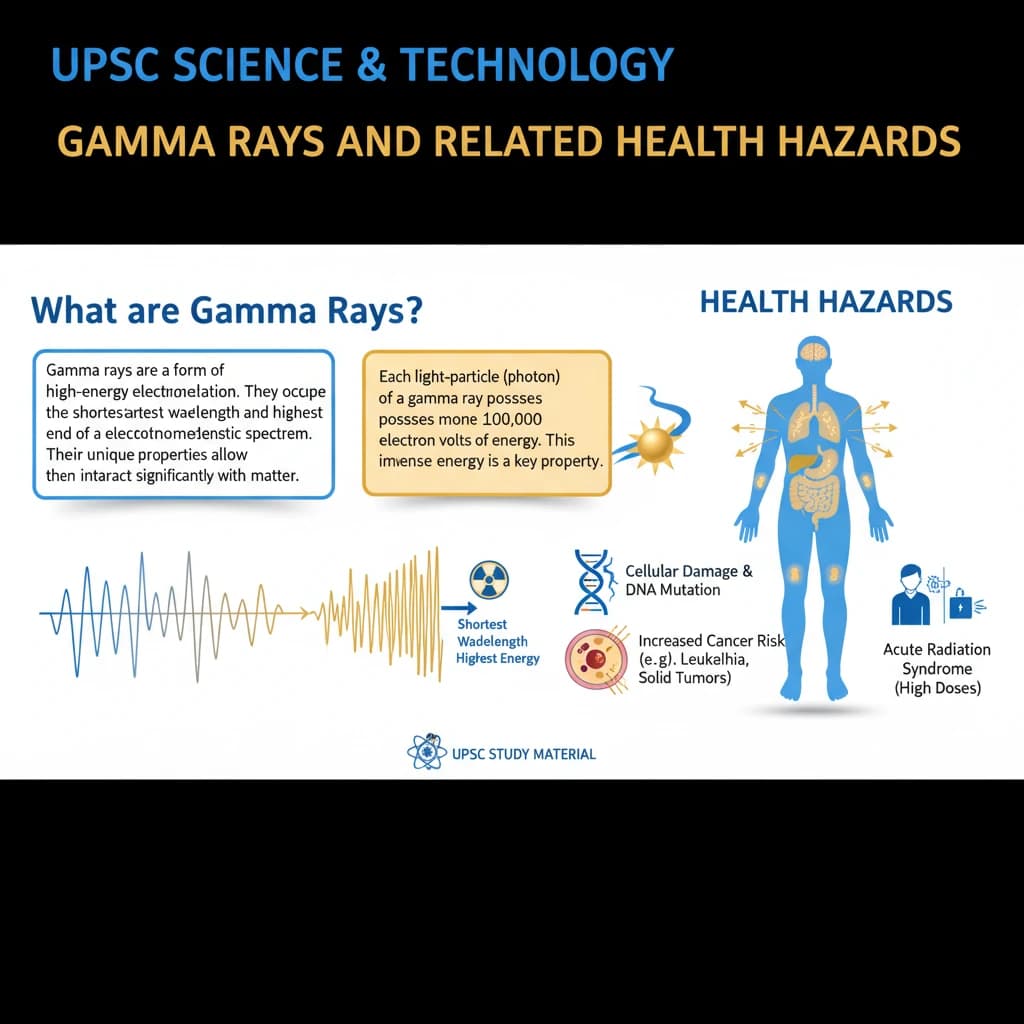
Gamma rays are a form of high-energy electromagnetic radiation. They occupy the shortest wavelength and highest energy end of the electromagnetic spectrum. Their unique properties allow them to interact significantly with matter.
Each light-particle (photon) of a gamma ray possesses more than 100,000 electron volts of energy. This immense energy is a key factor in their penetrating capabilities and biological effects.
Due to their exceptionally high energy, gamma rays can penetrate most materials, including dense substances and living tissues. This deep penetration capability is what makes them both useful in certain applications and dangerous to biological systems.
Sources of Gamma Rays
Gamma rays originate from extremely energetic phenomena both in the cosmos and on Earth. Their production is indicative of powerful physical processes.
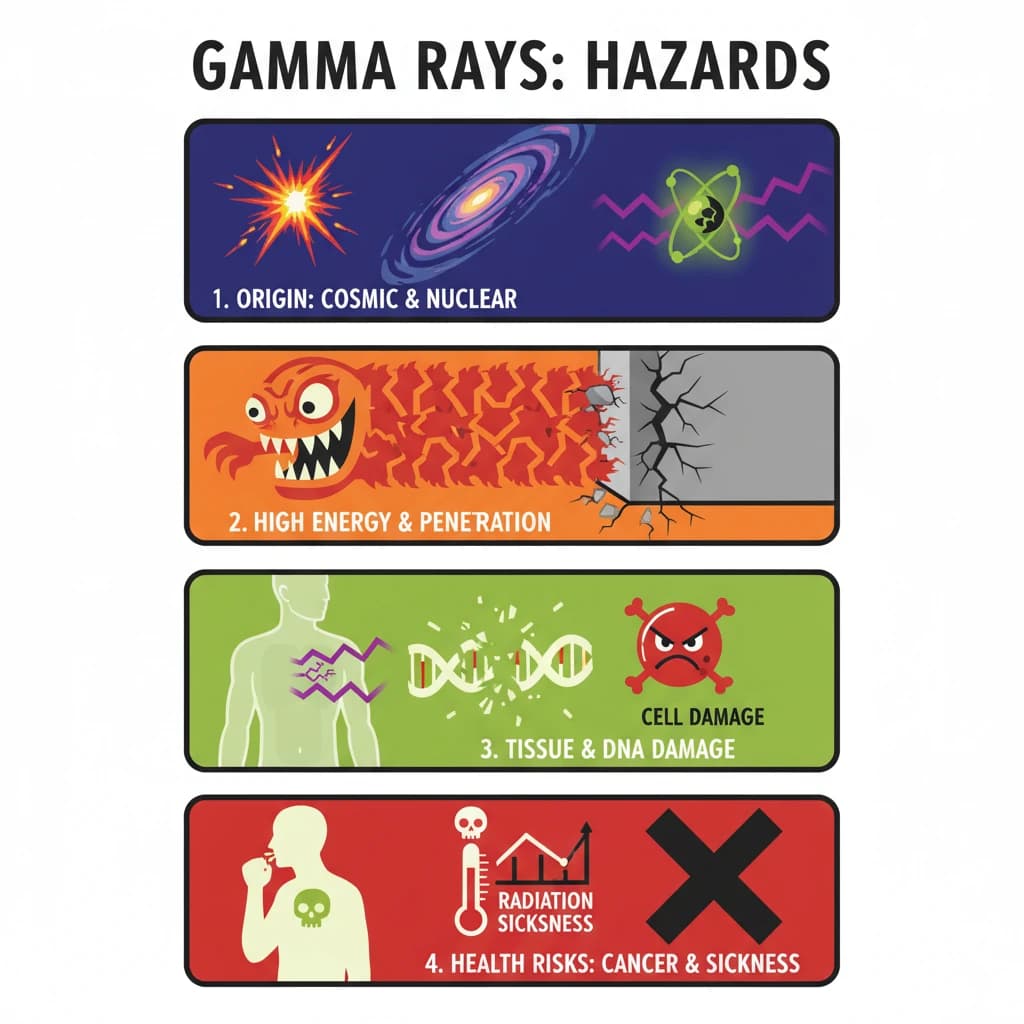
- Cosmic Sources: They are produced by exotic and energetic objects in the universe, such as rapidly spinning pulsars, catastrophic supernova explosions, and hot whirlpools of matter surrounding black holes. Intense bursts known as gamma-ray bursts are also significant cosmic emitters.
- Terrestrial Sources: On Earth, gamma rays are emitted during processes like radioactive decay of unstable atomic nuclei and various nuclear reactions, which are fundamental to nuclear physics and energy.
Health Hazards of Gamma Ray Exposure
Exposure to gamma rays poses significant health risks due to their ability to ionize matter and damage biological structures. The high energy of these rays makes them a potent form of ionizing radiation.
The primary mechanism of harm involves damage to cells and DNA. When gamma rays pass through tissue, they can directly break chemical bonds within DNA molecules or create highly reactive free radicals that subsequently damage cellular components.
This cellular and DNA damage can lead to a range of adverse health outcomes, both acute and long-term. The severity depends on the dose and duration of exposure.
- Radiation Sickness: Acute, high-dose exposure can result in radiation sickness, characterized by symptoms such as nausea, vomiting, fatigue, hair loss, and compromised immune function.
- Increased Cancer Risk: Long-term or even low-dose exposure can significantly increase the risk of developing various types of cancer due to unrepaired DNA damage leading to uncontrolled cell growth.
- Other Long-Term Effects: Other potential long-term effects include genetic mutations, birth defects in offspring of exposed individuals, cataracts, and cardiovascular diseases.
For UPSC Mains (GS Paper III - Science & Technology), understanding both the nature and the dual impact (beneficial applications vs. health hazards) of gamma rays is crucial. Be prepared to discuss their sources, properties, and the mechanisms of biological harm, along with regulatory measures.

💡 Key Takeaways
- •Gamma rays are high-energy electromagnetic radiation with the shortest wavelength and highest energy.
- •They originate from cosmic events (pulsars, supernovae, black holes) and terrestrial nuclear processes (radioactive decay, nuclear reactions).
- •Gamma rays have high penetrating power, capable of damaging human tissue and DNA.
- •Exposure leads to health risks like radiation sickness and increased cancer risk.
- •Despite hazards, gamma rays have crucial applications in medicine (radiation therapy, PET scans) and industry (sterilization, non-destructive testing).
- •Managing gamma ray exposure requires strict safety protocols and robust regulatory frameworks.
🧠 Memory Techniques
98% Verified Content
📚 Reference Sources
•General Physics Textbooks (Electromagnetic Spectrum, Nuclear Physics)
•World Health Organization (WHO) - Radiation Health Effects
•NASA - Gamma-Ray Astronomy