Loading page, please wait…
Global Cooperation in Space Debris Management - UPSC Science And Technology
What is Global Cooperation in Space Debris Management in UPSC Science And Technology?
Global Cooperation in Space Debris Management is a key topic under Science And Technology for UPSC Civil Services Examination. Key points include: Increasing satellites and space debris in LEO threaten its usability.. Global cooperation is essential to prevent the Kessler Syndrome.. Space debris management requires both mitigation and active removal strategies.. Understanding this topic is essential for both UPSC Prelims and Mains preparation.
Why is Global Cooperation in Space Debris Management important for UPSC exam?
Global Cooperation in Space Debris Management is a Medium-level topic in UPSC Science And Technology. It is tested in both Prelims (factual MCQs) and Mains (analytical answer writing). Previous year UPSC questions have frequently covered aspects of Global Cooperation in Space Debris Management, making it essential for comprehensive IAS preparation.
How to prepare Global Cooperation in Space Debris Management for UPSC?
To prepare Global Cooperation in Space Debris Management for UPSC: (1) Study the comprehensive notes covering all key concepts on Vaidra. (2) Practice previous year questions on this topic. (3) Connect it with current affairs using daily updates. (4) Revise using key takeaways and mind maps available for Science And Technology. (5) Write practice answers linking Global Cooperation in Space Debris Management to related GS Paper topics.
Key takeaways of Global Cooperation in Space Debris Management for UPSC
- Increasing satellites and space debris in LEO threaten its usability.
- Global cooperation is essential to prevent the Kessler Syndrome.
- Space debris management requires both mitigation and active removal strategies.
- International bodies like IADC and UNCOPUOS play a crucial role in setting guidelines.
- Mega-constellations intensify the debris challenge, demanding urgent solutions.
- Sustainable space practices are vital for future economic and scientific activities.
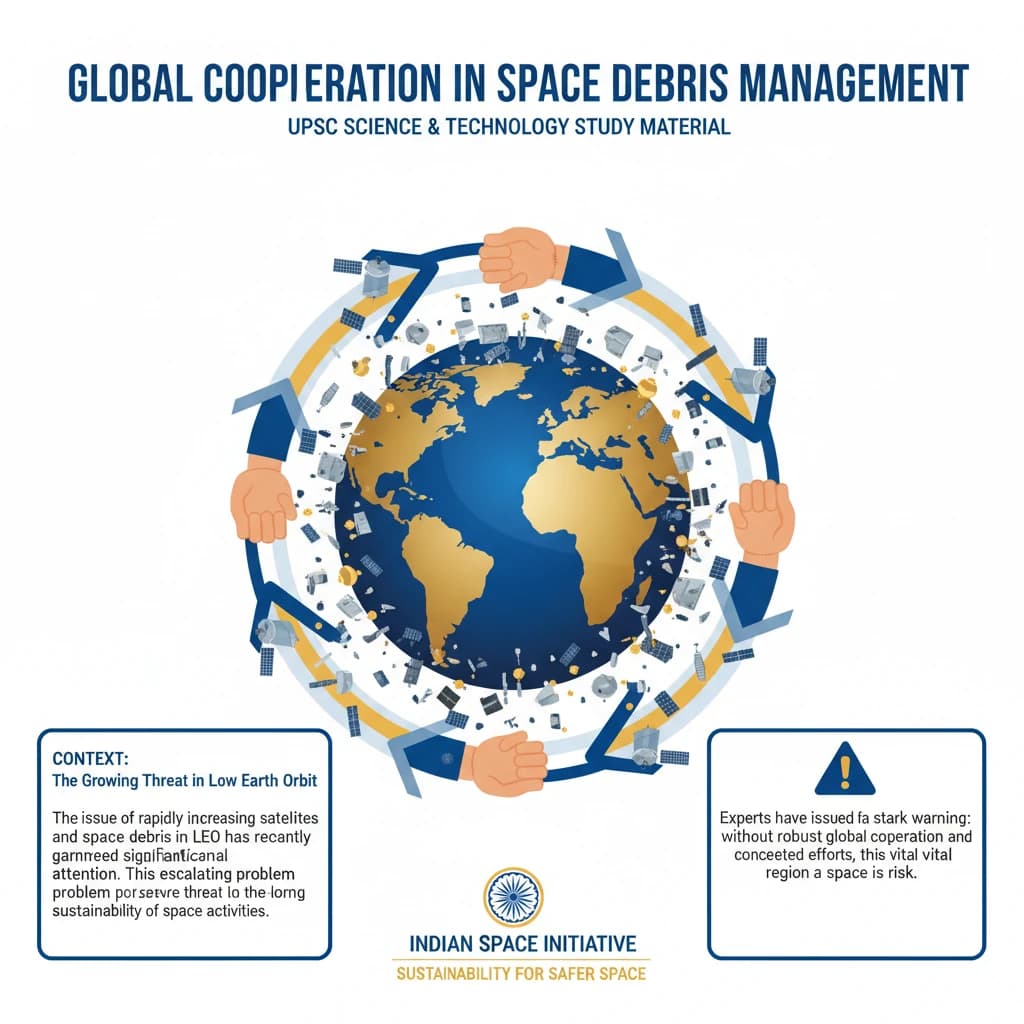
Global Cooperation in Space Debris Management
Medium⏱️ 8 min read
science and technology
📖 Introduction
Context: The Growing Threat in Low Earth Orbit
The issue of rapidly increasing satellites and space debris in Low Earth Orbit (LEO) has recently garnered significant international attention. This escalating problem poses a severe threat to the long-term sustainability of space activities.
Experts have issued a stark warning: without robust global cooperation and concerted efforts, this vital region of space risks becoming completely unusable for future missions and satellite deployments.
Low Earth Orbit (LEO) is the region of space typically below 2,000 km altitude. It is crucial for most operational satellites, including communication, Earth observation, and scientific missions.
The Challenge of Space Debris
Space debris refers to any human-made object orbiting Earth that no longer serves a useful purpose. This includes spent rocket stages, defunct satellites, and fragments from collisions or explosions.
The increasing density of objects in LEO significantly raises the probability of collisions, which in turn generate more debris, creating a cascading effect known as the Kessler Syndrome.
The Kessler Syndrome describes a scenario where the density of objects in LEO is high enough that collisions between objects could cause a cascade of further collisions, creating enough debris to make space activities impractical for many generations.
The Imperative for Global Cooperation
Managing space debris is a challenge that transcends national borders. Debris from one country's satellite can pose a threat to another country's assets, highlighting the need for a unified approach.
Effective global cooperation is essential for developing and implementing common standards, sharing data, coordinating debris mitigation strategies, and investing in active debris removal technologies.
For UPSC Mains (GS-III), understanding the implications of space debris on space security, international relations, and sustainable development goals is crucial. Emphasize the multi-faceted nature of the problem and solutions.
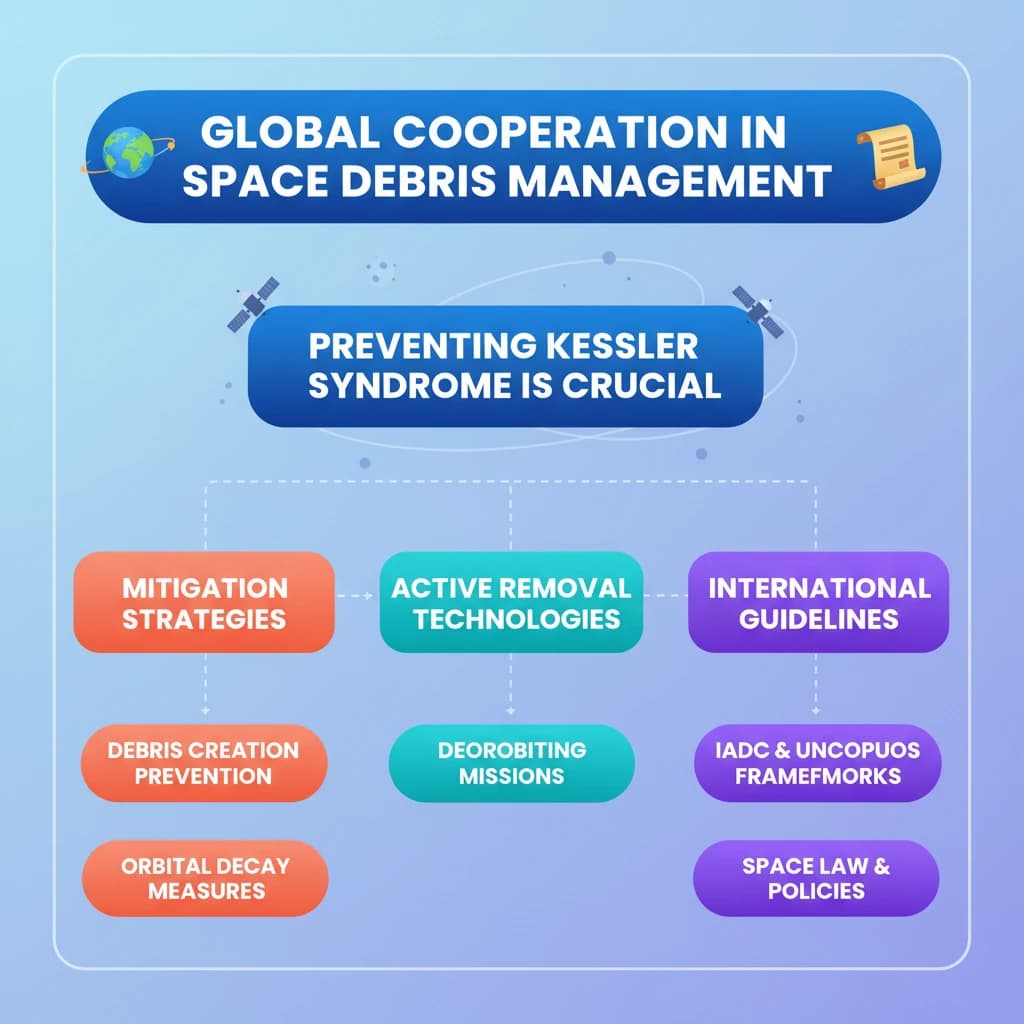
💡 Key Takeaways
- •Increasing satellites and space debris in LEO threaten its usability.
- •Global cooperation is essential to prevent the Kessler Syndrome.
- •Space debris management requires both mitigation and active removal strategies.
- •International bodies like IADC and UNCOPUOS play a crucial role in setting guidelines.
- •Mega-constellations intensify the debris challenge, demanding urgent solutions.
- •Sustainable space practices are vital for future economic and scientific activities.
🧠 Memory Techniques
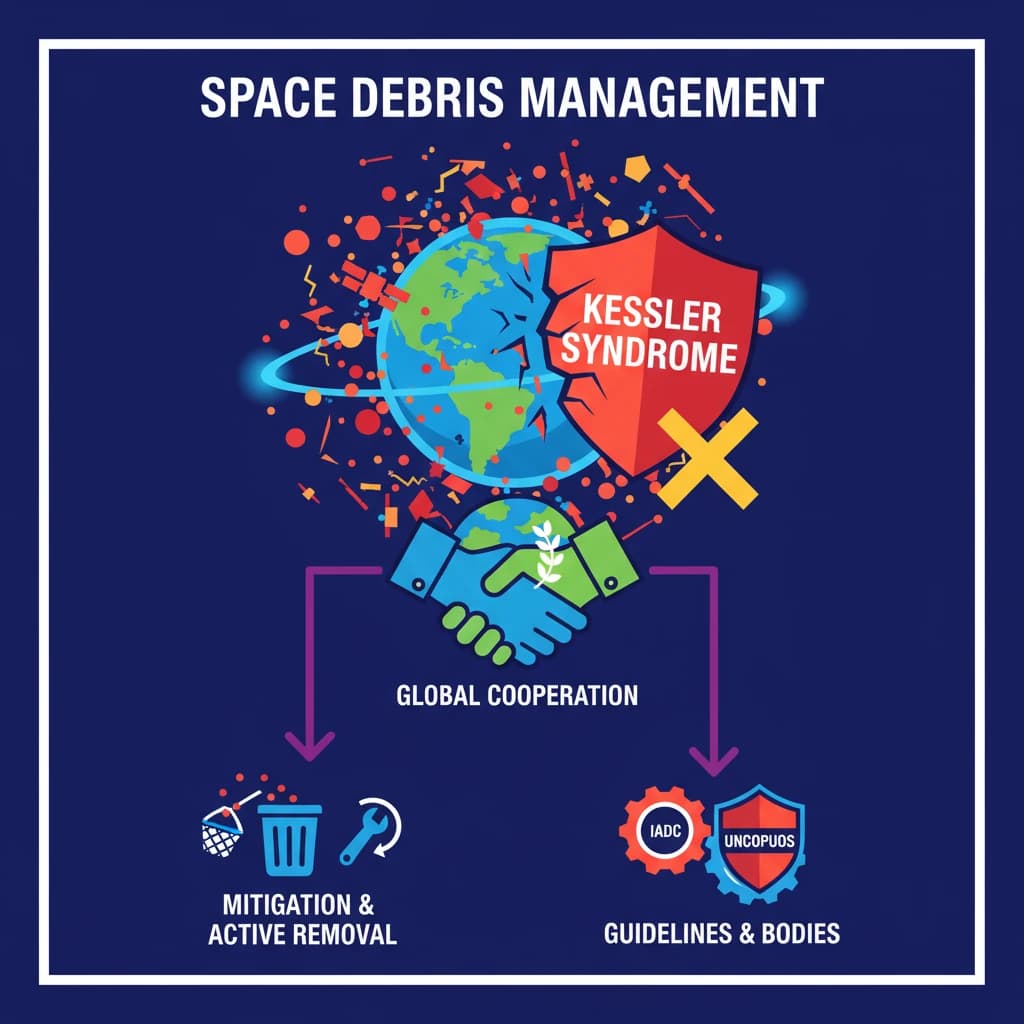
95% Verified Content
📚 Reference Sources
•NASA Orbital Debris Program Office reports
•European Space Agency (ESA) Space Debris Office publications
•United Nations Office for Outer Space Affairs (UNOOSA) documents
•Inter-Agency Space Debris Coordination Committee (IADC) guidelines