Loading page, please wait…
Gravity Energy Storage - UPSC Science And Technology
What is Gravity Energy Storage in UPSC Science And Technology?
Gravity Energy Storage is a key topic under Science And Technology for UPSC Civil Services Examination. Key points include: Gravity Energy Storage (GES) stores energy by lifting heavy masses (potential energy) and releases it by lowering them to generate electricity.. GES is a sustainable, long-lasting, and site-flexible alternative to traditional chemical batteries.. It effectively addresses the intermittency of renewable energy sources like solar and wind, crucial for grid stability.. Understanding this topic is essential for both UPSC Prelims and Mains preparation.
Why is Gravity Energy Storage important for UPSC exam?
Gravity Energy Storage is a Medium-level topic in UPSC Science And Technology. It is tested in both Prelims (factual MCQs) and Mains (analytical answer writing). Previous year UPSC questions have frequently covered aspects of Gravity Energy Storage, making it essential for comprehensive IAS preparation.
How to prepare Gravity Energy Storage for UPSC?
To prepare Gravity Energy Storage for UPSC: (1) Study the comprehensive notes covering all key concepts on Vaidra. (2) Practice previous year questions on this topic. (3) Connect it with current affairs using daily updates. (4) Revise using key takeaways and mind maps available for Science And Technology. (5) Write practice answers linking Gravity Energy Storage to related GS Paper topics.
Key takeaways of Gravity Energy Storage for UPSC
- Gravity Energy Storage (GES) stores energy by lifting heavy masses (potential energy) and releases it by lowering them to generate electricity.
- GES is a sustainable, long-lasting, and site-flexible alternative to traditional chemical batteries.
- It effectively addresses the intermittency of renewable energy sources like solar and wind, crucial for grid stability.
- GES is vital for India's target of 500 GW non-fossil fuel capacity by 2030, supporting large-scale renewable projects.
- Common designs include fluid-piston systems or stacked block/weight systems, converting kinetic energy into electricity via turbines.
- Offers high energy capacity and low environmental impact compared to chemical storage.
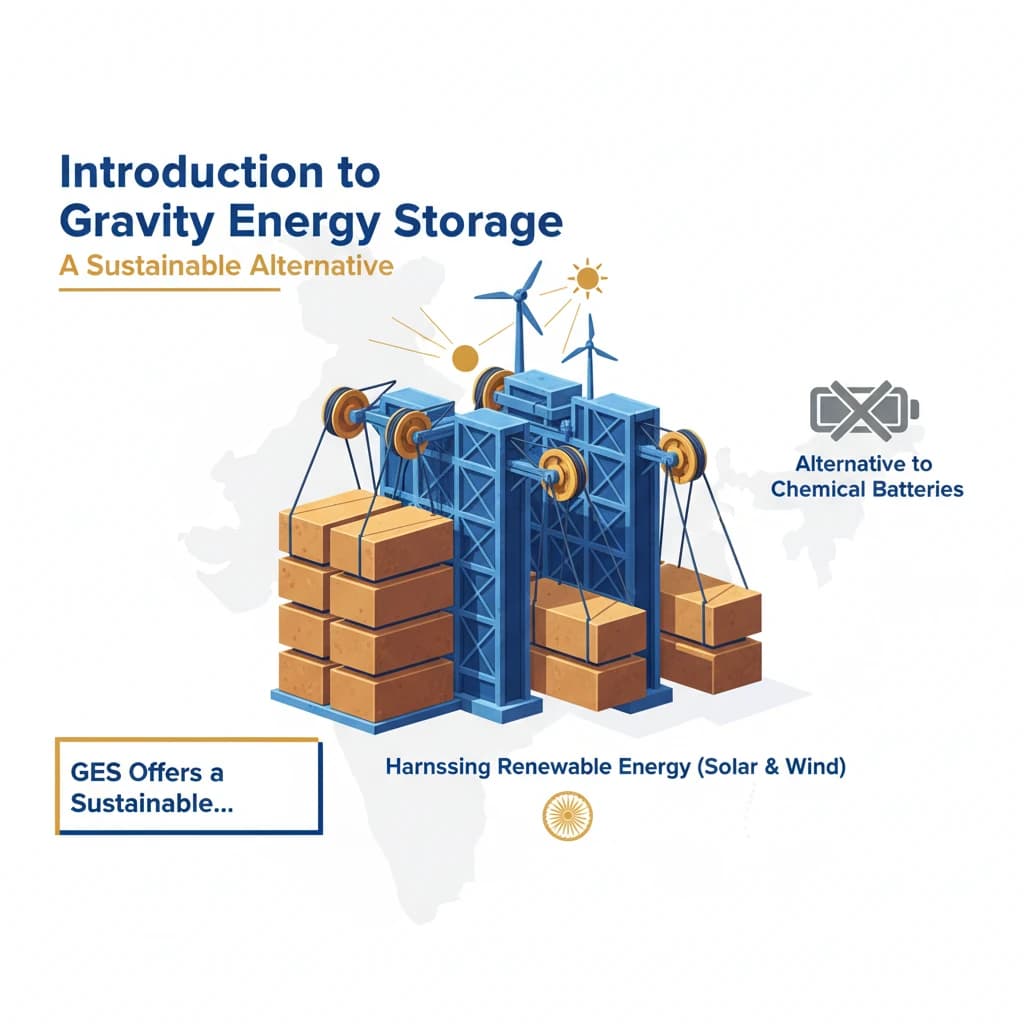
Gravity Energy Storage
Medium⏱️ 8 min read
science and technology
📖 Introduction
Introduction to Gravity Energy Storage
Gravity Energy Storage (GES) is emerging as an innovative and cost-effective solution. It directly addresses a key challenge faced by renewable energy sources like solar and wind.
This technology also serves as a promising alternative to traditional battery energy storage systems, which often involve chemical components.
GES offers a sustainable and long-lasting method to store energy, crucial for stabilizing modern electricity grids.
Defining Gravity Energy Storage
Gravity Energy Storage is an innovative technology designed to store energy by leveraging the fundamental force of gravity.
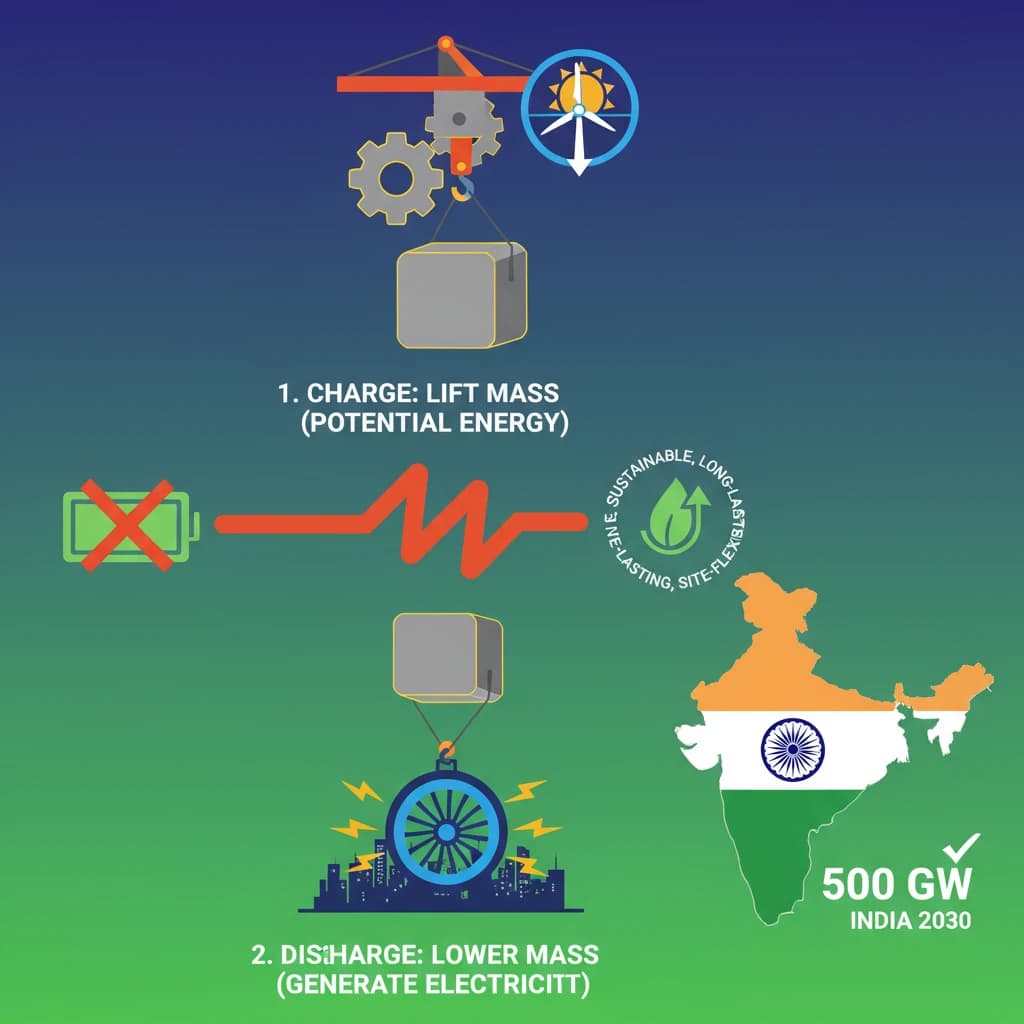
Definition: It is a system that stores energy by lifting a heavy mass and releases it by allowing the mass to descend, converting potential energy into usable electricity.
Mechanism of Operation
The core principle of Gravity Energy Storage lies in the concept of potential energy. It involves lifting heavy masses during periods when there is an excess of energy generation.
When electricity is needed, these heavy masses are released. Their descending motion is then converted into electrical energy.
Energy Conversion: A turbine or generator is used to convert the kinetic energy from the descending motion of the mass into electricity.
A common design involves a fluid-filled cylinder equipped with a heavy piston.
- During surplus electricity generation, the piston is lifted, effectively storing energy as potential energy.
- When energy is required, the piston descends, driving water or another fluid through a turbine to produce power.
Environmental Sustainability
Unlike traditional battery storage, gravity energy systems avoid reliance on chemical-based energy storage methods.
This characteristic makes them inherently more environmentally sustainable and ensures a significantly longer operational lifespan.
Key Advantages of Gravity Energy Storage
- Site Flexibility: Unlike pumped-hydro systems which require specific geographical features, gravity energy systems can be implemented in diverse locations.
- Scalability: These systems can be easily adapted to different energy capacities, making them ideal for both small-scale and large-scale grid-scale storage applications.
- Longevity: With minimal mechanical degradation, GES systems are designed to operate for decades, requiring relatively low maintenance.
Addressing Renewable Energy Challenges in India
Gravity Energy Storage can effectively address the significant intermittency issue of renewable energy sources in India. Solar and wind energy are not constant; they depend heavily on weather conditions and time of day.
With initiatives like the National Solar Mission and expanding wind power capacities, GES can help stabilize the grid by providing reliable storage.
Reliable energy storage is essential to balance electricity supply and demand, particularly during periods of peak usage or when renewable energy production is low.
These systems offer high energy capacity, capable of storing large amounts of energy. This bridges the gap during periods of low renewable production.
GES also boasts a low environmental impact. It reduces harmful chemical reactions and minimizes disposal issues, thereby supporting India's transition to a greener planet.
UPSC Insight: India aims to achieve 500 GW of non-fossil fuel capacity by 2030 under its renewable energy initiatives. Gravity Energy Storage can complement these efforts by providing reliable and cost-effective storage for the large-scale solar and wind projects being deployed across the country, a crucial point for GS Paper 3.
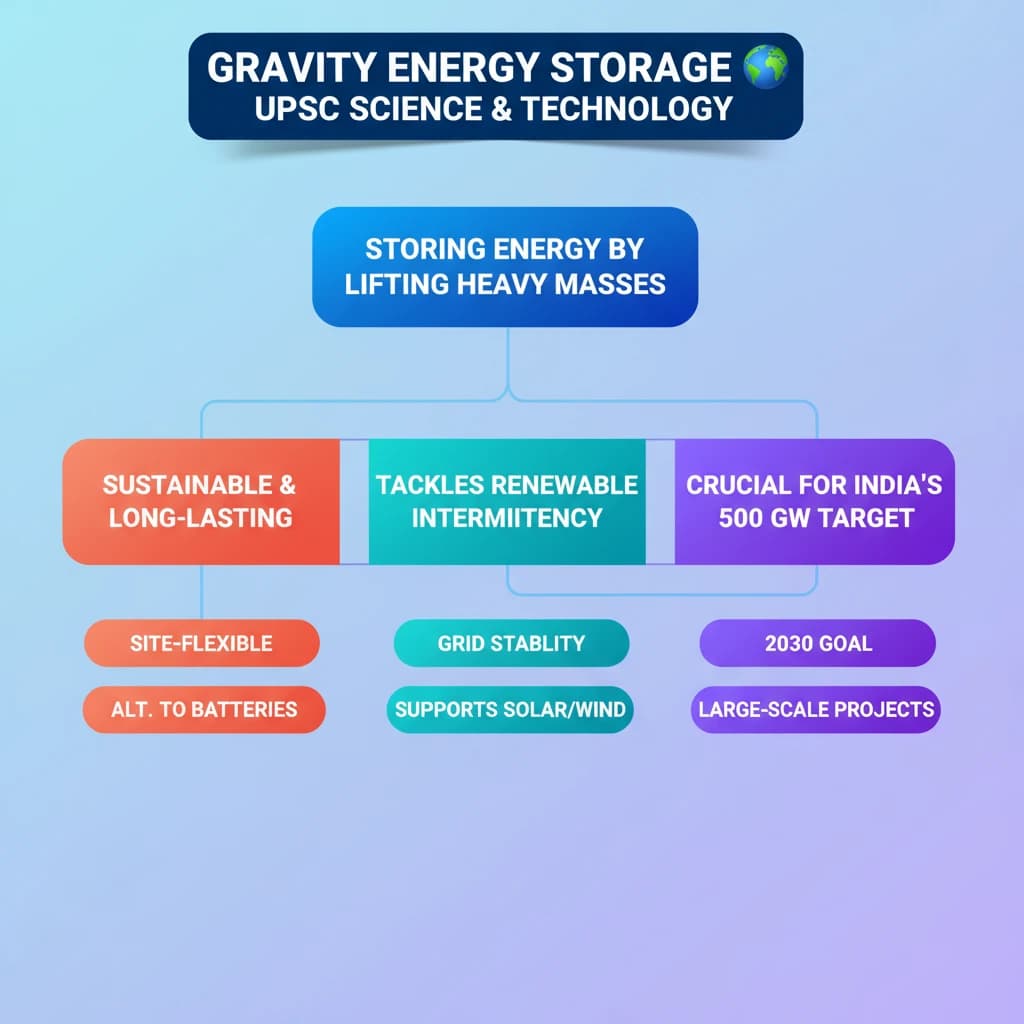
💡 Key Takeaways
- •Gravity Energy Storage (GES) stores energy by lifting heavy masses (potential energy) and releases it by lowering them to generate electricity.
- •GES is a sustainable, long-lasting, and site-flexible alternative to traditional chemical batteries.
- •It effectively addresses the intermittency of renewable energy sources like solar and wind, crucial for grid stability.
- •GES is vital for India's target of 500 GW non-fossil fuel capacity by 2030, supporting large-scale renewable projects.
- •Common designs include fluid-piston systems or stacked block/weight systems, converting kinetic energy into electricity via turbines.
- •Offers high energy capacity and low environmental impact compared to chemical storage.
🧠 Memory Techniques
95% Verified Content
📚 Reference Sources
•Energy Vault official website (for example details)
•Gravitricity official website (for example details)
•General knowledge on renewable energy storage technologies and physics principles