Loading page, please wait…
How do RNA and DNA Editing Differ? - UPSC Science And Technology
What is How do RNA and DNA Editing Differ? in UPSC Science And Technology?
How do RNA and DNA Editing Differ? is a key topic under Science And Technology for UPSC Civil Services Examination. Key points include: DNA editing causes permanent alterations to the genome, while RNA editing results in temporary changes to RNA molecules.. DNA editing (e.g., CRISPR-Cas9) often uses foreign bacterial components, which can trigger an immune response.. RNA editing (e.g., ADAR enzymes) utilizes naturally occurring human enzymes, posing a lower risk of immune reactions.. Understanding this topic is essential for both UPSC Prelims and Mains preparation.
Why is How do RNA and DNA Editing Differ? important for UPSC exam?
How do RNA and DNA Editing Differ? is a Medium-level topic in UPSC Science And Technology. It is tested in both Prelims (factual MCQs) and Mains (analytical answer writing). Previous year UPSC questions have frequently covered aspects of How do RNA and DNA Editing Differ?, making it essential for comprehensive IAS preparation.
How to prepare How do RNA and DNA Editing Differ? for UPSC?
To prepare How do RNA and DNA Editing Differ? for UPSC: (1) Study the comprehensive notes covering all key concepts on Vaidra. (2) Practice previous year questions on this topic. (3) Connect it with current affairs using daily updates. (4) Revise using key takeaways and mind maps available for Science And Technology. (5) Write practice answers linking How do RNA and DNA Editing Differ? to related GS Paper topics.
Key takeaways of How do RNA and DNA Editing Differ? for UPSC
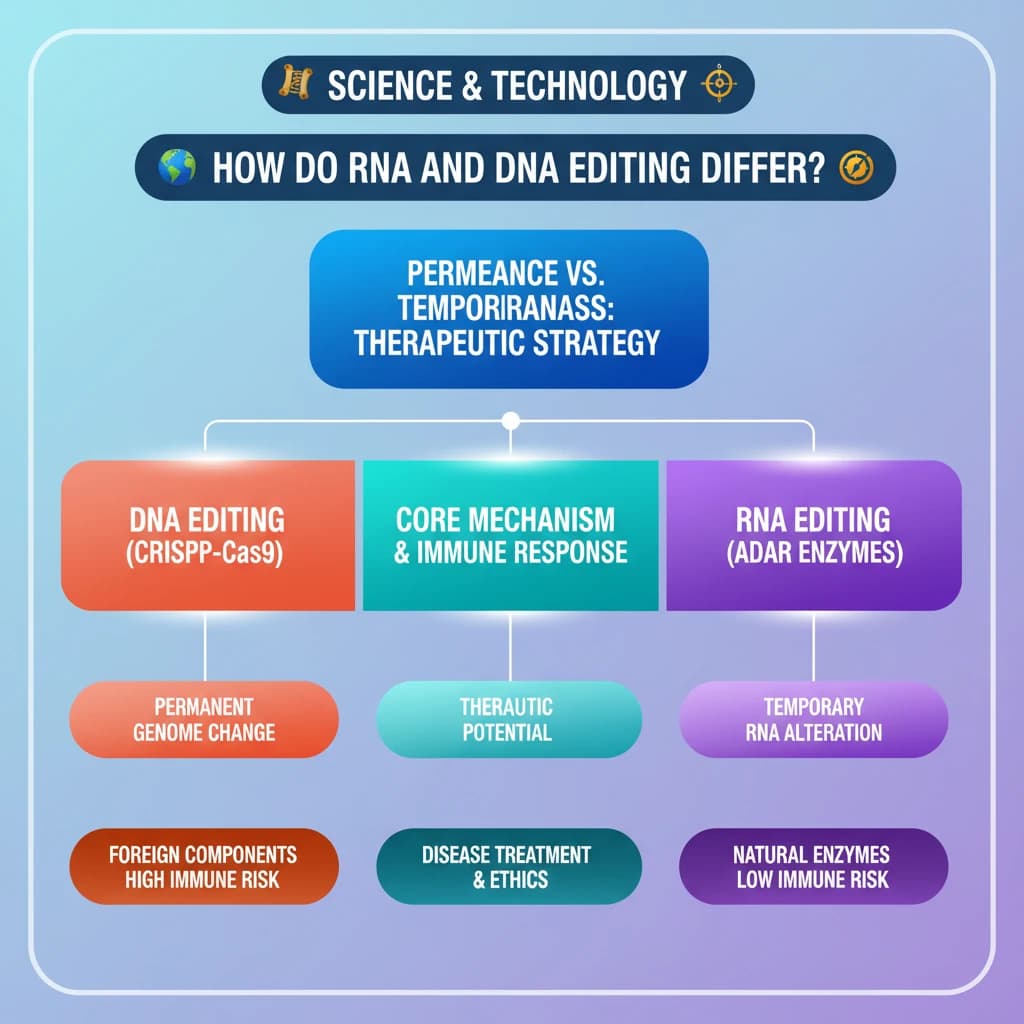
- DNA editing causes permanent alterations to the genome, while RNA editing results in temporary changes to RNA molecules.
- DNA editing (e.g., CRISPR-Cas9) often uses foreign bacterial components, which can trigger an immune response.
- RNA editing (e.g., ADAR enzymes) utilizes naturally occurring human enzymes, posing a lower risk of immune reactions.
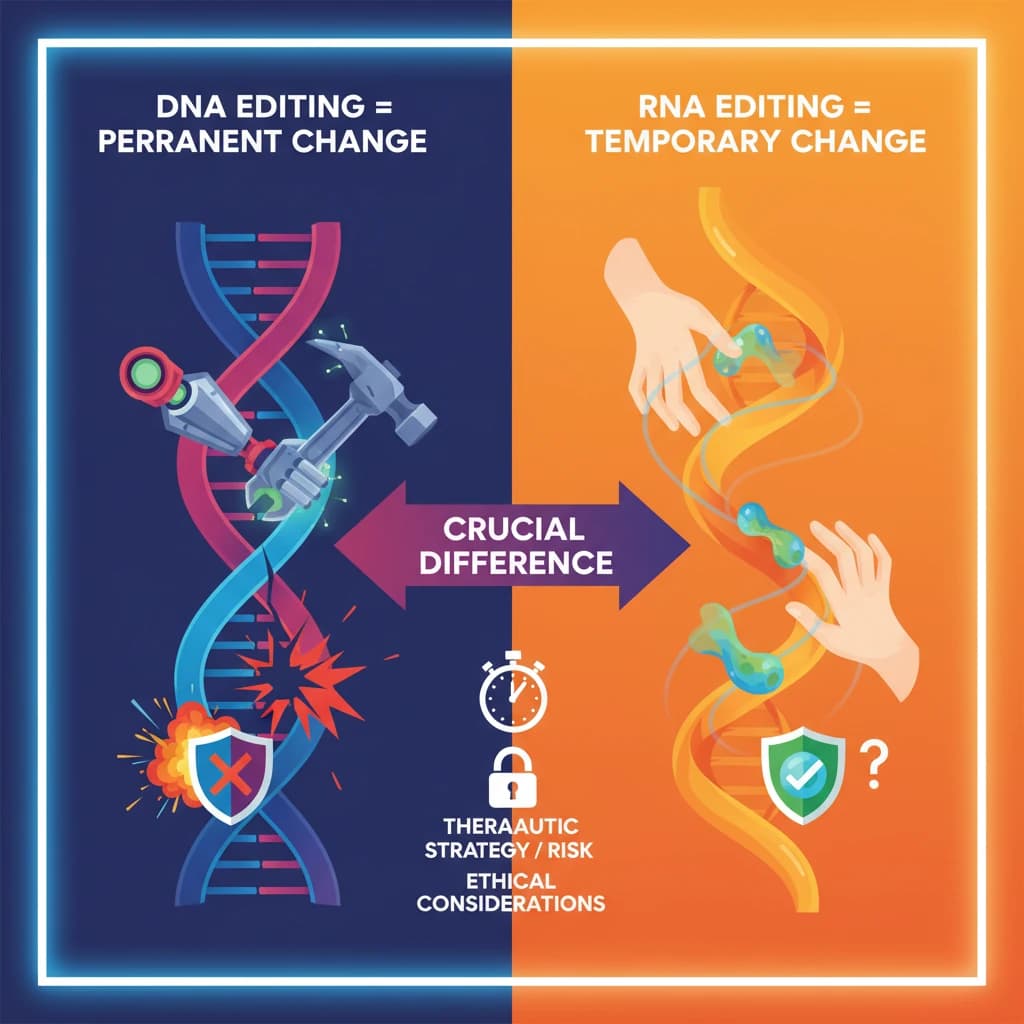
- The permanence vs. temporariness difference is crucial for determining therapeutic strategy, risk assessment, and ethical considerations.
- Both technologies offer vast potential for treating diseases but are suited for distinct applications based on their mechanisms and safety profiles.
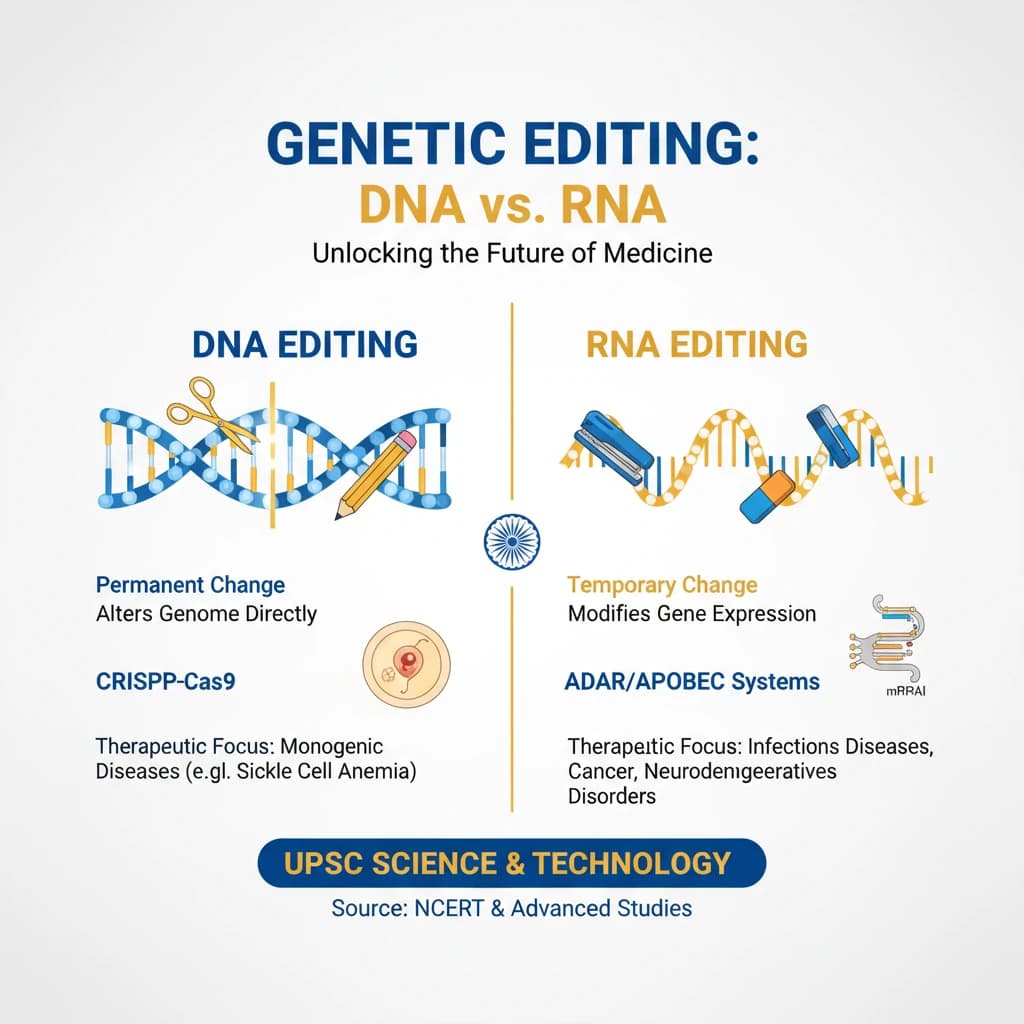
How do RNA and DNA Editing Differ?
Medium⏱️ 6 min read
science and technology
📖 Introduction
Introduction to Genetic Editing
Genetic editing involves precisely modifying an organism's genetic material. This advanced technology holds immense promise for treating various diseases and understanding biological processes.
It primarily focuses on altering either DNA or RNA, each possessing distinct characteristics and implications for therapeutic applications.
Core Differences: DNA vs. RNA Editing
The fundamental distinctions between DNA editing and RNA editing are based on their permanence, the tools utilized, and the resulting immune responses within the body.
| Aspect | DNA Editing | RNA Editing | |
|---|---|---|---|
| Permanence | Permanent: Alters an individual’s genome permanently. Changes are inherited if germline cells are affected. | Temporary: Makes temporary changes in RNA that fade over time as RNA molecules degrade. | |
| Risk of Errors | May lead to irreversible errors if off-target modifications occur, increasing long-term risks. | Provides flexibility to discontinue therapy if problems arise, reducing long-term risks due to transient effects. | |
| Tools Used | Often uses CRISPR-Cas9 or other tools derived from bacteria or other non-human sources. | Utilises ADAR enzymes (Adenosine Deaminases Acting on RNA) naturally present in human cells. | |
| Immune Response | Can trigger immune reactions due to the introduction of foreign bacterial proteins into the body. | Poses a lower risk of immune or allergic responses because it uses endogenous (naturally occurring) enzymes. | |
| Suitability | Requires careful consideration due to potential for irreversible changes and immune reactions. Best for permanent genetic corrections. | Suitable for repeated treatments and individuals with immune sensitivities, ideal for transient modulation of gene expression. |
Understanding DNA Editing
DNA editing directly modifies the organism's genome, which is the complete set of an organism's genetic material. These changes are made at the foundational level.
The modifications are typically permanent and can potentially be passed on to subsequent generations if performed on germline cells (sperm or egg cells).
The most prominent tool for DNA editing is CRISPR-Cas9, a revolutionary system adapted from bacterial immune defenses. It allows for precise cutting and editing of specific DNA sequences.
Understanding RNA Editing
In contrast, RNA editing modifies the RNA molecule, which serves as a temporary messenger carrying instructions from DNA for protein synthesis. It targets the transient copies of genetic information.
These modifications are inherently temporary because RNA molecules have a shorter lifespan than DNA and are constantly being synthesized and degraded by the cell.
RNA editing primarily utilizes ADAR enzymes (Adenosine Deaminases Acting on RNA), which are naturally occurring in human cells and convert adenosine to inosine in RNA, thereby altering the genetic message.
UPSC often asks about the ethical implications and practical applications of these technologies. Understanding the core differences in permanence and immune response is crucial for comprehensive answers, especially in GS Paper III: Science and Technology and GS Paper IV: Ethics.
💡 Key Takeaways
- •DNA editing causes permanent alterations to the genome, while RNA editing results in temporary changes to RNA molecules.
- •DNA editing (e.g., CRISPR-Cas9) often uses foreign bacterial components, which can trigger an immune response.
- •RNA editing (e.g., ADAR enzymes) utilizes naturally occurring human enzymes, posing a lower risk of immune reactions.
- •The permanence vs. temporariness difference is crucial for determining therapeutic strategy, risk assessment, and ethical considerations.
- •Both technologies offer vast potential for treating diseases but are suited for distinct applications based on their mechanisms and safety profiles.
🧠 Memory Techniques
95% Verified Content
📚 Reference Sources
•National Center for Biotechnology Information (NCBI) - for ADAR and CRISPR mechanisms
•Nature and Science journals (general knowledge on gene editing advancements)
•World Health Organization (WHO) - for ethical guidelines on gene editing