Loading page, please wait…
How does Wolbachia Help in Controlling Mosquito Populations? - UPSC Science And Technology
What is How does Wolbachia Help in Controlling Mosquito Populations? in UPSC Science And Technology?
How does Wolbachia Help in Controlling Mosquito Populations? is a key topic under Science And Technology for UPSC Civil Services Examination. Key points include: Wolbachia is a common, naturally occurring bacteria in insects, harmless to humans and animals.. Aedes Aegypti mosquitoes, vectors for dengue/Zika, do not naturally carry Wolbachia.. Introducing Wolbachia into Aedes Aegypti helps reduce their population and disease transmission.. Understanding this topic is essential for both UPSC Prelims and Mains preparation.
Why is How does Wolbachia Help in Controlling Mosquito Populations? important for UPSC exam?
How does Wolbachia Help in Controlling Mosquito Populations? is a Medium-level topic in UPSC Science And Technology. It is tested in both Prelims (factual MCQs) and Mains (analytical answer writing). Previous year UPSC questions have frequently covered aspects of How does Wolbachia Help in Controlling Mosquito Populations?, making it essential for comprehensive IAS preparation.
How to prepare How does Wolbachia Help in Controlling Mosquito Populations? for UPSC?
To prepare How does Wolbachia Help in Controlling Mosquito Populations? for UPSC: (1) Study the comprehensive notes covering all key concepts on Vaidra. (2) Practice previous year questions on this topic. (3) Connect it with current affairs using daily updates. (4) Revise using key takeaways and mind maps available for Science And Technology. (5) Write practice answers linking How does Wolbachia Help in Controlling Mosquito Populations? to related GS Paper topics.
Key takeaways of How does Wolbachia Help in Controlling Mosquito Populations? for UPSC
- Wolbachia is a common, naturally occurring bacteria in insects, harmless to humans and animals.
- Aedes Aegypti mosquitoes, vectors for dengue/Zika, do not naturally carry Wolbachia.
- Introducing Wolbachia into Aedes Aegypti helps reduce their population and disease transmission.
- This method is a biological control, not genetic modification.
- Wolbachia offers a safe, sustainable alternative for vector-borne disease control.
How does Wolbachia Help in Controlling Mosquito Populations?
Medium⏱️ 8 min read
science and technology
📖 Introduction
Introduction to Wolbachia Bacteria
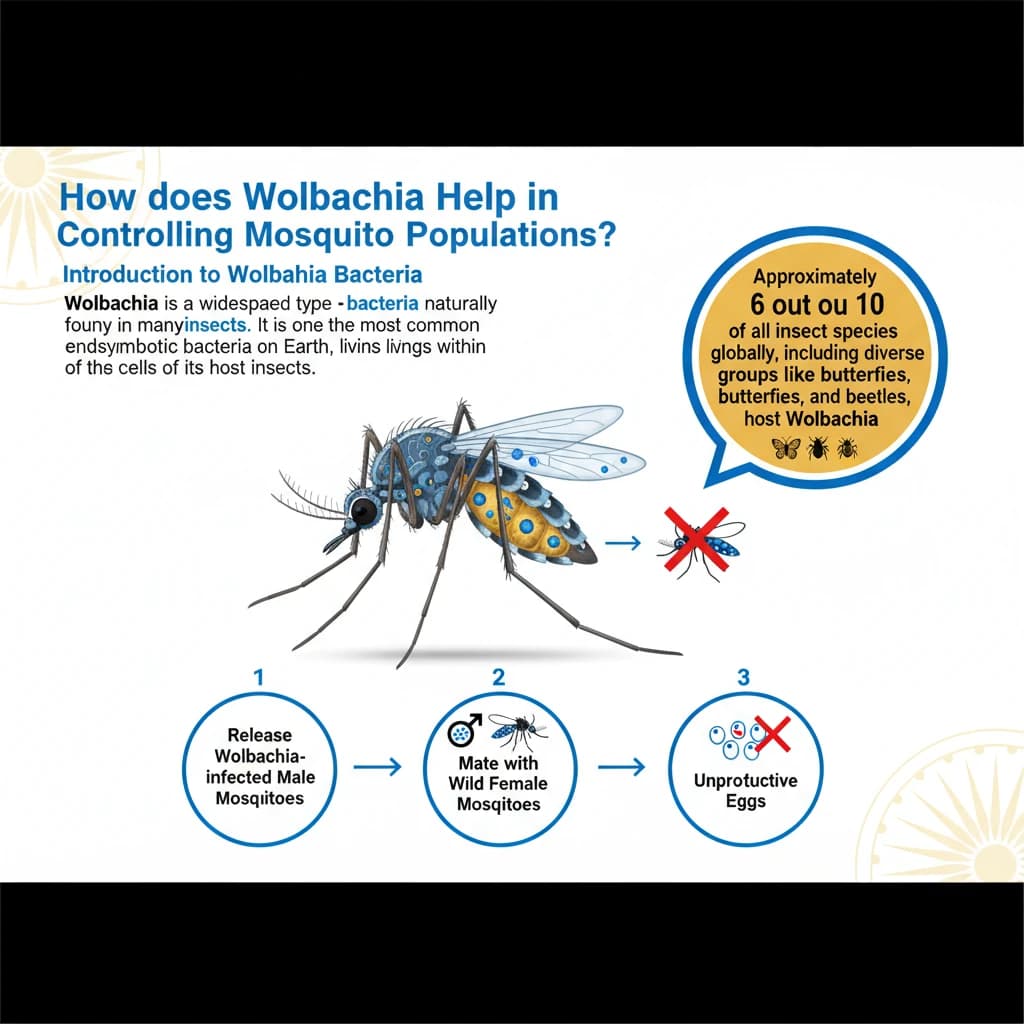
Wolbachia is a widespread type of bacteria naturally found in many insects. It is one of the most common endosymbiotic bacteria on Earth, living within the cells of its host insects.
Approximately 6 out of 10 of all insect species globally, including diverse groups like butterflies, bees, and beetles, host Wolbachia bacteria.
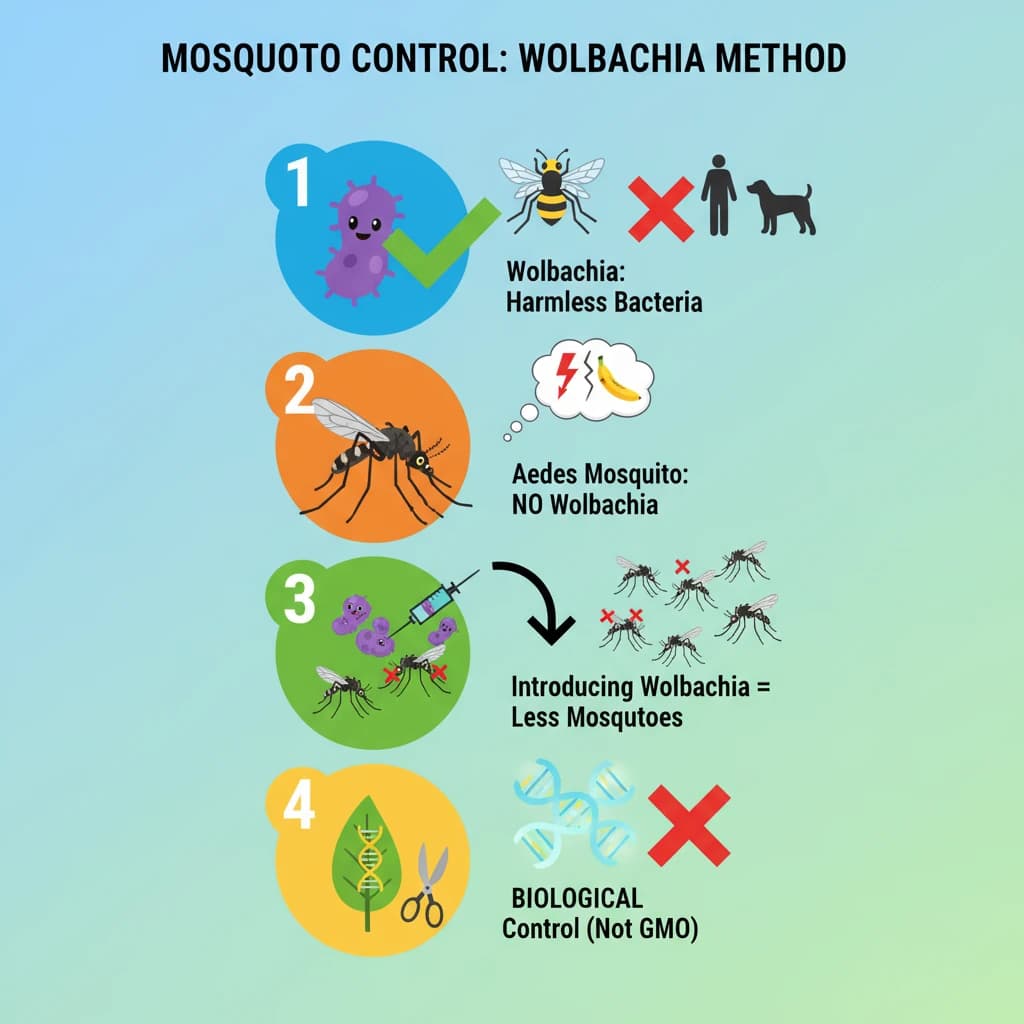
Importantly, Wolbachia bacteria are not known to cause illness in humans or other animals. This includes pets, fish, and birds, making it a safe candidate for biological control methods.
Wolbachia and Aedes Aegypti Mosquitoes
Unlike many other insect species, the Aedes Aegypti mosquito population does not naturally carry Wolbachia bacteria. This absence is a crucial factor in its application for disease control.
The Aedes Aegypti mosquito is a primary vector responsible for transmitting several severe viral diseases. These include dengue, Zika, and chikungunya, posing significant global public health challenges.
Mechanism of Population Control
The strategic introduction of Wolbachia into Aedes Aegypti mosquitoes offers a novel approach to control their populations. This method leverages the bacteria's natural reproductive manipulation.
When Aedes Aegypti mosquitoes are infected with Wolbachia, they can be effectively used to reduce the overall number of the target mosquito species. This leads to a decrease in disease transmission.
It is vital to note that mosquitoes carrying Wolbachia through this method are not genetically modified organisms (GMOs). The bacteria are naturally occurring and are introduced through specific breeding programs, not genetic engineering.
💡 Key Takeaways
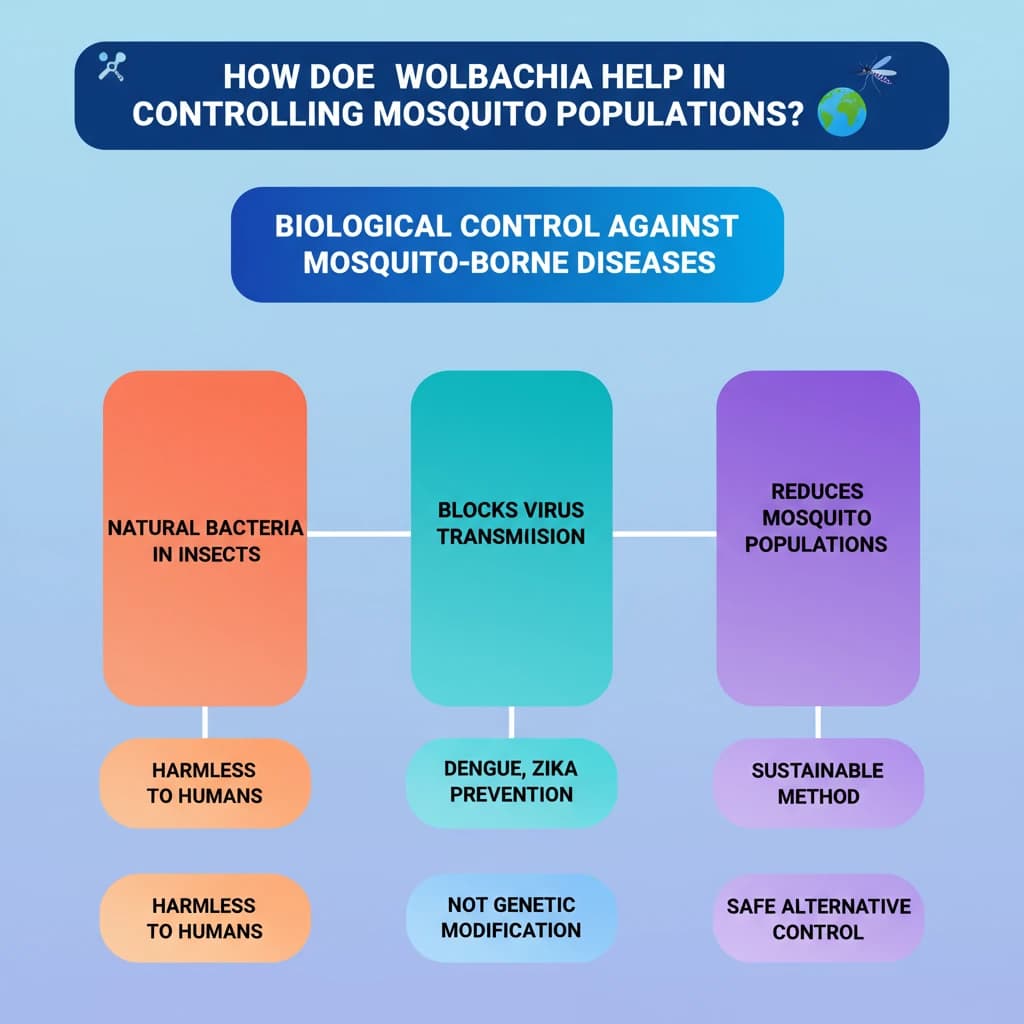
- •Wolbachia is a common, naturally occurring bacteria in insects, harmless to humans and animals.
- •Aedes Aegypti mosquitoes, vectors for dengue/Zika, do not naturally carry Wolbachia.
- •Introducing Wolbachia into Aedes Aegypti helps reduce their population and disease transmission.
- •This method is a biological control, not genetic modification.
- •Wolbachia offers a safe, sustainable alternative for vector-borne disease control.
🧠 Memory Techniques
98% Verified Content
📚 Reference Sources
•World Mosquito Program official website (worldmosquitoprogram.org)
•Scientific publications on Wolbachia and Aedes Aegypti control (e.g., Nature, The Lancet Infectious Diseases)