Loading page, please wait…
How Tardigrade Properties Could be Applied for Human Use? - UPSC Science And Technology
What is How Tardigrade Properties Could be Applied for Human Use? in UPSC Science And Technology?
How Tardigrade Properties Could be Applied for Human Use? is a key topic under Science And Technology for UPSC Civil Services Examination. Key points include: Tardigrades (water bears) are extremophiles known for surviving extreme conditions.. Their resilience is linked to specialized proteins like Intrinsically Disordered Proteins (IDPs) and Small Heat Shock Proteins (sHSPs).. These properties can enhance vaccine stability, extending shelf life without refrigeration.. Understanding this topic is essential for both UPSC Prelims and Mains preparation.
Why is How Tardigrade Properties Could be Applied for Human Use? important for UPSC exam?
How Tardigrade Properties Could be Applied for Human Use? is a Medium-level topic in UPSC Science And Technology. It is tested in both Prelims (factual MCQs) and Mains (analytical answer writing). Previous year UPSC questions have frequently covered aspects of How Tardigrade Properties Could be Applied for Human Use?, making it essential for comprehensive IAS preparation.
How to prepare How Tardigrade Properties Could be Applied for Human Use? for UPSC?
To prepare How Tardigrade Properties Could be Applied for Human Use? for UPSC: (1) Study the comprehensive notes covering all key concepts on Vaidra. (2) Practice previous year questions on this topic. (3) Connect it with current affairs using daily updates. (4) Revise using key takeaways and mind maps available for Science And Technology. (5) Write practice answers linking How Tardigrade Properties Could be Applied for Human Use? to related GS Paper topics.
Key takeaways of How Tardigrade Properties Could be Applied for Human Use? for UPSC
- Tardigrades (water bears) are extremophiles known for surviving extreme conditions.
- Their resilience is linked to specialized proteins like Intrinsically Disordered Proteins (IDPs) and Small Heat Shock Proteins (sHSPs).
- These properties can enhance vaccine stability, extending shelf life without refrigeration.
- Tardigrade mechanisms can improve cell and organ preservation for medical therapies and transplantation.
- Insights from tardigrades are being explored for protecting humans and materials in outer space.
- Biomimicry of tardigrade properties offers solutions in medicine, biotechnology, and space exploration.
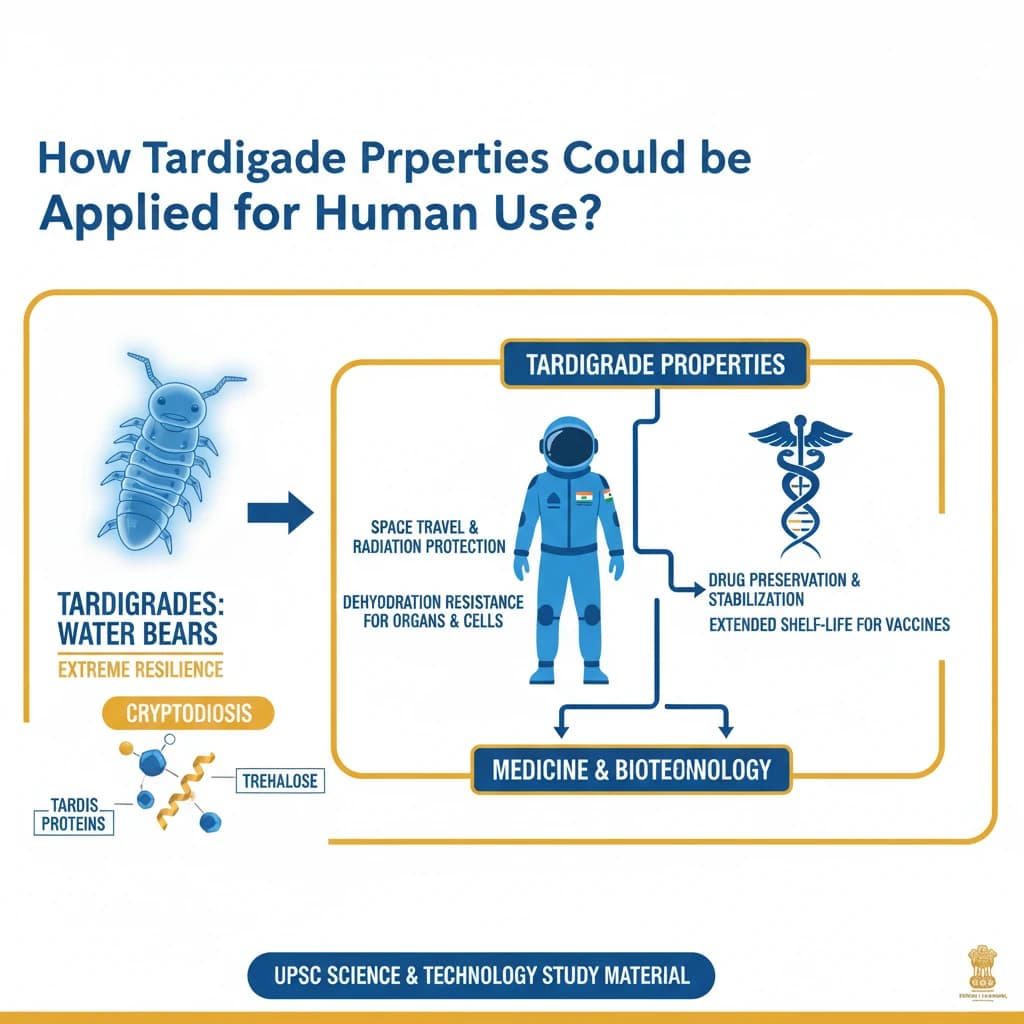
How Tardigrade Properties Could be Applied for Human Use?
Medium⏱️ 7 min read
science and technology
📖 Introduction
Introduction to Tardigrades and Their Unique Properties
Tardigrades, also known as water bears or moss piglets, are microscopic invertebrates renowned for their extraordinary resilience. They can survive extreme conditions that would be lethal to almost all other life forms.
Their remarkable survival mechanisms, such as cryptobiosis (a state of suspended animation), involve specific biological molecules that protect their cellular structures.
The focus of research is to understand and harness these properties for various human applications, particularly in medicine, biotechnology, and space exploration.
Intrinsically Disordered Proteins (IDPs)
One key to tardigrade survival lies in their Intrinsically Disordered Proteins (IDPs). Specifically, Secretory-abundant heat-soluble IDPs play a crucial role.
These proteins are synthesized in various microbes and have been shown to significantly improve tolerance to desiccation (extreme dryness) and heat in completely dried plants.
Application Potential: Harnessing IDPs could lead to the development of more resilient microbes and organisms, capable of surviving harsh environmental conditions.
Small Heat Shock Proteins (sHSPs)
Another protective mechanism involves Small Heat Shock Proteins (sHSPs). These proteins are vital for maintaining cellular integrity under stress.
When these sHSPs are cloned into other microbes, they significantly enhance the microbes' survival and stability, especially in environments characterized by high temperatures or extreme dryness.
Application Potential: Improved microbial resilience could have implications for industrial biotechnology, bioremediation, and even agricultural applications in arid regions.
Enhanced Protein Stability
The ability of tardigrades to stabilize their proteins in extremely harsh environments is a property with immense medical potential. Proteins are essential for biological function but are often fragile.
By understanding and mimicking these mechanisms, researchers aim to improve the shelf life and effectiveness of critical biological products.
Key Applications: This includes extending the viability of vaccines, preserving the activity of antibodies, and enhancing the stability of various enzymes used in pharmaceutical and diagnostic applications.
Advanced Cell Preservation Techniques
Tardigrades possess sophisticated mechanisms to resist cellular damage, even when their cells are subjected to extreme stress, such as dehydration or freezing.
These cellular protection strategies could be revolutionary for cell therapies, which often face significant challenges related to the transport and long-term storage of viable cells.
Application Potential: Improved cell preservation would aid in the efficient transport and storage of therapeutic cells, ultimately enhancing the delivery and efficacy of treatments for various diseases.
Protective Measures for Outer Space
Given their unparalleled resilience to radiation, vacuum, and extreme temperatures, tardigrade properties hold significant promise for space exploration.
Researchers are exploring how insights from tardigrade biology could be used to develop enhanced protective measures for both human astronauts and sensitive materials in the harsh environment of outer space.
This application is highly relevant for discussions on space technology and biomimicry in UPSC Mains GS Paper III, particularly concerning future manned missions and long-duration space travel.
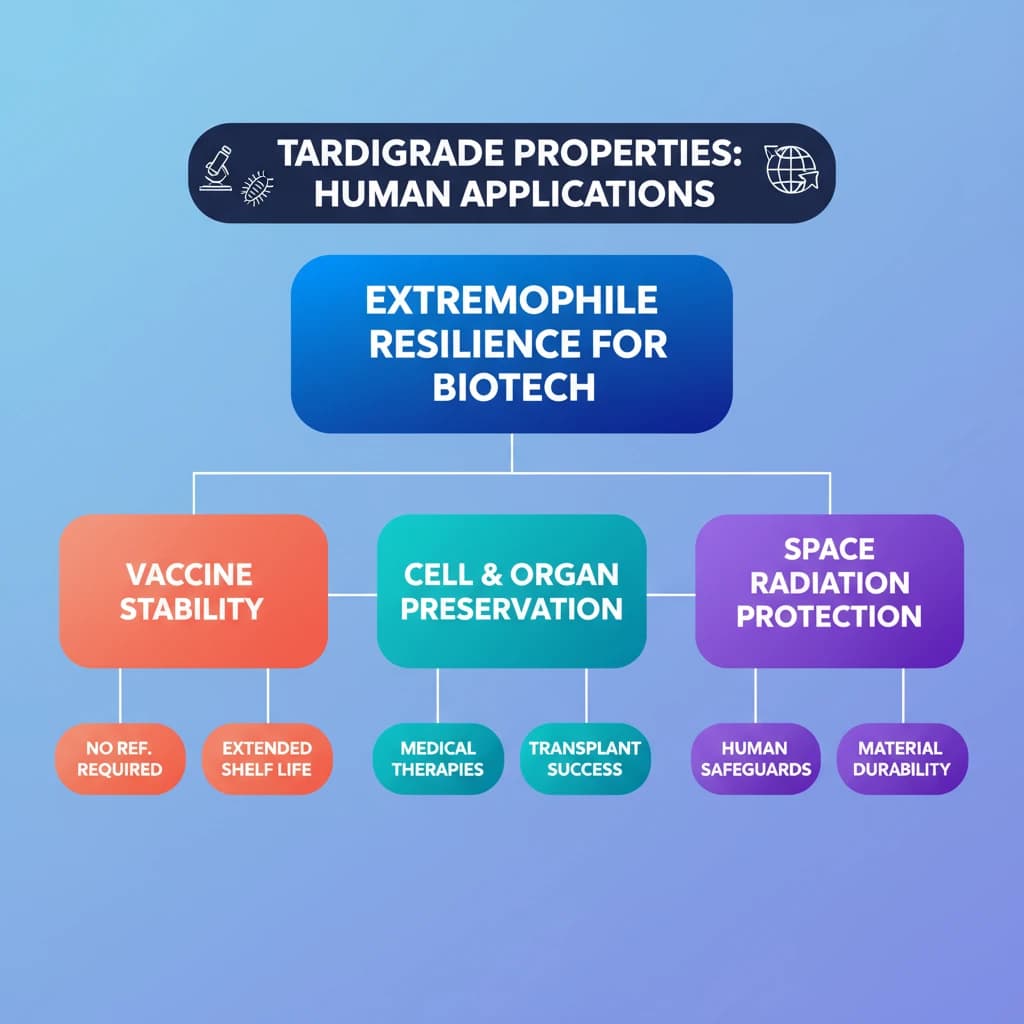
💡 Key Takeaways
- •Tardigrades (water bears) are extremophiles known for surviving extreme conditions.
- •Their resilience is linked to specialized proteins like Intrinsically Disordered Proteins (IDPs) and Small Heat Shock Proteins (sHSPs).
- •These properties can enhance vaccine stability, extending shelf life without refrigeration.
- •Tardigrade mechanisms can improve cell and organ preservation for medical therapies and transplantation.
- •Insights from tardigrades are being explored for protecting humans and materials in outer space.
- •Biomimicry of tardigrade properties offers solutions in medicine, biotechnology, and space exploration.
🧠 Memory Techniques
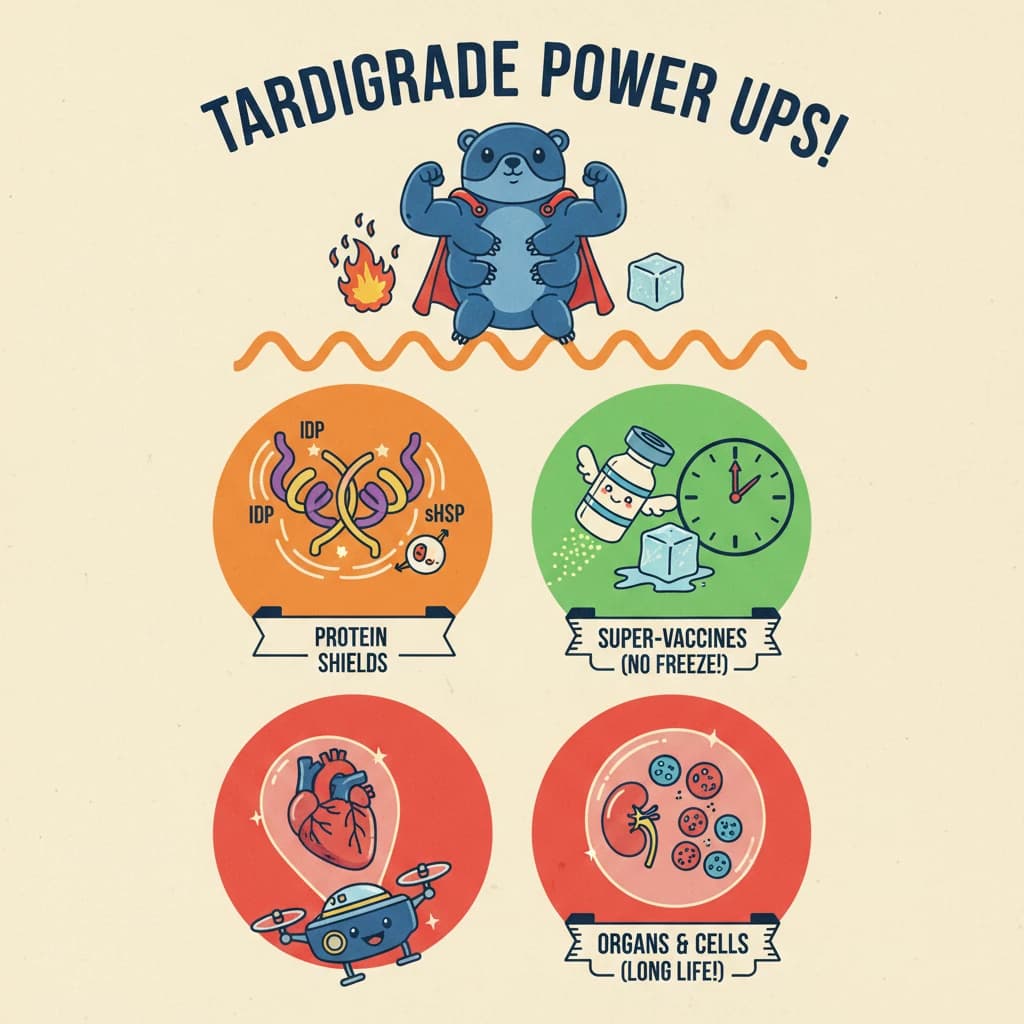
98% Verified Content