Loading page, please wait…
International Space Station (ISS) - UPSC Science And Technology
What is International Space Station (ISS) in UPSC Science And Technology?
International Space Station (ISS) is a key topic under Science And Technology for UPSC Civil Services Examination. Key points include: The International Space Station (ISS) is the largest human-made structure in space, launched in 1998.. It has been continuously occupied since 2000, serving as a habitat and research laboratory.. A joint effort of five major space agencies: NASA, Roscosmos, ESA, JAXA, and CSA.. Understanding this topic is essential for both UPSC Prelims and Mains preparation.
Why is International Space Station (ISS) important for UPSC exam?
International Space Station (ISS) is a Medium-level topic in UPSC Science And Technology. It is tested in both Prelims (factual MCQs) and Mains (analytical answer writing). Previous year UPSC questions have frequently covered aspects of International Space Station (ISS), making it essential for comprehensive IAS preparation.
How to prepare International Space Station (ISS) for UPSC?
To prepare International Space Station (ISS) for UPSC: (1) Study the comprehensive notes covering all key concepts on Vaidra. (2) Practice previous year questions on this topic. (3) Connect it with current affairs using daily updates. (4) Revise using key takeaways and mind maps available for Science And Technology. (5) Write practice answers linking International Space Station (ISS) to related GS Paper topics.
Key takeaways of International Space Station (ISS) for UPSC
- The International Space Station (ISS) is the largest human-made structure in space, launched in 1998.
- It has been continuously occupied since 2000, serving as a habitat and research laboratory.
- A joint effort of five major space agencies: NASA, Roscosmos, ESA, JAXA, and CSA.
- Orbits approximately 400 kilometres above Earth, enabling microgravity research and Earth observation.
- Represents a pinnacle of international scientific and technological cooperation, paving the way for future deep-space missions and commercial space ventures.
International Space Station (ISS)
Medium⏱️ 6 min read
science and technology
📖 Introduction
Introduction to the International Space Station (ISS)
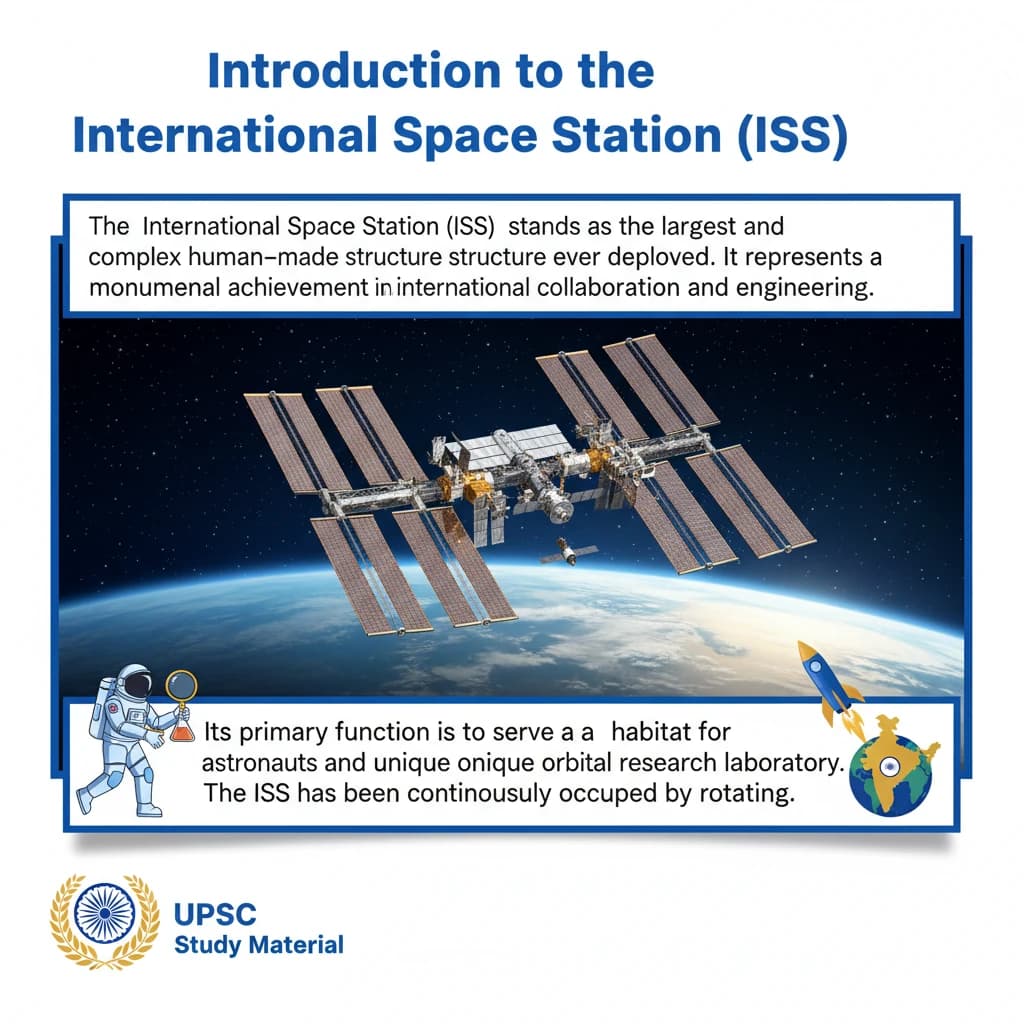
The International Space Station (ISS) stands as the largest and most complex human-made structure ever deployed in space. It represents a monumental achievement in international collaboration and engineering.
Its primary function is to serve as a habitat for astronauts and a unique orbital research laboratory. The ISS has been continuously occupied by rotating crews since November 2, 2000.
Key Concept: The ISS is a symbol of global scientific cooperation and humanity's enduring quest for knowledge beyond Earth.
Launch and Continuous Occupation
The first component of the ISS, the Zarya module, was launched on November 20, 1998. This marked the beginning of its assembly in low Earth orbit.
Since November 2000, the station has maintained a continuous human presence, hosting astronauts and cosmonauts from various countries for long-duration missions.
Launch Date: November 20, 1998 (First component)
Continuous Occupation: Since November 2, 2000
International Collaboration and Participating Agencies
The ISS is a testament to global cooperation, involving a consortium of five leading space agencies from around the world. This partnership pools resources, expertise, and technology.
The collaborative nature ensures diverse scientific perspectives and shared responsibilities in maintaining this complex orbital outpost.
Participating Space Agencies:
- United States: NASA (National Aeronautics and Space Administration)
- Russia: Roscosmos (State Space Corporation Roscosmos)
- Europe: ESA (European Space Agency)
- Japan: JAXA (Japan Aerospace Exploration Agency)
- Canada: CSA (Canadian Space Agency)
Orbital Parameters and Altitude
The ISS maintains a relatively low Earth orbit, allowing for easier access and resupply missions. Its proximity to Earth also facilitates observations of our planet.
This specific altitude is crucial for various scientific experiments, including those studying microgravity and Earth's atmosphere.
Orbital Altitude: Approximately 400 kilometres above Earth's surface.
UPSC Insight: Questions on international space collaborations, the benefits of microgravity research, and the geopolitical implications of space assets often feature the ISS as a prime example. Understand its multifaceted roles.
💡 Key Takeaways
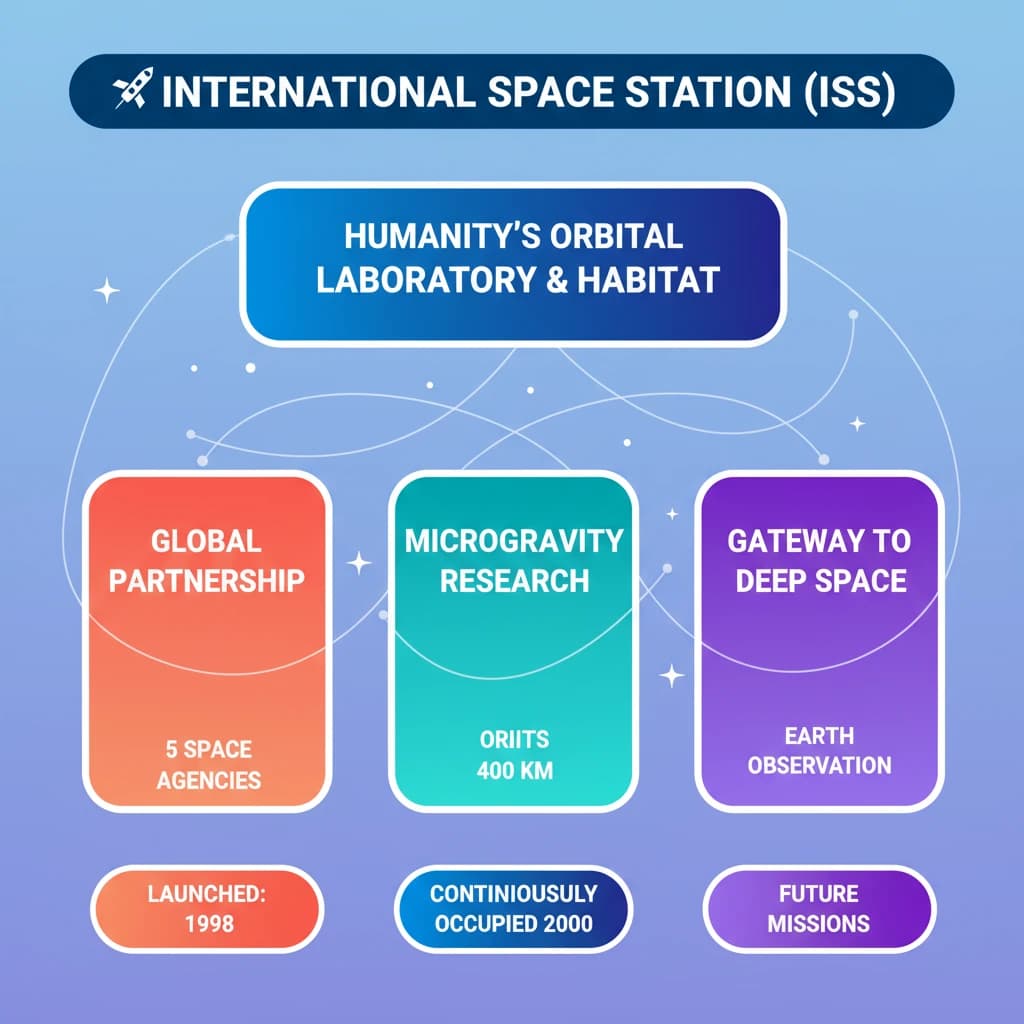
- •The International Space Station (ISS) is the largest human-made structure in space, launched in 1998.
- •It has been continuously occupied since 2000, serving as a habitat and research laboratory.
- •A joint effort of five major space agencies: NASA, Roscosmos, ESA, JAXA, and CSA.
- •Orbits approximately 400 kilometres above Earth, enabling microgravity research and Earth observation.
- •Represents a pinnacle of international scientific and technological cooperation, paving the way for future deep-space missions and commercial space ventures.
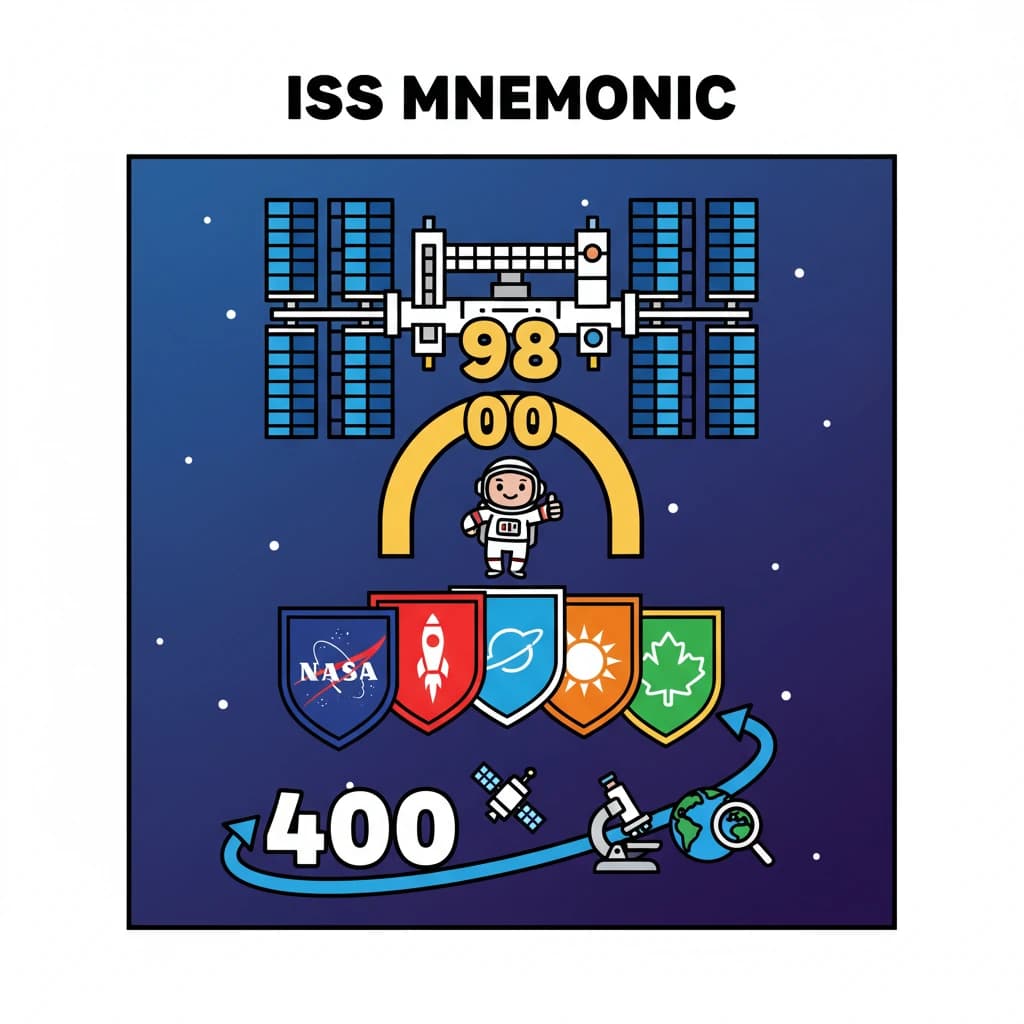
🧠 Memory Techniques
98% Verified Content
📚 Reference Sources
•NASA (National Aeronautics and Space Administration) - Official ISS pages
•ESA (European Space Agency) - Official ISS pages
•Roscosmos (State Space Corporation Roscosmos) - Official information