Loading page, please wait…
International Thalassemia Day - UPSC Science And Technology
What is International Thalassemia Day in UPSC Science And Technology?
International Thalassemia Day is a key topic under Science And Technology for UPSC Civil Services Examination. Key points include: International Thalassemia Day is observed on May 8th to raise awareness and promote prevention, diagnosis, and care.. Thalassemia is an inherited blood disorder affecting hemoglobin and red blood cell production, leading to anemia.. It has types (Alpha, Beta) and varying symptoms from asymptomatic to severe, requiring lifelong management.. Understanding this topic is essential for both UPSC Prelims and Mains preparation.
Why is International Thalassemia Day important for UPSC exam?
International Thalassemia Day is a Medium-level topic in UPSC Science And Technology. It is tested in both Prelims (factual MCQs) and Mains (analytical answer writing). Previous year UPSC questions have frequently covered aspects of International Thalassemia Day, making it essential for comprehensive IAS preparation.
How to prepare International Thalassemia Day for UPSC?
To prepare International Thalassemia Day for UPSC: (1) Study the comprehensive notes covering all key concepts on Vaidra. (2) Practice previous year questions on this topic. (3) Connect it with current affairs using daily updates. (4) Revise using key takeaways and mind maps available for Science And Technology. (5) Write practice answers linking International Thalassemia Day to related GS Paper topics.
Key takeaways of International Thalassemia Day for UPSC
- International Thalassemia Day is observed on May 8th to raise awareness and promote prevention, diagnosis, and care.
- Thalassemia is an inherited blood disorder affecting hemoglobin and red blood cell production, leading to anemia.
- It has types (Alpha, Beta) and varying symptoms from asymptomatic to severe, requiring lifelong management.
- The 2024 theme emphasizes equitable and accessible treatment for all patients.
- Integration of compulsory thalassemia testing into the RCH program is crucial for prevention and reducing disease burden.
International Thalassemia Day
Medium⏱️ 8 min read
science and technology
📖 Introduction
Introduction to International Thalassemia Day
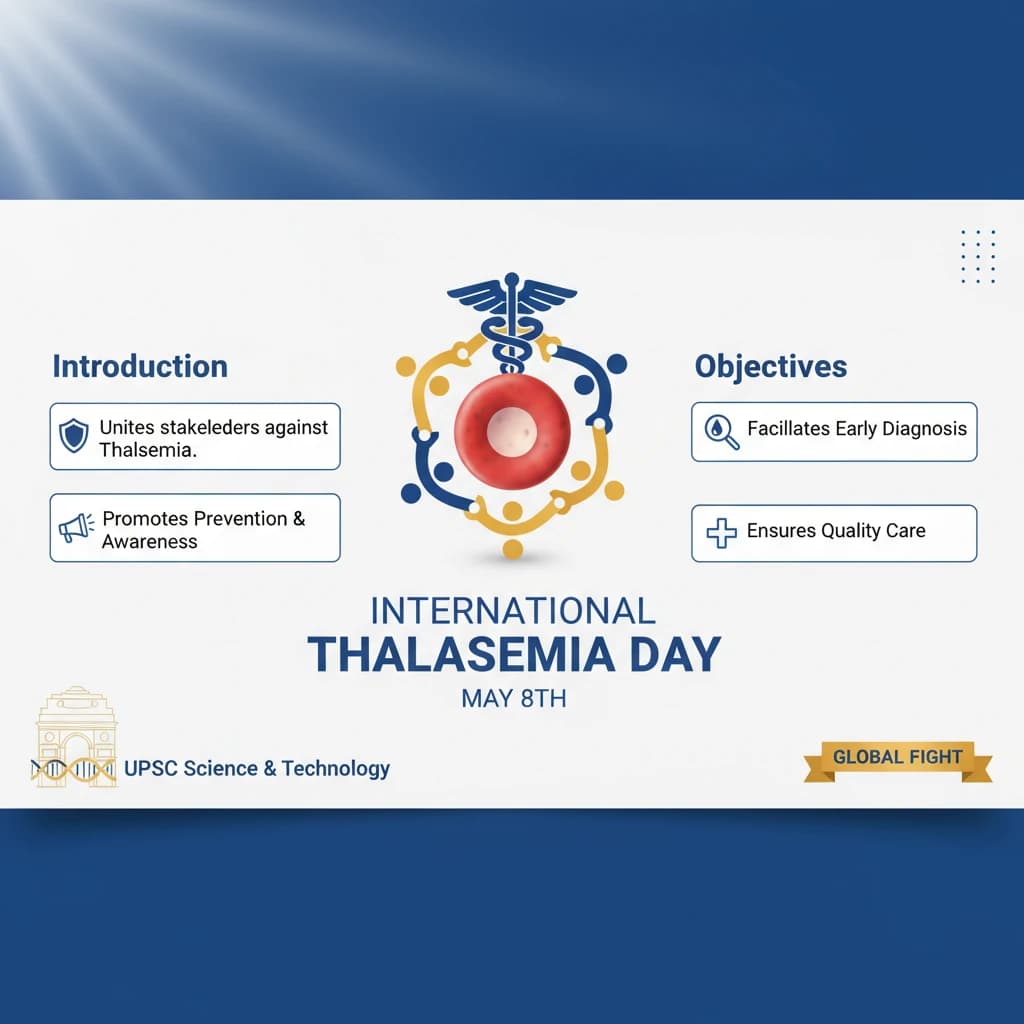
International Thalassemia Day is observed annually on May 8th. This day serves as a crucial platform to unite various stakeholders in the global fight against thalassemia.
The primary objectives include promoting prevention, raising widespread awareness, facilitating early diagnosis, and ensuring access to quality care for all patients affected by this genetic disorder.
What is Thalassemia?
Thalassemia (pronounced thal-uh-SEE-mee-uh) is an inherited blood disorder. It directly impacts the body's capacity to produce normal hemoglobin, which is essential for carrying oxygen in red blood cells.
Individuals with thalassemia produce fewer healthy hemoglobin proteins. Consequently, their bone marrow generates a reduced number of healthy red blood cells, leading to anemia and other complications.
Types of Thalassemia
Thalassemia is broadly categorized into different types based on which globin protein chain is affected:
- Alpha Thalassemia: This type occurs when there are defects in one or more of the four genes responsible for making alpha globin protein chains. These genes are inherited, two from each parent. The severity depends on the number of defective genes.
- Beta Thalassemia: This type results from defects in one or both of the two beta-globin genes, one inherited from each parent. The severity of anemia and the overall condition are determined by the number of defective genes and the specific location of the defect within the beta globin protein chain.
Symptoms of Thalassemia
The symptoms of thalassemia can vary significantly, ranging from no noticeable signs to severe, life-threatening conditions:
- Asymptomatic: Some individuals may carry the trait but exhibit no symptoms at all.
- Mild to Moderate Symptoms: These can include growth problems, delayed puberty, bone abnormalities (such as osteoporosis), and an enlarged spleen.
- Severe Symptoms: Patients with severe thalassemia often experience poor appetite, pale or yellowish skin (known as jaundice), dark or tea-colored urine, and irregular bone structure in the face.
2024 Theme and Focus
The theme for International Thalassemia Day 2024 is “Empowering Lives, Embracing Progress: Equitable and Accessible Thalassemia Treatment for All.”
This theme underscores the critical importance of ensuring equality in access to comprehensive care, treatment, and support for all individuals living with thalassemia, regardless of their geographical location or socioeconomic status.
Integration with RCH Program
During the 2024 observance, there was a strong emphasis on the urgent need to integrate compulsory Thalassemia testing into the existing Reproductive and Child Health (RCH) program.
This integration is proposed as a vital strategy to significantly alleviate the burden of Thalassemia within the population by enabling early detection and intervention.
The RCH program is a comprehensive flagship initiative launched in 2005 under the broader umbrella of the National Health Mission (NHM). Its primary goal is to achieve specific RCH targets, including the reduction of maternal and infant mortality rates and the overall total fertility rates in India.
UPSC Insight: Understanding the connection between specific health days (like International Thalassemia Day), national health programs (RCH, NHM), and genetic disorders is crucial for GS Paper 2 (Health). Be prepared to discuss policy implications and public health strategies.
💡 Key Takeaways
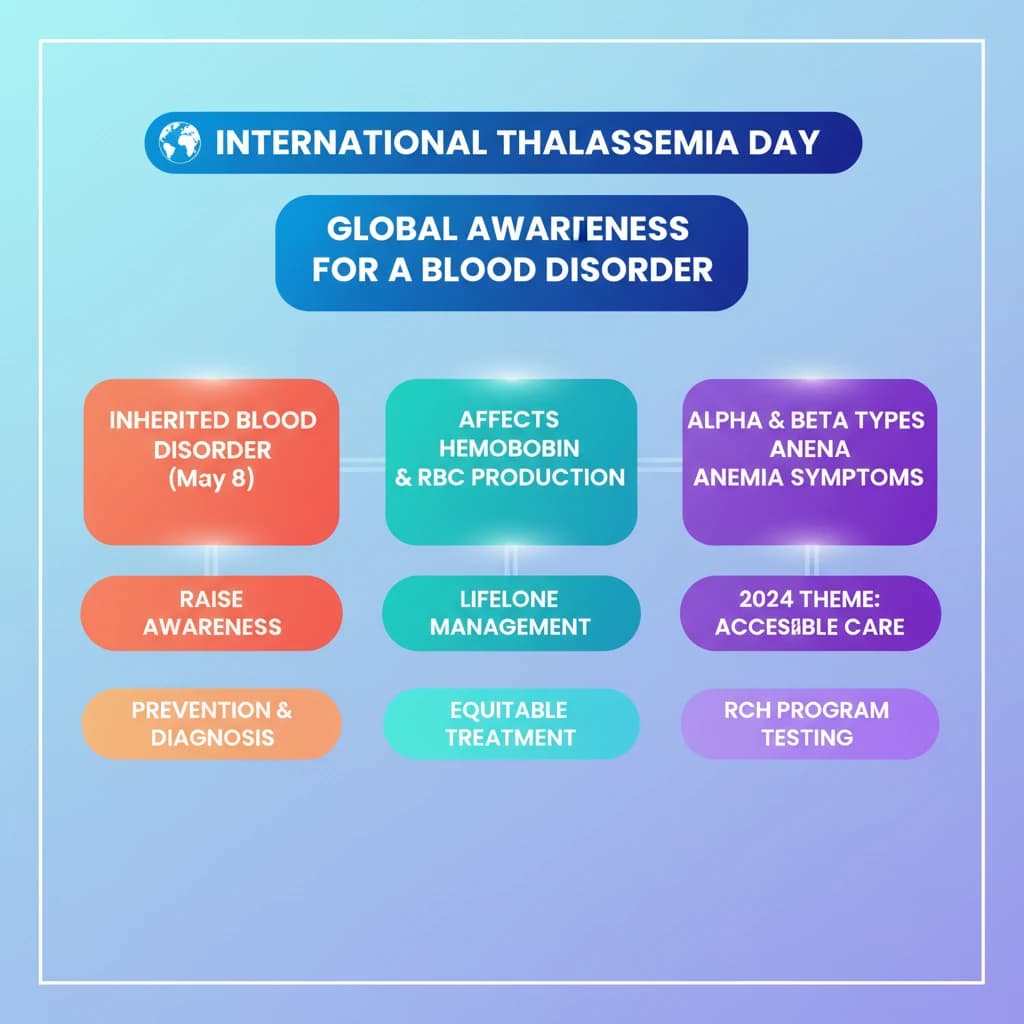
- •International Thalassemia Day is observed on May 8th to raise awareness and promote prevention, diagnosis, and care.
- •Thalassemia is an inherited blood disorder affecting hemoglobin and red blood cell production, leading to anemia.
- •It has types (Alpha, Beta) and varying symptoms from asymptomatic to severe, requiring lifelong management.
- •The 2024 theme emphasizes equitable and accessible treatment for all patients.
- •Integration of compulsory thalassemia testing into the RCH program is crucial for prevention and reducing disease burden.
🧠 Memory Techniques
95% Verified Content
📚 Reference Sources
•International Thalassemia Federation (ITF) official website
•World Health Organization (WHO) publications on Thalassemia
•National Health Mission (NHM) guidelines and documents