Loading page, please wait…
Launch of Tanager-1 - UPSC Science And Technology
What is Launch of Tanager-1 in UPSC Science And Technology?
Launch of Tanager-1 is a key topic under Science And Technology for UPSC Civil Services Examination. Key points include: Tanager-1 is a NASA satellite designed to detect major emitters of CO2 and Methane globally.. It uses imaging spectrometer technology to identify spectral "fingerprints" of these gases.. The satellite can measure point-source emissions from individual facilities.. Understanding this topic is essential for both UPSC Prelims and Mains preparation.
Why is Launch of Tanager-1 important for UPSC exam?
Launch of Tanager-1 is a Medium-level topic in UPSC Science And Technology. It is tested in both Prelims (factual MCQs) and Mains (analytical answer writing). Previous year UPSC questions have frequently covered aspects of Launch of Tanager-1, making it essential for comprehensive IAS preparation.
How to prepare Launch of Tanager-1 for UPSC?
To prepare Launch of Tanager-1 for UPSC: (1) Study the comprehensive notes covering all key concepts on Vaidra. (2) Practice previous year questions on this topic. (3) Connect it with current affairs using daily updates. (4) Revise using key takeaways and mind maps available for Science And Technology. (5) Write practice answers linking Launch of Tanager-1 to related GS Paper topics.
Key takeaways of Launch of Tanager-1 for UPSC
- Tanager-1 is a NASA satellite designed to detect major emitters of CO2 and Methane globally.
- It uses imaging spectrometer technology to identify spectral "fingerprints" of these gases.
- The satellite can measure point-source emissions from individual facilities.
- Methane is a potent greenhouse gas, 80 times more warming than CO2 over 20 years, and contributes 30% to global heating.
- Missions like Tanager-1 are crucial for tracking climate change, verifying emission reductions, and supporting international climate pledges.
Launch of Tanager-1
Medium⏱️ 8 min read
science and technology
📖 Introduction
Introduction to Tanager-1 Launch
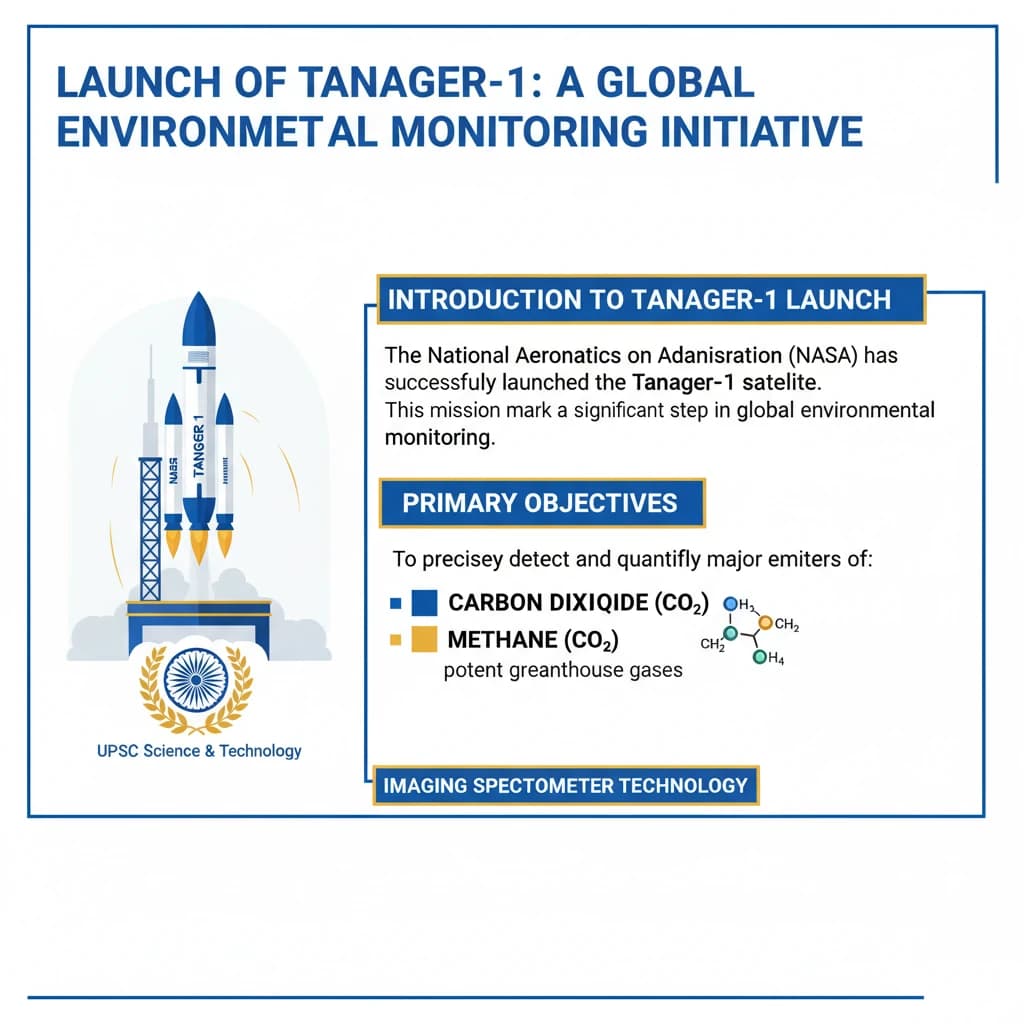
The National Aeronautics and Space Administration (NASA) has successfully launched the Tanager-1 satellite. This mission marks a significant step in global environmental monitoring.
The primary objective of Tanager-1 is to precisely detect and quantify major emitters of carbon dioxide (CO2) and methane (CH4), two potent greenhouse gases.
Imaging Spectrometer Technology
Tanager-1 employs advanced imaging spectrometer technology. This sophisticated instrument is designed to measure specific wavelengths of light that are reflected by Earth's surface.
How it Works:
- Different gases, such as methane and carbon dioxide, absorb distinct wavelengths of light.
- This absorption creates unique spectral "fingerprints" that the imaging spectrometer can accurately identify.
Global Emission Measurement Capability
A key capability of Tanager-1 is its ability to measure point-source emissions. This means it can pinpoint emissions down to the level of individual facilities and equipment.
This global-scale, high-resolution measurement capability is crucial for identifying specific sources of greenhouse gas emissions, enabling more targeted mitigation efforts.
Predecessor: MethaneSAT
Prior to Tanager-1, NASA had also launched MethaneSAT. This earlier satellite was specifically designed to track and measure methane emissions across various regions.
Understanding Methane: A Potent Greenhouse Gas
Methane (CH4) is recognized as a powerful greenhouse gas. It is the second-largest contributor to global warming, following carbon dioxide.
Key Methane Facts:
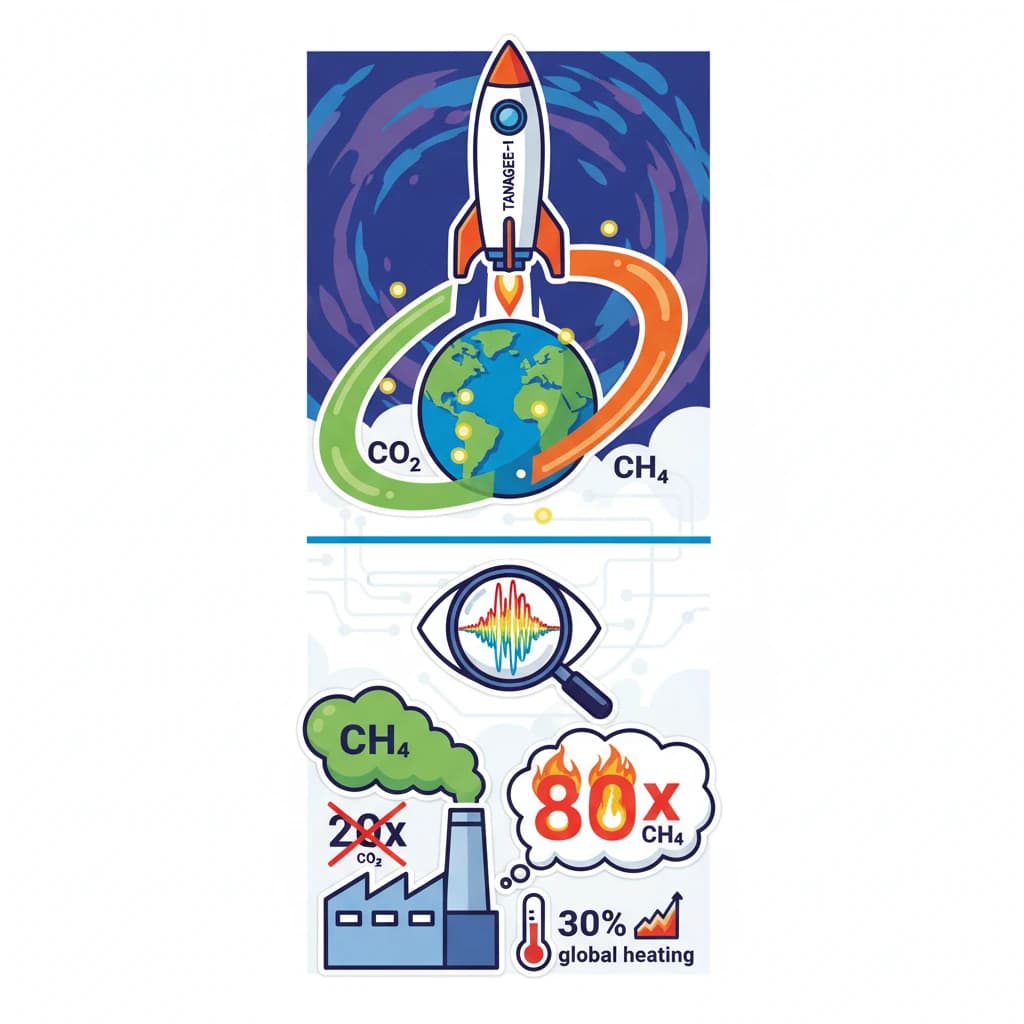
- Responsible for approximately 30% of global heating.
- According to the United Nations Environment Programme (UNEP), over a 20-year period, methane is 80 times more potent at warming the atmosphere than carbon dioxide.
UPSC Insight: Understanding the relative potency and sources of different greenhouse gases like methane and carbon dioxide is vital for both Prelims (factual) and Mains (environmental policy, climate change) questions.
💡 Key Takeaways
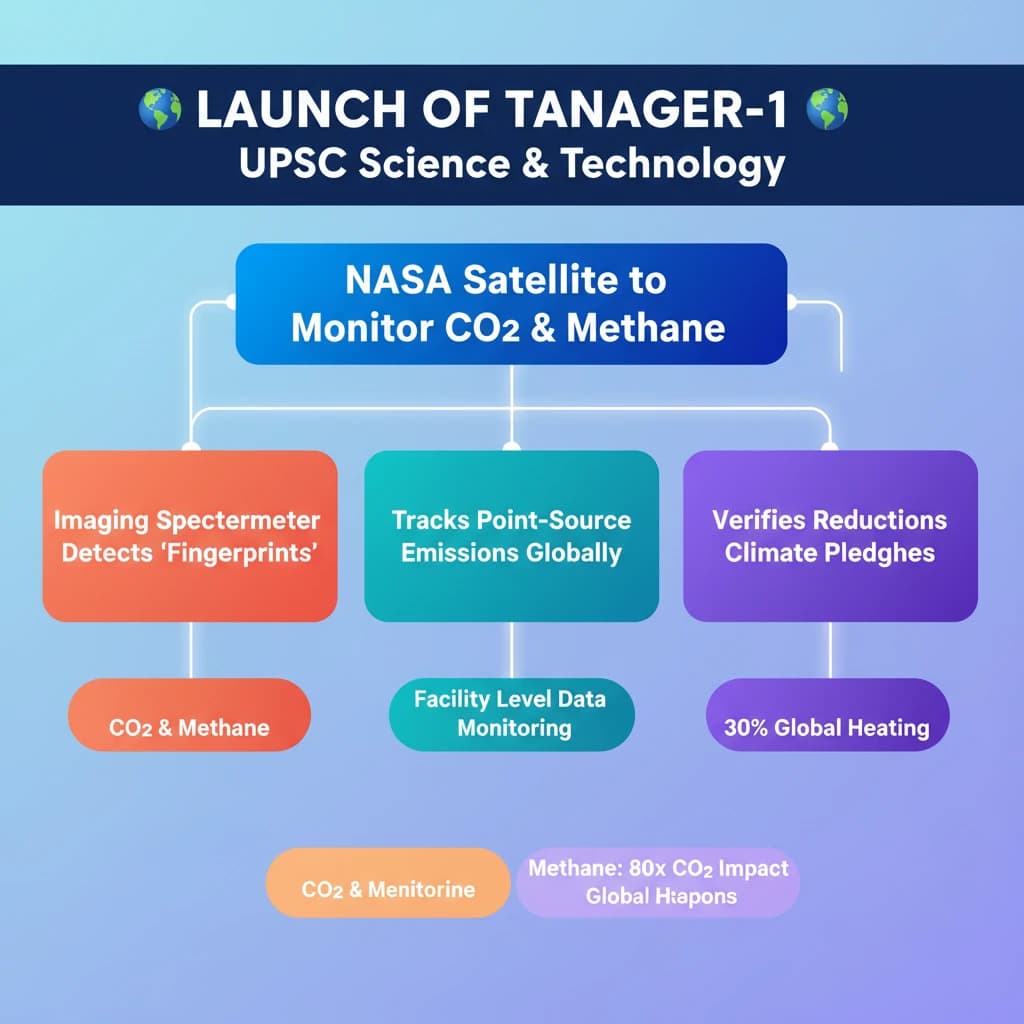
- •Tanager-1 is a NASA satellite designed to detect major emitters of CO2 and Methane globally.
- •It uses imaging spectrometer technology to identify spectral "fingerprints" of these gases.
- •The satellite can measure point-source emissions from individual facilities.
- •Methane is a potent greenhouse gas, 80 times more warming than CO2 over 20 years, and contributes 30% to global heating.
- •Missions like Tanager-1 are crucial for tracking climate change, verifying emission reductions, and supporting international climate pledges.
🧠 Memory Techniques
98% Verified Content
📚 Reference Sources
•NASA Official Website (for Tanager-1 and MethaneSAT details)
•United Nations Environment Programme (UNEP) reports on Methane