Loading page, please wait…
Marburg Virus Disease (MVD) Outbreak - UPSC Science And Technology
What is Marburg Virus Disease (MVD) Outbreak in UPSC Science And Technology?
Marburg Virus Disease (MVD) Outbreak is a key topic under Science And Technology for UPSC Civil Services Examination. Key points include: Marburg Virus Disease (MVD) is a deadly hemorrhagic fever with high fatality rates (up to 89%), currently without approved treatments.. A recent suspected outbreak in Tanzania's Kagera region tragically claimed 8 lives, highlighting its severe threat.. MVD is transmitted to humans from African fruit bats (Rousettus aegyptiacus) and spreads human-to-human via direct contact with bodily fluids.. Understanding this topic is essential for both UPSC Prelims and Mains preparation.
Why is Marburg Virus Disease (MVD) Outbreak important for UPSC exam?
Marburg Virus Disease (MVD) Outbreak is a Medium-level topic in UPSC Science And Technology. It is tested in both Prelims (factual MCQs) and Mains (analytical answer writing). Previous year UPSC questions have frequently covered aspects of Marburg Virus Disease (MVD) Outbreak, making it essential for comprehensive IAS preparation.
How to prepare Marburg Virus Disease (MVD) Outbreak for UPSC?
To prepare Marburg Virus Disease (MVD) Outbreak for UPSC: (1) Study the comprehensive notes covering all key concepts on Vaidra. (2) Practice previous year questions on this topic. (3) Connect it with current affairs using daily updates. (4) Revise using key takeaways and mind maps available for Science And Technology. (5) Write practice answers linking Marburg Virus Disease (MVD) Outbreak to related GS Paper topics.
Key takeaways of Marburg Virus Disease (MVD) Outbreak for UPSC
- Marburg Virus Disease (MVD) is a deadly hemorrhagic fever with high fatality rates (up to 89%), currently without approved treatments.
- A recent suspected outbreak in Tanzania's Kagera region tragically claimed 8 lives, highlighting its severe threat.
- MVD is transmitted to humans from African fruit bats (Rousettus aegyptiacus) and spreads human-to-human via direct contact with bodily fluids.
- Symptoms include fever, headache, vomiting blood, and general bleeding, closely resembling Ebola virus disease.
- Diagnosis is confirmed using molecular tests like RT-PCR (Reverse Transcription Polymerase Chain Reaction).
- MVD outbreaks underscore critical issues in global health security, zoonotic disease management, and the urgent need for R&D in infectious diseases.
Marburg Virus Disease (MVD) Outbreak
Medium⏱️ 7 min read
science and technology
📖 Introduction
Current Outbreak Context
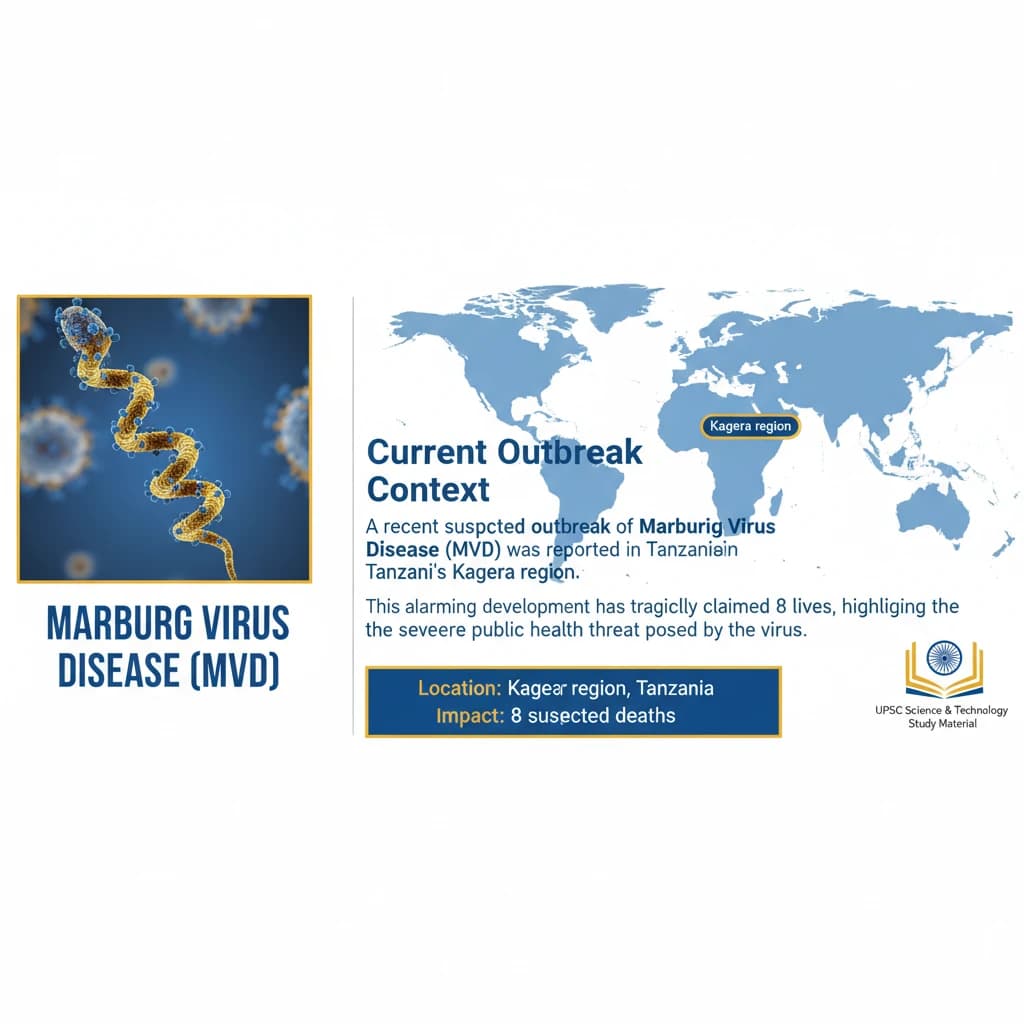
A recent suspected outbreak of Marburg Virus Disease (MVD) has been reported in Tanzania's Kagera region. This alarming development has tragically claimed 8 lives, highlighting the severe public health threat posed by the virus.
Location: Kagera region, Tanzania
Impact: 8 suspected deaths
Understanding Marburg Virus Disease (MVD)
Marburg Virus Disease (MVD) is a severe and often fatal hemorrhagic fever. It is caused by the Marburg virus, a highly pathogenic member of the Filoviridae family, which also includes the Ebola virus.
Key Characteristic: MVD is characterized by extremely high fatality rates, often reaching up to 89% in reported outbreaks. This underscores its lethal nature.
Currently, there are no approved specific treatments or vaccines available for MVD. Patient care primarily focuses on supportive measures to manage symptoms and complications.
Key Symptoms of MVD
The symptoms of Marburg Virus Disease can be sudden and severe, often resembling those of Ebola virus disease. Early recognition is crucial for containment and patient management.
- Fever: High body temperature is typically one of the first signs.
- Headache: Severe and persistent headaches are common.
- Vomiting Blood: Gastrointestinal distress, including hematemesis, can occur as the disease progresses.
- Bleeding: Hemorrhagic manifestations, such as internal and external bleeding, are characteristic of the disease.
Transmission Pathways
The Marburg virus is primarily a zoonotic disease, meaning it originates in animals and can transmit to humans. The natural reservoir for the virus is the African fruit bat (Rousettus aegyptiacus).
Primary Reservoir: African fruit bat (scientific name: Rousettus aegyptiacus)
Human-to-human transmission occurs through direct contact with the bodily fluids of infected individuals. These fluids include blood, secretions, organs, or semen, as well as contaminated surfaces and materials.
Diagnostic Methods
Accurate and rapid diagnosis of MVD is vital for implementing effective control measures and preventing further spread. Diagnostic tests confirm the presence of the virus in patient samples.
Confirmed Diagnosis: Achieved using laboratory tests such as RT-PCR (Reverse Transcription Polymerase Chain Reaction). This molecular test detects the genetic material of the Marburg virus.
UPSC Insight: Understanding zoonotic diseases, their transmission routes, and diagnostic techniques like RT-PCR is crucial for Science & Technology (GS Paper III) and Public Health (GS Paper II) topics. Be prepared to discuss similarities and differences with other viral hemorrhagic fevers like Ebola.
💡 Key Takeaways
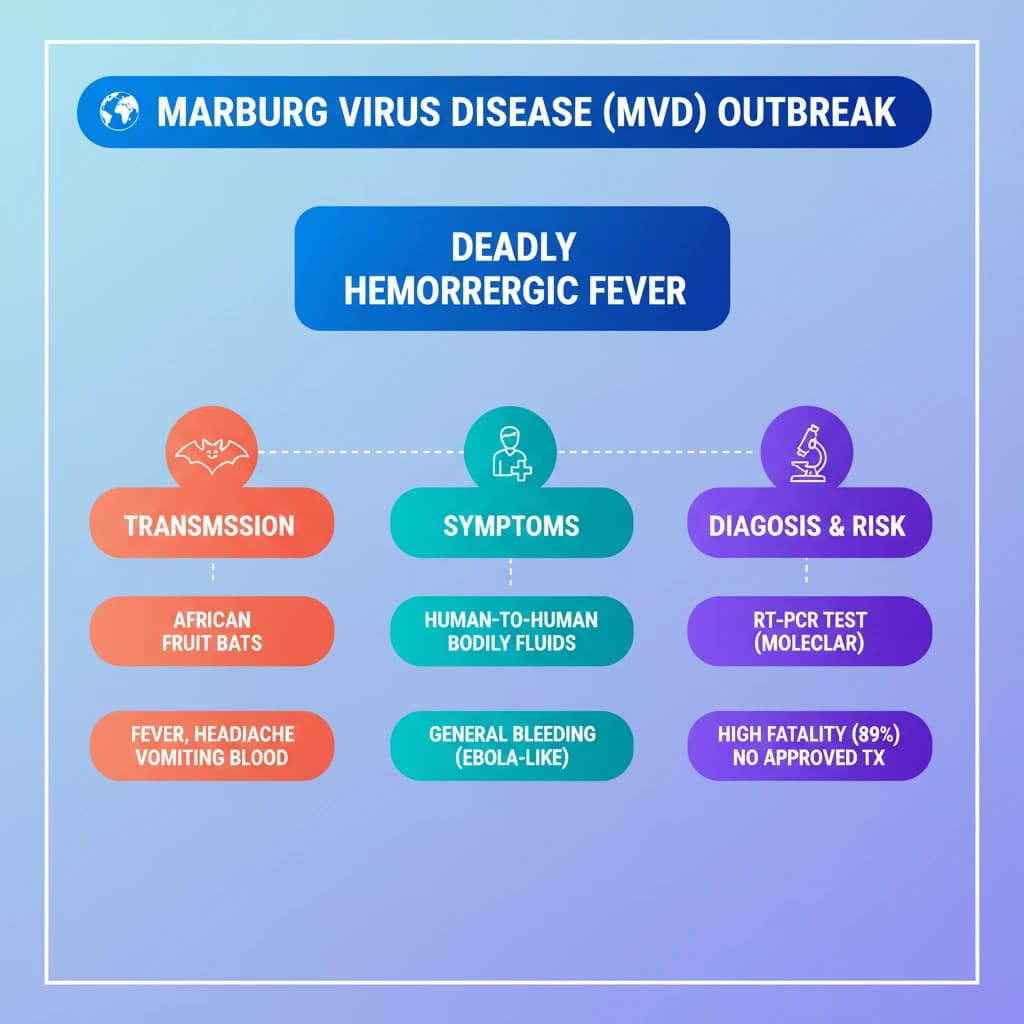
- •Marburg Virus Disease (MVD) is a deadly hemorrhagic fever with high fatality rates (up to 89%), currently without approved treatments.
- •A recent suspected outbreak in Tanzania's Kagera region tragically claimed 8 lives, highlighting its severe threat.
- •MVD is transmitted to humans from African fruit bats (Rousettus aegyptiacus) and spreads human-to-human via direct contact with bodily fluids.
- •Symptoms include fever, headache, vomiting blood, and general bleeding, closely resembling Ebola virus disease.
- •Diagnosis is confirmed using molecular tests like RT-PCR (Reverse Transcription Polymerase Chain Reaction).
- •MVD outbreaks underscore critical issues in global health security, zoonotic disease management, and the urgent need for R&D in infectious diseases.
🧠 Memory Techniques
98% Verified Content
📚 Reference Sources
•World Health Organization (WHO) - Marburg Virus Disease Fact Sheet
•Centers for Disease Control and and Prevention (CDC) - Marburg Hemorrhagic Fever