Loading page, please wait…
RNA Editing: Advancements, Types, and Significance for Genetic Conditions - UPSC Science And Technology
What is RNA Editing: Advancements, Types, and Significance for Genetic Conditions in UPSC Science And Technology?
RNA Editing: Advancements, Types, and Significance for Genetic Conditions is a key topic under Science And Technology for UPSC Civil Services Examination. Key points include: RNA editing modifies mRNA nucleotides after DNA transcription but before protein synthesis.. It involves addition, deletion, or substitution of nucleotides, primarily using ADAR enzymes guided by gRNA.. Recent clinical success by Wave Life Sciences for α-1 antitrypsin deficiency (AATD) highlights its therapeutic potential.. Understanding this topic is essential for both UPSC Prelims and Mains preparation.
Why is RNA Editing: Advancements, Types, and Significance for Genetic Conditions important for UPSC exam?
RNA Editing: Advancements, Types, and Significance for Genetic Conditions is a Medium-level topic in UPSC Science And Technology. It is tested in both Prelims (factual MCQs) and Mains (analytical answer writing). Previous year UPSC questions have frequently covered aspects of RNA Editing: Advancements, Types, and Significance for Genetic Conditions, making it essential for comprehensive IAS preparation.
How to prepare RNA Editing: Advancements, Types, and Significance for Genetic Conditions for UPSC?
To prepare RNA Editing: Advancements, Types, and Significance for Genetic Conditions for UPSC: (1) Study the comprehensive notes covering all key concepts on Vaidra. (2) Practice previous year questions on this topic. (3) Connect it with current affairs using daily updates. (4) Revise using key takeaways and mind maps available for Science And Technology. (5) Write practice answers linking RNA Editing: Advancements, Types, and Significance for Genetic Conditions to related GS Paper topics.
Key takeaways of RNA Editing: Advancements, Types, and Significance for Genetic Conditions for UPSC
- RNA editing modifies mRNA nucleotides after DNA transcription but before protein synthesis.
- It involves addition, deletion, or substitution of nucleotides, primarily using ADAR enzymes guided by gRNA.
- Recent clinical success by Wave Life Sciences for α-1 antitrypsin deficiency (AATD) highlights its therapeutic potential.
- RNA editing shows promise for treating various diseases like Huntington's, muscular dystrophy, and heart conditions.
- Challenges include its temporary nature (requiring repeated treatments) and limitations in current delivery systems for large molecules.
- RNA is a single-stranded nucleic acid with types like mRNA, tRNA, rRNA, and regulatory RNAs, crucial for protein synthesis and gene regulation.
RNA Editing: Advancements, Types, and Significance for Genetic Conditions
Medium⏱️ 8 min read
science and technology
📖 Introduction
Recent Breakthrough in RNA Editing
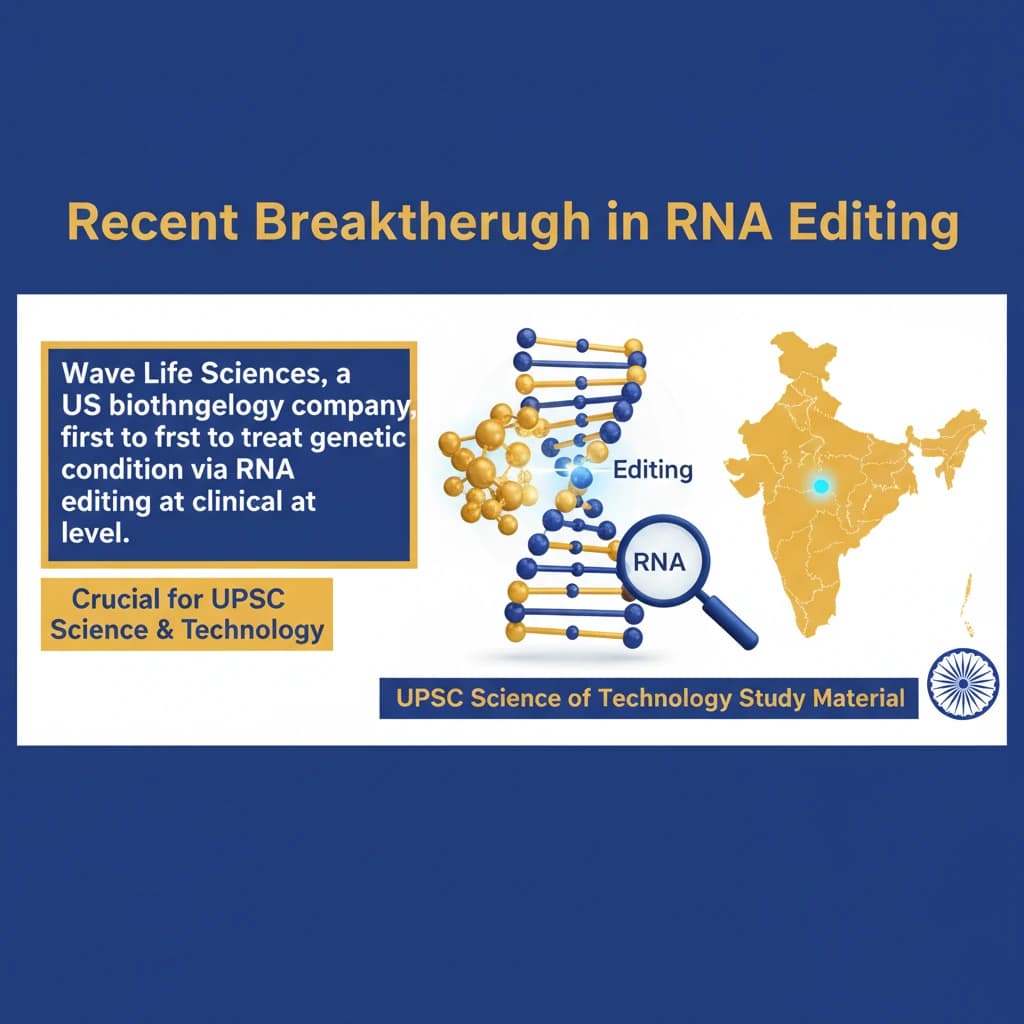
Recently, Wave Life Sciences, a prominent biotechnology company in the US, achieved a significant milestone. They became the first company to successfully treat a genetic condition by directly editing Ribonucleic acid (RNA) at the clinical level.
This development is crucial for UPSC Science & Technology (GS-III) as it highlights advancements in biotechnology and precision medicine. Expect questions on the applications and ethical implications of such genetic interventions.
What is RNA Editing?
RNA editing is a vital post-transcriptional process that modifies Messenger RNA (mRNA) nucleotides. This modification occurs after Deoxyribonucleic acid (DNA) has created mRNA but critically, before the mRNA initiates protein synthesis.
Definition: RNA editing alters the nucleotide sequence of an RNA molecule after it has been synthesized from a DNA template, thereby changing the information it carries.
Structure of mRNA
mRNA molecules are composed of specific segments known as exons and introns. These segments play distinct roles in the process of protein synthesis.
- Exons: These are the coding portions of mRNA that eventually carry the instructions to form a specific protein.
- Introns: These are non-coding parts of the mRNA. They are typically removed from the RNA molecule through a process called splicing before the mRNA is used to make a protein.
Types of RNA Editing Modifications
RNA editing can involve three primary types of modifications to the mRNA sequence, each altering the genetic message in a unique way.
- Addition: This type of editing occurs when one or more nucleotides are inserted into the mRNA sequence.
- Deletion: In contrast, deletion involves the removal of one or more nucleotides from the mRNA sequence.
- Substitution: This refers to the process where one nucleotide is replaced with a different nucleotide within the mRNA strand.
Mechanism of RNA Editing
The intricate process of RNA editing often involves a specialized group of enzymes. These enzymes are crucial for guiding the precise modifications.
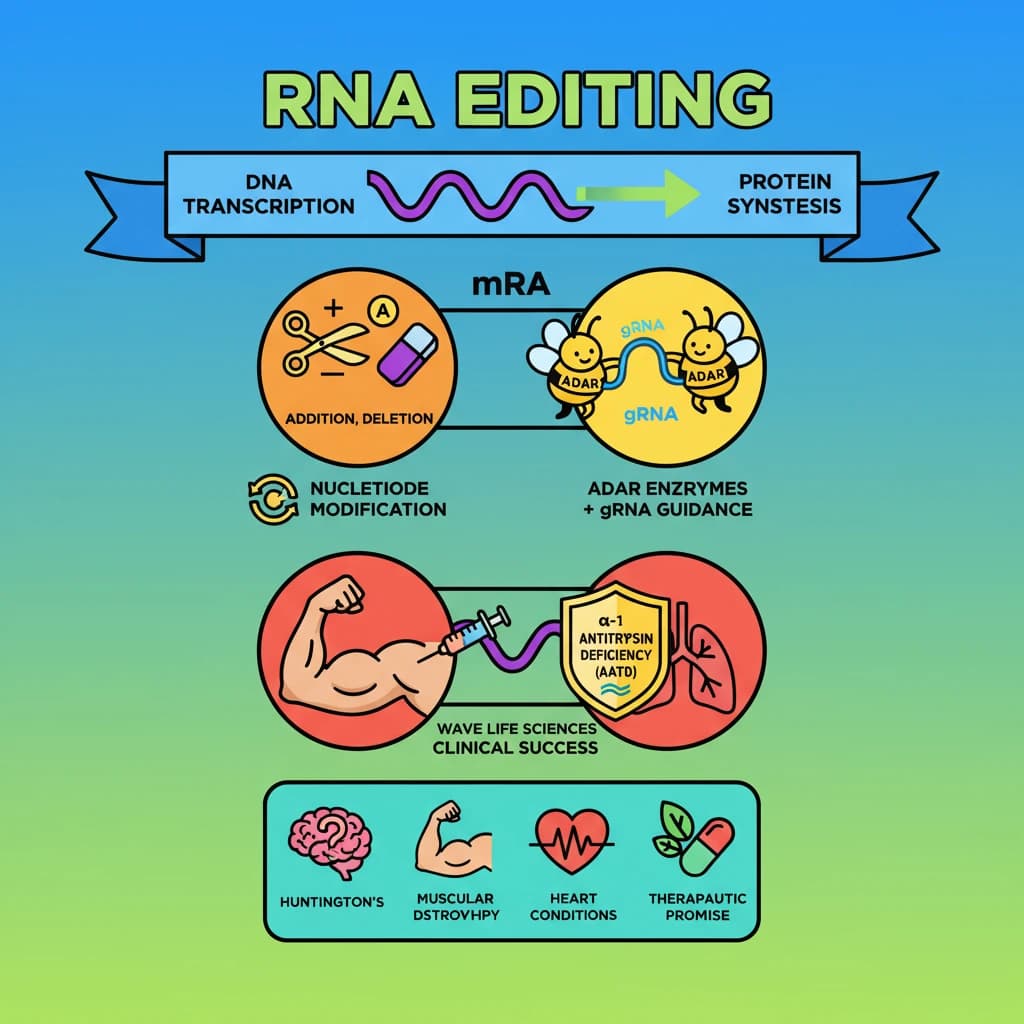
Key Enzyme Group: The technique primarily utilizes a group of enzymes called adenosine deaminase acting on RNA (ADAR). These enzymes are responsible for specific nucleotide conversions.
Guidance System: Scientists pair the effects of ADAR with a guide RNA (gRNA). The gRNA acts as a molecular GPS, directing the ADAR enzyme to a specific, targeted part of the mRNA molecule where the designated editing job needs to be performed.
Clinical Applications and Future Promise
The recent clinical success demonstrates the immense therapeutic potential of RNA editing, particularly for inherited disorders.
- Current Treatment: Wave Life Sciences is utilizing mRNA editing to treat α-1 antitrypsin deficiency (AATD), which is an inherited disorder. Their specific therapy is known as WVE-006.
- Broad Potential: RNA editing holds significant promise for addressing a wide array of other challenging medical conditions. This includes neurological disorders like Huntington’s disease and Parkinson’s disease, muscular conditions such as Duchenne muscular dystrophy, and metabolic issues like obesity, alongside various heart diseases.
Challenges in RNA Editing Therapy
Despite its promise, RNA editing therapy faces several significant hurdles that need to be overcome for widespread clinical adoption.
Temporary Nature: One major challenge is the temporary nature of RNA modifications. Unlike DNA editing, RNA editing effects are not permanent, often requiring repeated treatments to maintain therapeutic benefits.
Delivery System Limitations: Current delivery systems for RNA editing molecules, such as lipid nanoparticles and adeno-associated virus (AAV) vectors, have limitations. They often struggle to accommodate large molecules, which can restrict the scope and efficacy of treatments.
💡 Key Takeaways
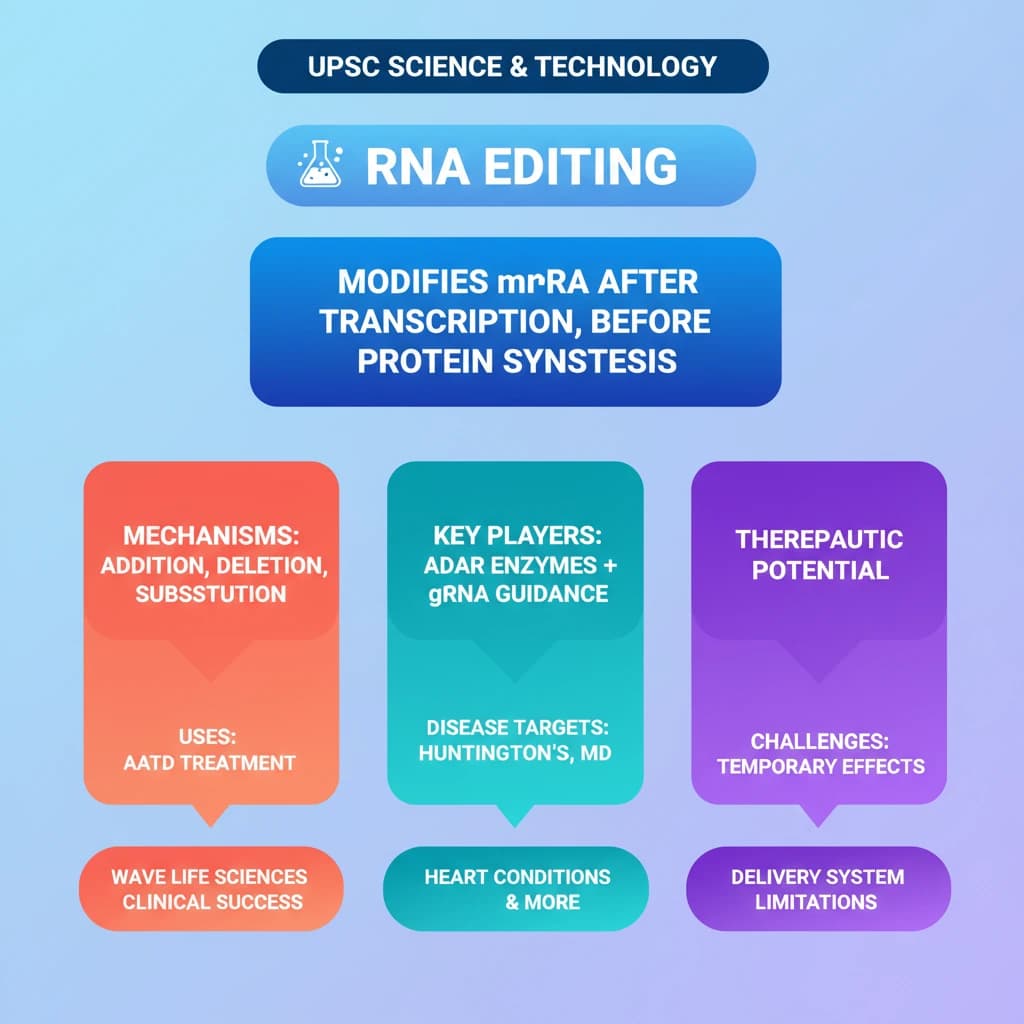
- •RNA editing modifies mRNA nucleotides after DNA transcription but before protein synthesis.
- •It involves addition, deletion, or substitution of nucleotides, primarily using ADAR enzymes guided by gRNA.
- •Recent clinical success by Wave Life Sciences for α-1 antitrypsin deficiency (AATD) highlights its therapeutic potential.
- •RNA editing shows promise for treating various diseases like Huntington's, muscular dystrophy, and heart conditions.
- •Challenges include its temporary nature (requiring repeated treatments) and limitations in current delivery systems for large molecules.
- •RNA is a single-stranded nucleic acid with types like mRNA, tRNA, rRNA, and regulatory RNAs, crucial for protein synthesis and gene regulation.
🧠 Memory Techniques
95% Verified Content