Loading page, please wait…
Rocket Systems: Multi-barrel rocket launcher Pinaka. - UPSC Science And Technology
What is Rocket Systems: Multi-barrel rocket launcher Pinaka. in UPSC Science And Technology?
Rocket Systems: Multi-barrel rocket launcher Pinaka. is a key topic under Science And Technology for UPSC Civil Services Examination. Key points include: Pinaka is an indigenous Multi-Barrel Rocket Launcher (MBRL) system, crucial for artillery fire support.. Lakshya and Nishant are key Unmanned Aerial Systems (UAS): Lakshya for training (target drone) and Nishant for multi-mission surveillance and artillery correction.. Humsa, Nagan, Ushus (Submarine Sonar Suite), and Mihir (helicopter sonar) are vital indigenous sonar systems enhancing naval detection and anti-submarine warfare capabilities.. Understanding this topic is essential for both UPSC Prelims and Mains preparation.
Why is Rocket Systems: Multi-barrel rocket launcher Pinaka. important for UPSC exam?
Rocket Systems: Multi-barrel rocket launcher Pinaka. is a Medium-level topic in UPSC Science And Technology. It is tested in both Prelims (factual MCQs) and Mains (analytical answer writing). Previous year UPSC questions have frequently covered aspects of Rocket Systems: Multi-barrel rocket launcher Pinaka., making it essential for comprehensive IAS preparation.
How to prepare Rocket Systems: Multi-barrel rocket launcher Pinaka. for UPSC?
To prepare Rocket Systems: Multi-barrel rocket launcher Pinaka. for UPSC: (1) Study the comprehensive notes covering all key concepts on Vaidra. (2) Practice previous year questions on this topic. (3) Connect it with current affairs using daily updates. (4) Revise using key takeaways and mind maps available for Science And Technology. (5) Write practice answers linking Rocket Systems: Multi-barrel rocket launcher Pinaka. to related GS Paper topics.
Key takeaways of Rocket Systems: Multi-barrel rocket launcher Pinaka. for UPSC
- Pinaka is an indigenous Multi-Barrel Rocket Launcher (MBRL) system, crucial for artillery fire support.
- Lakshya and Nishant are key Unmanned Aerial Systems (UAS): Lakshya for training (target drone) and Nishant for multi-mission surveillance and artillery correction.
- Humsa, Nagan, Ushus (Submarine Sonar Suite), and Mihir (helicopter sonar) are vital indigenous sonar systems enhancing naval detection and anti-submarine warfare capabilities.
- Arjun is India's indigenously developed Main Battle Tank (MBT), signifying self-reliance in armored warfare.
- India's focus on indigenous defense technology is critical for achieving strategic autonomy and aligns with the 'Atmanirbhar Bharat' initiative.
Rocket Systems: Multi-barrel rocket launcher Pinaka.
Medium⏱️ 7 min read
science and technology
📖 Introduction
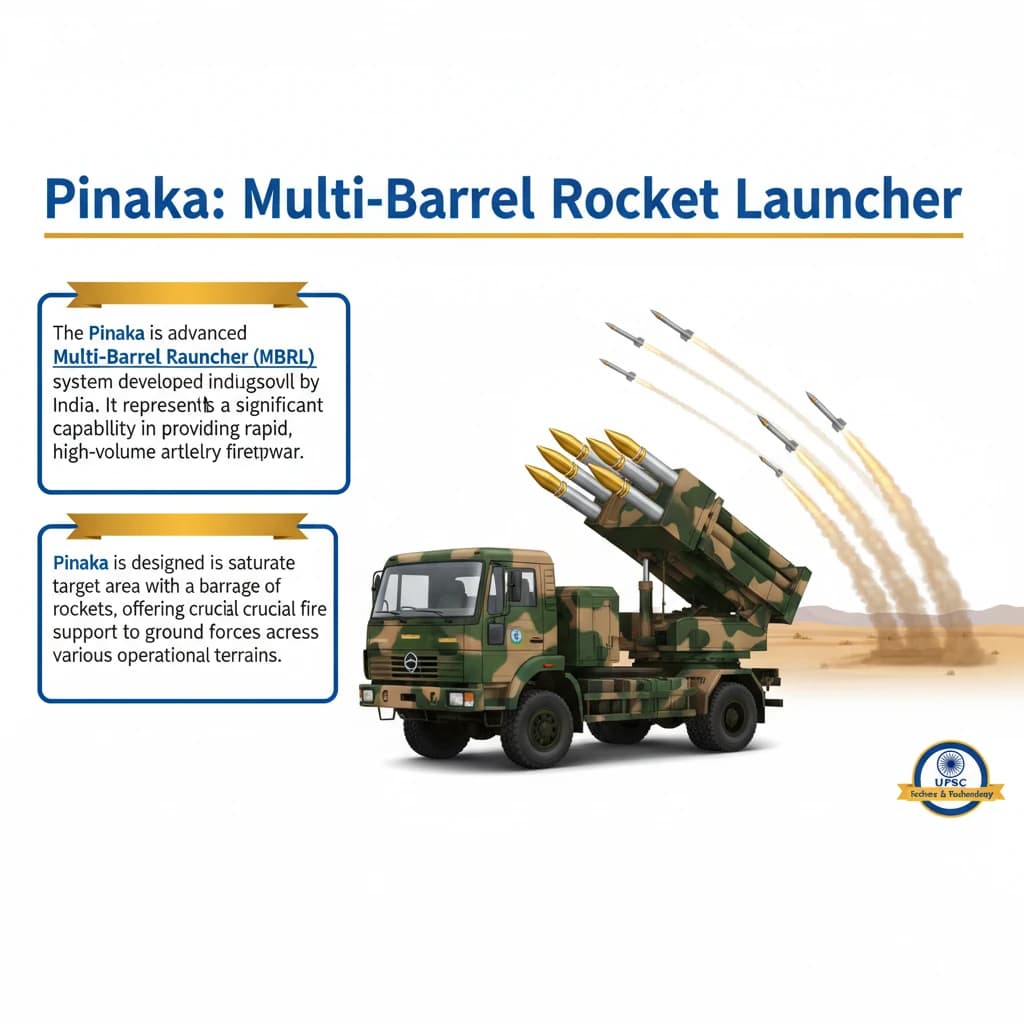
Pinaka: Multi-Barrel Rocket Launcher
The Pinaka is an advanced Multi-Barrel Rocket Launcher (MBRL) system developed indigenously by India. It represents a significant capability in providing rapid, high-volume artillery firepower.
Pinaka is designed to saturate a target area with a barrage of rockets, offering crucial fire support to ground forces across various operational terrains.
Unmanned Aerial Systems (UAS)
Unmanned Aerial Systems (UAS), commonly known as drones, are critical assets in modern defense. India has invested in developing several indigenous UAS platforms to enhance its surveillance and reconnaissance capabilities.
Lakshya: Reusable Aerial Target System
Lakshya is a specialized reusable aerial target system primarily utilized for training purposes. It simulates enemy aircraft to enable missile and air defense units to conduct realistic practice drills.
This system can be launched from both land and ship-based platforms. It is also capable of towing targets, providing diverse and challenging training scenarios for various weapon systems.
Nishant: Multi-Mission UAV
The Nishant is a versatile Multi-Mission Unmanned Aerial Vehicle (UAV) engineered for a broad spectrum of operational roles within the armed forces.
Its primary functions encompass surveillance and artillery correction. The Nishant features advanced autonomous flight capabilities and is equipped with a parachute recovery system for safe and controlled landings.
Naval Systems
India's naval forces leverage sophisticated indigenous systems for effective underwater detection and surveillance. These technologies are vital for bolstering maritime security and operational readiness.
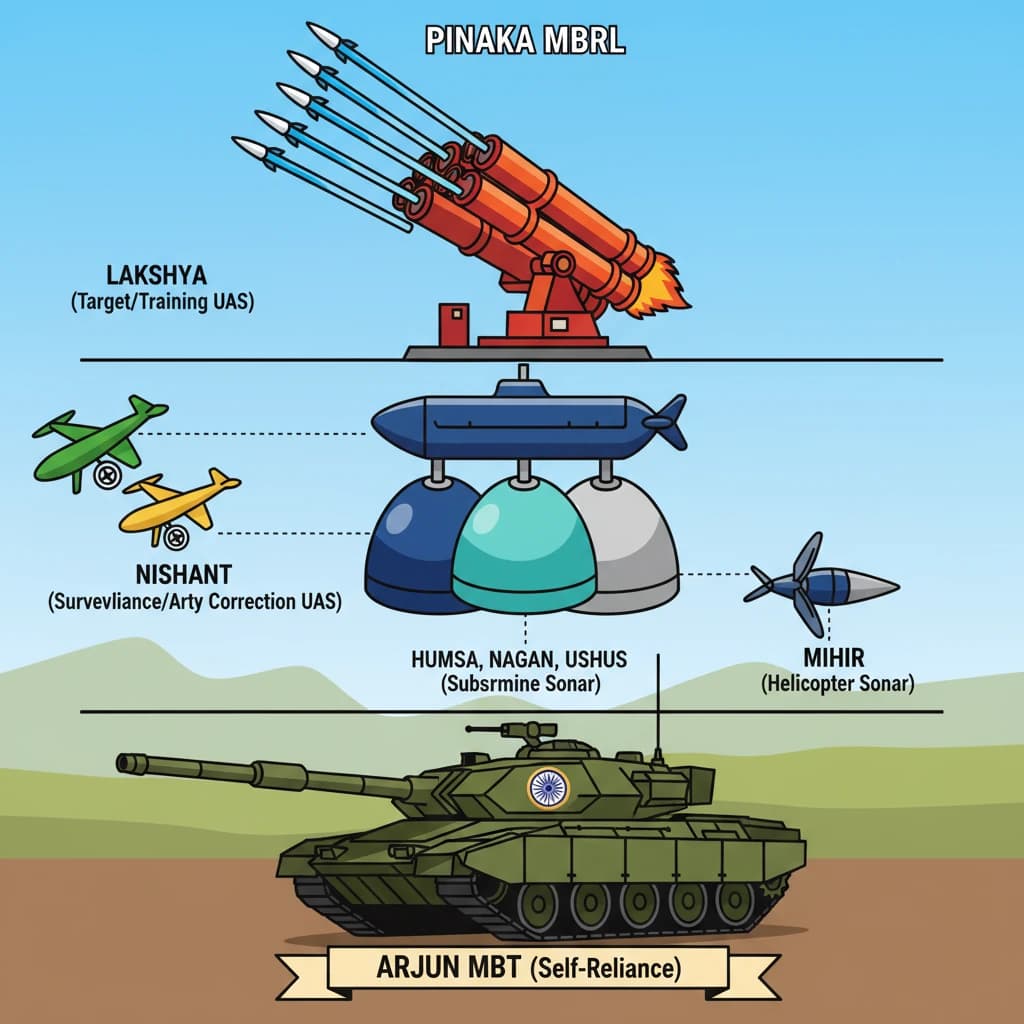
- Humsa: A prominent sonar system, likely deployed on surface vessels for detection and navigation.
- Nagan: Another key sonar system, indicating its broader application in naval operations.
- Ushus: Specifically designed as a Submarine Sonar Suite, essential for underwater detection, navigation, and targeting for submarines.
- Mihir: A specialized helicopter sonar system, employed in anti-submarine warfare (ASW) operations from airborne platforms, extending detection range.
Main Battle Tank: Arjun
The Arjun Main Battle Tank (MBT) is a third-generation tank developed indigenously by India. It marks a significant milestone in achieving self-reliance in armored warfare capabilities.
Designed by the Defence Research and Development Organisation (DRDO), the Arjun MBT integrates advanced technologies across its firepower, protection, and mobility systems, making it a formidable asset.
Understanding these indigenous defense systems is paramount for UPSC Mains GS Paper III (Science and Technology, Internal Security). Candidates should focus on their strategic importance and their contribution to India's journey towards self-reliance in defense.
💡 Key Takeaways
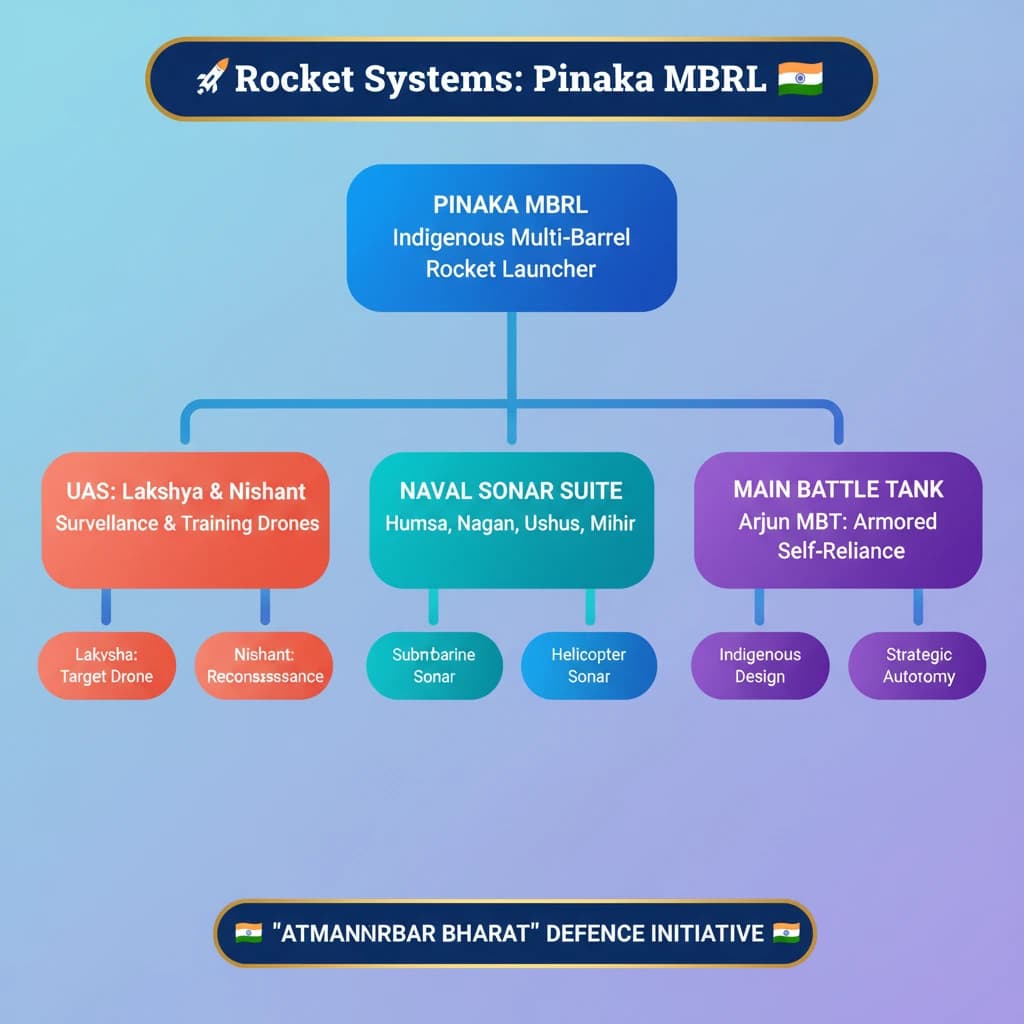
- •Pinaka is an indigenous Multi-Barrel Rocket Launcher (MBRL) system, crucial for artillery fire support.
- •Lakshya and Nishant are key Unmanned Aerial Systems (UAS): Lakshya for training (target drone) and Nishant for multi-mission surveillance and artillery correction.
- •Humsa, Nagan, Ushus (Submarine Sonar Suite), and Mihir (helicopter sonar) are vital indigenous sonar systems enhancing naval detection and anti-submarine warfare capabilities.
- •Arjun is India's indigenously developed Main Battle Tank (MBT), signifying self-reliance in armored warfare.
- •India's focus on indigenous defense technology is critical for achieving strategic autonomy and aligns with the 'Atmanirbhar Bharat' initiative.
🧠 Memory Techniques
95% Verified Content
📚 Reference Sources
•DRDO Official Website (general knowledge and specifics on systems)
•Ministry of Defence, Government of India (general defense policy and indigenization initiatives)