Loading page, please wait…
Space Docking: Techniques, Significance, and Applications (ISS) - UPSC Science And Technology
What is Space Docking: Techniques, Significance, and Applications (ISS) in UPSC Science And Technology?
Space Docking: Techniques, Significance, and Applications (ISS) is a key topic under Science And Technology for UPSC Civil Services Examination. Key points include: Space docking is the precise maneuver of joining two spacecraft in orbit.. It is crucial for assembling large structures and transferring crew, equipment, and supplies.. The International Space Station (ISS) was built and is sustained through continuous docking missions.. Understanding this topic is essential for both UPSC Prelims and Mains preparation.
Why is Space Docking: Techniques, Significance, and Applications (ISS) important for UPSC exam?
Space Docking: Techniques, Significance, and Applications (ISS) is a Medium-level topic in UPSC Science And Technology. It is tested in both Prelims (factual MCQs) and Mains (analytical answer writing). Previous year UPSC questions have frequently covered aspects of Space Docking: Techniques, Significance, and Applications (ISS), making it essential for comprehensive IAS preparation.
How to prepare Space Docking: Techniques, Significance, and Applications (ISS) for UPSC?
To prepare Space Docking: Techniques, Significance, and Applications (ISS) for UPSC: (1) Study the comprehensive notes covering all key concepts on Vaidra. (2) Practice previous year questions on this topic. (3) Connect it with current affairs using daily updates. (4) Revise using key takeaways and mind maps available for Science And Technology. (5) Write practice answers linking Space Docking: Techniques, Significance, and Applications (ISS) to related GS Paper topics.
Key takeaways of Space Docking: Techniques, Significance, and Applications (ISS) for UPSC
- Space docking is the precise maneuver of joining two spacecraft in orbit.
- It is crucial for assembling large structures and transferring crew, equipment, and supplies.
- The International Space Station (ISS) was built and is sustained through continuous docking missions.
- Docking enables modular construction, resupply, and crew rotation in space.
- It is a foundational technology for future deep-space missions and in-orbit servicing.
Space Docking: Techniques, Significance, and Applications (ISS)
Medium⏱️ 5 min read
science and technology
📖 Introduction
Understanding Space Docking
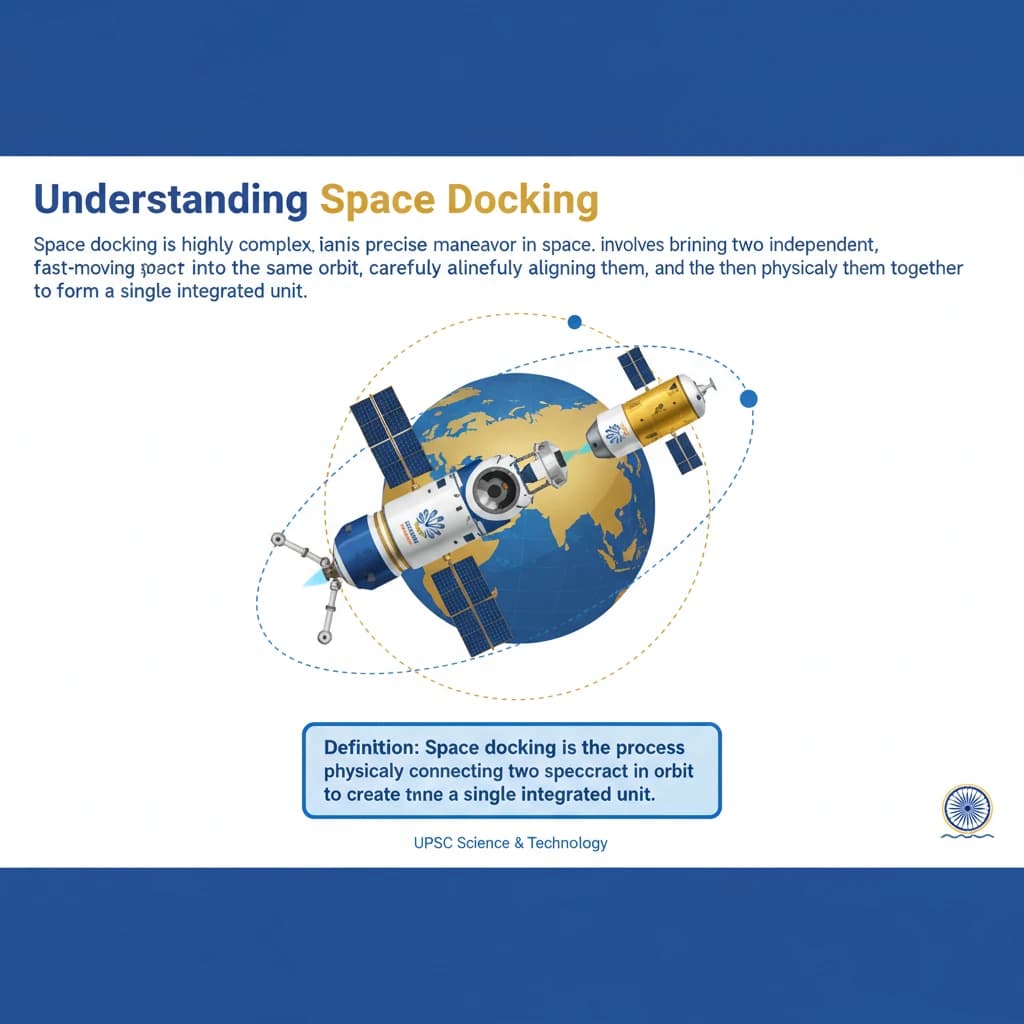
Space docking is a highly complex and precise maneuver in space. It involves bringing two independent, fast-moving spacecraft into the same orbit, carefully aligning them, and then physically joining them together to form a single integrated unit.
Definition: Space docking is the process of physically connecting two spacecraft in orbit to create a unified structure, enabling transfer of resources or personnel.
Pivotal Capability for Space Operations
This capability is absolutely pivotal for the advancement of space exploration and operations. It allows for the construction of large structures in space that are too massive to be launched as a single piece from Earth.
Key Purpose: Space docking facilitates the assembly of large space structures and the transfer of essential resources, including equipment, crew, and supplies, between spacecraft.
The International Space Station (ISS) Example
A prime example of space docking's importance is the construction and ongoing operation of the International Space Station (ISS). The ISS was not launched as one complete unit.
Instead, its various modules were launched separately over many years. Each module was then meticulously docked with existing parts of the station in orbit, gradually building the massive orbital laboratory.
UPSC Insight: The ISS serves as an excellent case study for questions on international cooperation in space, space infrastructure, and the practical applications of space technology. Mentioning its modular construction via docking can fetch extra marks in GS Paper 3 (Science & Technology).
Continuous Docking for ISS Operational Continuity
Beyond initial assembly, continuous docking missions are crucial for keeping the ISS operational. These missions ensure a constant flow of vital resources to the station.
- They deliver supplies, such as food, water, and scientific equipment.
- They bring new crew members to replace those completing their missions.
- They facilitate the addition of new modules for expansion or upgrades.
- They also enable the return of older crew members and scientific samples to Earth.
💡 Key Takeaways
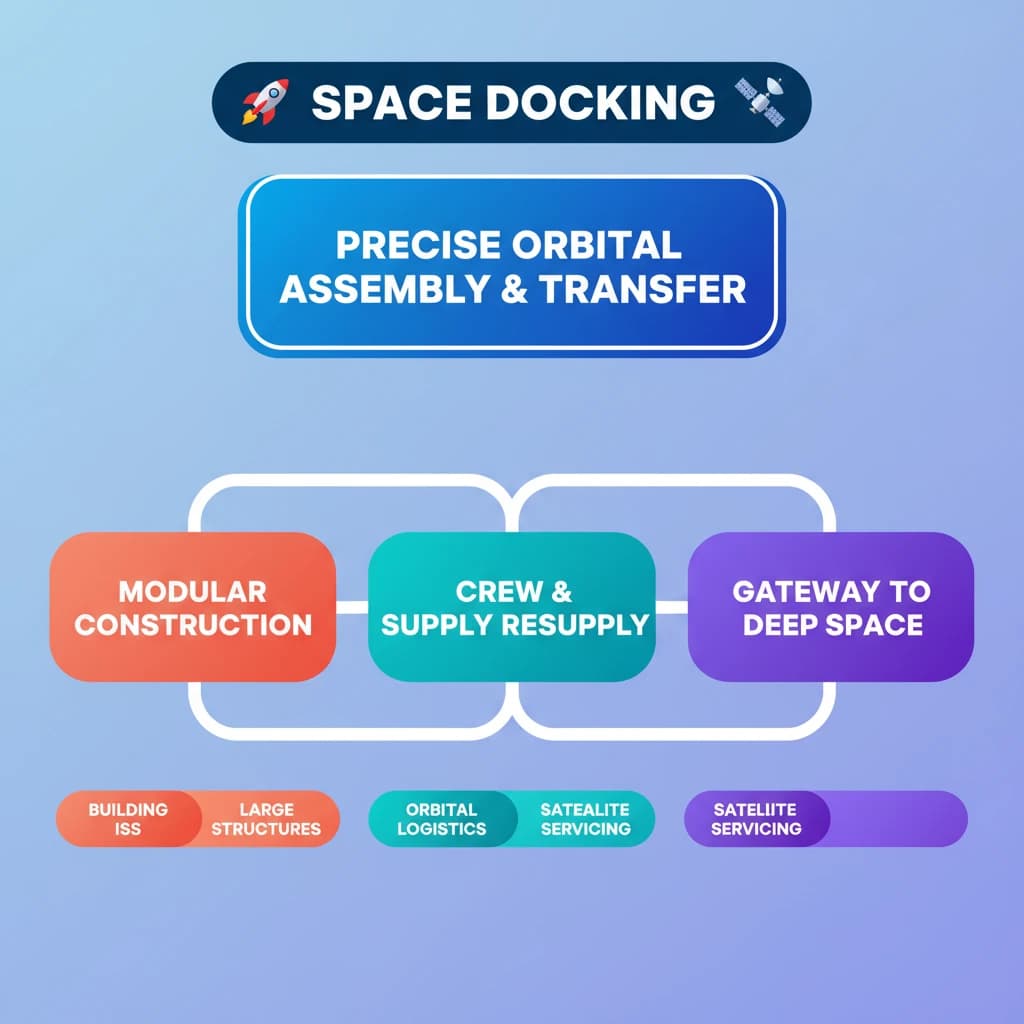
- •Space docking is the precise maneuver of joining two spacecraft in orbit.
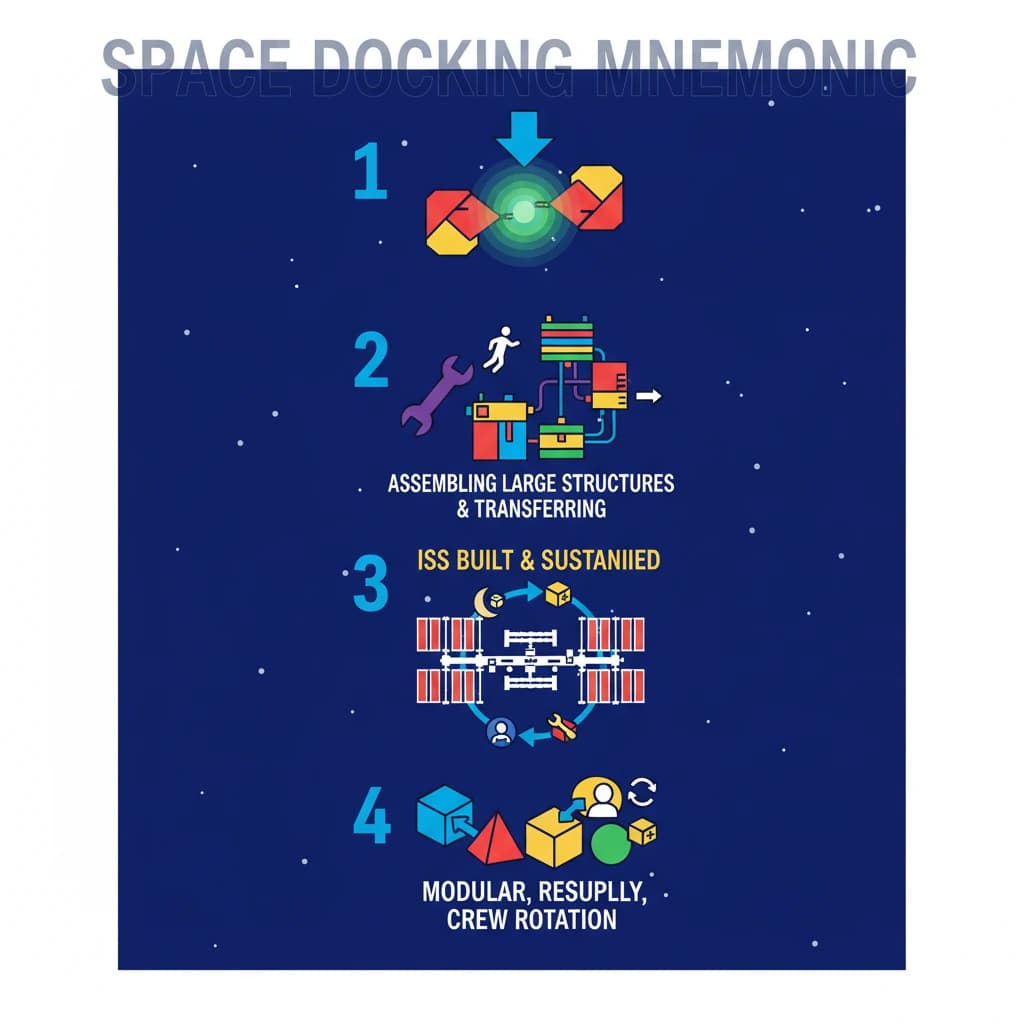
- •It is crucial for assembling large structures and transferring crew, equipment, and supplies.
- •The International Space Station (ISS) was built and is sustained through continuous docking missions.
- •Docking enables modular construction, resupply, and crew rotation in space.
- •It is a foundational technology for future deep-space missions and in-orbit servicing.
🧠 Memory Techniques
95% Verified Content
📚 Reference Sources
•NASA.gov (for ISS details, historical missions)
•ESA.int (for ISS details)
•ISRO.gov.in (for Gaganyaan and Indian space station context)