Loading page, please wait…
Subclinical Tuberculosis - UPSC Science And Technology
What is Subclinical Tuberculosis in UPSC Science And Technology?
Subclinical Tuberculosis is a key topic under Science And Technology for UPSC Civil Services Examination. Key points include: Subclinical TB lacks typical symptoms like persistent cough.. It is harder to detect than active TB, leading to missed diagnoses.. Subclinical TB contributes to the slow decline in India's TB incidence rates.. Understanding this topic is essential for both UPSC Prelims and Mains preparation.
Why is Subclinical Tuberculosis important for UPSC exam?
Subclinical Tuberculosis is a Medium-level topic in UPSC Science And Technology. It is tested in both Prelims (factual MCQs) and Mains (analytical answer writing). Previous year UPSC questions have frequently covered aspects of Subclinical Tuberculosis, making it essential for comprehensive IAS preparation.
How to prepare Subclinical Tuberculosis for UPSC?
To prepare Subclinical Tuberculosis for UPSC: (1) Study the comprehensive notes covering all key concepts on Vaidra. (2) Practice previous year questions on this topic. (3) Connect it with current affairs using daily updates. (4) Revise using key takeaways and mind maps available for Science And Technology. (5) Write practice answers linking Subclinical Tuberculosis to related GS Paper topics.
Key takeaways of Subclinical Tuberculosis for UPSC
- Subclinical TB lacks typical symptoms like persistent cough.
- It is harder to detect than active TB, leading to missed diagnoses.
- Subclinical TB contributes to the slow decline in India's TB incidence rates.
- It represents a hidden reservoir of infection, posing a challenge to TB elimination.
- Proactive screening and advanced diagnostics are essential to identify and manage subclinical cases.
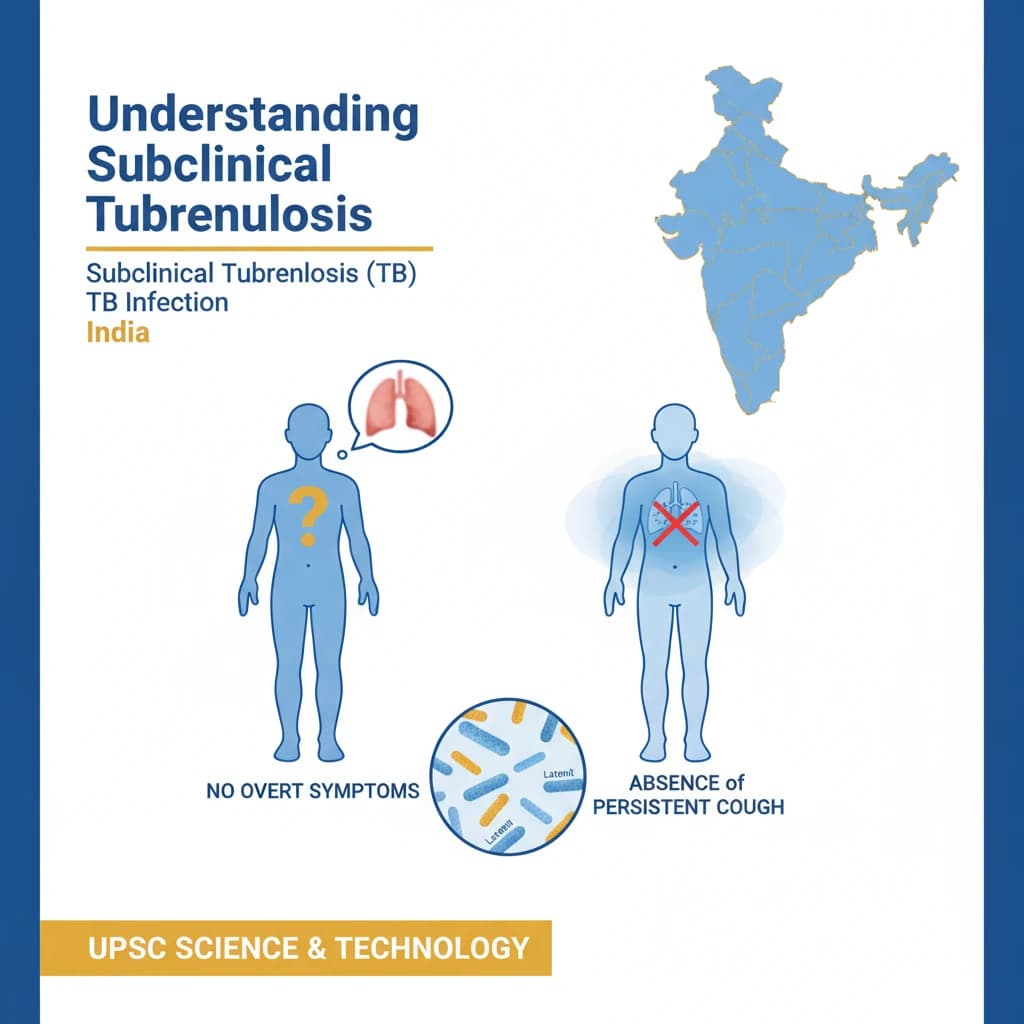
Subclinical Tuberculosis
Medium⏱️ 5 min read
science and technology
📖 Introduction
Understanding Subclinical Tuberculosis
Subclinical Tuberculosis (TB) represents a significant public health challenge, particularly in countries like India. It refers to a form of TB infection where individuals are infected but do not display the typical, overt symptoms commonly associated with the disease.
This absence of clear symptoms, such as a persistent cough, makes subclinical TB particularly insidious. Infected individuals may unknowingly transmit the bacteria, contributing to ongoing community spread.
The growing concern around subclinical TB stems from its contribution to the slow decline in TB incidence rates. Despite advancements in detection and treatment for symptomatic cases, this hidden reservoir of infection continues to fuel the epidemic.
The Challenge of Detection
Detecting subclinical TB is inherently more difficult compared to active TB. Active TB typically presents with more apparent and recognizable symptoms, prompting individuals to seek medical attention.
Unlike active TB, where diagnostic tools are often triggered by visible symptoms, subclinical TB requires proactive screening and advanced diagnostic methods to identify infected individuals before they develop overt illness or spread the disease.
For UPSC Mains GS-II (Health), understanding subclinical TB is crucial for discussing challenges in disease eradication programs and the need for innovative public health strategies.
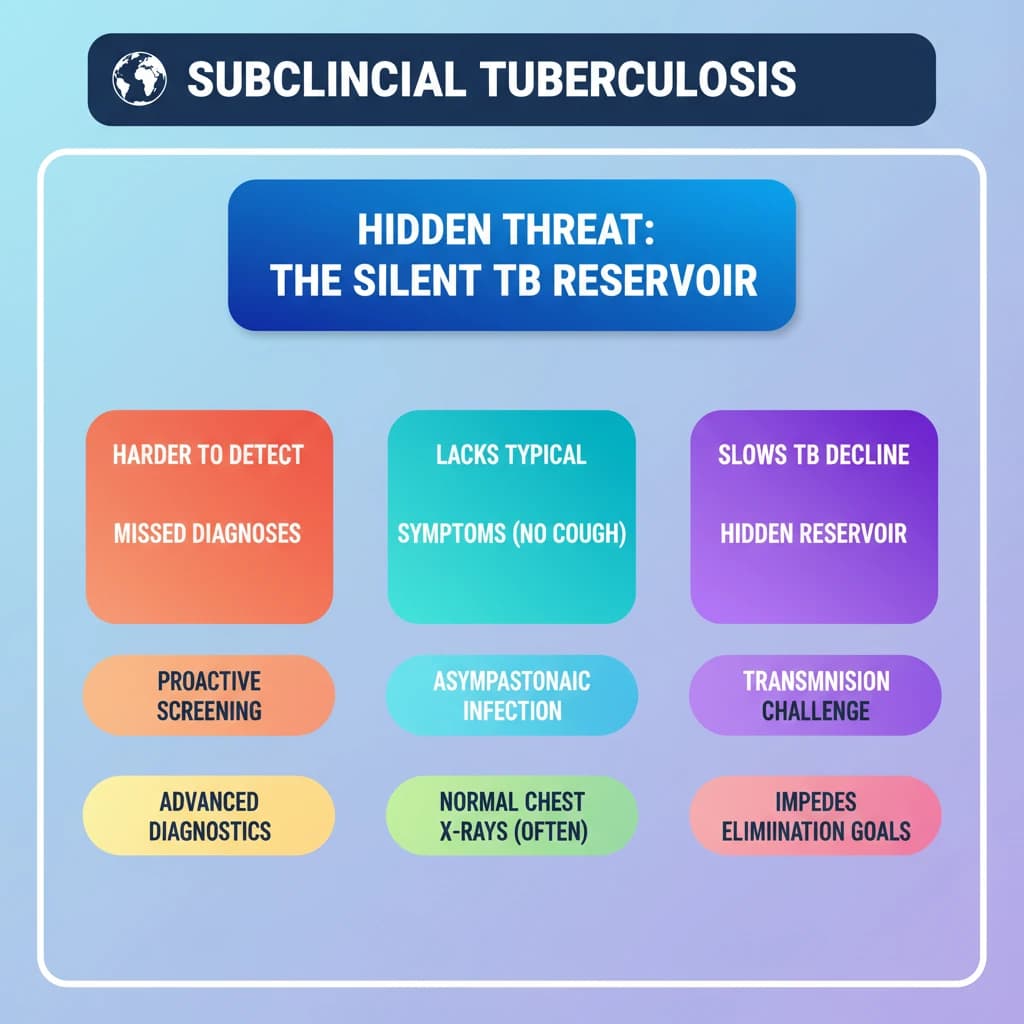
💡 Key Takeaways
- •Subclinical TB lacks typical symptoms like persistent cough.
- •It is harder to detect than active TB, leading to missed diagnoses.
- •Subclinical TB contributes to the slow decline in India's TB incidence rates.
- •It represents a hidden reservoir of infection, posing a challenge to TB elimination.
- •Proactive screening and advanced diagnostics are essential to identify and manage subclinical cases.
🧠 Memory Techniques
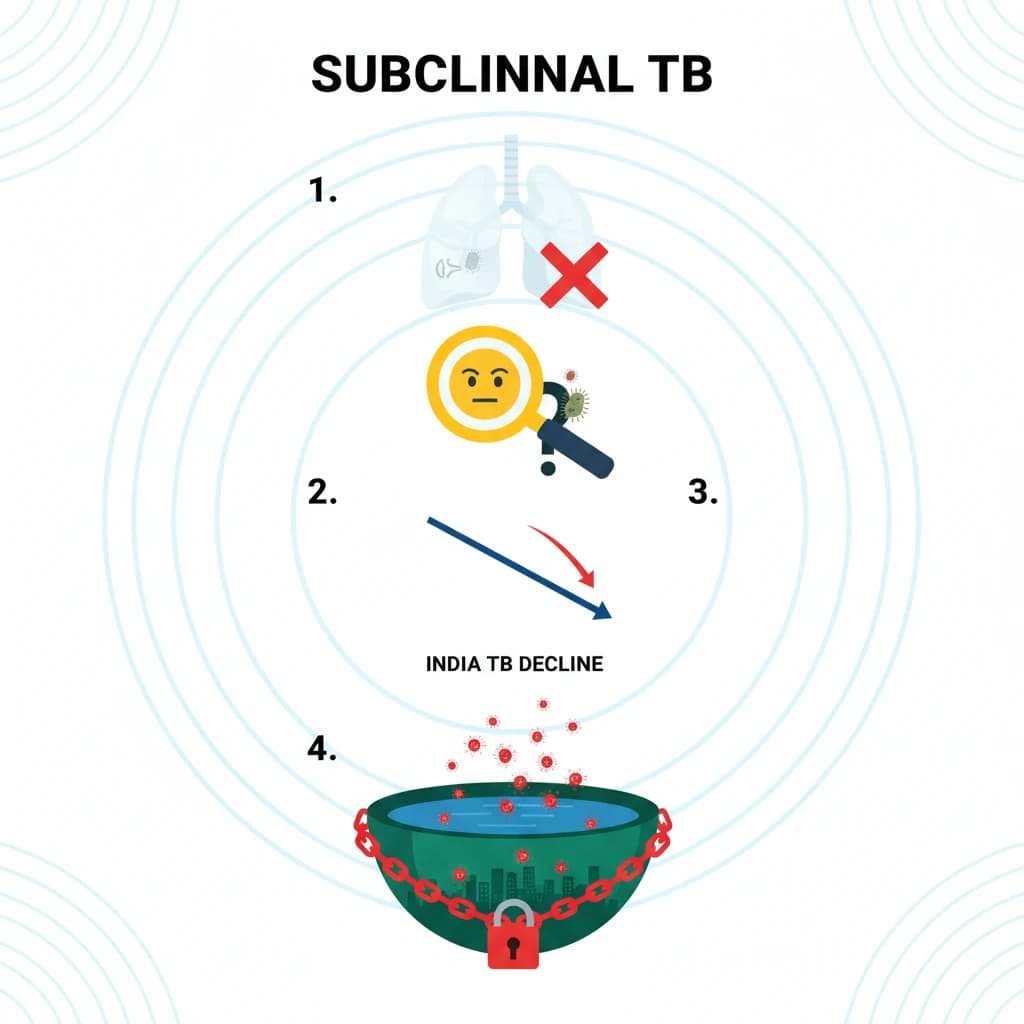
95% Verified Content
📚 Reference Sources
•World Health Organization (WHO) Guidelines on Tuberculosis
•India's National Strategic Plan for TB Elimination (2017-2025)