Loading page, please wait…
Sucralose: A Promising Sweetener for Diabetics - UPSC Science And Technology
What is Sucralose: A Promising Sweetener for Diabetics in UPSC Science And Technology?
Sucralose: A Promising Sweetener for Diabetics is a key topic under Science And Technology for UPSC Civil Services Examination. Key points include: An Indian study suggests sucralose is a promising sweetener for Type 2 Diabetics, showing no significant changes in glucose or HbA1c.. This finding contrasts with WHO's caution against NNS for weight control in non-diabetics.. Sucralose is a non-nutritive sweetener, approximately 600 times sweeter than sucrose with no calories.. Understanding this topic is essential for both UPSC Prelims and Mains preparation.
Why is Sucralose: A Promising Sweetener for Diabetics important for UPSC exam?
Sucralose: A Promising Sweetener for Diabetics is a Medium-level topic in UPSC Science And Technology. It is tested in both Prelims (factual MCQs) and Mains (analytical answer writing). Previous year UPSC questions have frequently covered aspects of Sucralose: A Promising Sweetener for Diabetics, making it essential for comprehensive IAS preparation.
How to prepare Sucralose: A Promising Sweetener for Diabetics for UPSC?
To prepare Sucralose: A Promising Sweetener for Diabetics for UPSC: (1) Study the comprehensive notes covering all key concepts on Vaidra. (2) Practice previous year questions on this topic. (3) Connect it with current affairs using daily updates. (4) Revise using key takeaways and mind maps available for Science And Technology. (5) Write practice answers linking Sucralose: A Promising Sweetener for Diabetics to related GS Paper topics.
Key takeaways of Sucralose: A Promising Sweetener for Diabetics for UPSC
- An Indian study suggests sucralose is a promising sweetener for Type 2 Diabetics, showing no significant changes in glucose or HbA1c.
- This finding contrasts with WHO's caution against NNS for weight control in non-diabetics.
- Sucralose is a non-nutritive sweetener, approximately 600 times sweeter than sucrose with no calories.
- HbA1c is a key indicator for long-term blood glucose control in diabetes.
- The debate on NNS highlights the complexity of dietary recommendations and the need for context-specific guidance.
- Regulatory bodies and scientific research continuously evaluate the safety and efficacy of food additives.
Sucralose: A Promising Sweetener for Diabetics
Medium⏱️ 6 min read
science and technology
📖 Introduction
Context of the Recent Study
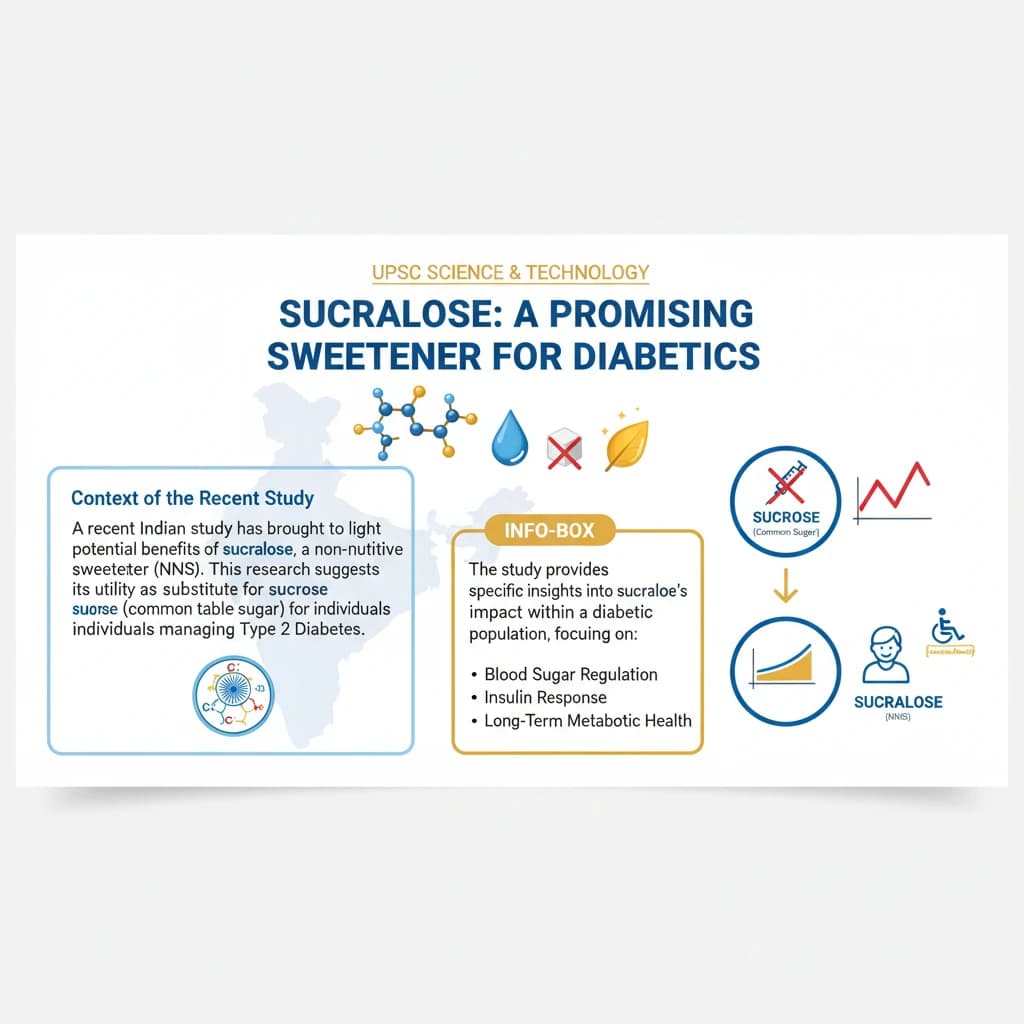
A recent Indian study has brought to light the potential benefits of sucralose, a non-nutritive sweetener (NNS). This research suggests its utility as a substitute for sucrose (common table sugar) for individuals managing Type 2 Diabetes.
The study provides specific insights into sucralose's impact within a diabetic population, offering a nuanced perspective on its use.
Contrasting Views on Non-Nutritive Sweeteners
The findings of this Indian study stand in contrast to a recent advisory from the World Health Organization (WHO). The WHO has cautioned against the general use of Non-Nutritive Sweeteners for weight control, particularly in non-diabetic populations.
This highlights an ongoing debate and evolving understanding regarding the broader health implications of NNS across different demographic groups.
Key Findings of the Indian Study
The intervention and control groups in the study showed no significant changes in key health markers. Specifically, there were no notable differences observed in glucose levels or HbA1c levels between the groups.
HbA1c is a crucial indicator that reflects average blood glucose control over the preceding two to three months. The stability of this marker is a significant finding for diabetics.
UPSC Insight: Questions on dietary science, public health policies, and medical advancements are common in GS-II (Social Justice) and GS-III (Science & Technology). Understanding the nuances of such studies is crucial.
💡 Key Takeaways
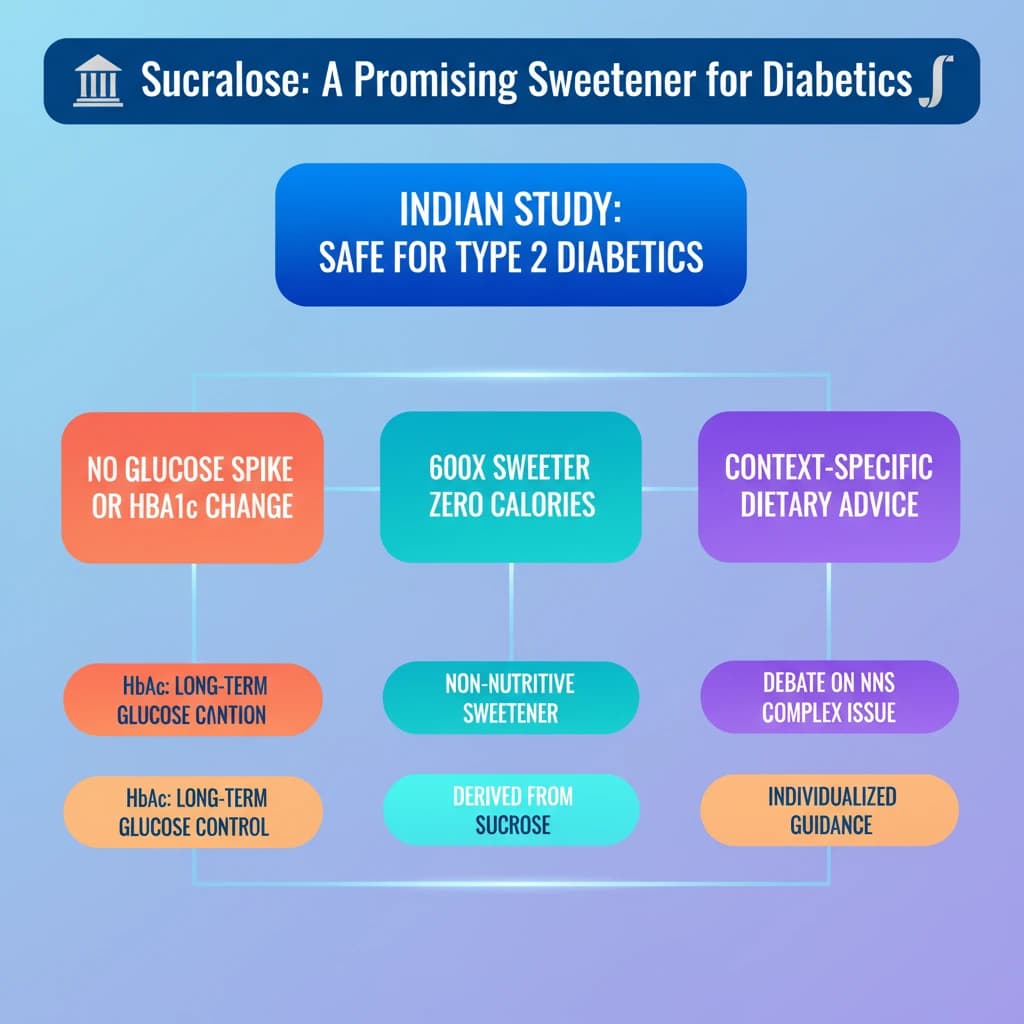
- •An Indian study suggests sucralose is a promising sweetener for Type 2 Diabetics, showing no significant changes in glucose or HbA1c.
- •This finding contrasts with WHO's caution against NNS for weight control in non-diabetics.
- •Sucralose is a non-nutritive sweetener, approximately 600 times sweeter than sucrose with no calories.
- •HbA1c is a key indicator for long-term blood glucose control in diabetes.
- •The debate on NNS highlights the complexity of dietary recommendations and the need for context-specific guidance.
- •Regulatory bodies and scientific research continuously evaluate the safety and efficacy of food additives.
🧠 Memory Techniques

95% Verified Content
📚 Reference Sources
•World Health Organization (WHO) Guidelines on Non-Sugar Sweeteners
•General scientific literature on Sucralose and Type 2 Diabetes