Loading page, please wait…
Tardigrades: Adaptations, Cryptobiosis, and Potential Human Applications - UPSC Science And Technology
What is Tardigrades: Adaptations, Cryptobiosis, and Potential Human Applications in UPSC Science And Technology?
Tardigrades: Adaptations, Cryptobiosis, and Potential Human Applications is a key topic under Science And Technology for UPSC Civil Services Examination. Key points include: Tardigrades ('water bears') are microscopic extremophiles known for extraordinary resilience.. They can survive extreme radiation, starvation, lack of oxygen, dehydration, freezing, and even space vacuum.. Cryptobiosis is a key survival mechanism, allowing them to halt biological activity in adverse conditions.. Understanding this topic is essential for both UPSC Prelims and Mains preparation.
Why is Tardigrades: Adaptations, Cryptobiosis, and Potential Human Applications important for UPSC exam?
Tardigrades: Adaptations, Cryptobiosis, and Potential Human Applications is a Medium-level topic in UPSC Science And Technology. It is tested in both Prelims (factual MCQs) and Mains (analytical answer writing). Previous year UPSC questions have frequently covered aspects of Tardigrades: Adaptations, Cryptobiosis, and Potential Human Applications, making it essential for comprehensive IAS preparation.
How to prepare Tardigrades: Adaptations, Cryptobiosis, and Potential Human Applications for UPSC?
To prepare Tardigrades: Adaptations, Cryptobiosis, and Potential Human Applications for UPSC: (1) Study the comprehensive notes covering all key concepts on Vaidra. (2) Practice previous year questions on this topic. (3) Connect it with current affairs using daily updates. (4) Revise using key takeaways and mind maps available for Science And Technology. (5) Write practice answers linking Tardigrades: Adaptations, Cryptobiosis, and Potential Human Applications to related GS Paper topics.
Key takeaways of Tardigrades: Adaptations, Cryptobiosis, and Potential Human Applications for UPSC
- Tardigrades ('water bears') are microscopic extremophiles known for extraordinary resilience.
- They can survive extreme radiation, starvation, lack of oxygen, dehydration, freezing, and even space vacuum.
- Cryptobiosis is a key survival mechanism, allowing them to halt biological activity in adverse conditions.
- The DDA1 gene helps synthesize betalains (antioxidants) that protect cells from radiation damage.
- Their properties offer potential applications in medicine (organ preservation), space technology, and radiation protection.
Tardigrades: Adaptations, Cryptobiosis, and Potential Human Applications
Medium⏱️ 7 min read
science and technology
📖 Introduction
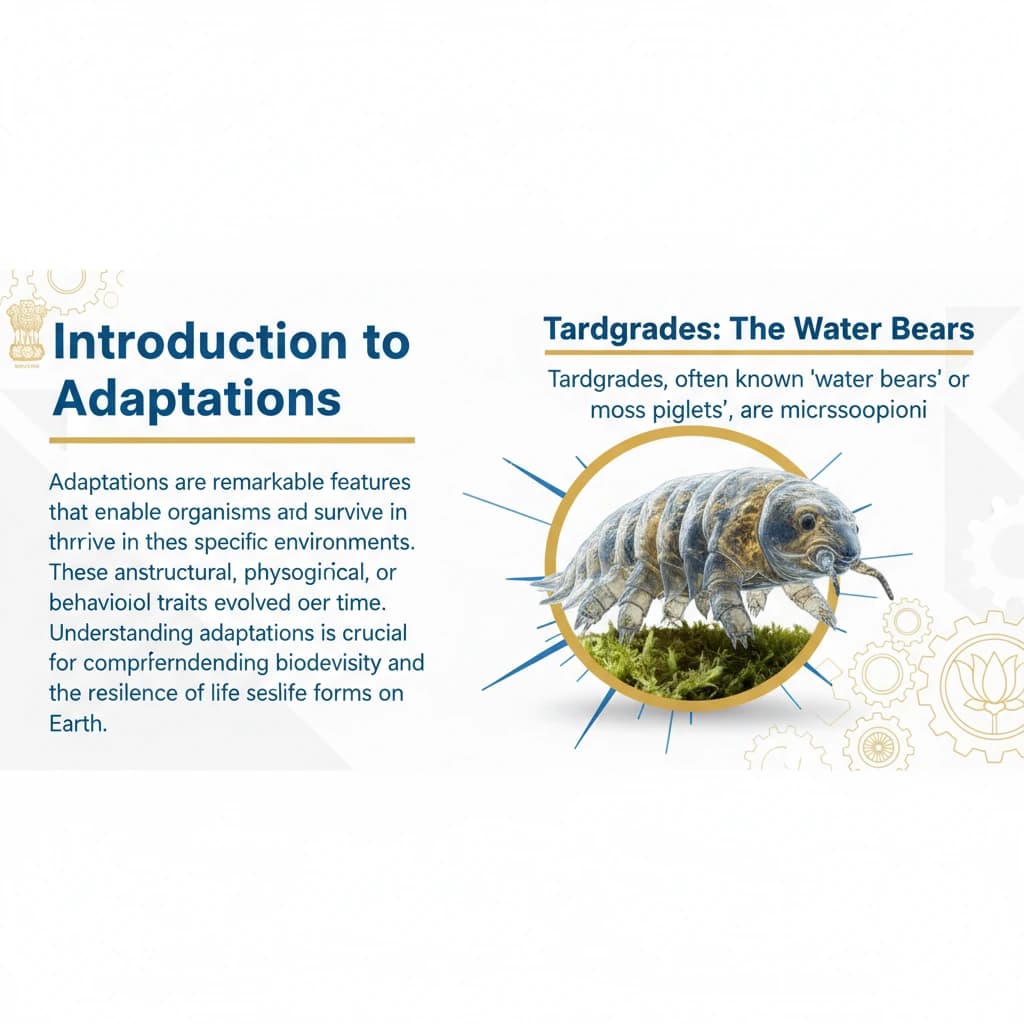
Introduction to Adaptations
Adaptations are remarkable features that enable organisms to survive and thrive in their specific environments. These can be structural, physiological, or behavioral traits evolved over time.
Understanding adaptations is crucial for comprehending biodiversity and the resilience of life forms on Earth.
Tardigrades: The Water Bears
Tardigrades, often known as 'water bears' or 'moss piglets', are microscopic invertebrates renowned for their extraordinary survival capabilities. Molecular dating suggests their origin dates back at least 600 million years ago.
Origin: At least 600 million years ago (molecular dating)
Common Name: Water Bears, Moss Piglets
These creatures are masters of survival, capable of inhabiting some of the most extreme ecosystems on the planet.
Extreme Habitats:
- Arctic regions
- Deep-sea floors
- Deserts
- Even the vacuum of space
Unparalleled Resilience
Tardigrades exhibit an astonishing ability to withstand conditions that would be lethal to most other life forms. Their resilience makes them a subject of intense scientific study.
Extreme Conditions Withstood:
- Extreme radiation
- Starvation
- Lack of oxygen (anoxia)
- Severe dehydration (lack of water)
- Freezing temperatures
Cryptobiosis: A Survival Mechanism
A key to the tardigrades' survival is a reversible metabolic state called cryptobiosis. In this state, they halt nearly all biological activity to endure extreme environmental stress.
Cryptobiosis Definition: A metabolic state of life entered by an organism in response to adverse environmental conditions, characterized by a significant reduction in metabolic activity.
This remarkable process allows them to survive prolonged periods of dehydration, freezing, and even intense radiation damage, resuming normal functions once conditions improve.
Genetic Basis of Resilience
Recent research has shed light on the genetic mechanisms behind tardigrade resilience. The DDA1 gene plays a significant role in their ability to recover from stress.
DDA1 Gene Function: Helps synthesize betalains, a type of antioxidant.
Betalains are pigments with powerful antioxidant properties. They are believed to protect tardigrade cells from damage caused by radiation, enabling them to repair and reactivate after exposure.
UPSC Insight: Questions on extremophiles and their adaptations often appear in the Science & Technology section (GS Paper III). Understanding concepts like cryptobiosis and specific genetic mechanisms (e.g., DDA1 gene) can provide an edge.
💡 Key Takeaways
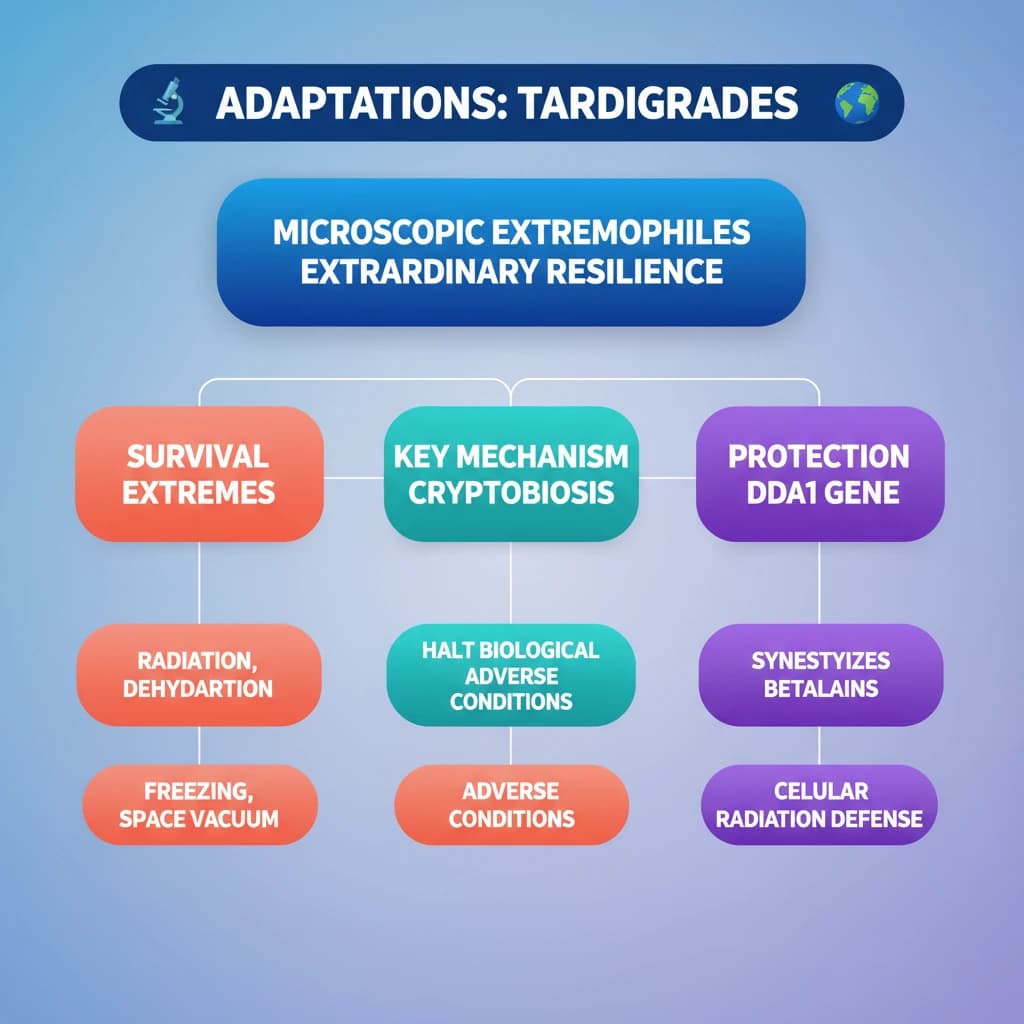
- •Tardigrades ('water bears') are microscopic extremophiles known for extraordinary resilience.
- •They can survive extreme radiation, starvation, lack of oxygen, dehydration, freezing, and even space vacuum.
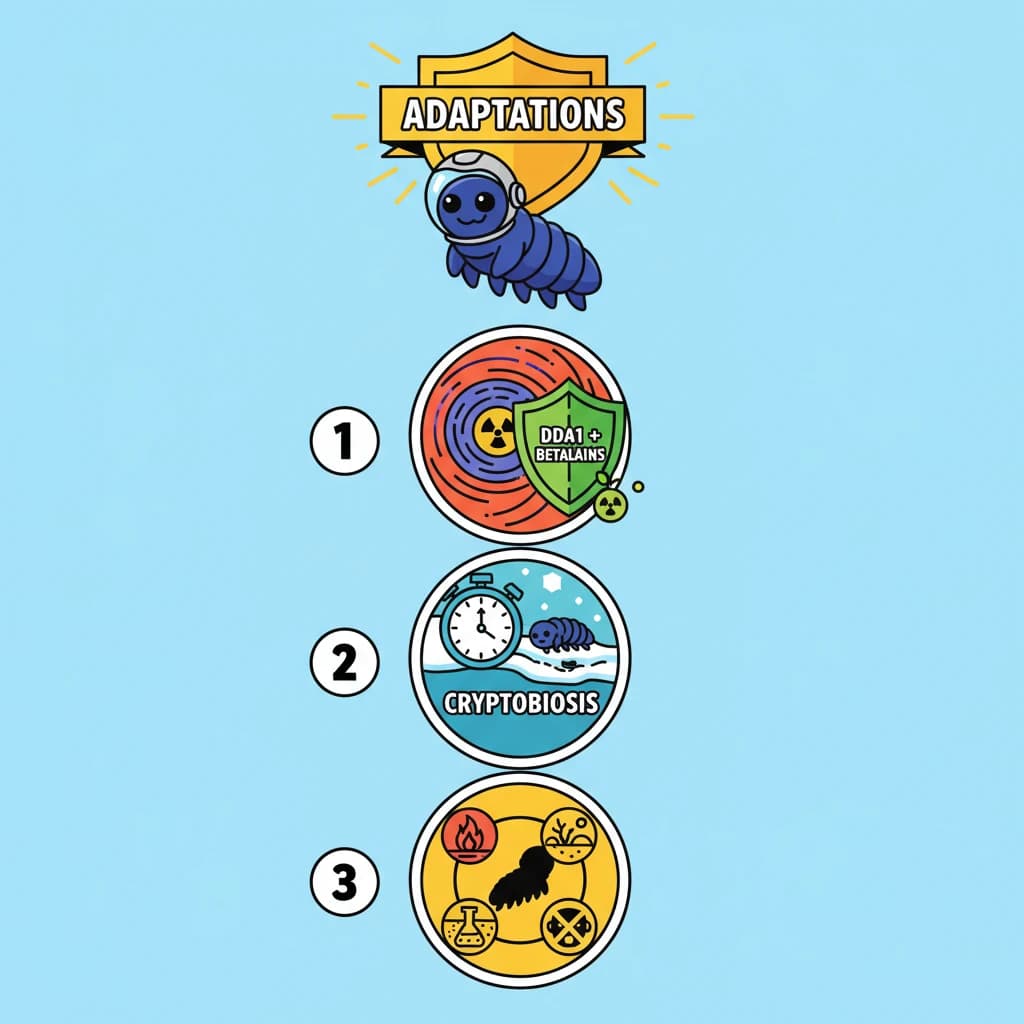
- •Cryptobiosis is a key survival mechanism, allowing them to halt biological activity in adverse conditions.
- •The DDA1 gene helps synthesize betalains (antioxidants) that protect cells from radiation damage.
- •Their properties offer potential applications in medicine (organ preservation), space technology, and radiation protection.
🧠 Memory Techniques
95% Verified Content
📚 Reference Sources
•Scientific literature on Tardigrades and Cryptobiosis (e.g., Nature, PNAS)
•General biology textbooks on adaptations and extremophiles