Loading page, please wait…
Tardigrades Genes for Innovation - UPSC Science And Technology
What is Tardigrades Genes for Innovation in UPSC Science And Technology?
Tardigrades Genes for Innovation is a key topic under Science And Technology for UPSC Civil Services Examination. Key points include: Tardigrades are microscopic, eight-legged invertebrates, also known as water bears or moss piglets.. They are currently being studied for their unique features to inspire advancements in medicine, biotechnology, and space exploration.. Their earliest known fossils date back 90 million years to the Cretaceous Period.. Understanding this topic is essential for both UPSC Prelims and Mains preparation.
Why is Tardigrades Genes for Innovation important for UPSC exam?
Tardigrades Genes for Innovation is a Medium-level topic in UPSC Science And Technology. It is tested in both Prelims (factual MCQs) and Mains (analytical answer writing). Previous year UPSC questions have frequently covered aspects of Tardigrades Genes for Innovation, making it essential for comprehensive IAS preparation.
How to prepare Tardigrades Genes for Innovation for UPSC?
To prepare Tardigrades Genes for Innovation for UPSC: (1) Study the comprehensive notes covering all key concepts on Vaidra. (2) Practice previous year questions on this topic. (3) Connect it with current affairs using daily updates. (4) Revise using key takeaways and mind maps available for Science And Technology. (5) Write practice answers linking Tardigrades Genes for Innovation to related GS Paper topics.
Key takeaways of Tardigrades Genes for Innovation for UPSC
- Tardigrades are microscopic, eight-legged invertebrates, also known as water bears or moss piglets.
- They are currently being studied for their unique features to inspire advancements in medicine, biotechnology, and space exploration.
- Their earliest known fossils date back 90 million years to the Cretaceous Period.
- Key survival mechanisms include cryptobiosis (suspended animation) and extreme resistance to radiation.
- Research into tardigrade biology offers potential solutions for vaccine preservation, radiation shielding, and crop resilience.
Tardigrades Genes for Innovation
Medium⏱️ 6 min read
science and technology
📖 Introduction
Introduction to Tardigrades
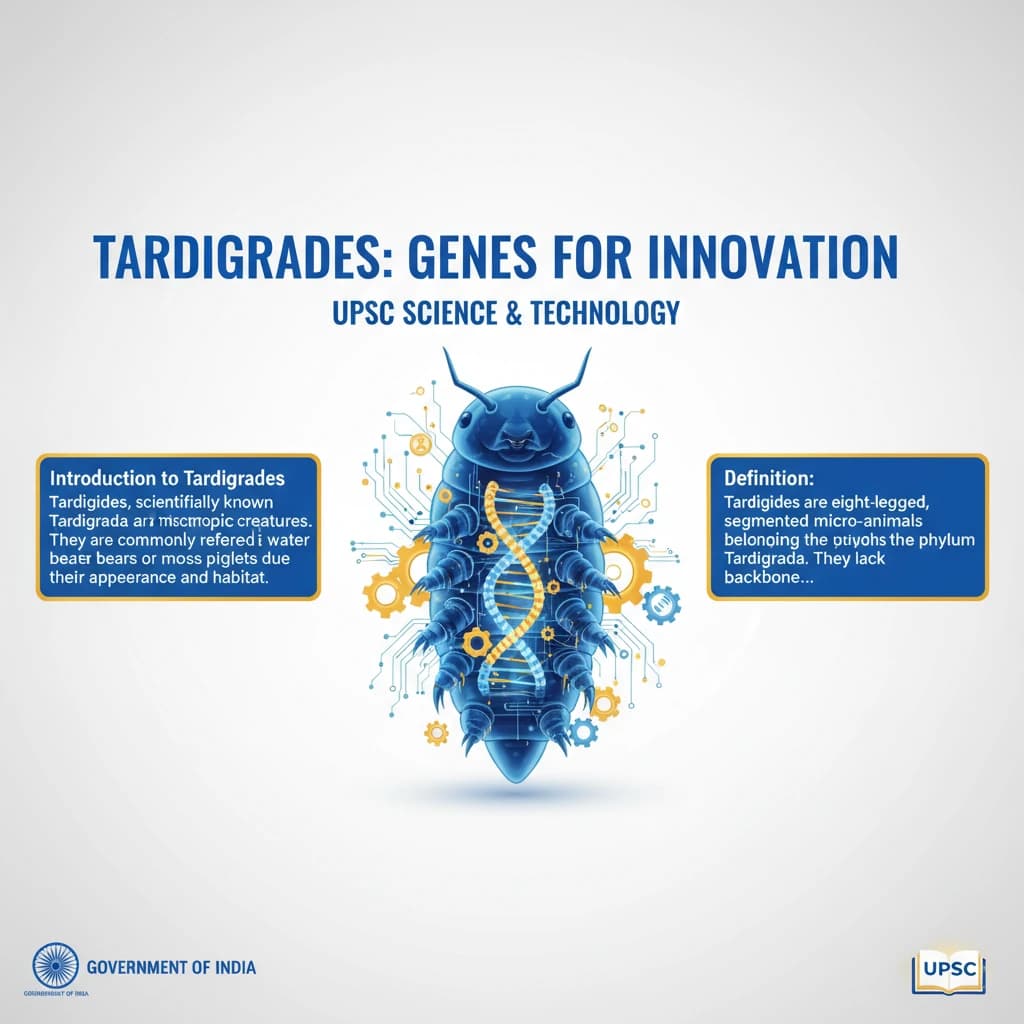
Tardigrades, scientifically known as Tardigrada, are fascinating microscopic creatures. They are commonly referred to as water bears or moss piglets due to their appearance and habitat.
Definition: Tardigrades are eight-legged, segmented micro-animals belonging to the phylum Tardigrada. They lack a backbone, classifying them as invertebrates.
Why are Tardigrades in the News?
Recently, researchers have intensified their study of tardigrades. They are exploring a wide array of the creatures' unique features.
The primary goal is to draw inspiration from tardigrade biology to drive advancements in critical fields such as medicine, biotechnology, and space exploration.
Key Characteristics of Tardigrades
Physical Attributes
These creatures are truly microscopic, requiring specialized equipment to observe them. They possess eight legs, which they use for locomotion.
A defining characteristic is their lack of a vertebral column, meaning they are invertebrates.
Classification and Evolution
Tardigrades are classified under their own distinct phylum, Tardigrada. This highlights their unique evolutionary path and biological distinctiveness.
Earliest Known Fossils: The oldest identified tardigrade fossils date back approximately 90 million years ago. These ancient records place their existence firmly within the Cretaceous Period (which spanned from 145 to 66 million years ago).
UPSC Relevance: Understanding tardigrades can be important for questions related to General Science (evolution, biology), Biotechnology (biomimicry, extremophiles), and Space Technology (radiation resistance, life in extreme environments).
💡 Key Takeaways
- •Tardigrades are microscopic, eight-legged invertebrates, also known as water bears or moss piglets.
- •They are currently being studied for their unique features to inspire advancements in medicine, biotechnology, and space exploration.
- •Their earliest known fossils date back 90 million years to the Cretaceous Period.
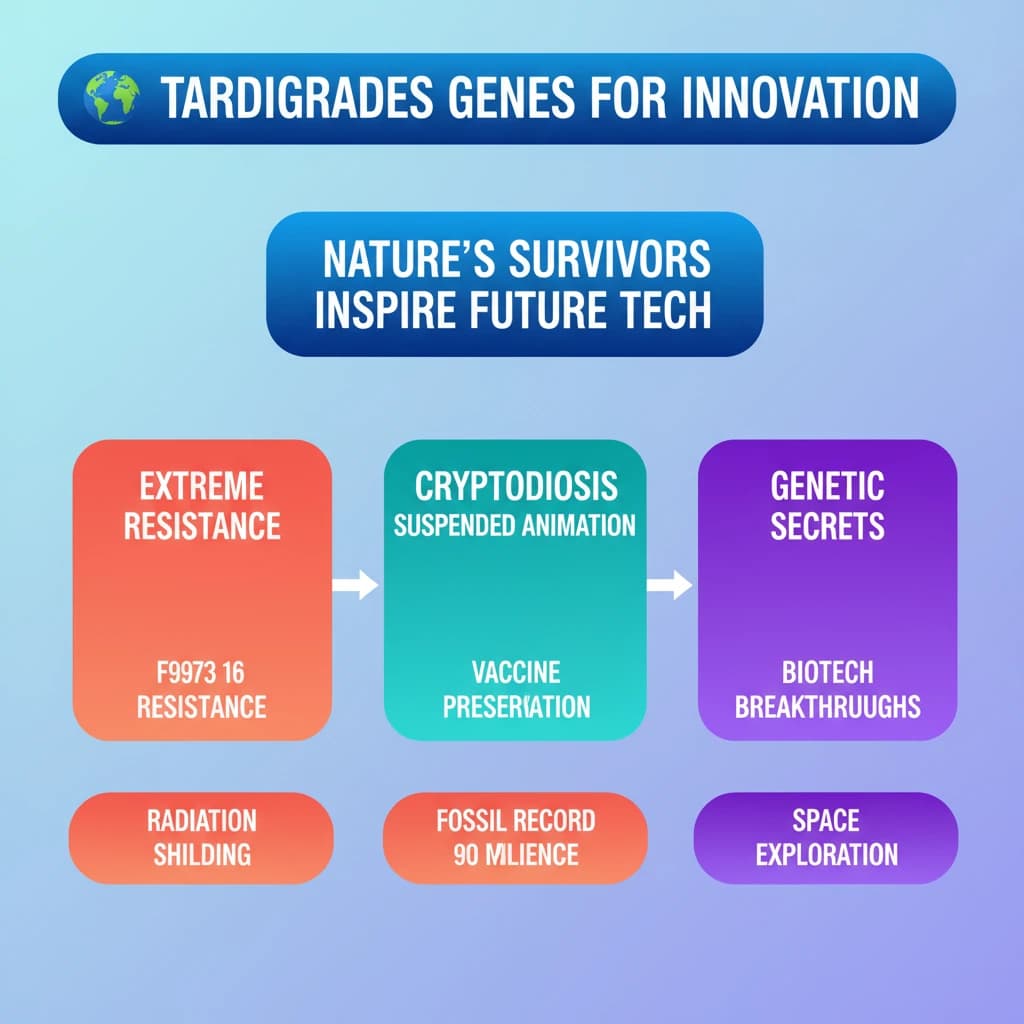
- •Key survival mechanisms include cryptobiosis (suspended animation) and extreme resistance to radiation.
- •Research into tardigrade biology offers potential solutions for vaccine preservation, radiation shielding, and crop resilience.
🧠 Memory Techniques

95% Verified Content
📚 Reference Sources
•General scientific knowledge about Tardigrades (cryptobiosis, radiation resistance, Dsup protein)