Loading page, please wait…
What are Sugar and Sugar Substitutes? - UPSC Science And Technology
What is What are Sugar and Sugar Substitutes? in UPSC Science And Technology?
What are Sugar and Sugar Substitutes? is a key topic under Science And Technology for UPSC Civil Services Examination. Key points include: Sugar is a carbohydrate, not essential, with sucrose being the most common.. Sugar substitutes offer sweetness with fewer/no calories, aiding in calorie reduction and diabetes management.. Three main types: Artificial Sweeteners (e.g., sucralose), Sugar Alcohols (e.g., xylitol), and Novel Sweeteners (e.g., stevia).. Understanding this topic is essential for both UPSC Prelims and Mains preparation.
Why is What are Sugar and Sugar Substitutes? important for UPSC exam?
What are Sugar and Sugar Substitutes? is a Medium-level topic in UPSC Science And Technology. It is tested in both Prelims (factual MCQs) and Mains (analytical answer writing). Previous year UPSC questions have frequently covered aspects of What are Sugar and Sugar Substitutes?, making it essential for comprehensive IAS preparation.
How to prepare What are Sugar and Sugar Substitutes? for UPSC?
To prepare What are Sugar and Sugar Substitutes? for UPSC: (1) Study the comprehensive notes covering all key concepts on Vaidra. (2) Practice previous year questions on this topic. (3) Connect it with current affairs using daily updates. (4) Revise using key takeaways and mind maps available for Science And Technology. (5) Write practice answers linking What are Sugar and Sugar Substitutes? to related GS Paper topics.
Key takeaways of What are Sugar and Sugar Substitutes? for UPSC
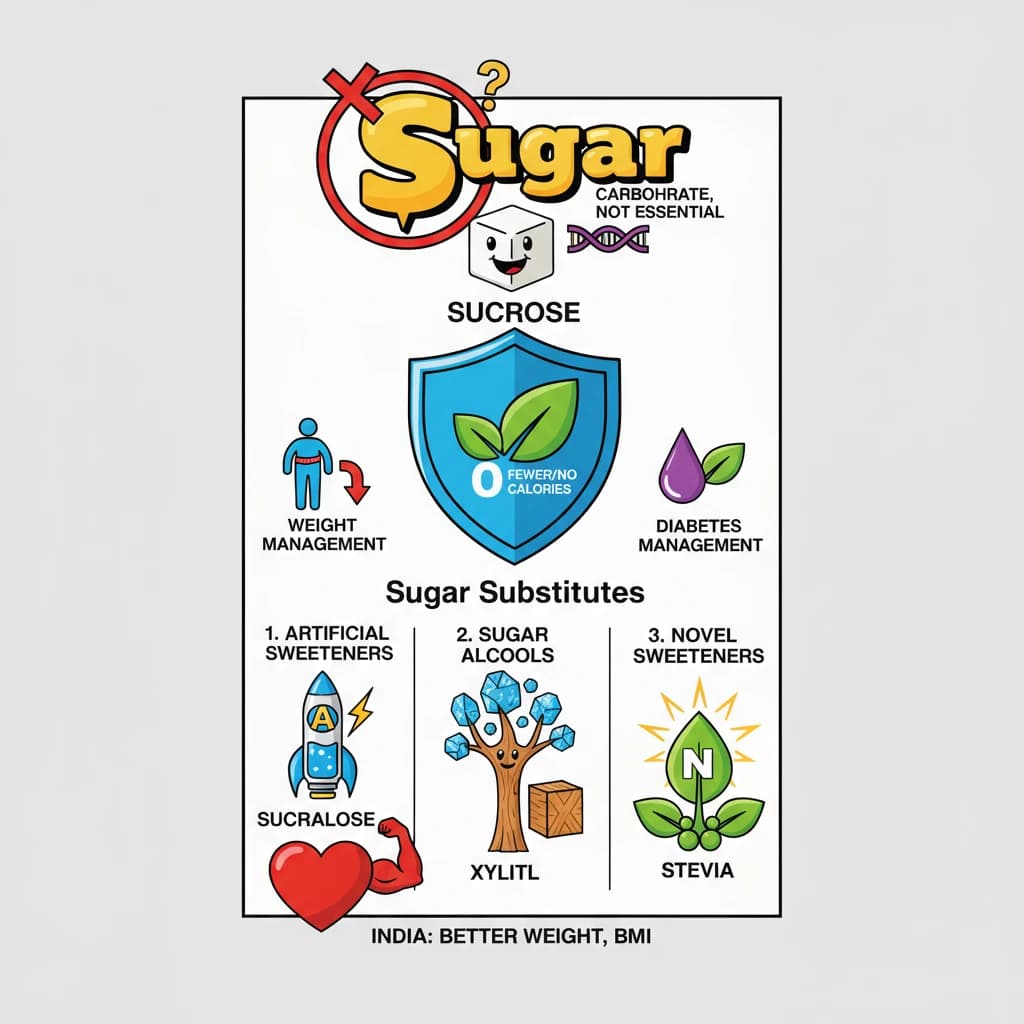
- Sugar is a carbohydrate, not essential, with sucrose being the most common.
- Sugar substitutes offer sweetness with fewer/no calories, aiding in calorie reduction and diabetes management.
- Three main types: Artificial Sweeteners (e.g., sucralose), Sugar Alcohols (e.g., xylitol), and Novel Sweeteners (e.g., stevia).
- Sucralose has shown potential in improving body weight and BMI, crucial for India's diabetic population.
- Judicious use of sugar substitutes is key, as part of an overall healthy diet and lifestyle.
What are Sugar and Sugar Substitutes?
Medium⏱️ 8 min read
science and technology
📖 Introduction
Understanding Sugar and Sugar Substitutes
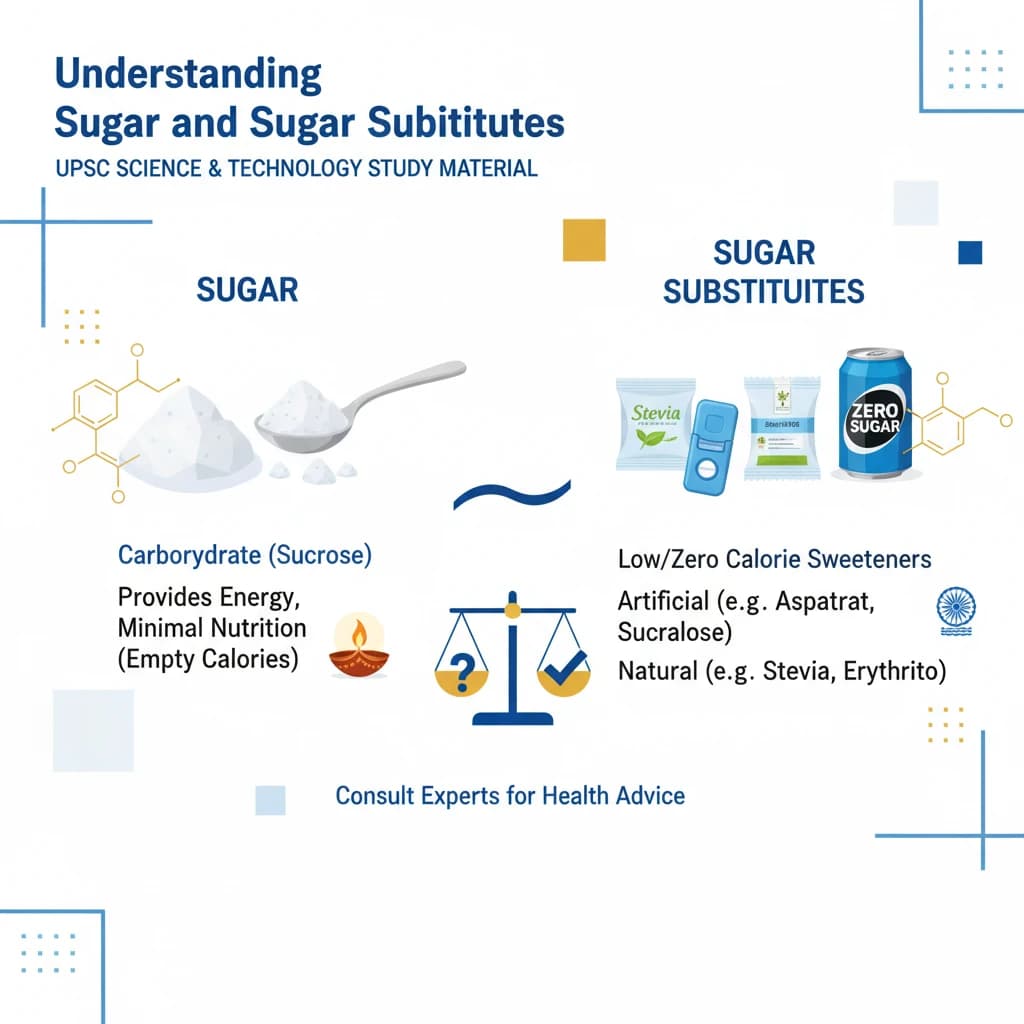
Sugar is a type of carbohydrate, alongside fibre and starch. While carbohydrates are vital for human health, sugar itself is not considered an essential nutrient for the body.
The most commonly used sweetener globally is white table sugar, scientifically known as sucrose. It provides energy but offers minimal nutritional value beyond calories.
Other Natural Sugars:
- Fructose (found in fruits)
- Galactose (part of lactose)
- Glucose (primary energy source)
- Lactose (milk sugar)
- Maltose (malt sugar)
What are Sugar Substitutes?
Sugar substitutes are substances that provide a sweet taste similar to sugar but with significantly fewer or no calories. They are designed to help reduce overall calorie and sugar intake.
These substitutes are frequently found in food and beverage products marketed as “sugar-free”, “keto”, “low carb”, or “diet” options. Their primary appeal lies in their ability to deliver sweetness without the caloric load of traditional sugar.
Types of Sugar Substitutes
Sugar substitutes can be broadly categorized into three main types based on their origin and properties.
Artificial Sweeteners (Non-Nutritive Sweeteners - NNS)
Artificial Sweeteners, also known as Non-Nutritive Sweeteners (NNS), are primarily synthesized from chemicals in laboratories. Some can also be derived from natural herbs.
These sweeteners are remarkably potent, often being 200 to 700 times sweeter than common table sugar (sucrose). They provide intense sweetness with virtually no calories.
Examples of Artificial Sweeteners:
- Acesulfame Potassium (Ace-K)
- Advantame
- Aspartame
- Neotame
- Saccharin
- Sucralose
Sugar Alcohols
Sugar Alcohols are synthetically derived from sugars. They are commonly incorporated into many processed food products, offering both sweetness and texture.
These are generally less sweet than artificial sweeteners. They are often used in items like chewing gum and hard candies to add bulk, texture, and a mild sweet taste.
Examples of Sugar Alcohols:
- Erythritol
- Isomalt
- Lactitol
- Maltitol
- Sorbitol
- Xylitol
Novel Sweeteners
Novel Sweeteners are derived from natural sources, offering a blend of benefits found in both artificial and natural sweeteners. They are a newer class of sugar alternatives.
They are characterized by being low in calories and sugar, which helps in preventing weight gain and managing blood sugar spikes. These are typically less processed and closely resemble their natural origins.
Examples of Novel Sweeteners:
- Allulose
- Monk fruit
- Stevia
- Tagatose
Sucralose Study Findings and Significance for India
Recent studies have shown that participants using sucralose experienced slight improvements in key health indicators. These included a reduction in body weight, waist circumference, and Body Mass Index (BMI).
The judicious and informed use of sucralose can play a significant role in reducing an individual's overall calorie and sugar intake. This aspect is particularly crucial for the effective management of conditions like diabetes.
These findings hold substantial significance for India, a country where the adoption of artificial sweeteners is currently less common. The study suggests that sucralose could potentially enhance dietary compliance and support weight management efforts for diabetic patients across the nation. This has implications for public health policies.
💡 Key Takeaways
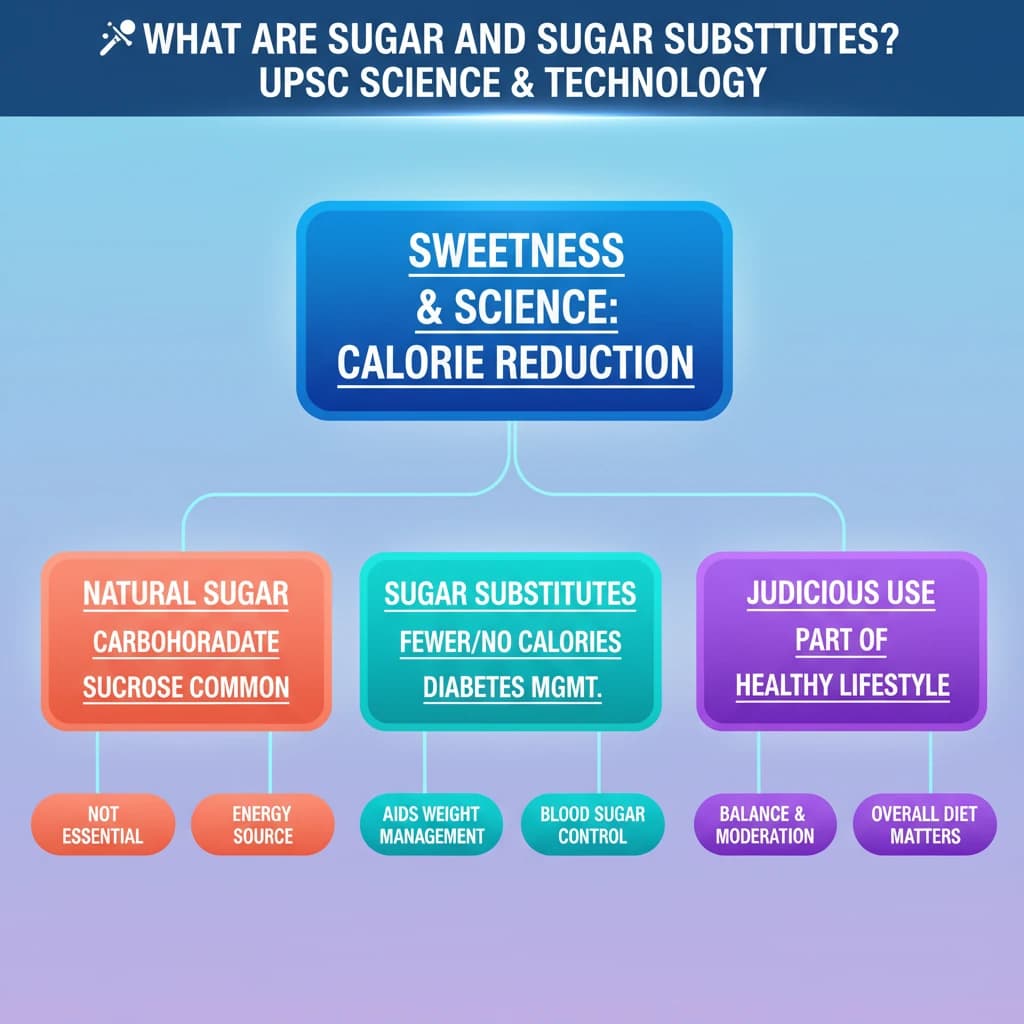
- •Sugar is a carbohydrate, not essential, with sucrose being the most common.
- •Sugar substitutes offer sweetness with fewer/no calories, aiding in calorie reduction and diabetes management.
- •Three main types: Artificial Sweeteners (e.g., sucralose), Sugar Alcohols (e.g., xylitol), and Novel Sweeteners (e.g., stevia).
- •Sucralose has shown potential in improving body weight and BMI, crucial for India's diabetic population.
- •Judicious use of sugar substitutes is key, as part of an overall healthy diet and lifestyle.
🧠 Memory Techniques
98% Verified Content