Loading page, please wait…
What are the applications of the Discovery? - UPSC Science And Technology
What is What are the applications of the Discovery? in UPSC Science And Technology?
What are the applications of the Discovery? is a key topic under Science And Technology for UPSC Civil Services Examination. Key points include: microRNAs (miRNAs) are small non-coding RNAs crucial for gene regulation.. Abnormal microRNA regulation is linked to diseases like cancer and genetic disorders.. Mutations in microRNA genes can cause conditions such as hearing loss, eye, and skeletal disorders.. Understanding this topic is essential for both UPSC Prelims and Mains preparation.
Why is What are the applications of the Discovery? important for UPSC exam?
What are the applications of the Discovery? is a Medium-level topic in UPSC Science And Technology. It is tested in both Prelims (factual MCQs) and Mains (analytical answer writing). Previous year UPSC questions have frequently covered aspects of What are the applications of the Discovery?, making it essential for comprehensive IAS preparation.
How to prepare What are the applications of the Discovery? for UPSC?
To prepare What are the applications of the Discovery? for UPSC: (1) Study the comprehensive notes covering all key concepts on Vaidra. (2) Practice previous year questions on this topic. (3) Connect it with current affairs using daily updates. (4) Revise using key takeaways and mind maps available for Science And Technology. (5) Write practice answers linking What are the applications of the Discovery? to related GS Paper topics.
Key takeaways of What are the applications of the Discovery? for UPSC
- microRNAs (miRNAs) are small non-coding RNAs crucial for gene regulation.
- Abnormal microRNA regulation is linked to diseases like cancer and genetic disorders.
- Mutations in microRNA genes can cause conditions such as hearing loss, eye, and skeletal disorders.
- Currently, there are no direct clinical applications of microRNAs for treatment.
- Extensive research is ongoing to understand microRNAs better and develop future clinical applications.
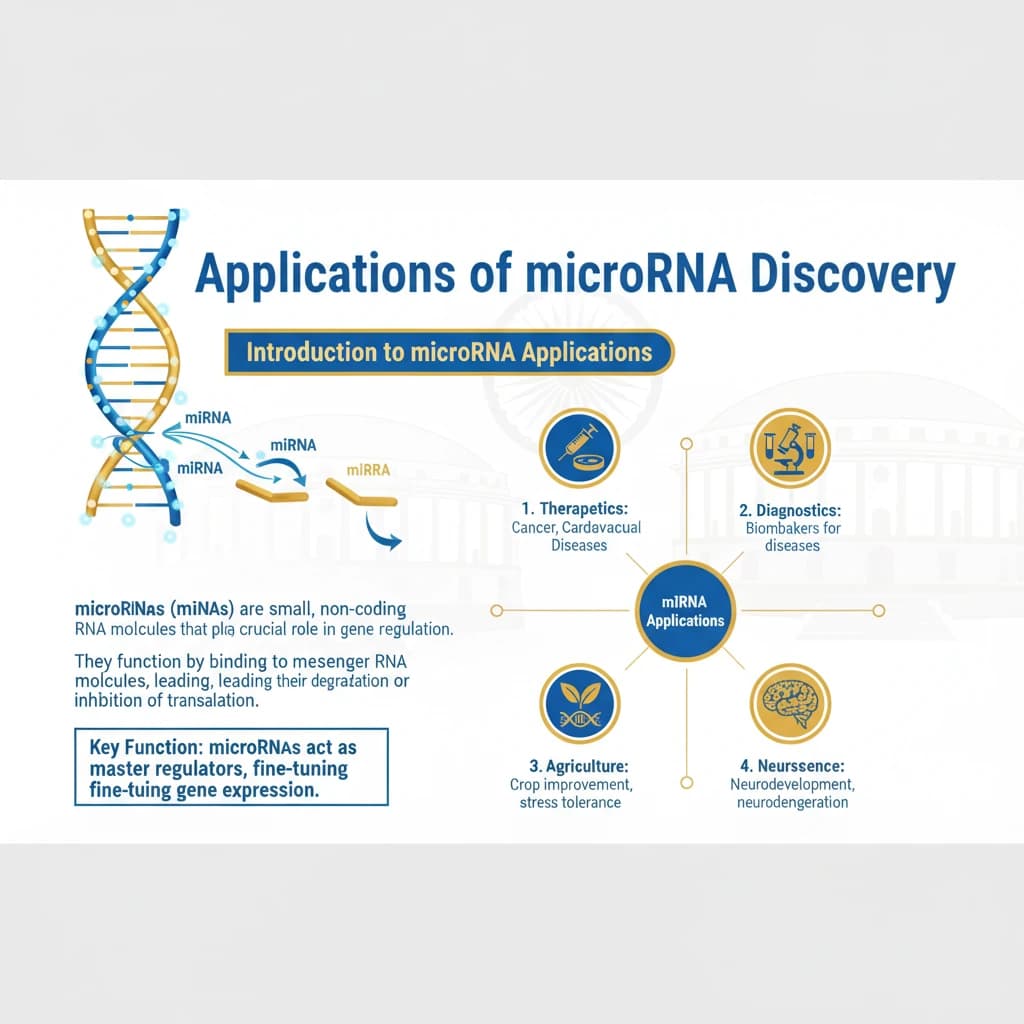
What are the applications of the Discovery?
Medium⏱️ 8 min read
science and technology
📖 Introduction
Introduction to microRNA Applications
microRNAs (miRNAs) are small, non-coding RNA molecules that play a crucial role in gene regulation. They function by binding to messenger RNA (mRNA) molecules, leading to their degradation or inhibition of translation. This intricate control mechanism impacts various cellular processes.
Key Function: microRNAs act as master regulators, fine-tuning the expression of hundreds of genes, thereby influencing cell growth, differentiation, and programmed cell death.
Abnormal Regulation and Diseases
Disruptions in the normal regulation of microRNAs can have significant pathological consequences, contributing to the development and progression of various diseases. Understanding these abnormalities is key to uncovering potential therapeutic targets.
Cancer Development
Abnormal microRNA regulation is a well-established factor in the initiation and progression of cancer. Specific miRNAs can act as either oncogenes (promoting cancer) or tumor suppressors (inhibiting cancer), depending on their target genes and cellular context.
Many research efforts are focused on identifying miRNA biomarkers for early cancer detection and prognosis, as well as developing miRNA-based therapies.
Genetic Mutations and Disorders
Mutations within microRNA genes themselves, or in the machinery responsible for their processing, have been directly linked to a range of inherited human conditions. These genetic alterations can lead to severe developmental and functional impairments.
- Hearing Loss: Specific miRNA gene mutations are implicated in certain forms of congenital hearing impairment.
- Eye Disorders: Altered miRNA function due to mutations can contribute to various ocular diseases affecting vision.
- Skeletal Disorders: Defects in microRNA pathways have been associated with abnormalities in bone development and structure.
Future Potential and Challenges
While the role of microRNAs in disease is extensively studied and their potential is immense, it is crucial to note that there are currently no direct clinical applications readily available for patient treatment based solely on microRNA modulation.
UPSC Insight: Questions on emerging biotechnologies often focus on both their potential applications and the challenges/ethical considerations. Be prepared to discuss both the promise and the current limitations of microRNA therapeutics.
Further extensive research and a deeper, more comprehensive understanding of the complex regulatory networks involving microRNAs are absolutely necessary. This foundational work will pave the way for their eventual translation into effective clinical interventions.
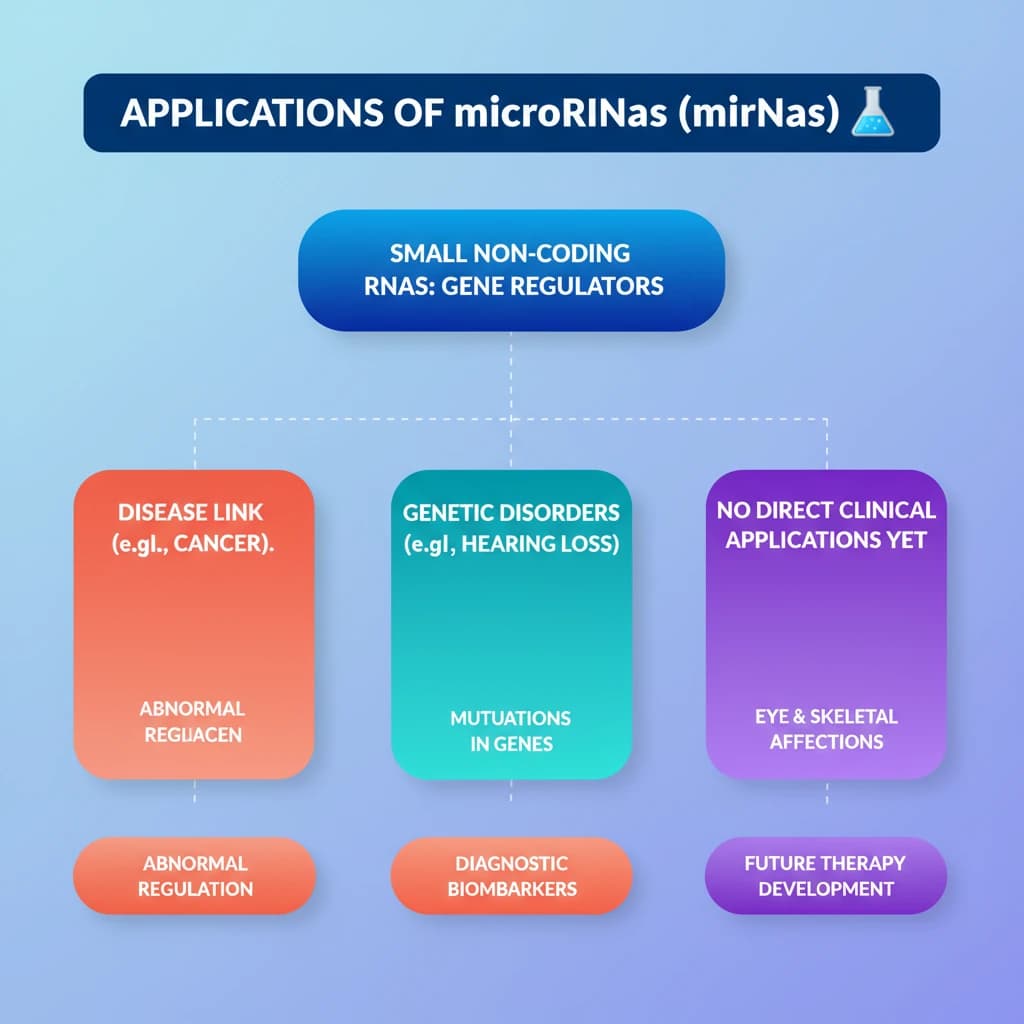
💡 Key Takeaways
- •microRNAs (miRNAs) are small non-coding RNAs crucial for gene regulation.
- •Abnormal microRNA regulation is linked to diseases like cancer and genetic disorders.
- •Mutations in microRNA genes can cause conditions such as hearing loss, eye, and skeletal disorders.
- •Currently, there are no direct clinical applications of microRNAs for treatment.
- •Extensive research is ongoing to understand microRNAs better and develop future clinical applications.
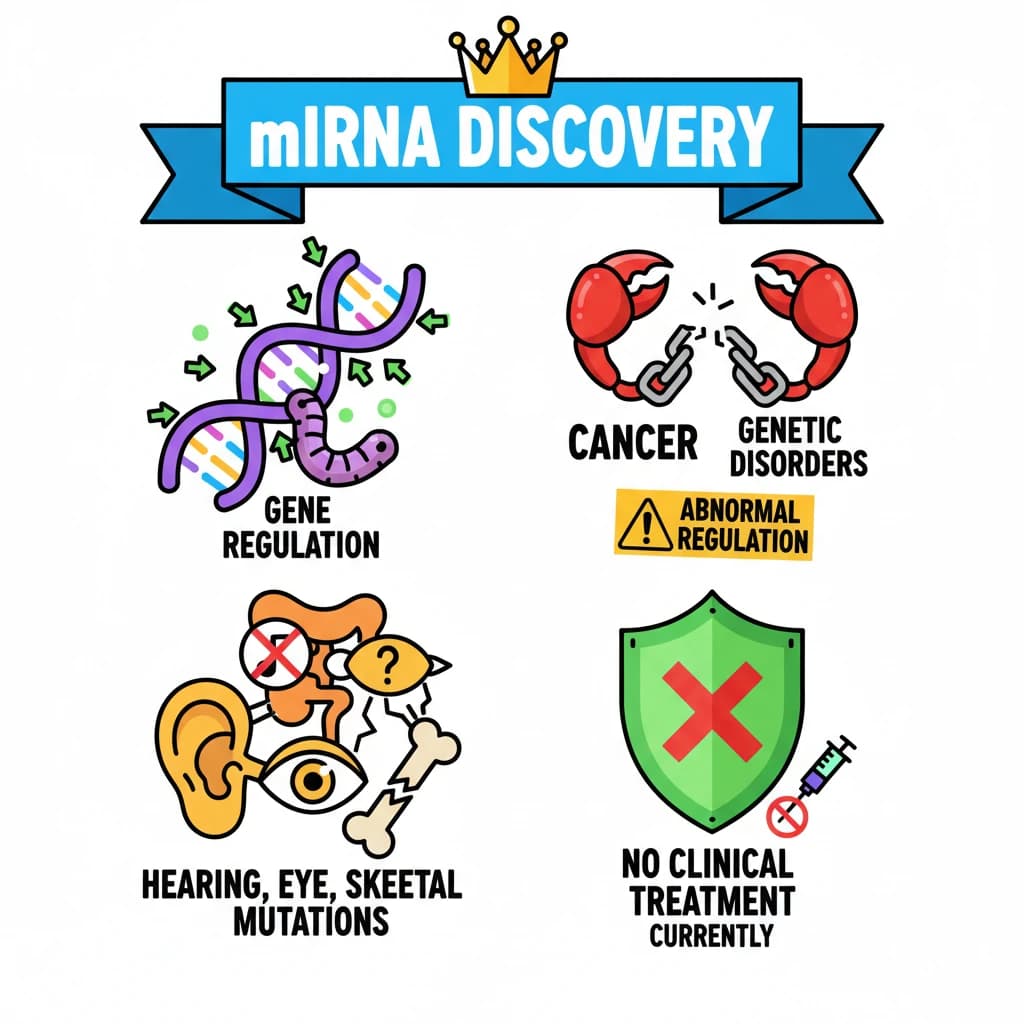
🧠 Memory Techniques
95% Verified Content
📚 Reference Sources
•General scientific literature on microRNAs and their role in disease