Loading page, please wait…
What are the Key Facts About the Study? - UPSC Science And Technology
What is What are the Key Facts About the Study? in UPSC Science And Technology?
What are the Key Facts About the Study? is a key topic under Science And Technology for UPSC Civil Services Examination. Key points include: Study focused on optimizing piezoelectric capabilities of zirconia nanoparticle-polymer composites.. Zirconia nanoparticles were derived from UiO-66 and UiO-67 MOFs.. Surface properties and crystal structure of nanoparticles critically influenced piezoelectric performance.. Understanding this topic is essential for both UPSC Prelims and Mains preparation.
Why is What are the Key Facts About the Study? important for UPSC exam?
What are the Key Facts About the Study? is a Medium-level topic in UPSC Science And Technology. It is tested in both Prelims (factual MCQs) and Mains (analytical answer writing). Previous year UPSC questions have frequently covered aspects of What are the Key Facts About the Study?, making it essential for comprehensive IAS preparation.
How to prepare What are the Key Facts About the Study? for UPSC?
To prepare What are the Key Facts About the Study? for UPSC: (1) Study the comprehensive notes covering all key concepts on Vaidra. (2) Practice previous year questions on this topic. (3) Connect it with current affairs using daily updates. (4) Revise using key takeaways and mind maps available for Science And Technology. (5) Write practice answers linking What are the Key Facts About the Study? to related GS Paper topics.
Key takeaways of What are the Key Facts About the Study? for UPSC
- Study focused on optimizing piezoelectric capabilities of zirconia nanoparticle-polymer composites.
- Zirconia nanoparticles were derived from UiO-66 and UiO-67 MOFs.
- Surface properties and crystal structure of nanoparticles critically influenced piezoelectric performance.
- Practical applications include Bluetooth-based security alert systems using piezoelectric pavements.
- The prototype can also generate electricity from mechanical energy, beneficial for smart cities and security systems.
What are the Key Facts About the Study?
Medium⏱️ 8 min read
science and technology
📖 Introduction
Overview of the Research Study
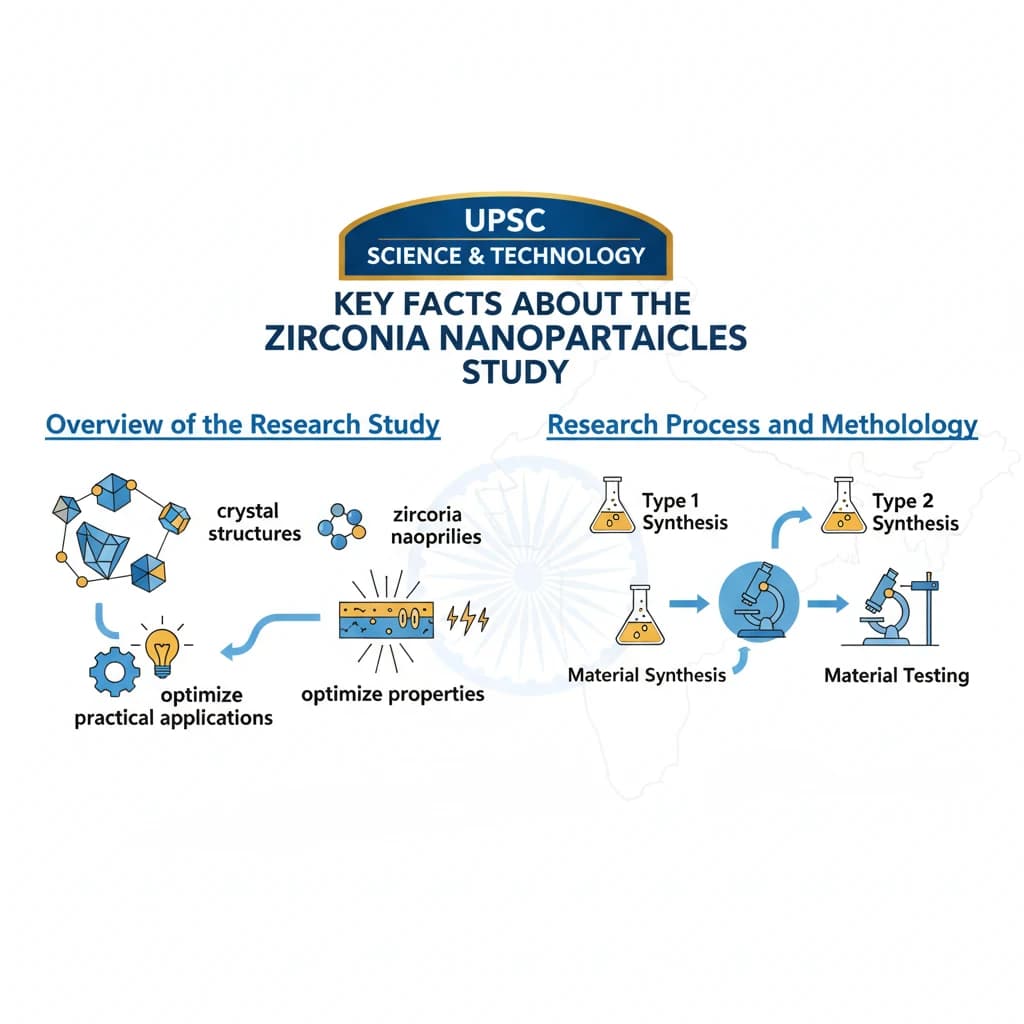
This study focused on understanding how the different crystal structures of zirconia nanoparticles impact the piezoelectric capabilities of a composite material. The researchers aimed to optimize these properties for various practical applications.
Research Process and Methodology
The research involved a multi-step process to synthesize and test the materials. Initially, two specific types of zirconia-based Metal-organic frameworks (MOFs), namely UiO-66 and UiO-67, were meticulously created.
Metal-organic frameworks (MOFs) are a class of crystalline materials. They are formed by linking metal ions or clusters with rigid organic molecules. This unique structure results in highly porous materials that can be one, two, or three-dimensional.
These synthesized MOFs were then converted into zirconia nanoparticles. Subsequently, these nanoparticles were uniformly mixed with a specialized piezoelectric polymer known as poly(vinylidene diflouride) (PVDF).
The combination of nanoparticles and polymer resulted in the formation of polymer nanocomposite films. These films were the primary materials used for evaluating the piezoelectric properties.
Key Research Findings
The study yielded significant insights into the material's behavior. Researchers observed a direct and substantial correlation between the surface properties and the crystal structure of the nanoparticles and the overall piezoelectric performance of the polymer composite.
The surface characteristics and internal atomic arrangement (crystal structure) of the zirconia nanoparticles were found to be critical determinants of the composite material's ability to generate electricity under mechanical stress.
Practical Applications Derived from the Study
The findings of this research open doors for several innovative applications, particularly in the fields of security and energy generation. The developed materials show promise for creating advanced sensing and power generation systems.
Security Alert System
One notable application is a Bluetooth-based security alert system. This system incorporates a piezoelectric pavement prototype capable of generating voltage directly from footsteps.
If any unauthorized entry is detected by the system, it automatically activates. It then promptly sends alerts to a connected mobile device, such as an Android smartphone, utilizing Bluetooth technology for communication.
Electricity Generation
Beyond security, the prototype also demonstrates significant potential for electricity generation. It can effectively convert mechanical energy input, such as pressure or vibrations, into usable electrical energy.
This feature is highly beneficial for enhancing energy efficiency in modern urban environments, particularly in smart cities and sophisticated automated security systems. It aligns with India's push for sustainable urban development and energy independence (UPSC GS-III: Science & Technology, Environment, Infrastructure).
💡 Key Takeaways
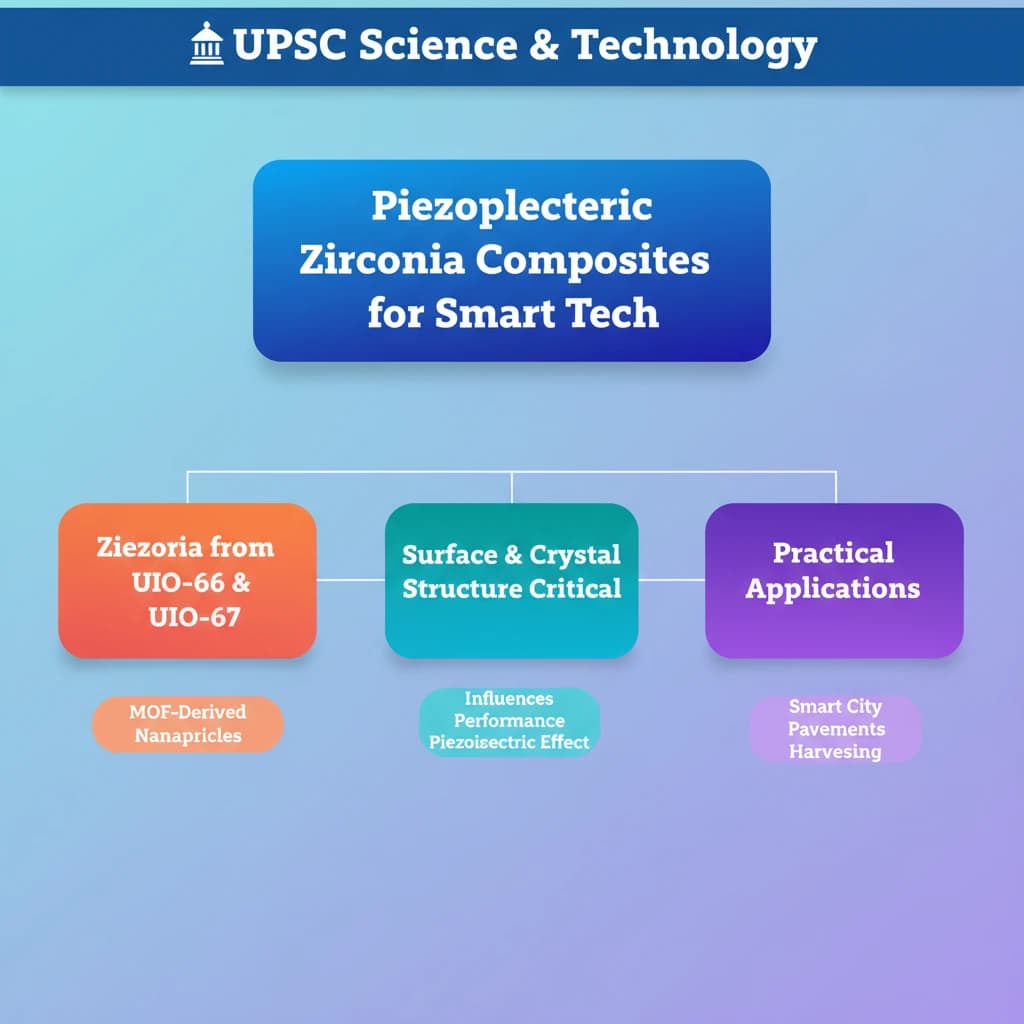
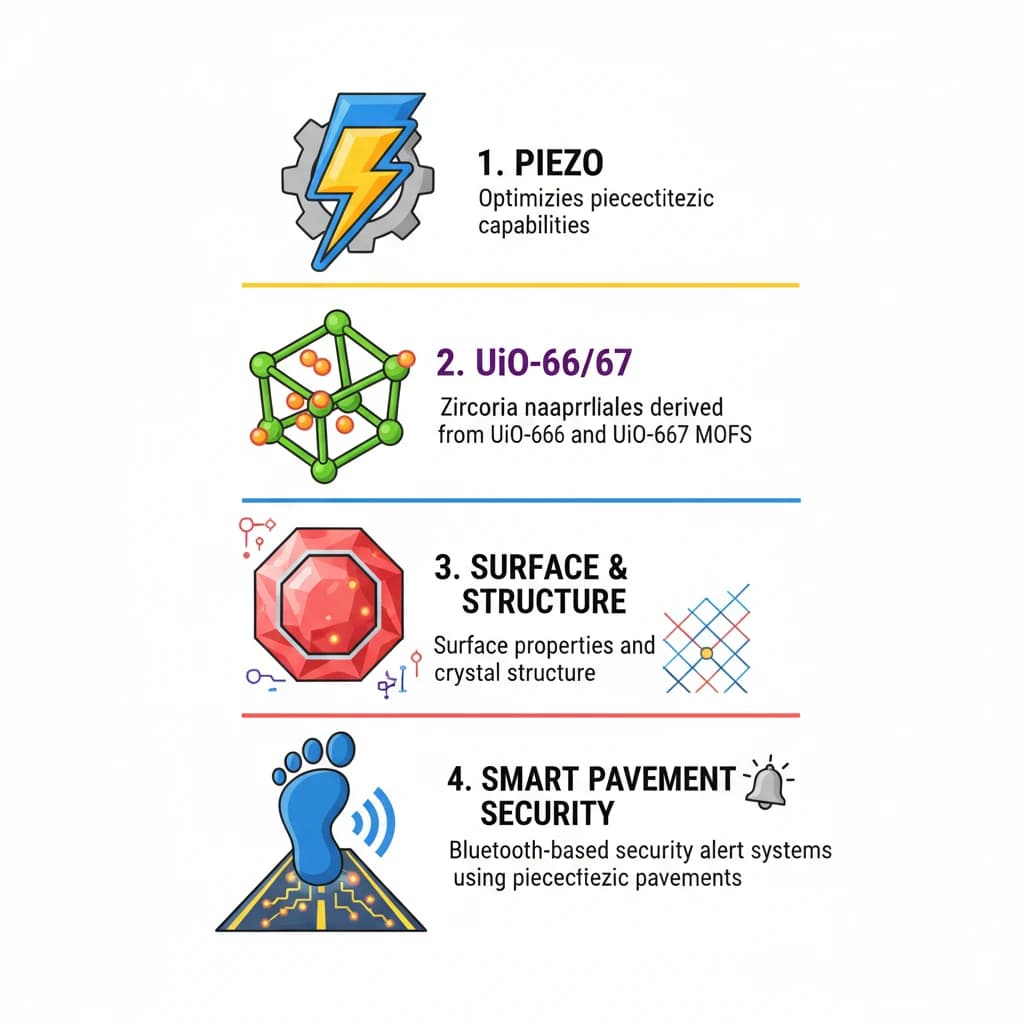
- •Study focused on optimizing piezoelectric capabilities of zirconia nanoparticle-polymer composites.
- •Zirconia nanoparticles were derived from UiO-66 and UiO-67 MOFs.
- •Surface properties and crystal structure of nanoparticles critically influenced piezoelectric performance.
- •Practical applications include Bluetooth-based security alert systems using piezoelectric pavements.
- •The prototype can also generate electricity from mechanical energy, beneficial for smart cities and security systems.
🧠 Memory Techniques
95% Verified Content
📚 Reference Sources
•General scientific understanding of piezoelectricity, MOFs, and nanotechnology (implied background research)