Loading page, please wait…
What are the Techniques Used for Genetic Analysis? - UPSC Science And Technology
What is What are the Techniques Used for Genetic Analysis? in UPSC Science And Technology?
What are the Techniques Used for Genetic Analysis? is a key topic under Science And Technology for UPSC Civil Services Examination. Key points include: Genetic analysis uses techniques like SNPs, haplotypes, and genealogical tree inference to study DNA variations.. SNPs identify single nucleotide differences, useful for ancestry and ancient DNA studies.. Haplotypes analyze inherited blocks of genetic markers, providing insights into disease patterns.. Understanding this topic is essential for both UPSC Prelims and Mains preparation.
Why is What are the Techniques Used for Genetic Analysis? important for UPSC exam?
What are the Techniques Used for Genetic Analysis? is a Medium-level topic in UPSC Science And Technology. It is tested in both Prelims (factual MCQs) and Mains (analytical answer writing). Previous year UPSC questions have frequently covered aspects of What are the Techniques Used for Genetic Analysis?, making it essential for comprehensive IAS preparation.
How to prepare What are the Techniques Used for Genetic Analysis? for UPSC?
To prepare What are the Techniques Used for Genetic Analysis? for UPSC: (1) Study the comprehensive notes covering all key concepts on Vaidra. (2) Practice previous year questions on this topic. (3) Connect it with current affairs using daily updates. (4) Revise using key takeaways and mind maps available for Science And Technology. (5) Write practice answers linking What are the Techniques Used for Genetic Analysis? to related GS Paper topics.
Key takeaways of What are the Techniques Used for Genetic Analysis? for UPSC
- Genetic analysis uses techniques like SNPs, haplotypes, and genealogical tree inference to study DNA variations.
- SNPs identify single nucleotide differences, useful for ancestry and ancient DNA studies.
- Haplotypes analyze inherited blocks of genetic markers, providing insights into disease patterns.
- India's IBDC and GenomIndia Project are crucial for building a national genetic diversity database.
- Biotech-PRIDE Guidelines ensure ethical and secure sharing of biological data through the Bio-Grid.
- These advancements support personalized medicine, disease management, and agricultural biotechnology in India.
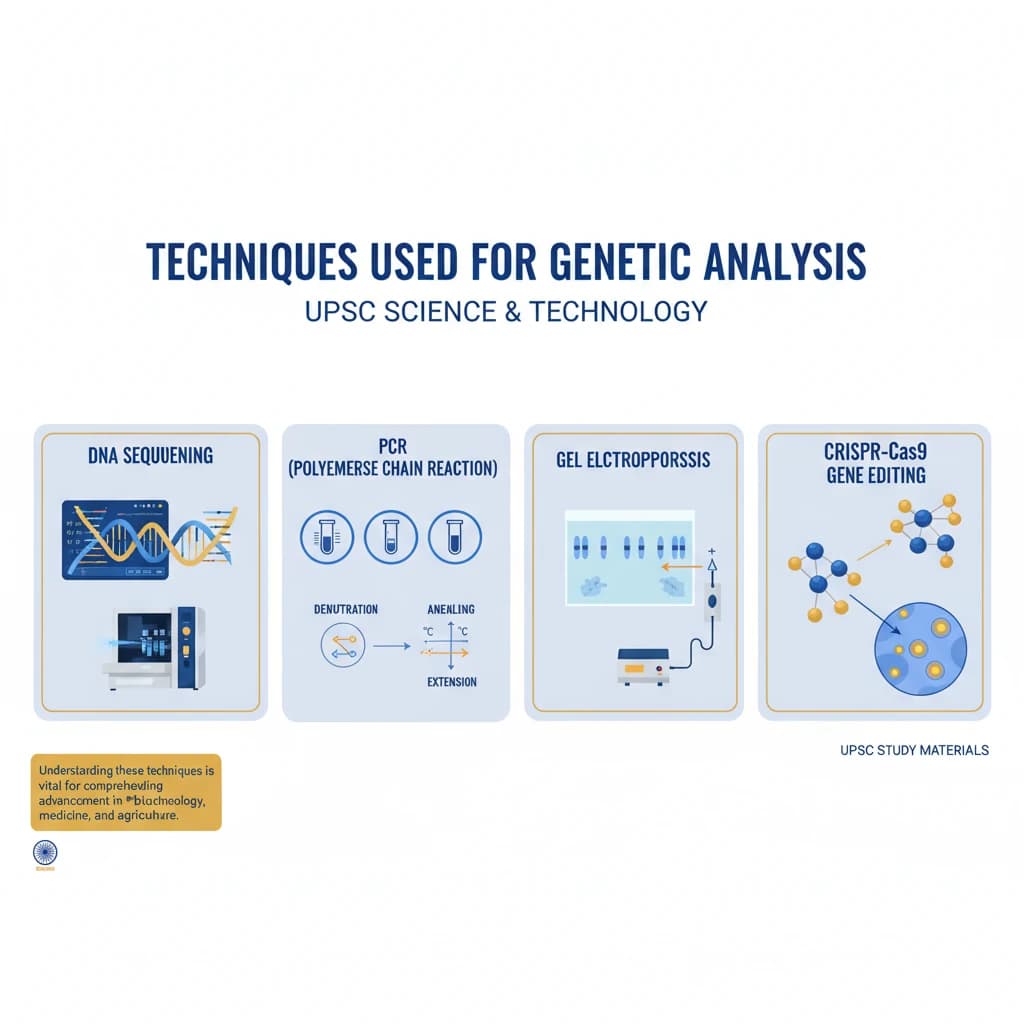
What are the Techniques Used for Genetic Analysis?
Medium⏱️ 10 min read
science and technology
📖 Introduction
Introduction to Genetic Analysis Techniques
Genetic analysis involves various laboratory methods to study the structure and function of an organism's genetic material. These techniques are crucial for understanding disease patterns, population genetics, and reconstructing evolutionary histories.
Understanding these techniques is vital for comprehending advancements in biotechnology, medicine, and forensics, often relevant for UPSC General Studies Paper 3.
Single Nucleotide Polymorphisms (SNPs)
A Single Nucleotide Polymorphism (SNP) refers to a variation at a single position in a DNA sequence among individuals. It is the most common type of genetic variation.
Definition: An SNP occurs when a single nucleotide (A, C, G, or T) in the genome differs between members of a species or paired chromosomes in an individual.
SNP analysis is a laboratory method used to identify these single nucleotide variations. It helps in finding differences in a DNA sequence where one nucleotide varies.
This technique is widely employed to reconstruct genetic histories and develop ancestry models, particularly from ancient genetic material (aDNA). It provides insights into population movements and relationships.
Challenges: SNP analysis requires high-quality DNA samples. It also faces difficulties when distinguishing between closely related ancestral groups due to minimal genetic divergence.
Haplotypes Method
The Haplotypes Method focuses on studying combinations of genetic markers that are inherited together. These markers are typically located on the same chromosome.
Definition: A haplotype is a group of alleles (different forms of a gene) at different loci on a single chromosome that are inherited together from a single parent.
This technique offers deeper insights into disease patterns and population genetics. It can reveal information that might be overlooked when analyzing individual genetic markers in isolation.
By examining these inherited blocks of genetic information, researchers can gain a more comprehensive understanding of genetic predispositions and population structures.
Genealogical Tree Inference
Genealogical Tree Inference is a method used to map the ancestry and genetic relationships among individuals. It achieves this by constructing detailed family trees or genealogical trees.
This technique involves analyzing both modern genomes and ancient genomes. Its primary goal is to understand complex population structures and track demographic changes over time.
It helps in tracing lineage, identifying common ancestors, and understanding how populations have evolved and migrated across generations.
Indian Biological Data Centre (IBDC)
The Indian Biological Data Centre (IBDC) is India’s first national repository specifically designed for life science data. It plays a crucial role in managing and sharing vast amounts of biological information.
The IBDC archives whole genome sequencing (WGS) samples. These samples are invaluable resources for genomic research and personalized medicine initiatives.
A significant dataset from the GenomIndia Project, comprising whole genome sequencing (WGS) samples, is archived at the IBDC. This makes it accessible to the global research community.
The IBDC Portal facilitates seamless access to this genetic data. This accessibility supports global advancements in genomics research and the development of personalized medicine approaches.
FeeD Protocols
The FeeD Protocols are designed to ensure the ethical, transparent, and secure sharing of high-quality genomic data. These protocols operate under the overarching framework of the Biotech-PRIDE Guidelines.
Purpose: FeeD Protocols aim to standardize the process of data exchange, ensuring integrity and privacy while maximizing the utility of genomic data for research.
GenomIndia Project (GIP)
The GenomIndia Project (GIP) is a flagship initiative led by the Department of Biotechnology (DBT). It emphasizes the critical importance of understanding India's unique genetic diversity.
The project's main objective is to create a comprehensive database of India’s genetic diversity. This database will serve as a foundational resource for various biomedical and agricultural research efforts.
The GenomIndia Project is a key example of national scientific initiatives relevant for questions on Science & Technology policy and biotechnology advancements in UPSC Mains GS Paper 3.
Biotech-PRIDE Guidelines
The “Biotech-PRIDE Guidelines” (Promotion of Research and Innovation through Data Exchange) were released in 2021 by the Department of Biotechnology (DBT).
These guidelines establish a robust framework for the exchange of biological data among various research groups across India. They promote collaboration and data integration.
Key objectives of the guidelines include:
- Ensuring better integration of biological data.
- Facilitating informed decision-making in research.
- Promoting equitable access to valuable biological datasets.
- Encouraging timely sharing of research data.
- Avoiding duplication of research efforts.
- Maximizing the benefits derived from public investment in research.
The guidelines are implemented through the Indian Biological Data Centre (IBDC), which is housed at the Regional Centre for Biotechnology (RCB) in Haryana.
Under the Biotech-PRIDE Guidelines, existing biological datasets are connected to the IBDC, forming a larger network known as the Bio-Grid.
The Bio-Grid functions as a National Repository for biological data. It ensures the secure exchange of data while maintaining high standards of safety, quality, and clear data access protocols.
Regional Centre for Biotechnology (RCB)
The Regional Centre for Biotechnology (RCB) was established by the Department of Biotechnology (DBT). It is a key institution focused on advancing biotechnology in India.
The RCB's mandate includes providing high-quality biotechnology education, conducting cutting-edge research, and offering specialized training programs.
The RCB was recognized as an Institution of National Importance in 2016. This designation underscores its strategic importance in India's scientific landscape.
The center actively fosters innovation and is dedicated to developing skilled human resources. These efforts aim to address critical challenges in sectors such as health, agriculture, and the environment.
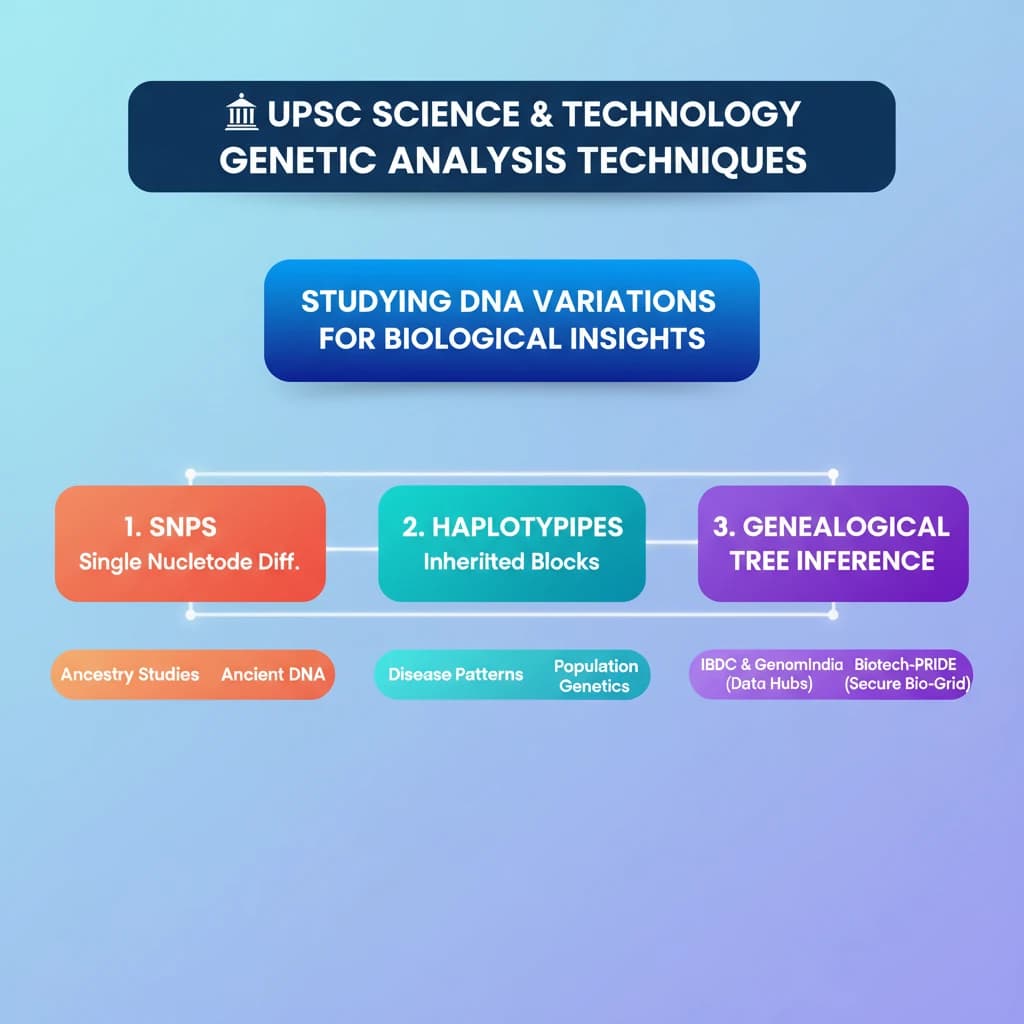
💡 Key Takeaways
- •Genetic analysis uses techniques like SNPs, haplotypes, and genealogical tree inference to study DNA variations.
- •SNPs identify single nucleotide differences, useful for ancestry and ancient DNA studies.
- •Haplotypes analyze inherited blocks of genetic markers, providing insights into disease patterns.
- •India's IBDC and GenomIndia Project are crucial for building a national genetic diversity database.
- •Biotech-PRIDE Guidelines ensure ethical and secure sharing of biological data through the Bio-Grid.
- •These advancements support personalized medicine, disease management, and agricultural biotechnology in India.
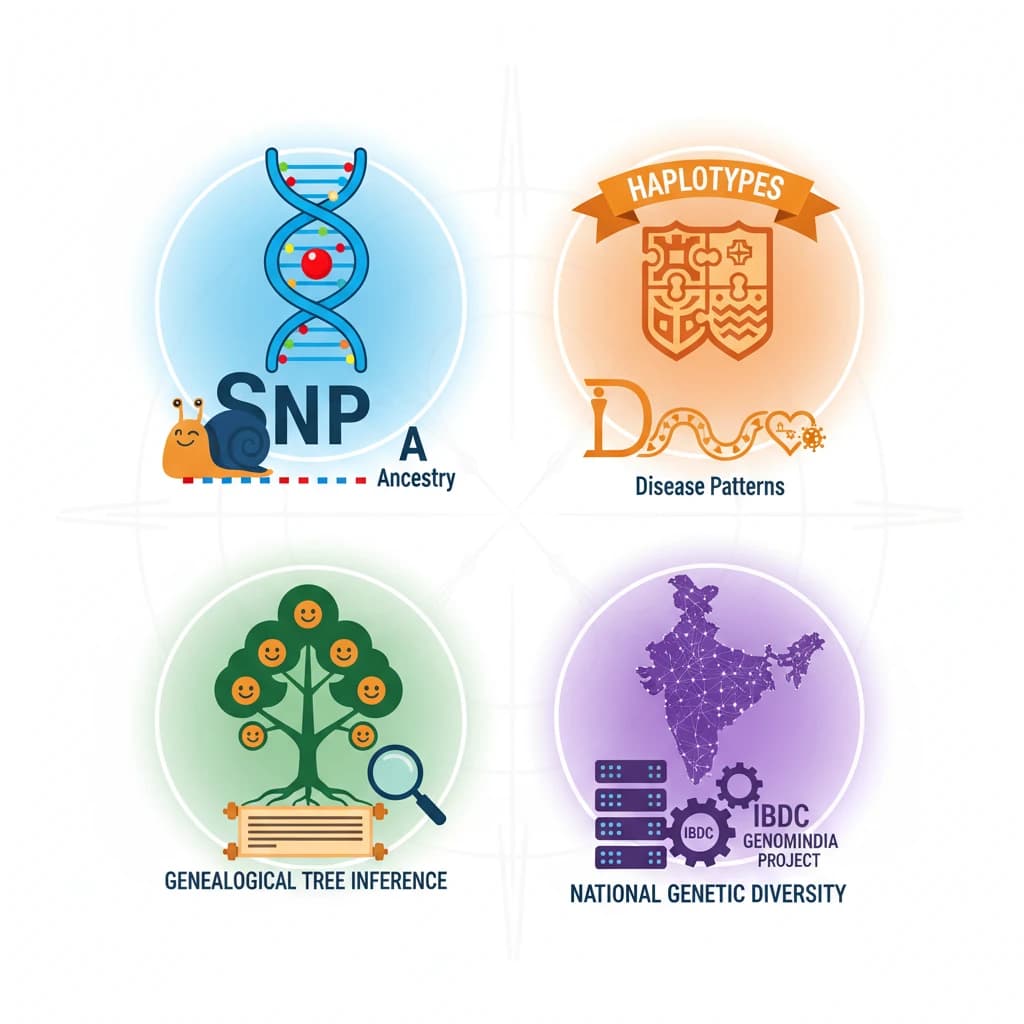
🧠 Memory Techniques
98% Verified Content
📚 Reference Sources
•Department of Biotechnology (DBT) official communications regarding Biotech-PRIDE Guidelines and GenomIndia Project
•Indian Biological Data Centre (IBDC) official website information
•Regional Centre for Biotechnology (RCB) official website information