Loading page, please wait…
What is Alzheimer’s Disease? - UPSC Science And Technology
What is What is Alzheimer’s Disease? in UPSC Science And Technology?
What is Alzheimer’s Disease? is a key topic under Science And Technology for UPSC Civil Services Examination. Key points include: Alzheimer's is a progressive neurodegenerative disorder causing memory loss and cognitive decline.. It is characterized by amyloid plaques and neurofibrillary tangles in the brain.. It is the most common cause of dementia, accounting for 60-80% of cases.. Understanding this topic is essential for both UPSC Prelims and Mains preparation.
Why is What is Alzheimer’s Disease? important for UPSC exam?
What is Alzheimer’s Disease? is a Medium-level topic in UPSC Science And Technology. It is tested in both Prelims (factual MCQs) and Mains (analytical answer writing). Previous year UPSC questions have frequently covered aspects of What is Alzheimer’s Disease?, making it essential for comprehensive IAS preparation.
How to prepare What is Alzheimer’s Disease? for UPSC?
To prepare What is Alzheimer’s Disease? for UPSC: (1) Study the comprehensive notes covering all key concepts on Vaidra. (2) Practice previous year questions on this topic. (3) Connect it with current affairs using daily updates. (4) Revise using key takeaways and mind maps available for Science And Technology. (5) Write practice answers linking What is Alzheimer’s Disease? to related GS Paper topics.
Key takeaways of What is Alzheimer’s Disease? for UPSC
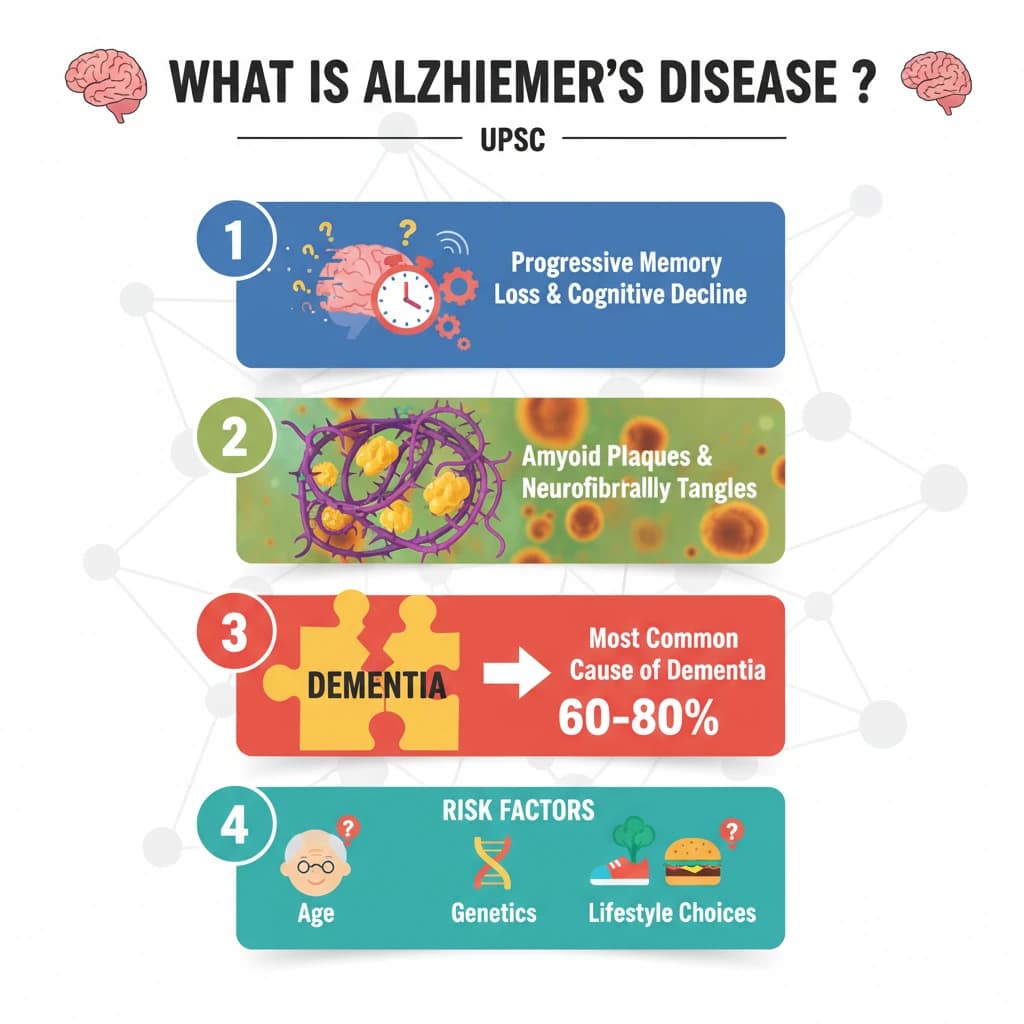
- Alzheimer's is a progressive neurodegenerative disorder causing memory loss and cognitive decline.
- It is characterized by amyloid plaques and neurofibrillary tangles in the brain.
- It is the most common cause of dementia, accounting for 60-80% of cases.
- Risk factors include age, genetics, and lifestyle choices.
- Currently, there is no cure, but treatments can temporarily reduce symptoms.
- Global prevalence is rising, with India facing a significant burden due to its aging population.
What is Alzheimer’s Disease?
Medium⏱️ 6 min read
science and technology
📖 Introduction
Understanding Alzheimer's Disease
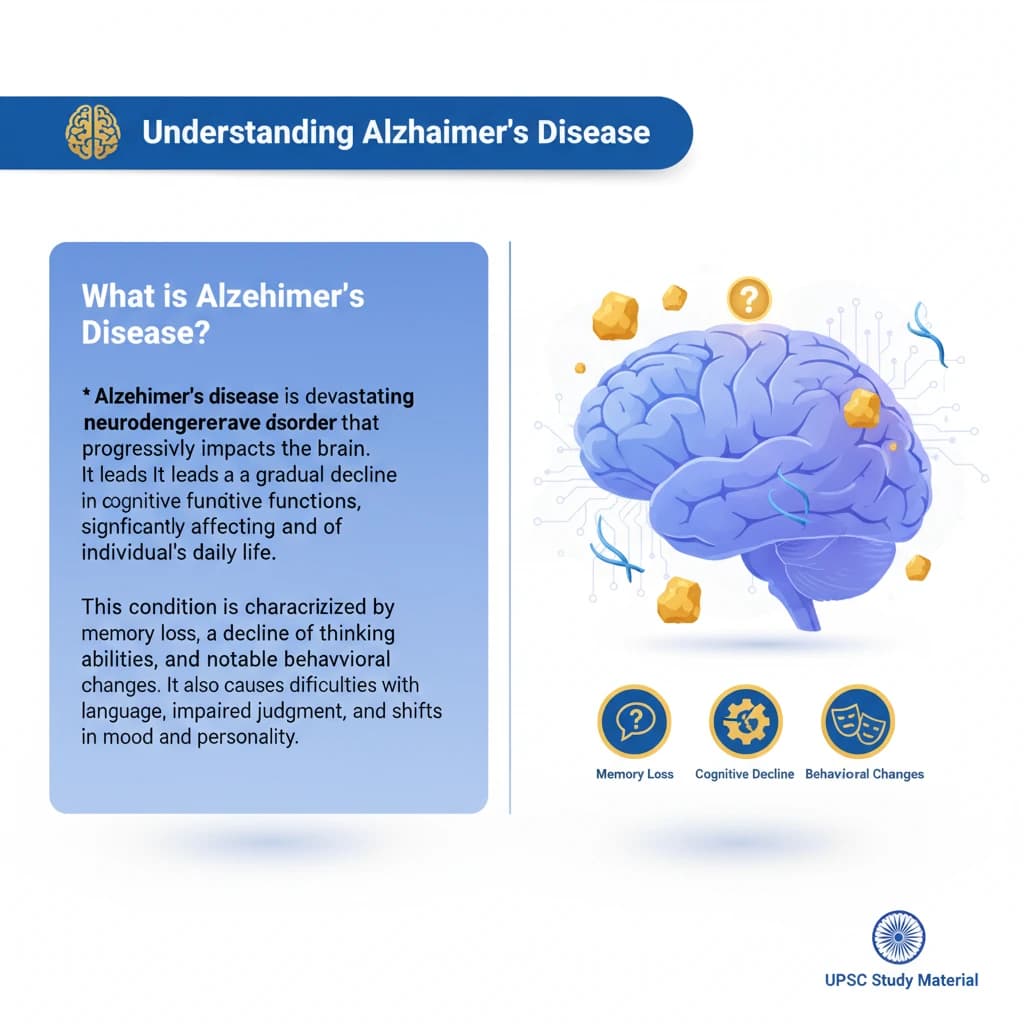
Alzheimer's disease is a devastating neurodegenerative disorder that progressively impacts the brain. It leads to a gradual decline in cognitive functions, significantly affecting an individual's daily life.
This condition is characterized by memory loss, a decline in thinking abilities, and notable behavioral changes. It also causes difficulties with language, impaired judgment, and shifts in mood and personality.
Key Symptoms of Alzheimer's:
- Memory loss affecting daily life
- Challenges in planning or solving problems
- Difficulty completing familiar tasks
- Confusion with time or place
- Trouble understanding visual images and spatial relationships
- New problems with words in speaking or writing
- Misplacing things and losing the ability to retrace steps
- Decreased or poor judgment
- Changes in mood or personality
Pathological Hallmarks of Alzheimer's
The disease involves distinct changes within the brain. Two primary pathological features are the formation of amyloid plaques and neurofibrillary tangles.
These abnormal protein deposits contribute to the accelerated aging and eventual death of neurons, particularly those critical for memory storage and processing.
Alzheimer's and Dementia: Alzheimer's disease is the most prevalent cause of dementia, accounting for approximately 60-80% of all dementia cases globally. Dementia is a broader term for a decline in mental ability severe enough to interfere with daily life.
Causes and Risk Factors
The exact causes of Alzheimer's disease are not yet fully understood. However, several factors are known to increase the risk of developing the condition.
- Age: Advancing age is the most significant risk factor. The majority of cases occur in individuals over 65 years.
- Genetics: Specific gene mutations can significantly elevate an individual's risk. While some forms are strongly hereditary, most cases are not directly inherited.
- Amyloid Protein: A central hypothesis suggests that the abnormal accumulation of proteins, particularly amyloid-beta, in and around brain cells is a primary driver. These deposits form plaques.
- Tau Protein: Another protein, tau, forms abnormal structures called neurofibrillary tangles inside brain cells, further disrupting neuronal function.
- Lifestyle Factors: Chronic health conditions and lifestyle choices play a role. These include cardiovascular disease, diabetes, obesity, smoking, and a sedentary lifestyle.
Diagnosis of Alzheimer's
Diagnosing Alzheimer's involves a combination of clinical assessments and advanced medical tests. Early and accurate diagnosis is crucial for management.
- Cognitive and Neuropsychological Tests: These assessments evaluate memory, thinking, problem-solving abilities, and other cognitive functions.
- Imaging Techniques: MRI (Magnetic Resonance Imaging) and PET scans (Positron Emission Tomography) are used to identify structural and metabolic changes in the brain, such as brain shrinkage or reduced activity in certain areas.
- Biomarker Tests: Advanced tests, including cerebrospinal fluid (CSF) analysis and amyloid PET scans, can detect the presence of amyloid plaques and tau tangles, which are specific markers of the disease.
Treatment and Management
Currently, there is no cure for Alzheimer's disease. However, various treatments and supportive therapies are available to help manage symptoms and improve the quality of life for affected individuals.
Medicines can temporarily reduce some symptoms, such as memory loss and cognitive decline. Non-pharmacological interventions, including cognitive stimulation and lifestyle adjustments, also play a vital role.
Global and Indian Prevalence
Alzheimer's disease represents a significant global public health challenge, with its prevalence expected to rise due to aging populations worldwide.
Prevalence Data (WHO, 2023):
- Over 55 million individuals globally are affected by dementia.
- Alzheimer's disease accounts for approximately 75% of these dementia cases.
- In India, an estimated 3 to 9 million people are believed to be affected.
- This figure is projected to increase substantially as India's population continues to age.
UPSC Insight: Understanding the prevalence and socio-economic impact of diseases like Alzheimer's is crucial for GS-II (Social Justice - Health) and GS-I (Social Issues - Ageing Population). Be prepared to discuss policy implications.
💡 Key Takeaways
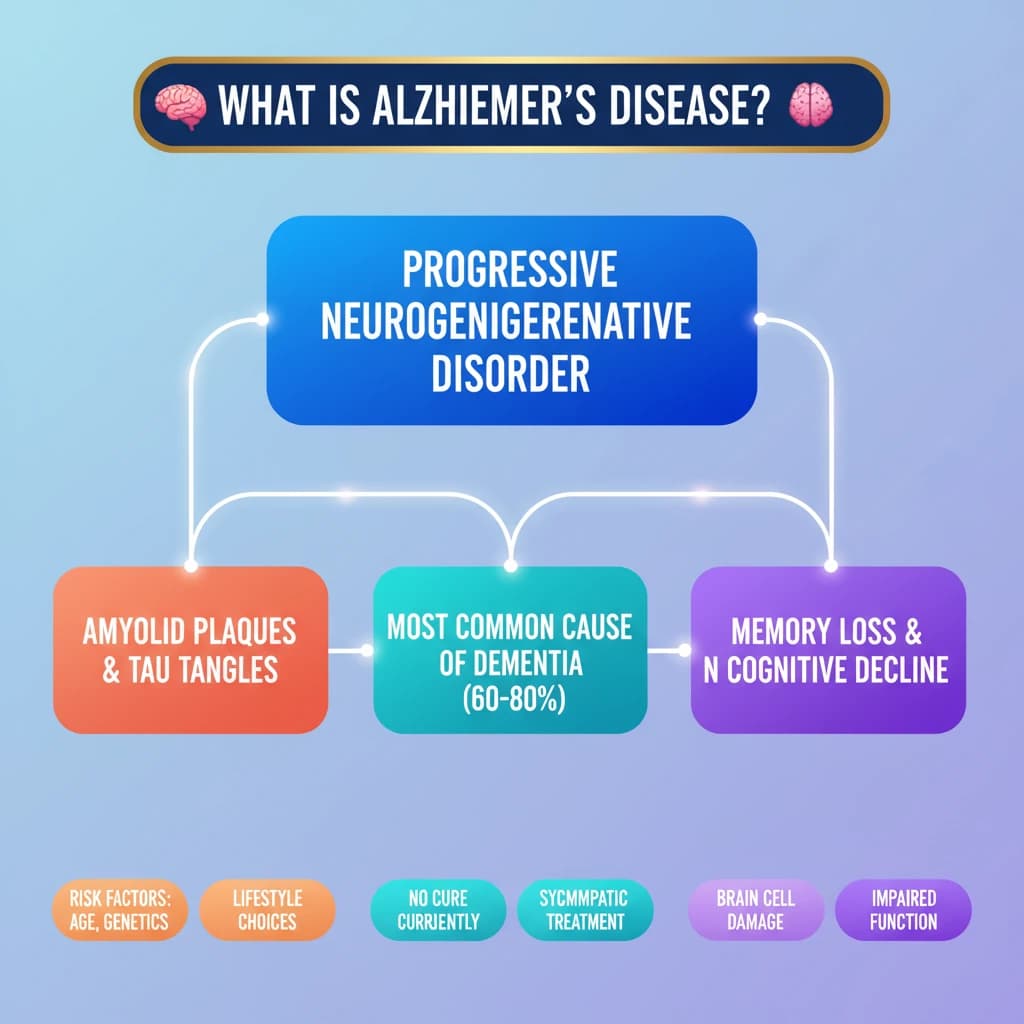
- •Alzheimer's is a progressive neurodegenerative disorder causing memory loss and cognitive decline.
- •It is characterized by amyloid plaques and neurofibrillary tangles in the brain.
- •It is the most common cause of dementia, accounting for 60-80% of cases.
- •Risk factors include age, genetics, and lifestyle choices.
- •Currently, there is no cure, but treatments can temporarily reduce symptoms.
- •Global prevalence is rising, with India facing a significant burden due to its aging population.
🧠 Memory Techniques
98% Verified Content
📚 Reference Sources
•World Health Organization (WHO) Estimates 2023 on Dementia
•Alzheimer's Association official resources