Loading page, please wait…
What is Deep-Sea Mining? - UPSC Science And Technology
What is What is Deep-Sea Mining? in UPSC Science And Technology?
What is Deep-Sea Mining? is a key topic under Science And Technology for UPSC Civil Services Examination. Key points include: Deep-sea mining extracts valuable minerals (nickel, cobalt, rare earths) from the ocean floor.. Three main types: polymetallic nodules, seafloor sulfides, and cobalt crusts.. Minerals are crucial for batteries, renewable energy, and electronics.. Understanding this topic is essential for both UPSC Prelims and Mains preparation.
Why is What is Deep-Sea Mining? important for UPSC exam?
What is Deep-Sea Mining? is a Medium-level topic in UPSC Science And Technology. It is tested in both Prelims (factual MCQs) and Mains (analytical answer writing). Previous year UPSC questions have frequently covered aspects of What is Deep-Sea Mining?, making it essential for comprehensive IAS preparation.
How to prepare What is Deep-Sea Mining? for UPSC?
To prepare What is Deep-Sea Mining? for UPSC: (1) Study the comprehensive notes covering all key concepts on Vaidra. (2) Practice previous year questions on this topic. (3) Connect it with current affairs using daily updates. (4) Revise using key takeaways and mind maps available for Science And Technology. (5) Write practice answers linking What is Deep-Sea Mining? to related GS Paper topics.
Key takeaways of What is Deep-Sea Mining? for UPSC
- Deep-sea mining extracts valuable minerals (nickel, cobalt, rare earths) from the ocean floor.
- Three main types: polymetallic nodules, seafloor sulfides, and cobalt crusts.
- Minerals are crucial for batteries, renewable energy, and electronics.
- Anticipated to grow due to high demand and polymetallic nodule availability.
- Significant environmental concerns exist, including damage to 'dark oxygen' ecosystems and marine species like jellyfish via mud plumes.
- Regulated by the International Seabed Authority (ISA) in international waters.
What is Deep-Sea Mining?
Medium⏱️ 8 min read
science and technology
📖 Introduction
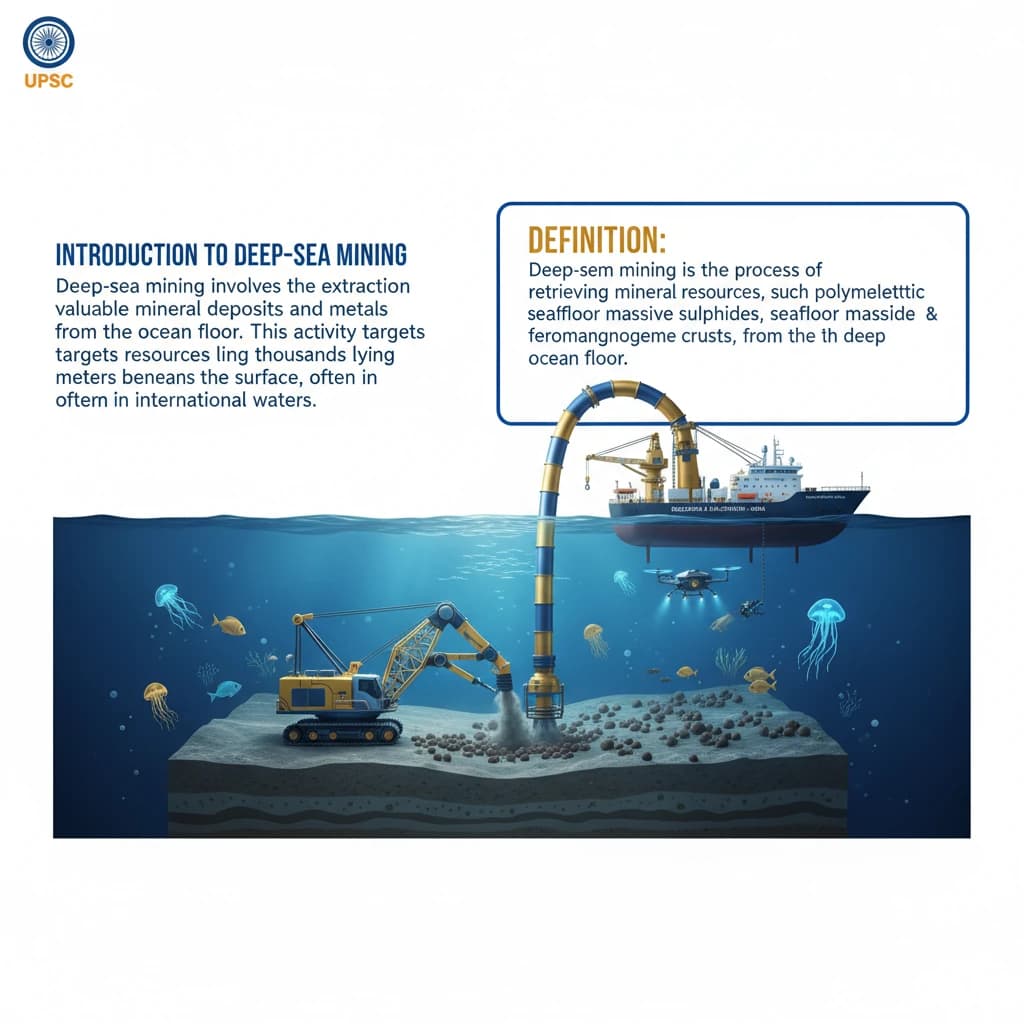
Introduction to Deep-Sea Mining
Deep-sea mining involves the extraction of valuable mineral deposits and metals from the ocean floor. This activity targets resources lying thousands of meters beneath the surface, often in international waters.
Definition: Deep-sea mining is the process of retrieving mineral resources, such as polymetallic nodules, seafloor sulfides, and cobalt crusts, from the deep ocean environment.
Types of Deep-Sea Mining Activities
There are three primary methods currently considered or practiced for extracting minerals from the deep sea, each targeting different geological formations and mineral types.
- Polymetallic Nodules Removal: This involves collecting potato-sized polymetallic nodules rich in various metals from the abyssal plains of the seabed.
- Seafloor Sulfide Mining: This targets massive deposits of seafloor sulfides, typically found near hydrothermal vents, which are rich in copper, zinc, gold, and silver.
- Cobalt Crusts Extraction: This method focuses on extracting cobalt crusts that form on the flanks of seamounts and other rock formations, valuable for their cobalt, nickel, and rare earth elements.
Valuable Materials Extracted
The nodules, deposits, and crusts found in the deep sea contain a wealth of materials critical for modern industries and technologies. These resources are becoming increasingly vital globally.
Key Minerals: Extracted materials include nickel, rare earth elements, and cobalt. These are indispensable for the manufacturing of batteries, various renewable energy technologies, and common everyday devices such as cell phones and computers.
Future Outlook for Deep-Sea Mining
Experts anticipate that deep-sea mining is poised to become a significant marine resource extraction activity in the coming decades. This projection is largely driven by the extensive availability of certain mineral types.
Anticipated Growth: The abundance of polymetallic nodules, in particular, suggests that deep-sea mining will play a crucial role in meeting the global demand for critical minerals in the near future.
Environmental Concerns of Deep-Sea Mining
The burgeoning interest in deep-sea mining has raised significant environmental concerns among scientists and conservationists. The fragile ecosystems of the deep ocean are particularly vulnerable to disruption.
'Dark Oxygen' Discovery: The recent discovery of 'dark oxygen' highlights the existence of unique ecosystems reliant on previously unknown oxygen sources. Mining activities could severely damage these delicate environments by altering their oxygen supply.
Experts are particularly worried that the removal of polymetallic nodules could be highly detrimental to these sensitive marine environments, impacting biodiversity and ecosystem functions.
UPSC Insight (Nov 2023 Study): A study published in November 2023 indicated that deep-sea mining could harm deep-sea jellyfish. This impact is primarily due to the creation of mud plumes in ocean water, which interfere with the nutrient and reproductive cycles of these and other marine species. This highlights a specific ecological risk.
💡 Key Takeaways
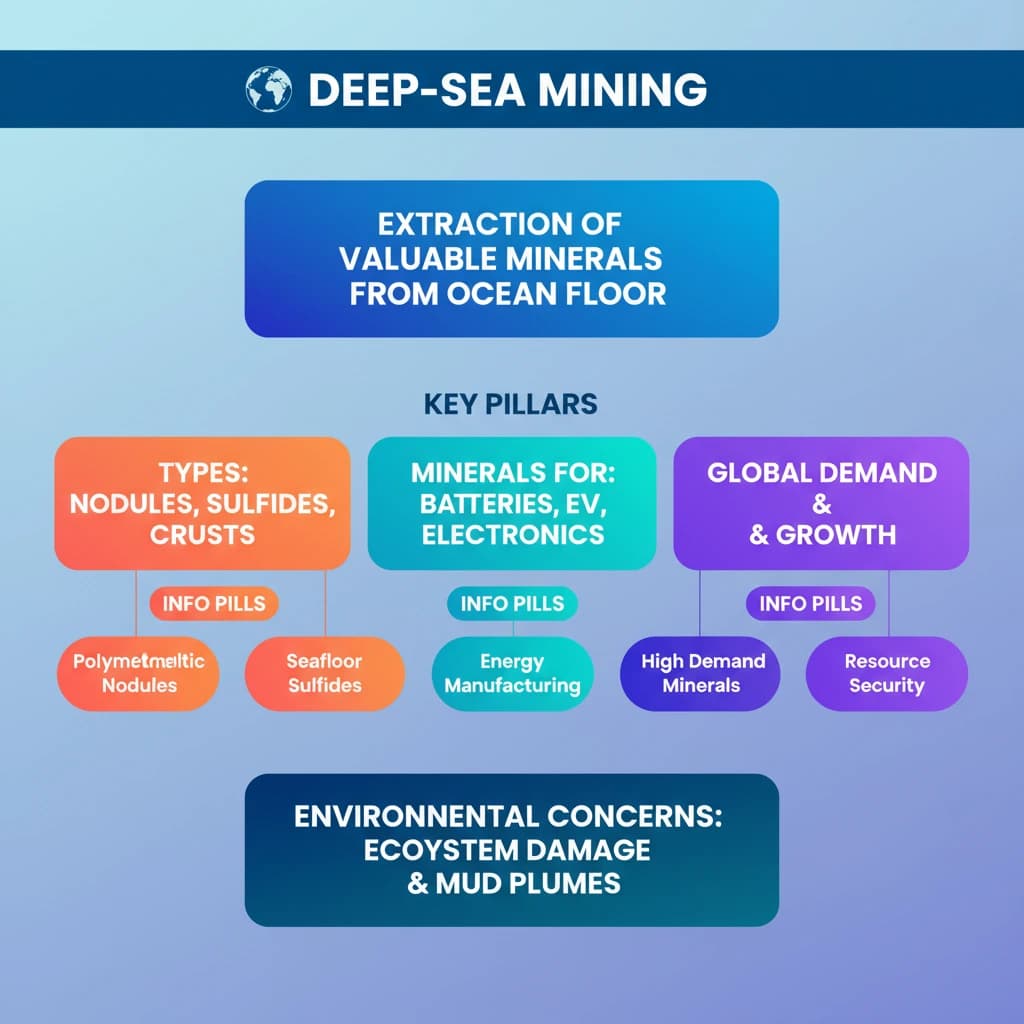
- •Deep-sea mining extracts valuable minerals (nickel, cobalt, rare earths) from the ocean floor.
- •Three main types: polymetallic nodules, seafloor sulfides, and cobalt crusts.
- •Minerals are crucial for batteries, renewable energy, and electronics.
- •Anticipated to grow due to high demand and polymetallic nodule availability.
- •Significant environmental concerns exist, including damage to 'dark oxygen' ecosystems and marine species like jellyfish via mud plumes.
- •Regulated by the International Seabed Authority (ISA) in international waters.
🧠 Memory Techniques

98% Verified Content