Loading page, please wait…
What is Kawasaki Disease? - UPSC Science And Technology
What is What is Kawasaki Disease? in UPSC Science And Technology?
What is Kawasaki Disease? is a key topic under Science And Technology for UPSC Civil Services Examination. Key points include: Kawasaki disease is an inflammatory condition affecting blood vessel walls, primarily in children aged 6 months to 5 years.. It increases the risk of blood vessel tearing or narrowing, restricting blood flow to organs.. The exact cause is unknown, but infections, environmental factors, and genetics are suspected.. Understanding this topic is essential for both UPSC Prelims and Mains preparation.
Why is What is Kawasaki Disease? important for UPSC exam?
What is Kawasaki Disease? is a Easy-level topic in UPSC Science And Technology. It is tested in both Prelims (factual MCQs) and Mains (analytical answer writing). Previous year UPSC questions have frequently covered aspects of What is Kawasaki Disease?, making it essential for comprehensive IAS preparation.
How to prepare What is Kawasaki Disease? for UPSC?
To prepare What is Kawasaki Disease? for UPSC: (1) Study the comprehensive notes covering all key concepts on Vaidra. (2) Practice previous year questions on this topic. (3) Connect it with current affairs using daily updates. (4) Revise using key takeaways and mind maps available for Science And Technology. (5) Write practice answers linking What is Kawasaki Disease? to related GS Paper topics.
Key takeaways of What is Kawasaki Disease? for UPSC
- Kawasaki disease is an inflammatory condition affecting blood vessel walls, primarily in children aged 6 months to 5 years.
- It increases the risk of blood vessel tearing or narrowing, restricting blood flow to organs.
- The exact cause is unknown, but infections, environmental factors, and genetics are suspected.
- Prevalence is significantly higher in East Asian countries (Japan, Korea, Taiwan).
- Early diagnosis and treatment are crucial to prevent severe cardiac complications.
What is Kawasaki Disease?
Easy⏱️ 5 min read
science and technology
📖 Introduction
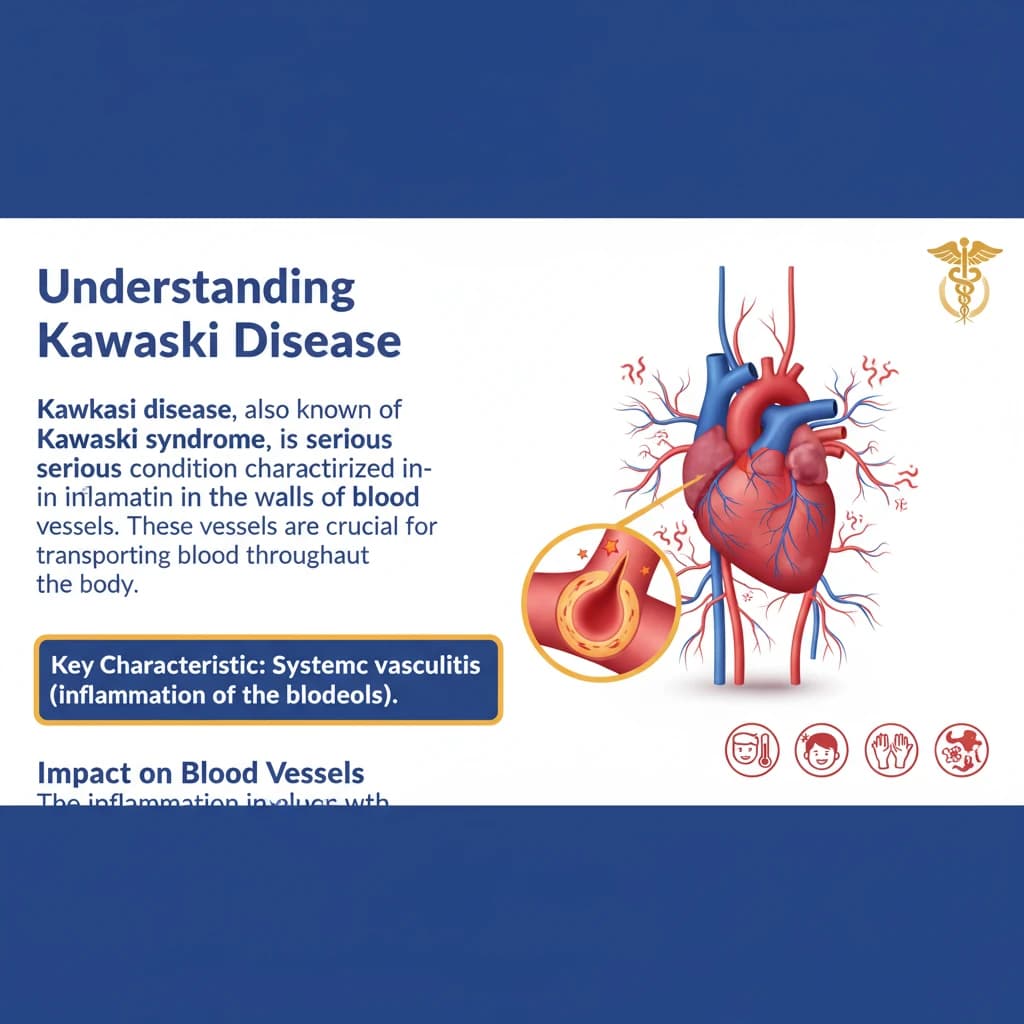
Understanding Kawasaki Disease
Kawasaki disease, also known as Kawasaki syndrome, is a serious condition characterized by inflammation in the walls of blood vessels. These vessels are crucial for transporting blood throughout the body.
Key Characteristic: Systemic vasculitis (inflammation of blood vessels).
Impact on Blood Vessels
The inflammation weakens the blood vessel walls. This significantly increases the risk of them either tearing or narrowing.
Such damage can severely limit the flow of blood to various tissues and organs, potentially leading to serious complications.
Prevalence and Demographics
Kawasaki disease primarily affects young children. It is most commonly observed in those aged between 6 months and 5 years.
- Global Incidence:
- US and Canada: Approximately 10 to 20 cases per 100,000 children under 5 years.
- Japan, Korea, and Taiwan: Significantly higher incidence, ranging from 50 to 250 cases per 100,000 children under 5 years.
Suspected Causes
The exact cause of Kawasaki disease remains unknown to medical science. This makes prevention and specific targeting challenging.
However, several factors are suspected to play a role in its development. These include potential links to bacterial or viral infections.
Environmental factors and a genetic predisposition are also considered as possible contributors to the onset of the disease.
💡 Key Takeaways
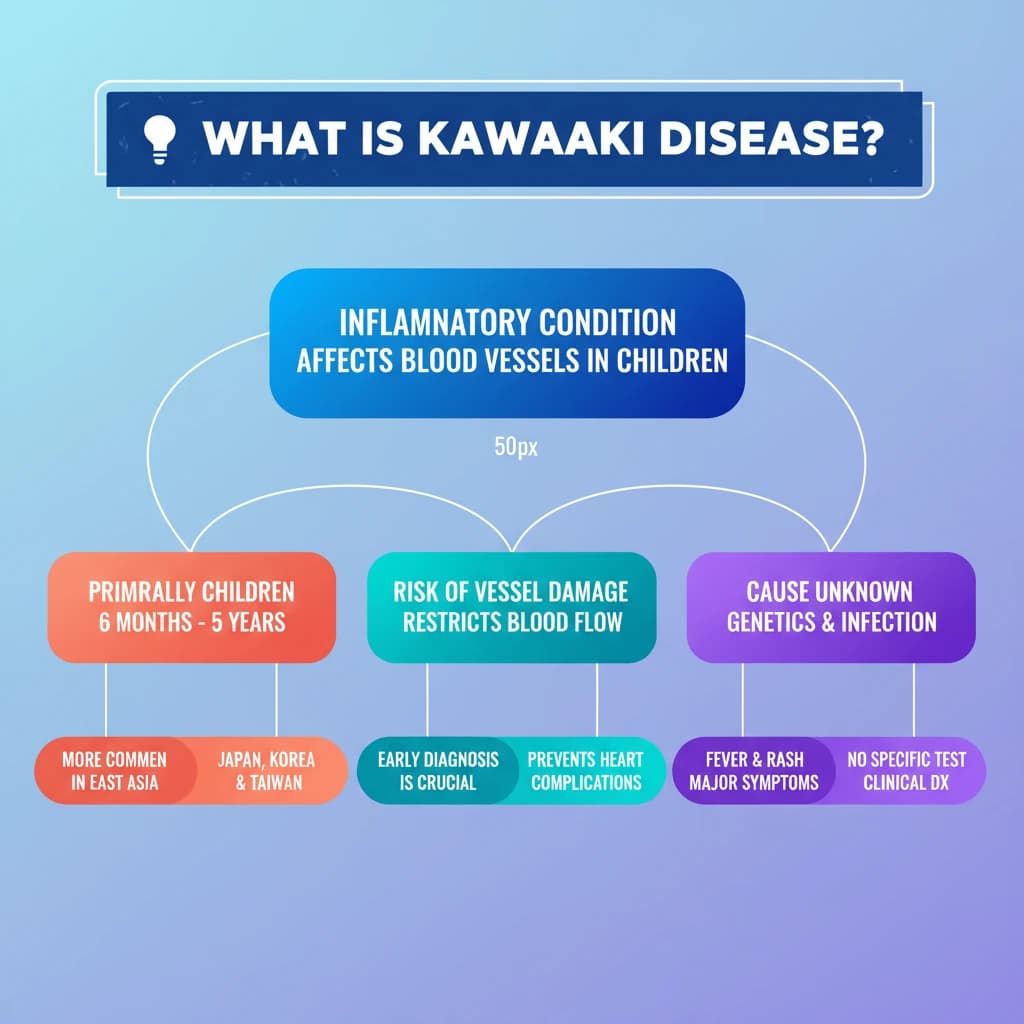
- •Kawasaki disease is an inflammatory condition affecting blood vessel walls, primarily in children aged 6 months to 5 years.
- •It increases the risk of blood vessel tearing or narrowing, restricting blood flow to organs.
- •The exact cause is unknown, but infections, environmental factors, and genetics are suspected.
- •Prevalence is significantly higher in East Asian countries (Japan, Korea, Taiwan).
- •Early diagnosis and treatment are crucial to prevent severe cardiac complications.
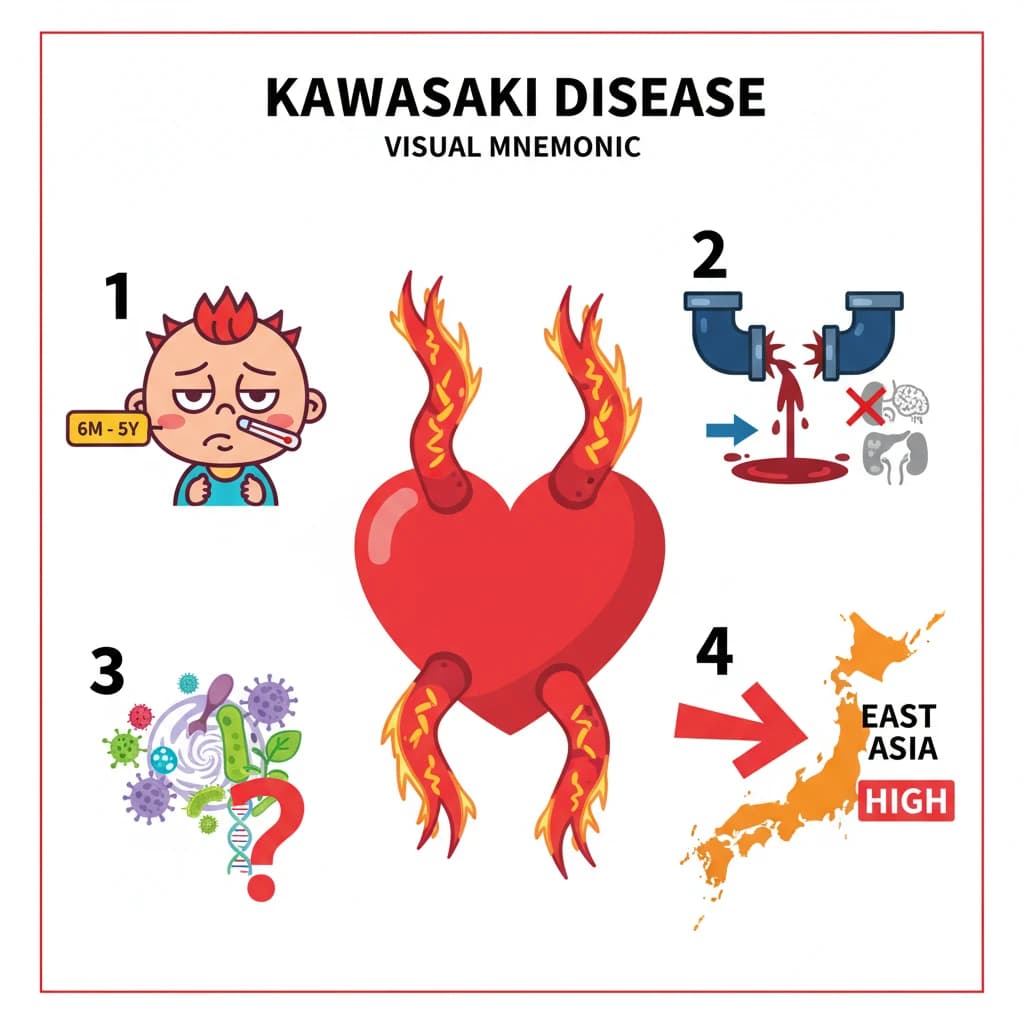
🧠 Memory Techniques
95% Verified Content