Loading page, please wait…
What is Parkinson’s Disease? - UPSC Science And Technology
What is What is Parkinson’s Disease? in UPSC Science And Technology?
What is Parkinson’s Disease? is a key topic under Science And Technology for UPSC Civil Services Examination. Key points include: Parkinson's Disease is a progressive neurodegenerative disorder affecting the central nervous system.. It is primarily caused by the loss of dopamine-producing neurons in the brain's substantia nigra.. Symptoms include both motor (tremors, rigidity, bradykinesia, postural instability) and non-motor (cognitive, mental health, sleep) issues.. Understanding this topic is essential for both UPSC Prelims and Mains preparation.
Why is What is Parkinson’s Disease? important for UPSC exam?
What is Parkinson’s Disease? is a Medium-level topic in UPSC Science And Technology. It is tested in both Prelims (factual MCQs) and Mains (analytical answer writing). Previous year UPSC questions have frequently covered aspects of What is Parkinson’s Disease?, making it essential for comprehensive IAS preparation.
How to prepare What is Parkinson’s Disease? for UPSC?
To prepare What is Parkinson’s Disease? for UPSC: (1) Study the comprehensive notes covering all key concepts on Vaidra. (2) Practice previous year questions on this topic. (3) Connect it with current affairs using daily updates. (4) Revise using key takeaways and mind maps available for Science And Technology. (5) Write practice answers linking What is Parkinson’s Disease? to related GS Paper topics.
Key takeaways of What is Parkinson’s Disease? for UPSC
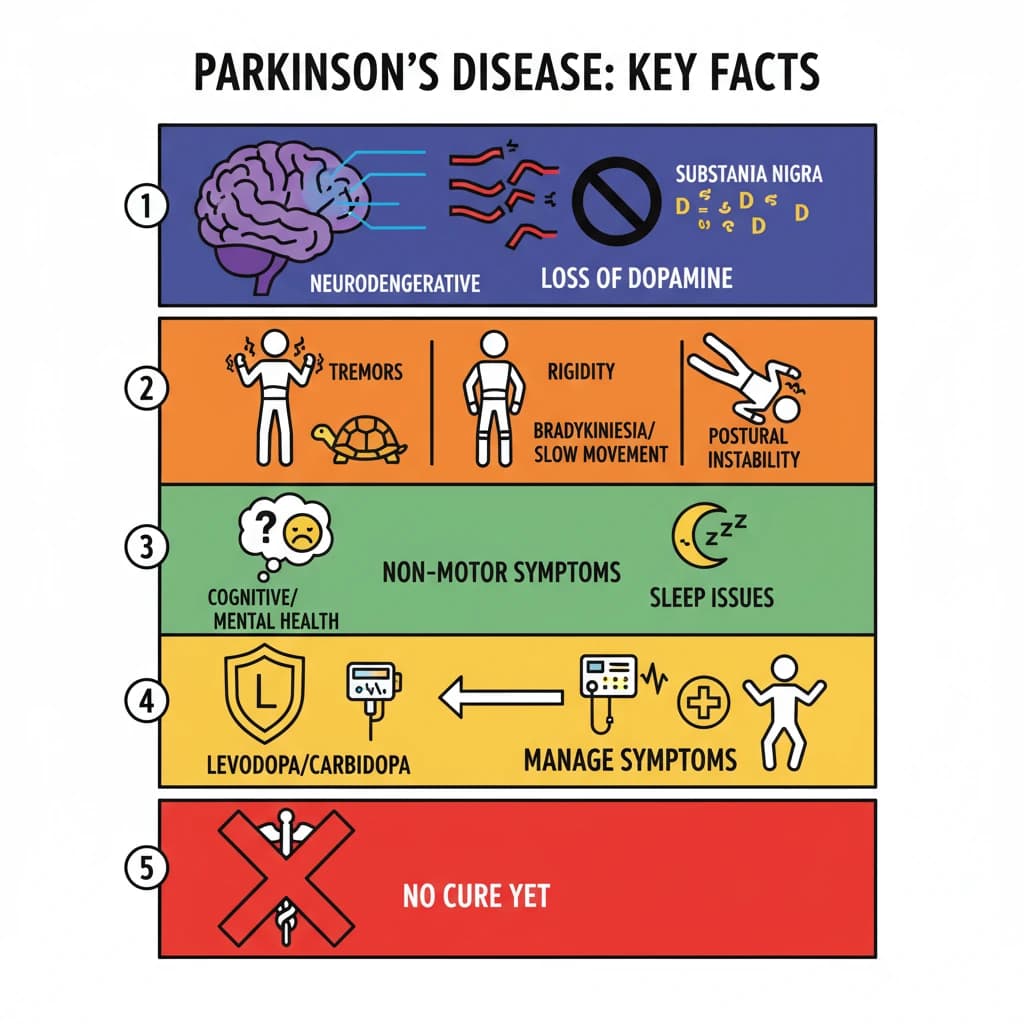
- Parkinson's Disease is a progressive neurodegenerative disorder affecting the central nervous system.
- It is primarily caused by the loss of dopamine-producing neurons in the brain's substantia nigra.
- Symptoms include both motor (tremors, rigidity, bradykinesia, postural instability) and non-motor (cognitive, mental health, sleep) issues.
- There is currently no cure, but treatments like Levodopa/carbidopa and DBS effectively manage symptoms.
- Global prevalence has doubled in 25 years, making it a significant public health concern, highlighted by World Parkinson's Day on April 13th.
What is Parkinson’s Disease?
Medium⏱️ 7 min read
science and technology
📖 Introduction
Understanding Parkinson's Disease (PD)
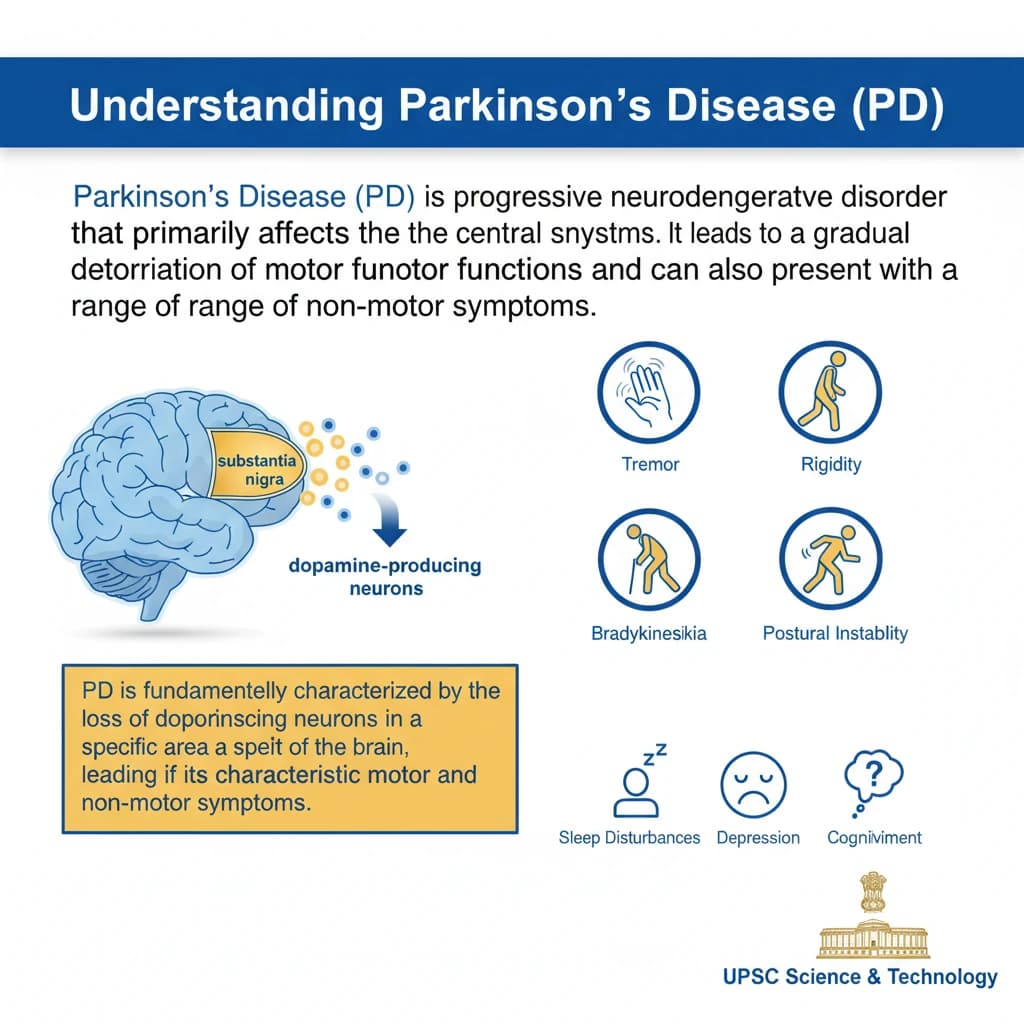
Parkinson's Disease (PD) is a progressive neurodegenerative disorder that primarily affects the central nervous system. It leads to a gradual deterioration of motor functions and can also present with a range of non-motor symptoms.
PD is fundamentally characterized by the loss of dopamine-producing neurons in a specific area of the brain, leading to its characteristic symptoms.
Key Symptoms of Parkinson's Disease
Symptoms of PD are broadly categorized into motor and non-motor manifestations, impacting various aspects of daily life.
Motor Symptoms:
- Tremors: Involuntary shaking, often starting in a limb, especially at rest.
- Rigidity: Stiffness of the limbs and trunk, which can cause pain and limit range of motion.
- Bradykinesia: Slowness of movement, making initiation and execution of voluntary movements difficult.
- Postural Instability: Impaired balance and coordination, significantly increasing the risk of falls.
Non-Motor Symptoms:
These symptoms can often precede motor manifestations and significantly impact a patient's quality of life and overall well-being.
- Cognitive Issues: Problems with memory, attention, and executive functions.
- Mental Health Disorders: Depression, anxiety, and apathy are common comorbidities.
- Sleep Disturbances: Insomnia, vivid dreams, and REM sleep behavior disorder.
- Pain and Sensory Problems: Numbness, tingling, and generalized pain are frequently reported.
Defining Bradykinesia
Bradykinesia specifically refers to the slowness of movement and a reduction in the speed of voluntary movements. It can also manifest as progressive hesitations or halts as movements are continued, making routine tasks challenging.
Etiology: Causes of Parkinson's Disease
The precise cause of Parkinson's Disease is not yet fully known. However, it is widely believed to result from a complex interplay of both genetic and environmental factors.
The primary pathological feature is the degeneration of dopamine-producing neurons in the substantia nigra region of the brain. This critical loss of dopamine leads to the impaired motor control observed in patients.
Global Prevalence and Awareness
The global burden of Parkinson's Disease has seen a significant and concerning increase over recent decades, reflecting a growing public health challenge.
- The global prevalence of PD has doubled in the past 25 years, indicating a substantial rise in affected individuals.
- In 2019, global estimates indicated over 8.5 million individuals living with PD worldwide.
To raise awareness, foster understanding, and support those affected by the condition, World Parkinson's Day is observed annually on April 13th.
Treatment Approaches for Parkinson's Disease
Currently, there is no known cure for Parkinson's Disease. However, various therapies are available to effectively manage and reduce the severity of symptoms, significantly improving patients' quality of life.
Treatment strategies typically involve a combination of approaches:
- Medications: Pharmacological interventions are used to alleviate symptoms and improve motor function.
- Surgery: For advanced cases, procedures such as Deep Brain Stimulation (DBS) may be considered.
- Rehabilitation Therapies: Including physical, occupational, and speech therapy, crucial for maintaining function and independence.
The most common medication used is Levodopa/carbidopa. This combination medicine works by increasing the amount of dopamine in the brain, thereby compensating for the loss of natural dopamine production and reducing symptoms.
💡 Key Takeaways
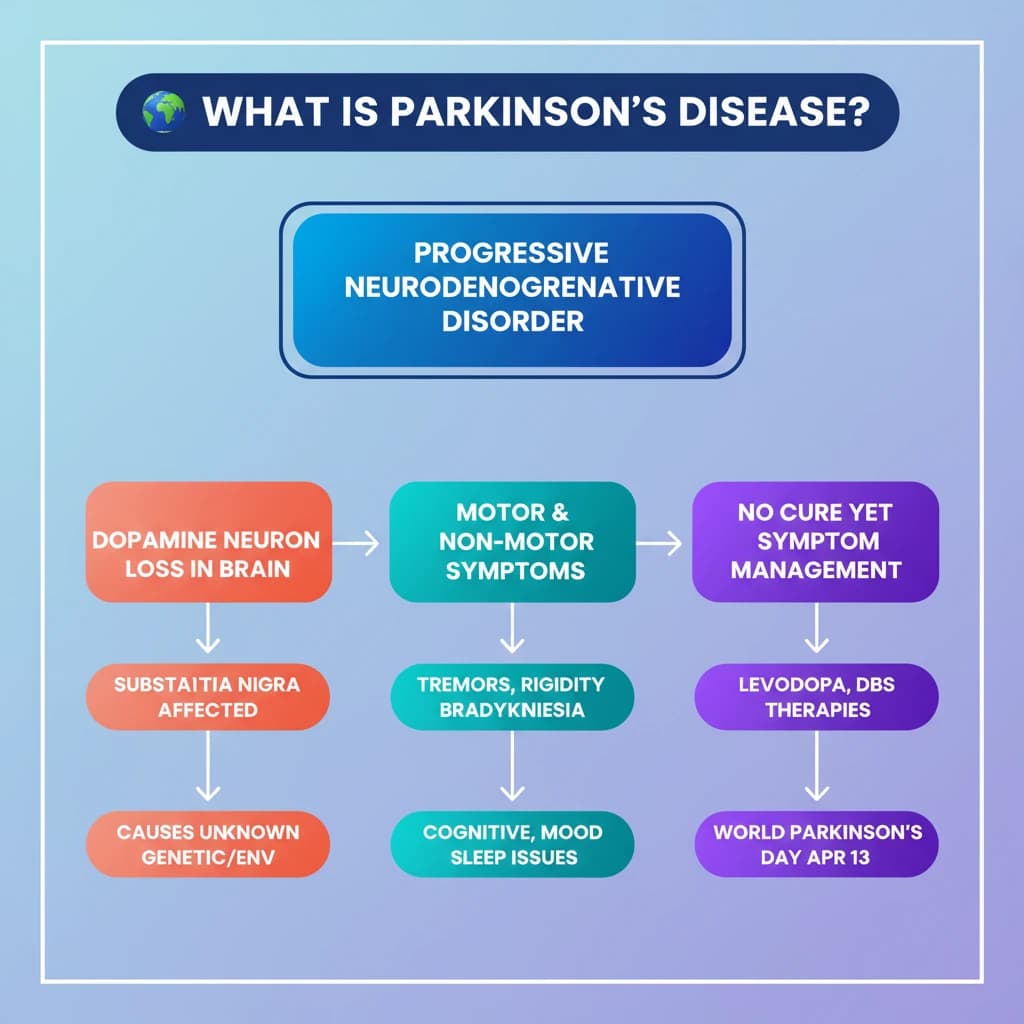
- •Parkinson's Disease is a progressive neurodegenerative disorder affecting the central nervous system.
- •It is primarily caused by the loss of dopamine-producing neurons in the brain's substantia nigra.
- •Symptoms include both motor (tremors, rigidity, bradykinesia, postural instability) and non-motor (cognitive, mental health, sleep) issues.
- •There is currently no cure, but treatments like Levodopa/carbidopa and DBS effectively manage symptoms.
- •Global prevalence has doubled in 25 years, making it a significant public health concern, highlighted by World Parkinson's Day on April 13th.
🧠 Memory Techniques
98% Verified Content
📚 Reference Sources
•World Health Organization (WHO) reports on Neurological Disorders
•National Institute of Neurological Disorders and Stroke (NINDS) publications