Loading page, please wait…
What is the DBS Brain Implant Technology to Treat Epilepsy? - UPSC Science And Technology
What is What is the DBS Brain Implant Technology to Treat Epilepsy? in UPSC Science And Technology?
What is the DBS Brain Implant Technology to Treat Epilepsy? is a key topic under Science And Technology for UPSC Civil Services Examination. Key points include: Deep Brain Stimulation (DBS) is an advanced neurosurgical treatment for epilepsy.. It involves implanting a device to deliver mild electrical currents to specific brain regions.. DBS is crucial for the ~30% of epilepsy patients resistant to conventional medications.. Understanding this topic is essential for both UPSC Prelims and Mains preparation.
Why is What is the DBS Brain Implant Technology to Treat Epilepsy? important for UPSC exam?
What is the DBS Brain Implant Technology to Treat Epilepsy? is a Medium-level topic in UPSC Science And Technology. It is tested in both Prelims (factual MCQs) and Mains (analytical answer writing). Previous year UPSC questions have frequently covered aspects of What is the DBS Brain Implant Technology to Treat Epilepsy?, making it essential for comprehensive IAS preparation.
How to prepare What is the DBS Brain Implant Technology to Treat Epilepsy? for UPSC?
To prepare What is the DBS Brain Implant Technology to Treat Epilepsy? for UPSC: (1) Study the comprehensive notes covering all key concepts on Vaidra. (2) Practice previous year questions on this topic. (3) Connect it with current affairs using daily updates. (4) Revise using key takeaways and mind maps available for Science And Technology. (5) Write practice answers linking What is the DBS Brain Implant Technology to Treat Epilepsy? to related GS Paper topics.
Key takeaways of What is the DBS Brain Implant Technology to Treat Epilepsy? for UPSC
- Deep Brain Stimulation (DBS) is an advanced neurosurgical treatment for epilepsy.
- It involves implanting a device to deliver mild electrical currents to specific brain regions.
- DBS is crucial for the ~30% of epilepsy patients resistant to conventional medications.
- It differs from traditional surgeries (like resective surgery or corpus callosotomy) by modulating rather than removing brain tissue.
- Epilepsy is recognized by WHO as a neurological disorder, with significant prevalence in India.
What is the DBS Brain Implant Technology to Treat Epilepsy?
Medium⏱️ 8 min read
science and technology
📖 Introduction
Understanding Epilepsy: A Neurological Disorder
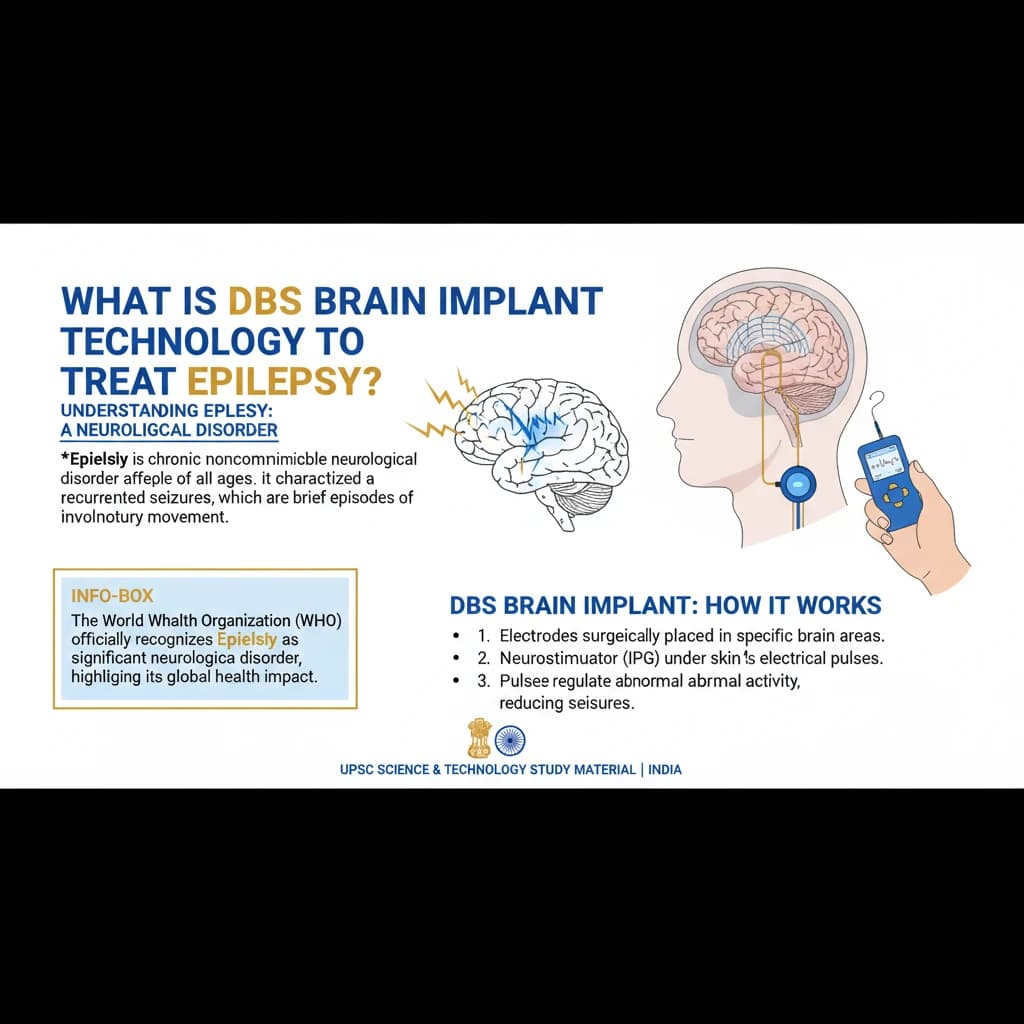
Epilepsy is a chronic noncommunicable neurological disorder affecting people of all ages. It is characterized by recurrent, unprovoked seizures, which are brief episodes of involuntary movement.
The World Health Organization (WHO) officially recognizes Epilepsy as a significant neurological disorder, highlighting its global health impact.
In India, the prevalence of epilepsy is a notable concern. A 2022 Lancet study indicated that the prevalence ranges from 3 to 11.9 cases per 1,000 people across the country.
Despite advancements in medicine, a significant challenge remains: approximately 30% of patients with epilepsy are resistant to conventional anti-seizure medications.
Traditional Surgical Approaches to Epilepsy Treatment
For patients whose seizures cannot be controlled by medication, surgical interventions are often considered. These procedures aim to either remove the seizure-generating area or disrupt the spread of abnormal electrical activity.
1. Epilepsy Surgery
This traditional surgical method involves a neurosurgeon identifying and physically removing a a portion of the brain where the epileptic seizures are believed to originate.
The goal is to eliminate the source of abnormal electrical discharges, thereby preventing future seizures or significantly reducing their frequency and intensity.
2. Corpus Callosotomy
Corpus Callosotomy is another surgical procedure designed to treat severe epilepsy, particularly when seizures spread rapidly between brain hemispheres.
During this operation, doctors surgically remove the corpus callosum, which is the thick band of nerve fibers connecting the two halves of the brain.
By severing the corpus callosum, the procedure prevents abnormal electrical signals from traveling from one half of the brain to the other, thus stopping the spread of seizures.
Introduction to Deep Brain Stimulation (DBS) for Epilepsy
Deep Brain Stimulation (DBS) represents an advanced neurosurgical treatment option for epilepsy, especially for those patients who do not respond to medications or other surgeries.
DBS involves the surgical implantation of a medical device, similar to a pacemaker, which delivers mild electrical currents to specific, precisely targeted regions within the brain.
These targeted brain regions are carefully selected because they are implicated in the generation or propagation of epileptic seizures.
Mechanism of DBS in Treating Epilepsy
The DBS system typically consists of three main components: electrodes (leads), an extension wire, and a neurostimulator (IPG).
The electrodes are thin, insulated wires implanted into specific brain areas. These electrodes are connected to an extension wire that tunnels under the skin down to the chest or abdomen.
In the chest or abdomen, the extension wire connects to the neurostimulator, a small, battery-operated device. This device generates and delivers controlled electrical impulses.
The mild electrical currents delivered by the DBS device modulate the abnormal brain activity responsible for seizures, helping to normalize neural circuits and reduce seizure frequency.
Understanding the distinction between ablative surgeries (like removing brain tissue) and neuromodulatory therapies (like DBS) is crucial for UPSC GS Paper 3 Science & Technology questions.
💡 Key Takeaways
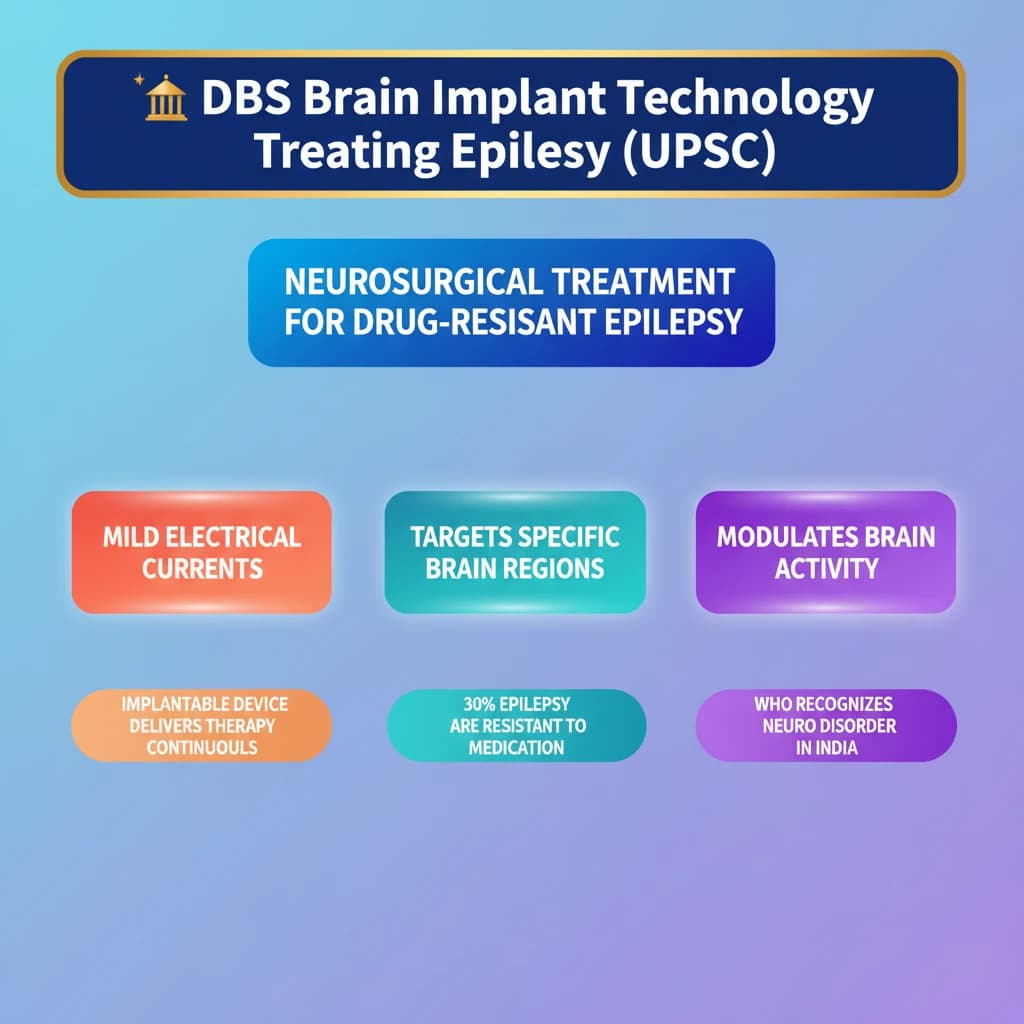
- •Deep Brain Stimulation (DBS) is an advanced neurosurgical treatment for epilepsy.
- •It involves implanting a device to deliver mild electrical currents to specific brain regions.
- •DBS is crucial for the ~30% of epilepsy patients resistant to conventional medications.
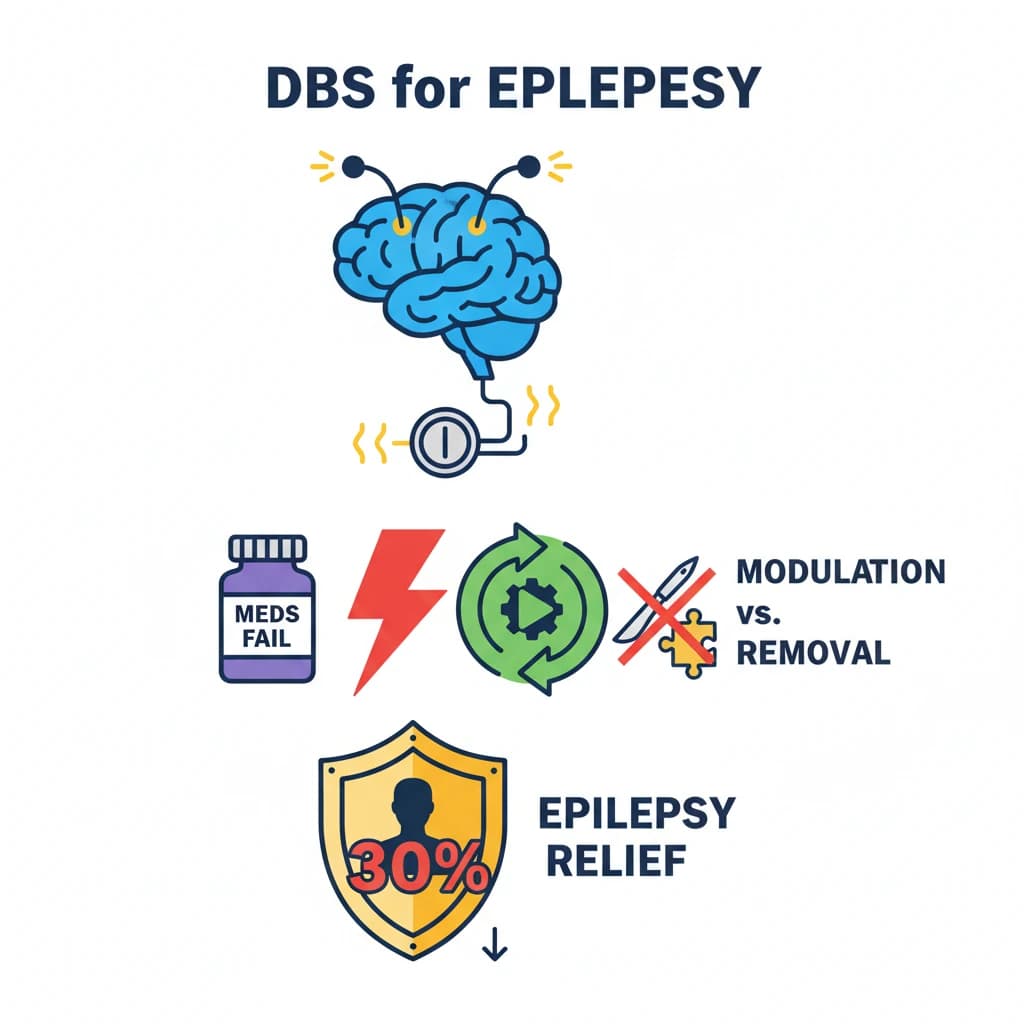
- •It differs from traditional surgeries (like resective surgery or corpus callosotomy) by modulating rather than removing brain tissue.
- •Epilepsy is recognized by WHO as a neurological disorder, with significant prevalence in India.
🧠 Memory Techniques
95% Verified Content
📚 Reference Sources
•World Health Organization (WHO) official statements on epilepsy
•Lancet study (2022) on epilepsy prevalence in India