Loading page, please wait…
What is the GenomIndia Project? - UPSC Science And Technology
What is What is the GenomIndia Project? in UPSC Science And Technology?
What is the GenomIndia Project? is a key topic under Science And Technology for UPSC Civil Services Examination. Key points include: GenomIndia Project (GIP) launched in 2020 by DBT to map India's genetic diversity.. Aims to sequence genomes of 10,000 individuals across 99 ethnic groups in Phase 1, with a long-term goal of 1 million.. Phase 2 focuses on sequencing genomes of individuals with specific diseases like cancer, diabetes, and rare diseases.. Understanding this topic is essential for both UPSC Prelims and Mains preparation.
Why is What is the GenomIndia Project? important for UPSC exam?
What is the GenomIndia Project? is a Medium-level topic in UPSC Science And Technology. It is tested in both Prelims (factual MCQs) and Mains (analytical answer writing). Previous year UPSC questions have frequently covered aspects of What is the GenomIndia Project?, making it essential for comprehensive IAS preparation.
How to prepare What is the GenomIndia Project? for UPSC?
To prepare What is the GenomIndia Project? for UPSC: (1) Study the comprehensive notes covering all key concepts on Vaidra. (2) Practice previous year questions on this topic. (3) Connect it with current affairs using daily updates. (4) Revise using key takeaways and mind maps available for Science And Technology. (5) Write practice answers linking What is the GenomIndia Project? to related GS Paper topics.
Key takeaways of What is the GenomIndia Project? for UPSC
- GenomIndia Project (GIP) launched in 2020 by DBT to map India's genetic diversity.
- Aims to sequence genomes of 10,000 individuals across 99 ethnic groups in Phase 1, with a long-term goal of 1 million.
- Phase 2 focuses on sequencing genomes of individuals with specific diseases like cancer, diabetes, and rare diseases.
- Significance lies in identifying unique genetic factors and mutations (e.g., MYBPC3) specific to India's 4,600+ population groups, not found in global databases.
- Crucial for establishing a baseline genetic map for health, disease predisposition, and population-specific traits, enabling precision medicine.
What is the GenomIndia Project?
Medium⏱️ 7 min read
science and technology
📖 Introduction
Introduction to the GenomIndia Project (GIP)
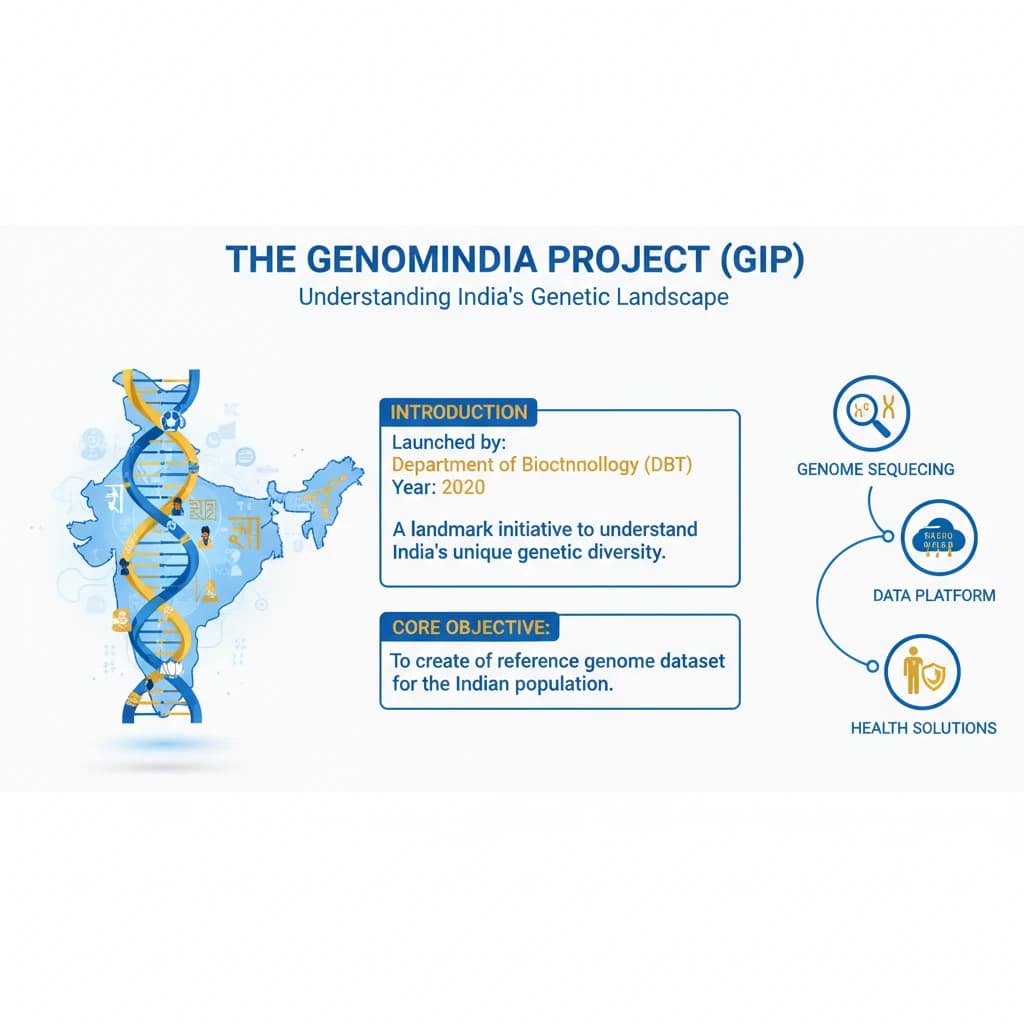
The GenomIndia Project (GIP) is a landmark initiative launched by the Department of Biotechnology (DBT) in 2020. It stands as a flagship program aimed at comprehensively understanding India's unique genetic landscape.
Launch Year: 2020
Nodal Agency: Department of Biotechnology (DBT)
Core Objective of GIP
The primary goal of the GIP is to map the vast genetic diversity prevalent across India. This involves sequencing and analyzing the genomes of various population groups within the country.
The project seeks to establish a baseline genetic map. This map will be crucial for studying health, understanding disease predisposition, and identifying population-specific traits unique to India.
Scope and Phases of the Project
The GenomIndia Project is structured in phases to systematically cover India's diverse genetic makeup.
- Phase One: This initial phase focuses on sequencing the genomes of 10,000 individuals. These individuals are carefully selected to represent 99 distinct ethnic groups across India.
- Long-term Vision: The project has ambitious plans to eventually scale up its efforts to sequence 1 million genomes, providing an even more comprehensive genetic database.
The second phase of the GIP takes a more targeted approach, focusing on specific health challenges.
- Phase Two: This phase involves sequencing the genomes of individuals with specific diseases. Conditions under study include cancer, diabetes, and various rare diseases.
By comparing the genomes of diseased individuals with healthy ones, researchers aim to identify genes linked to these conditions. This comparative analysis is vital for understanding disease mechanisms.
Significance for India's Healthcare
India's unparalleled genetic diversity, with over 4,600 distinct population groups, makes the GIP particularly significant. This diversity means that genetic factors influencing health and disease can vary significantly from global patterns.
The project is expected to uncover genetic factors unique to Indian populations. This includes identifying specific rare diseases and novel mutations that may not be present in international genetic databases.
For instance, the MYBPC3 mutation, linked to early cardiac arrest, is prevalent in certain Indian populations but is largely absent from global genetic datasets. Understanding such unique genetic markers is critical for developing targeted healthcare interventions.
💡 Key Takeaways
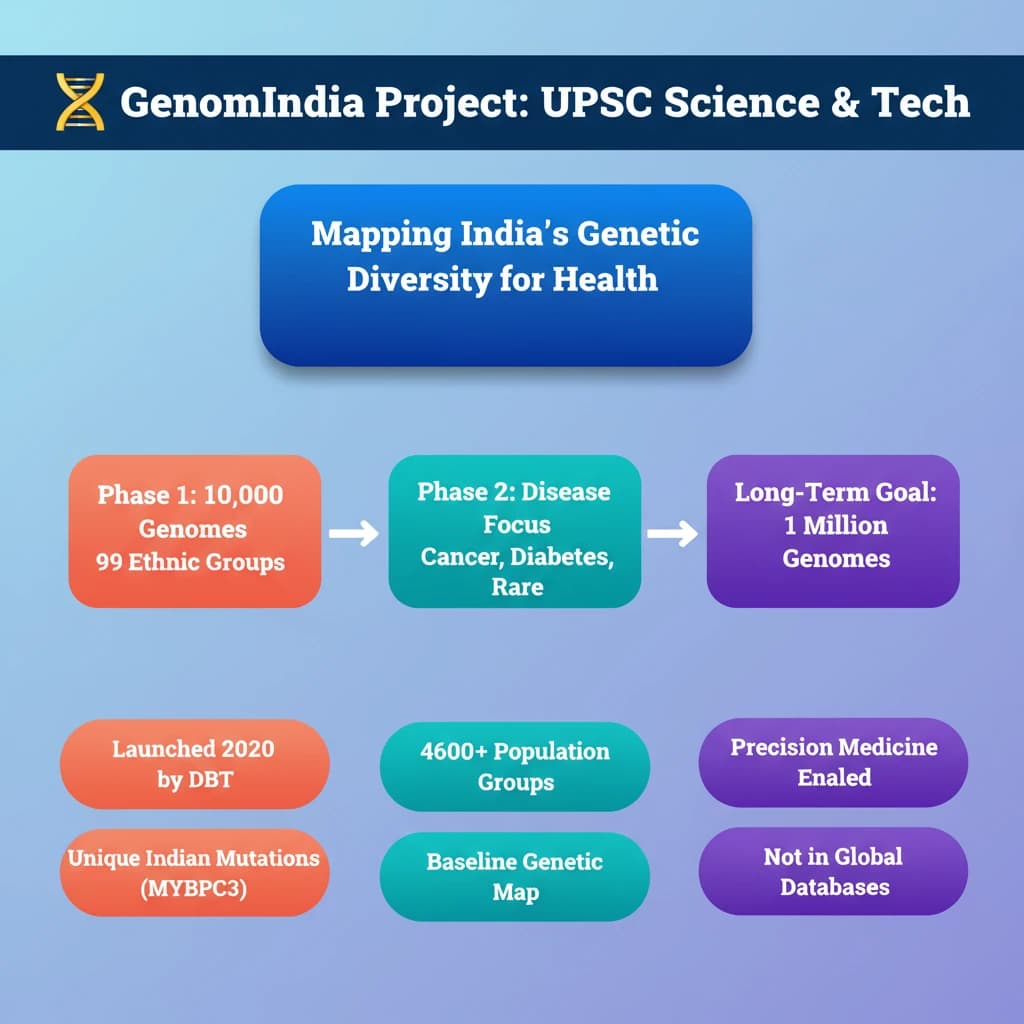
- •GenomIndia Project (GIP) launched in 2020 by DBT to map India's genetic diversity.
- •Aims to sequence genomes of 10,000 individuals across 99 ethnic groups in Phase 1, with a long-term goal of 1 million.
- •Phase 2 focuses on sequencing genomes of individuals with specific diseases like cancer, diabetes, and rare diseases.
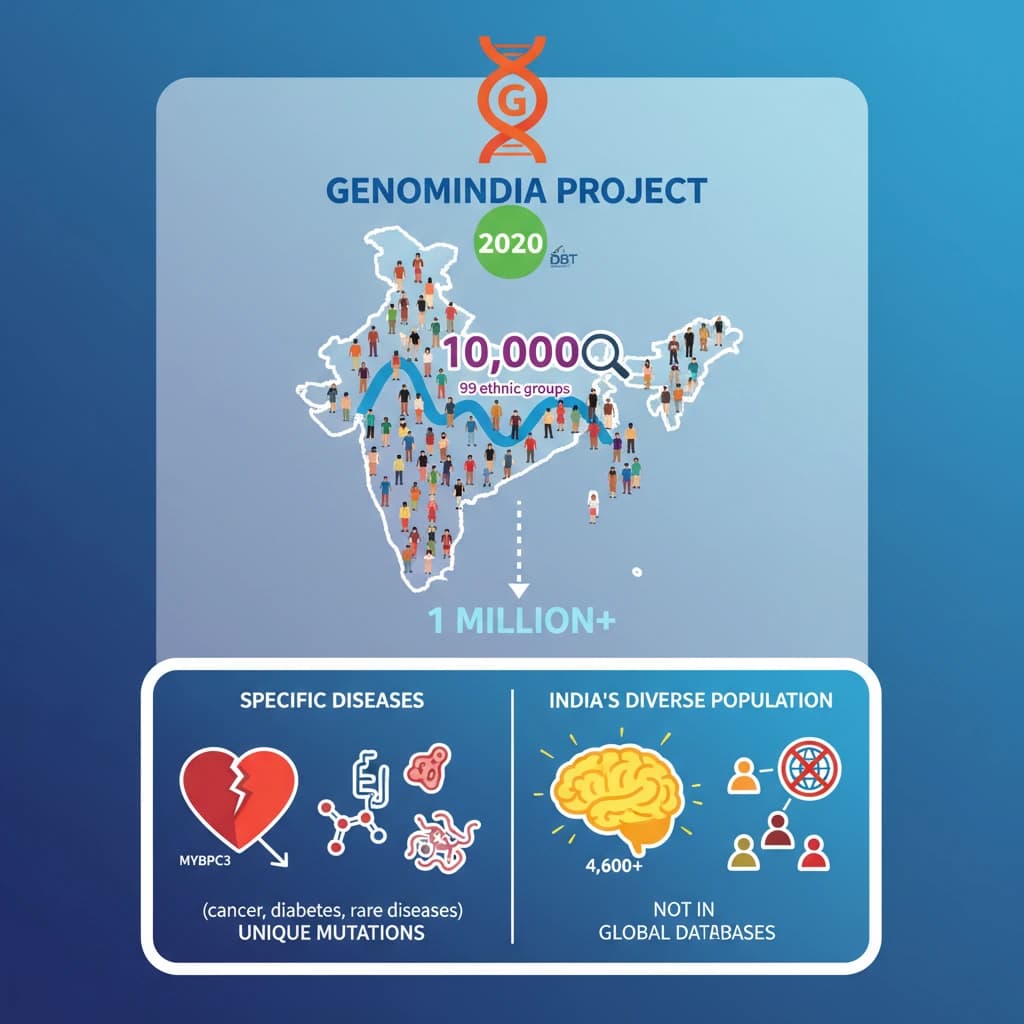
- •Significance lies in identifying unique genetic factors and mutations (e.g., MYBPC3) specific to India's 4,600+ population groups, not found in global databases.
- •Crucial for establishing a baseline genetic map for health, disease predisposition, and population-specific traits, enabling precision medicine.
🧠 Memory Techniques
95% Verified Content
📚 Reference Sources
•Department of Biotechnology (DBT) official website (for GenomIndia Project details)
•Scientific publications and news articles on the GenomIndia Project