Loading page, please wait…
What is the Kodaikanal Solar Observatory? - UPSC Science And Technology
What is What is the Kodaikanal Solar Observatory? in UPSC Science And Technology?
What is the Kodaikanal Solar Observatory? is a key topic under Science And Technology for UPSC Civil Services Examination. Key points include: Kodaikanal Solar Observatory (KSO) established in 1899, owned by Indian Institute of Astrophysics (IIA).. First detected the Evershed effect (radial flow of gas in sunspot penumbra) in January 1909.. Precursor was the Madras Observatory (1792), established by British East India Company.. Understanding this topic is essential for both UPSC Prelims and Mains preparation.
Why is What is the Kodaikanal Solar Observatory? important for UPSC exam?
What is the Kodaikanal Solar Observatory? is a Medium-level topic in UPSC Science And Technology. It is tested in both Prelims (factual MCQs) and Mains (analytical answer writing). Previous year UPSC questions have frequently covered aspects of What is the Kodaikanal Solar Observatory?, making it essential for comprehensive IAS preparation.
How to prepare What is the Kodaikanal Solar Observatory? for UPSC?
To prepare What is the Kodaikanal Solar Observatory? for UPSC: (1) Study the comprehensive notes covering all key concepts on Vaidra. (2) Practice previous year questions on this topic. (3) Connect it with current affairs using daily updates. (4) Revise using key takeaways and mind maps available for Science And Technology. (5) Write practice answers linking What is the Kodaikanal Solar Observatory? to related GS Paper topics.
Key takeaways of What is the Kodaikanal Solar Observatory? for UPSC
- Kodaikanal Solar Observatory (KSO) established in 1899, owned by Indian Institute of Astrophysics (IIA).
- First detected the Evershed effect (radial flow of gas in sunspot penumbra) in January 1909.
- Precursor was the Madras Observatory (1792), established by British East India Company.
- Madras Observatory merged with KSO in April 1899 during observatory reorganisation.
- KSO maintains a century-long archive of solar data, crucial for space weather and climate research.
What is the Kodaikanal Solar Observatory?
Medium⏱️ 5 min read
science and technology
📖 Introduction
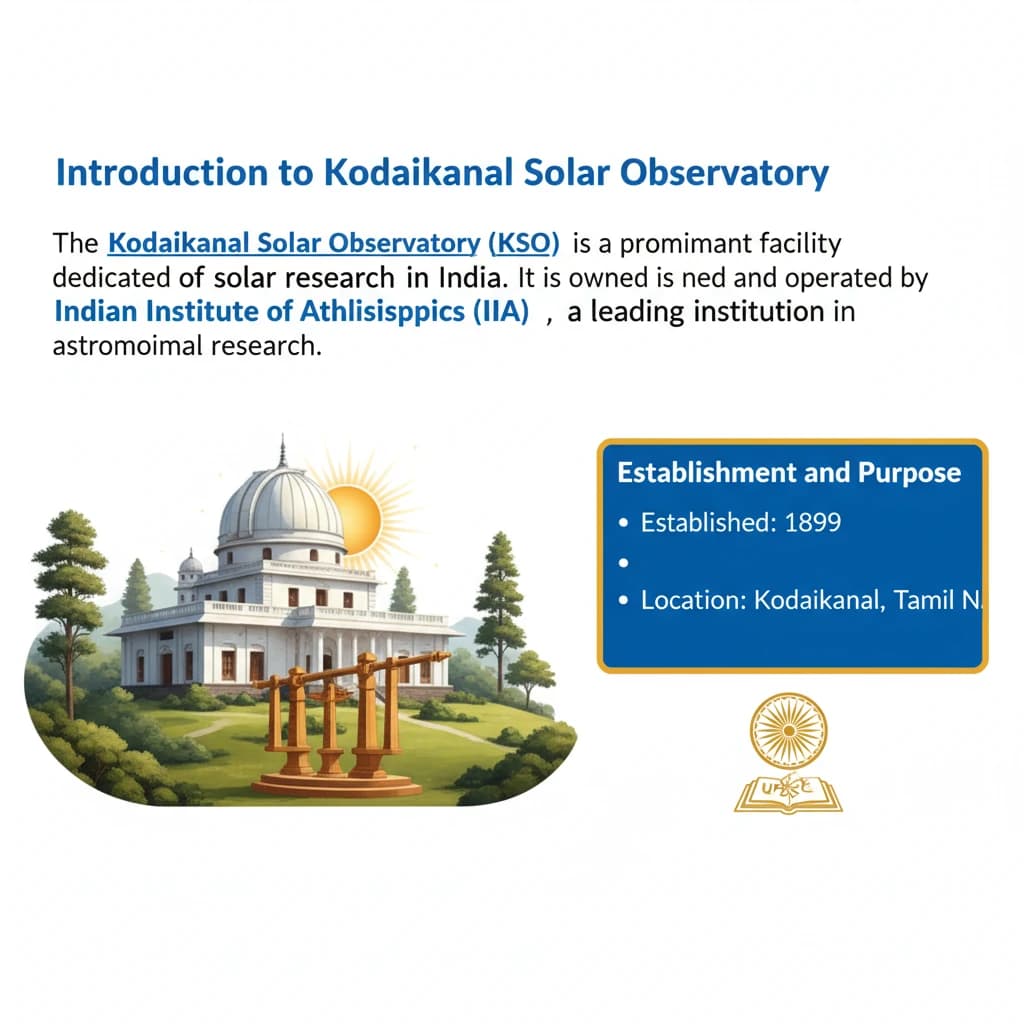
Introduction to Kodaikanal Solar Observatory
The Kodaikanal Solar Observatory (KSO) is a prominent facility dedicated to solar research in India.
It is owned and operated by the Indian Institute of Astrophysics (IIA), a leading institution in astronomical research.
Establishment and Purpose
Established: 1899
Location: Kodaikanal, Tamil Nadu
Primary Function: Solar observations and research.
Landmark Discovery: The Evershed Effect
The KSO holds historical significance for a major scientific discovery related to the Sun.
The Evershed effect was first detected at this observatory in January 1909.
This effect describes the apparent radial flow of gas observed within the penumbra (the outer, filamentary region) of sunspots on the Sun's surface.
Understanding the Evershed effect is crucial for topics related to solar physics and stellar atmospheres in UPSC Mains GS Paper 3 (Science & Technology).
💡 Key Takeaways
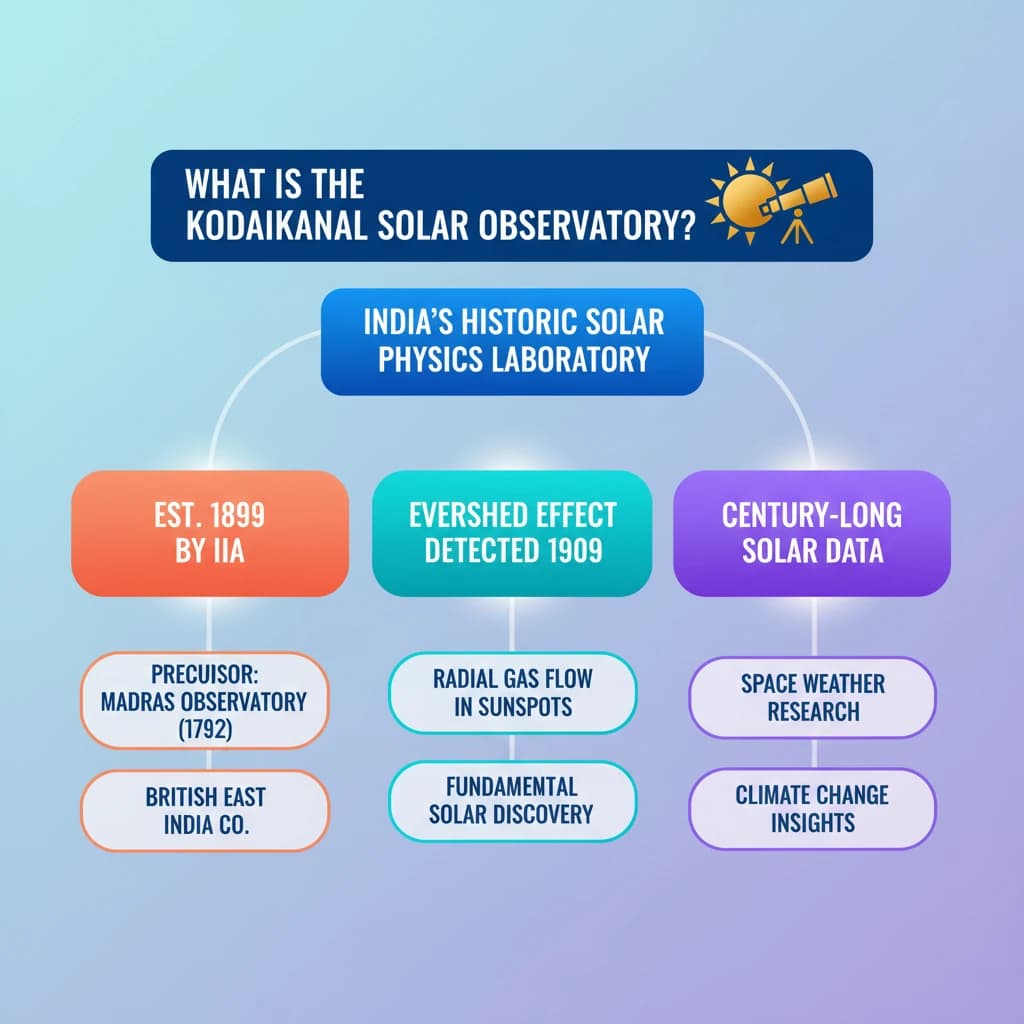
- •Kodaikanal Solar Observatory (KSO) established in 1899, owned by Indian Institute of Astrophysics (IIA).
- •First detected the Evershed effect (radial flow of gas in sunspot penumbra) in January 1909.
- •Precursor was the Madras Observatory (1792), established by British East India Company.
- •Madras Observatory merged with KSO in April 1899 during observatory reorganisation.
- •KSO maintains a century-long archive of solar data, crucial for space weather and climate research.
🧠 Memory Techniques

95% Verified Content
📚 Reference Sources
•Indian Institute of Astrophysics (IIA) official website
•Historical records of Kodaikanal Solar Observatory