Loading page, please wait…
Wolbachia-Infected Mosquitoes for Dengue Control - UPSC Science And Technology
What is Wolbachia-Infected Mosquitoes for Dengue Control in UPSC Science And Technology?
Wolbachia-Infected Mosquitoes for Dengue Control is a key topic under Science And Technology for UPSC Civil Services Examination. Key points include: Wolbachia-infected mosquitoes offer a novel, biological control method for dengue, chikungunya, and Zika.. Traditional vector control methods face limitations, necessitating innovative strategies.. India faces a significant public health and economic burden from dengue, with high case numbers and economic losses.. Understanding this topic is essential for both UPSC Prelims and Mains preparation.
Why is Wolbachia-Infected Mosquitoes for Dengue Control important for UPSC exam?
Wolbachia-Infected Mosquitoes for Dengue Control is a Medium-level topic in UPSC Science And Technology. It is tested in both Prelims (factual MCQs) and Mains (analytical answer writing). Previous year UPSC questions have frequently covered aspects of Wolbachia-Infected Mosquitoes for Dengue Control, making it essential for comprehensive IAS preparation.
How to prepare Wolbachia-Infected Mosquitoes for Dengue Control for UPSC?
To prepare Wolbachia-Infected Mosquitoes for Dengue Control for UPSC: (1) Study the comprehensive notes covering all key concepts on Vaidra. (2) Practice previous year questions on this topic. (3) Connect it with current affairs using daily updates. (4) Revise using key takeaways and mind maps available for Science And Technology. (5) Write practice answers linking Wolbachia-Infected Mosquitoes for Dengue Control to related GS Paper topics.
Key takeaways of Wolbachia-Infected Mosquitoes for Dengue Control for UPSC
- Wolbachia-infected mosquitoes offer a novel, biological control method for dengue, chikungunya, and Zika.
- Traditional vector control methods face limitations, necessitating innovative strategies.
- India faces a significant public health and economic burden from dengue, with high case numbers and economic losses.
- Wolbachia works by inhibiting virus replication in mosquitoes, reducing their ability to transmit diseases.
- The method is naturally occurring, self-sustaining, and environmentally friendly, avoiding chemical pesticides.
- Global programs like the World Mosquito Program have demonstrated significant success in reducing dengue incidence.
- This approach aligns with India's public health goals and biotechnology advancements for sustainable disease management.
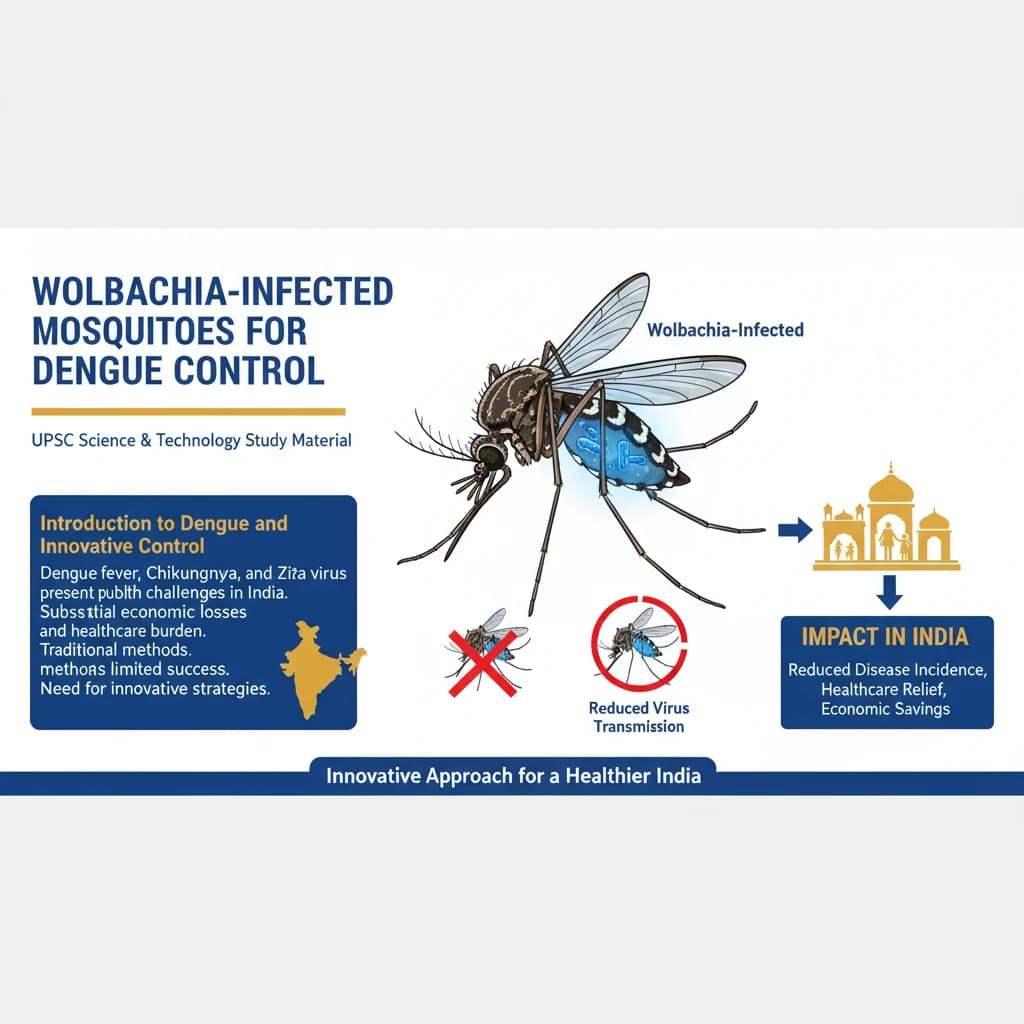
Wolbachia-Infected Mosquitoes for Dengue Control
Medium⏱️ 7 min read
science and technology
📖 Introduction
Introduction to Dengue and Innovative Control
Dengue fever, along with Chikungunya and Zika virus, presents significant public health challenges in India. These diseases lead to substantial economic losses and place a heavy burden on healthcare systems.
Traditional methods for controlling mosquito-borne diseases have shown limited success. This highlights the urgent need for innovative and more effective strategies to combat these pervasive threats.
The use of Wolbachia-infected mosquitoes emerges as a promising and novel alternative. This biological control method offers a sustainable approach to reduce the transmission of these debilitating viral infections.
The Burden of Dengue in India and Globally
The impact of dengue in India is substantial, both in terms of caseload and economic cost. The disease affects a large population annually, particularly in vulnerable regions.
- As of April 2024, India recorded 19,447 dengue cases and 16 deaths.
- Kerala reported the highest number of cases, followed by Tamil Nadu, indicating regional hotspots.
- The estimated economic impact of dengue in India is a staggering Rs 28,300 crore annually.
- Additionally, it accounts for 5.68 lakh years of young life lost, highlighting its severe societal cost.
Globally, the situation remains critical. The World Health Organization (WHO) continuously monitors the spread and impact of dengue worldwide.
The WHO reported over 7.6 million cases of dengue globally as of April 2024, underscoring the widespread nature of the disease.
Understanding the Wolbachia Method
The Wolbachia method involves introducing mosquitoes carrying the naturally occurring Wolbachia bacterium into wild mosquito populations. This bacterium has a unique effect on the mosquito's ability to transmit viruses.
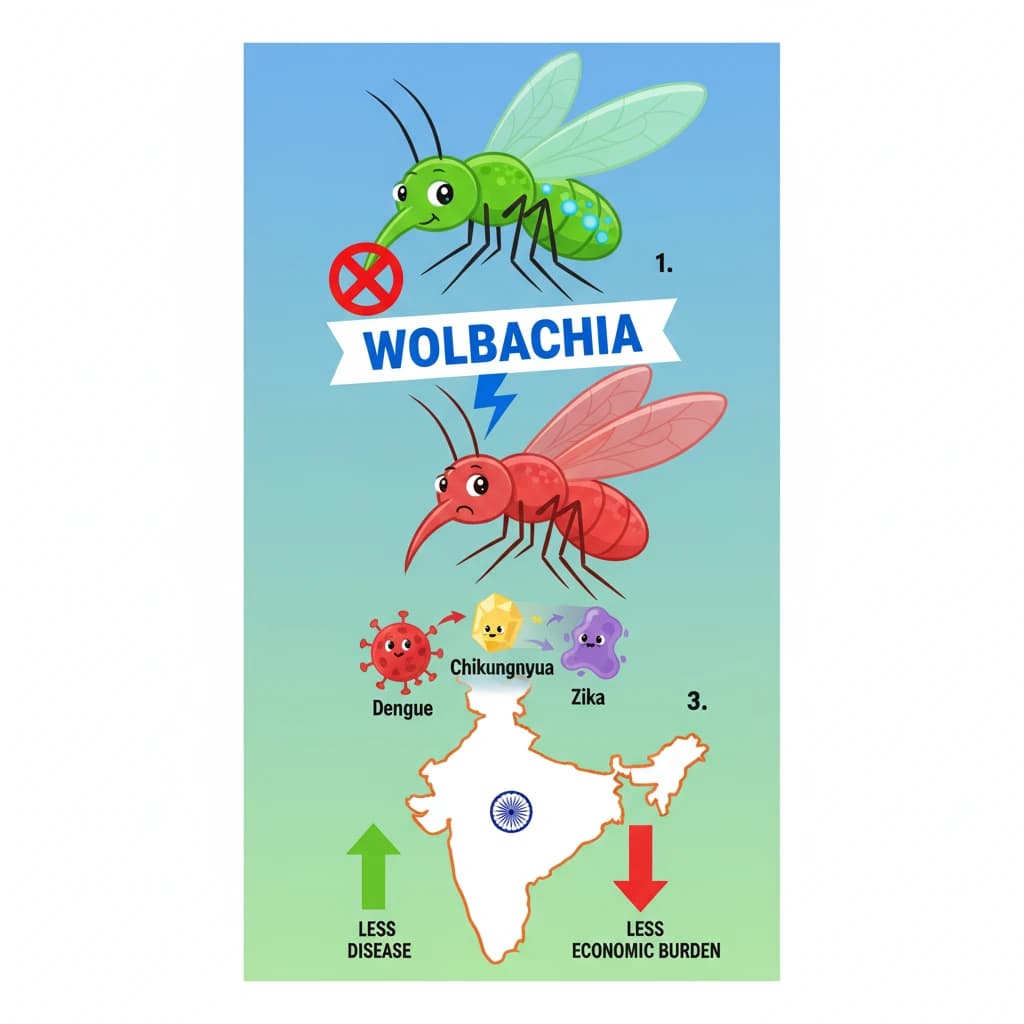
When Aedes aegypti mosquitoes (the primary vector for dengue) carry Wolbachia, the bacterium competes with viruses like dengue, chikungunya, and Zika, making it harder for these viruses to replicate inside the mosquito. This significantly reduces the mosquito's capacity to transmit the disease to humans.
This topic is crucial for UPSC GS Paper III (Science & Technology, Biotechnology) and GS Paper II (Health, Public Policy). Focus on both the scientific mechanism and its public health implications.
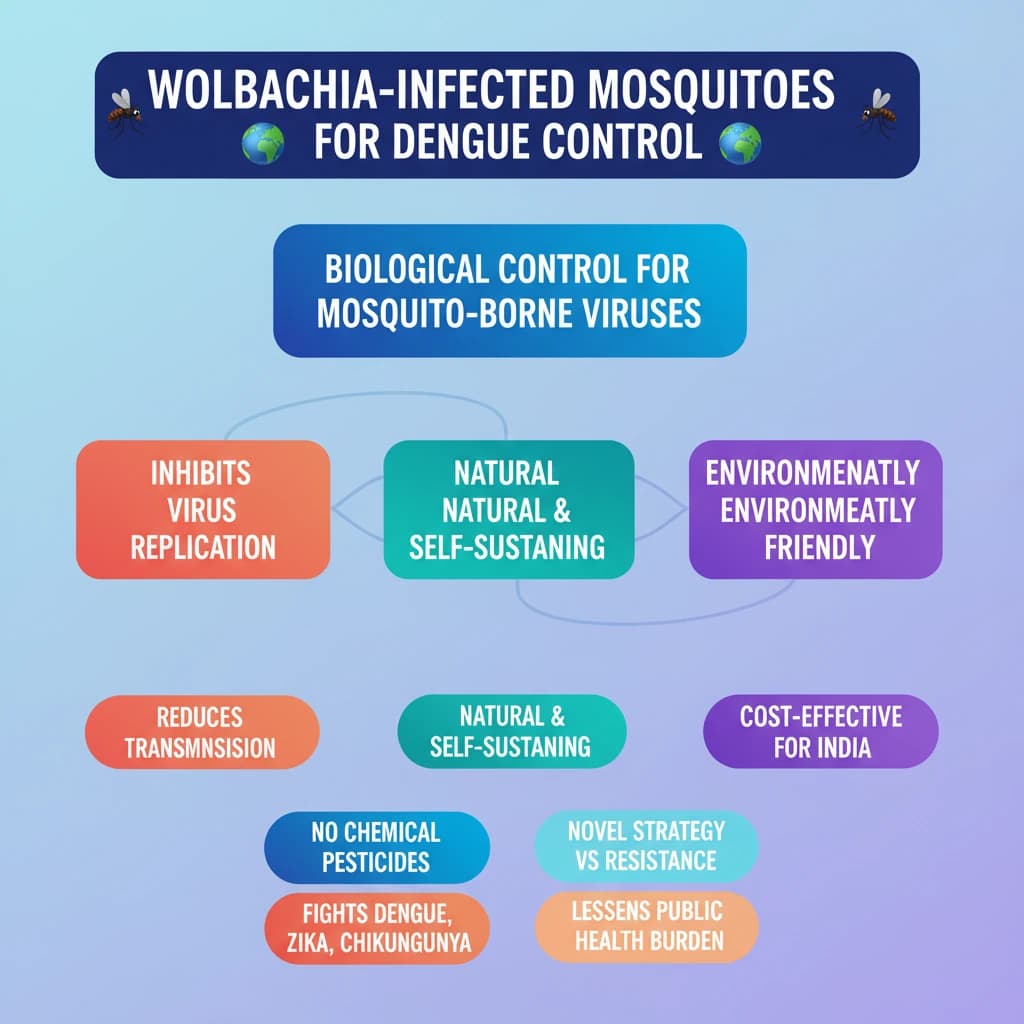
💡 Key Takeaways
- •Wolbachia-infected mosquitoes offer a novel, biological control method for dengue, chikungunya, and Zika.
- •Traditional vector control methods face limitations, necessitating innovative strategies.
- •India faces a significant public health and economic burden from dengue, with high case numbers and economic losses.
- •Wolbachia works by inhibiting virus replication in mosquitoes, reducing their ability to transmit diseases.
- •The method is naturally occurring, self-sustaining, and environmentally friendly, avoiding chemical pesticides.
- •Global programs like the World Mosquito Program have demonstrated significant success in reducing dengue incidence.
- •This approach aligns with India's public health goals and biotechnology advancements for sustainable disease management.
🧠 Memory Techniques
95% Verified Content
📚 Reference Sources
•World Health Organization (WHO) reports on dengue statistics
•World Mosquito Program (WMP) official website and research publications