Loading page, please wait…
HIV: Understanding the Virus, its Impact, and Implications - UPSC Social Issues
What is HIV: Understanding the Virus, its Impact, and Implications in UPSC Social Issues?
HIV: Understanding the Virus, its Impact, and Implications is a key topic under Social Issues for UPSC Civil Services Examination. Key points include: HIV is the Human Immunodeficiency Virus, attacking the body's immune system.. It primarily targets and destroys CD4 immune cells, a type of White Blood Cell.. Weakened immunity leads to vulnerability to opportunistic infections and cancers.. Understanding this topic is essential for both UPSC Prelims and Mains preparation.
Why is HIV: Understanding the Virus, its Impact, and Implications important for UPSC exam?
HIV: Understanding the Virus, its Impact, and Implications is a Easy-level topic in UPSC Social Issues. It is tested in both Prelims (factual MCQs) and Mains (analytical answer writing). Previous year UPSC questions have frequently covered aspects of HIV: Understanding the Virus, its Impact, and Implications, making it essential for comprehensive IAS preparation.
How to prepare HIV: Understanding the Virus, its Impact, and Implications for UPSC?
To prepare HIV: Understanding the Virus, its Impact, and Implications for UPSC: (1) Study the comprehensive notes covering all key concepts on Vaidra. (2) Practice previous year questions on this topic. (3) Connect it with current affairs using daily updates. (4) Revise using key takeaways and mind maps available for Social Issues. (5) Write practice answers linking HIV: Understanding the Virus, its Impact, and Implications to related GS Paper topics.
Key takeaways of HIV: Understanding the Virus, its Impact, and Implications for UPSC
- HIV is the Human Immunodeficiency Virus, attacking the body's immune system.
- It primarily targets and destroys CD4 immune cells, a type of White Blood Cell.
- Weakened immunity leads to vulnerability to opportunistic infections and cancers.
- AIDS is the advanced stage of HIV infection, characterized by severe immunodeficiency.
- Antiretroviral Therapy (ART) effectively manages HIV, making it a chronic condition and reducing transmission.
HIV: Understanding the Virus, its Impact, and Implications
Easy⏱️ 6 min read
social issues
📖 Introduction
What is HIV? An Overview
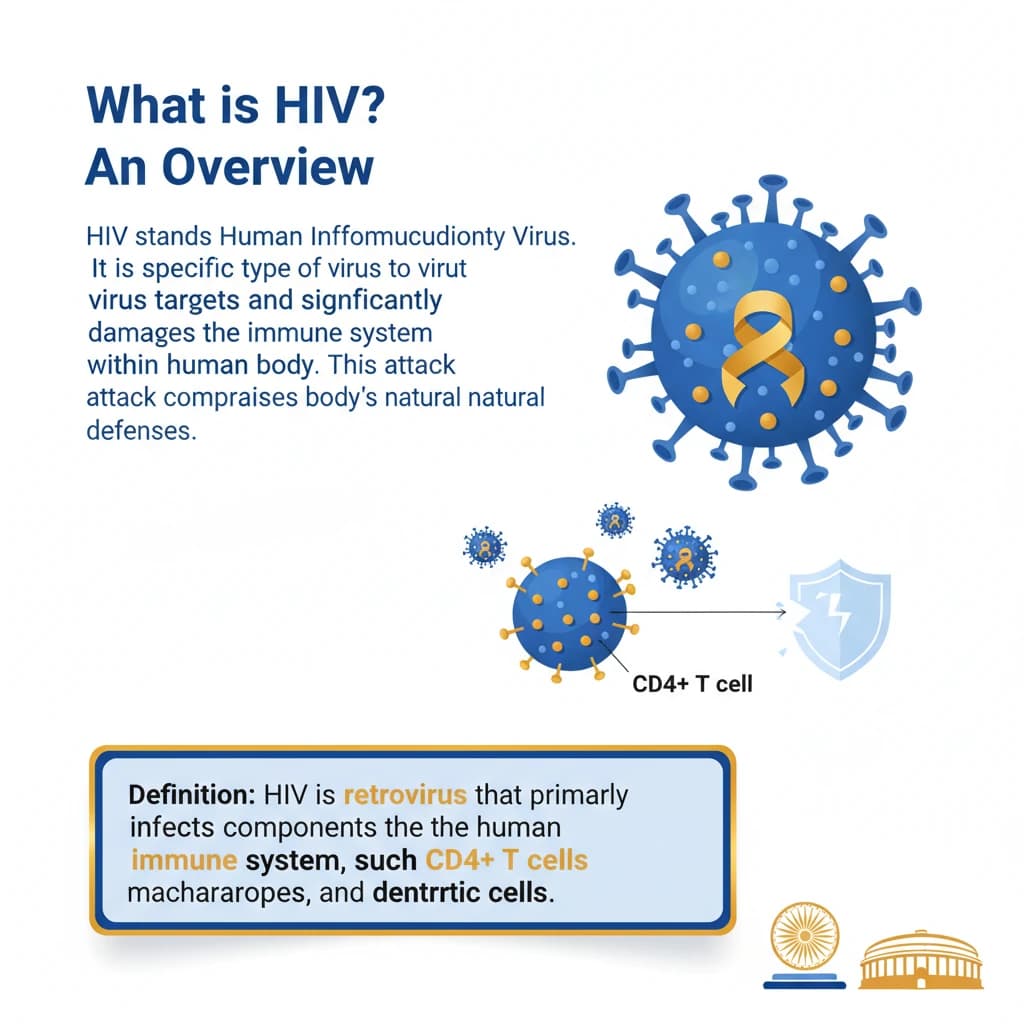
HIV stands for Human Immunodeficiency Virus. It is a specific type of virus that targets and significantly damages the immune system within the human body. This attack compromises the body's natural defenses.
Definition: HIV is a retrovirus that primarily infects components of the human immune system, such as CD4+ T cells, macrophages, and dendritic cells.
Targeting Key Immune Cells
The virus primarily targets and damages CD4 immune cells. These are a crucial type of White Blood Cell, playing an essential role in orchestrating the body's immune response against infections and various diseases.
By destroying these vital cells, HIV progressively weakens the immune system. This makes the infected individual increasingly susceptible to illnesses that a healthy immune system would normally fight off.
Impact on the Body's Defenses
Over an extended period, the continuous assault by HIV severely debilitates the body's immune system. This leaves the individual highly vulnerable to a range of opportunistic infections and certain types of cancers.
Key Concept: HIV does not directly cause death, but rather creates a state of severe immunodeficiency (AIDS) that allows other infections and cancers to thrive, ultimately leading to severe health complications.
💡 Key Takeaways
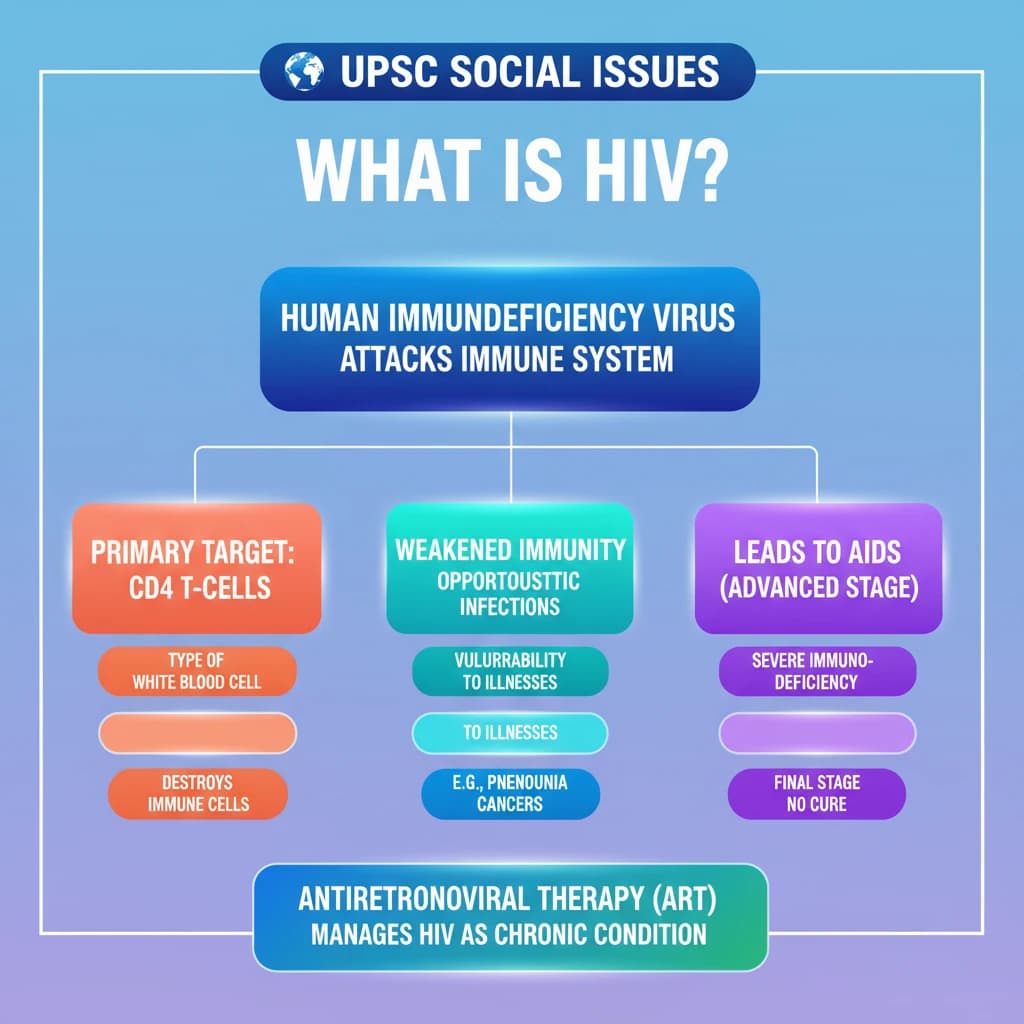
- •HIV is the Human Immunodeficiency Virus, attacking the body's immune system.
- •It primarily targets and destroys CD4 immune cells, a type of White Blood Cell.
- •Weakened immunity leads to vulnerability to opportunistic infections and cancers.
- •AIDS is the advanced stage of HIV infection, characterized by severe immunodeficiency.
- •Antiretroviral Therapy (ART) effectively manages HIV, making it a chronic condition and reducing transmission.
🧠 Memory Techniques

98% Verified Content
📚 Reference Sources
•UNAIDS - The Joint United Nations Programme on HIV/AIDS
•Centers for Disease Control and Prevention (CDC) - About HIV
•National AIDS Control Organisation (NACO), India