Loading page, please wait…
Key Anti-TB Drugs: Isoniazid, Rifampicin, and Delamanid - UPSC Social Issues
What is Key Anti-TB Drugs: Isoniazid, Rifampicin, and Delamanid in UPSC Social Issues?
Key Anti-TB Drugs: Isoniazid, Rifampicin, and Delamanid is a key topic under Social Issues for UPSC Civil Services Examination. Key points include: Isoniazid (INH) and Rifampicin (RIF) are cornerstone first-line drugs for TB treatment.. INH inhibits mycolic acid synthesis; RIF inhibits bacterial RNA synthesis.. Combination therapy with multiple drugs is essential to prevent drug resistance and ensure cure.. Understanding this topic is essential for both UPSC Prelims and Mains preparation.
Why is Key Anti-TB Drugs: Isoniazid, Rifampicin, and Delamanid important for UPSC exam?
Key Anti-TB Drugs: Isoniazid, Rifampicin, and Delamanid is a Easy-level topic in UPSC Social Issues. It is tested in both Prelims (factual MCQs) and Mains (analytical answer writing). Previous year UPSC questions have frequently covered aspects of Key Anti-TB Drugs: Isoniazid, Rifampicin, and Delamanid, making it essential for comprehensive IAS preparation.
How to prepare Key Anti-TB Drugs: Isoniazid, Rifampicin, and Delamanid for UPSC?
To prepare Key Anti-TB Drugs: Isoniazid, Rifampicin, and Delamanid for UPSC: (1) Study the comprehensive notes covering all key concepts on Vaidra. (2) Practice previous year questions on this topic. (3) Connect it with current affairs using daily updates. (4) Revise using key takeaways and mind maps available for Social Issues. (5) Write practice answers linking Key Anti-TB Drugs: Isoniazid, Rifampicin, and Delamanid to related GS Paper topics.
Key takeaways of Key Anti-TB Drugs: Isoniazid, Rifampicin, and Delamanid for UPSC
- Isoniazid (INH) and Rifampicin (RIF) are cornerstone first-line drugs for TB treatment.
- INH inhibits mycolic acid synthesis; RIF inhibits bacterial RNA synthesis.
- Combination therapy with multiple drugs is essential to prevent drug resistance and ensure cure.
- Delamanid is a newer drug specifically used for Multidrug-Resistant TB (MDR-TB).
- India's National Tuberculosis Elimination Programme (NTEP) aims to eliminate TB by 2025, with a strong focus on drug management and combating resistance.
Key Anti-TB Drugs: Isoniazid, Rifampicin, and Delamanid
Easy⏱️ 7 min read
social issues
📖 Introduction
Introduction to Anti-TB Drugs
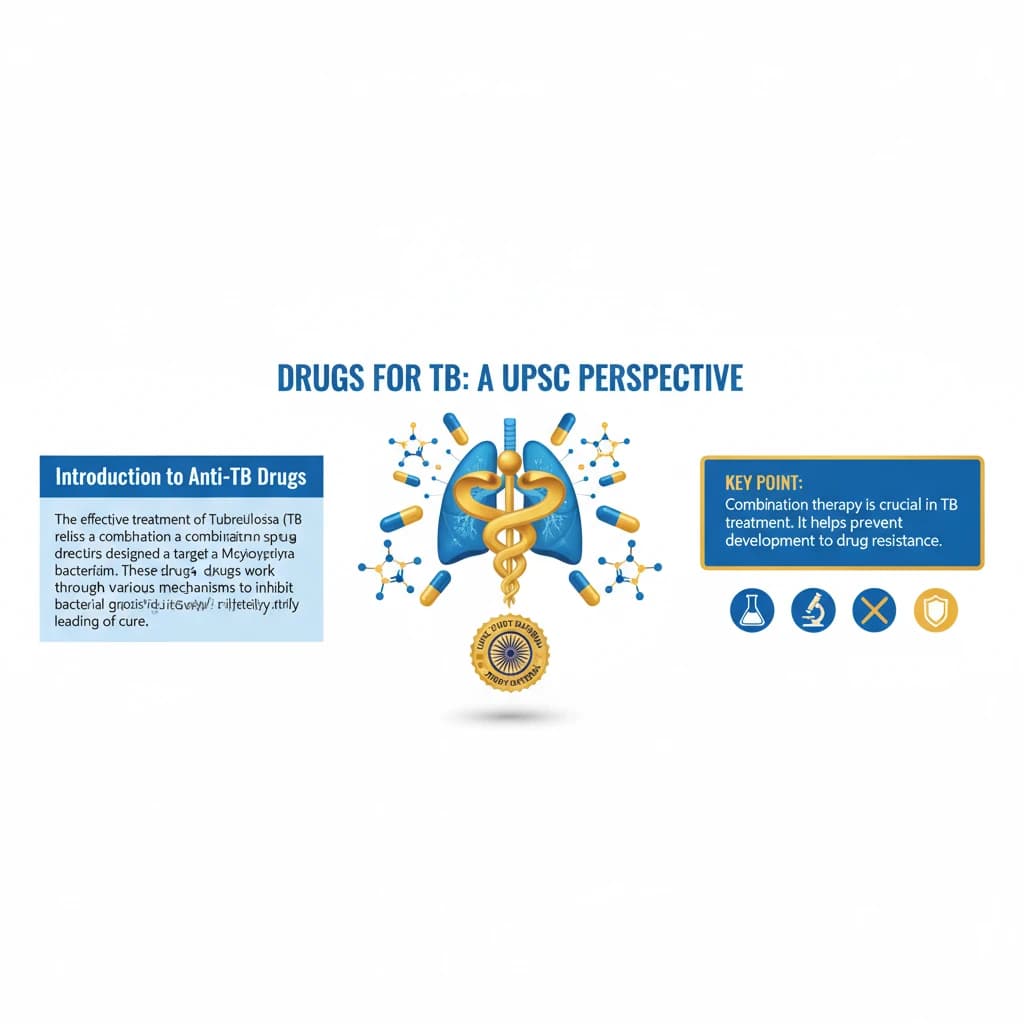
The effective treatment of Tuberculosis (TB) relies heavily on a combination of specific drugs designed to target the Mycobacterium tuberculosis bacterium. These drugs work through various mechanisms to inhibit bacterial growth and replication, ultimately leading to a cure.
Combination therapy is crucial in TB treatment. It helps prevent the development of drug resistance and ensures complete eradication of the infection.
Isoniazid (INH): The Cornerstone of Treatment
Isoniazid (INH) is a foundational drug in the treatment regimen for Tuberculosis. It is highly effective against the causative agent, Mycobacterium tuberculosis.
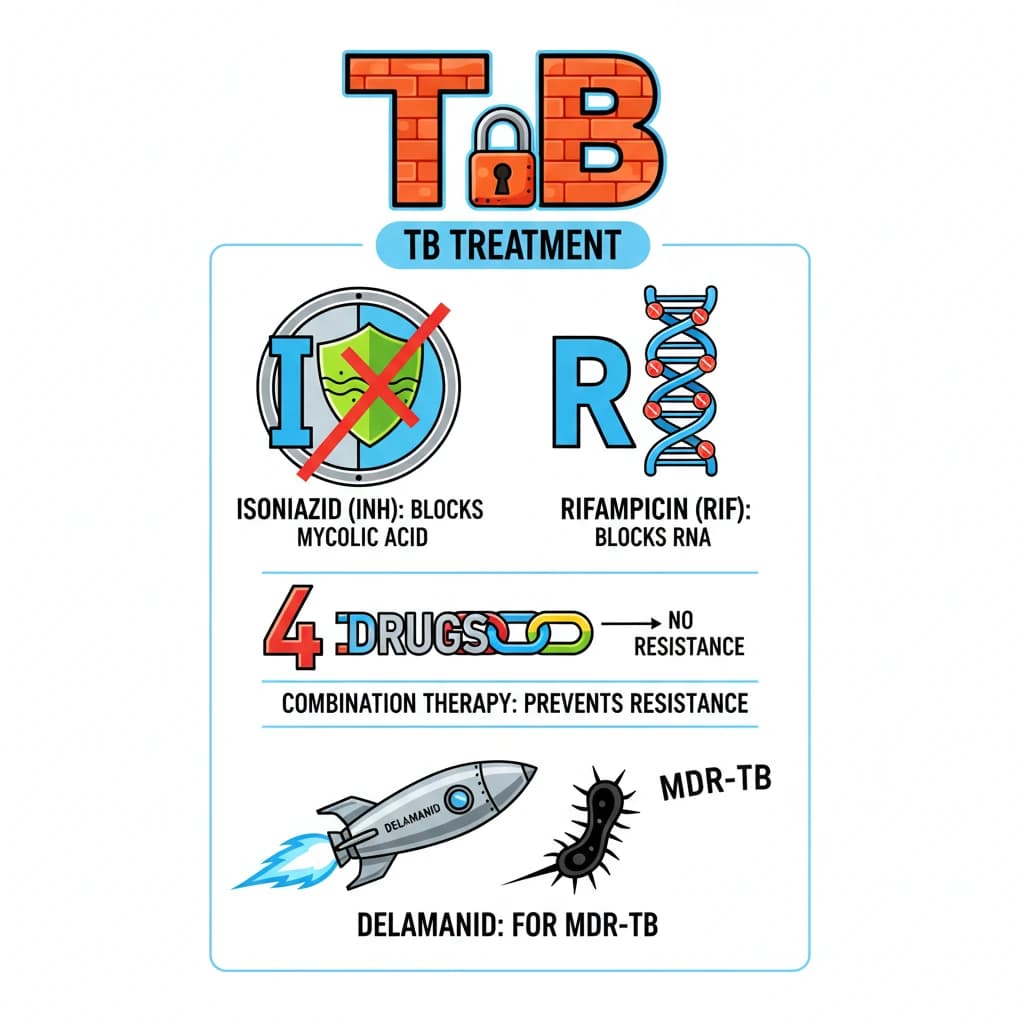
Its primary mechanism of action involves inhibiting the synthesis of mycolic acids. These acids are vital components of the bacterial cell wall, and their disruption leads to bacterial death.
Mechanism of Action (INH): Inhibits mycolic acid synthesis, weakening the bacterial cell wall.
Rifampicin (RIF): Essential for Preventing Resistance
Rifampicin (RIF) is another indispensable drug in the standard TB treatment protocol. It plays a critical role, especially when used in combination with other anti-TB agents.
This drug works by inhibiting the synthesis of RNA within the bacterial cell. By disrupting RNA production, it prevents the bacteria from producing essential proteins, thereby halting their growth and multiplication.
The inclusion of Rifampicin in multi-drug regimens is crucial for preventing the development of drug resistance, a significant challenge in TB management.
Mechanism of Action (RIF): Inhibits bacterial RNA synthesis.
Delamanid: A Newer Drug for MDR-TB
Delamanid represents a newer class of drugs developed to combat more challenging forms of Tuberculosis. It is primarily used in the treatment of multidrug-resistant TB (MDR-TB).
Like other potent anti-TB agents, Delamanid is typically administered in combination with other drugs to enhance its effectiveness and prevent further resistance development in MDR-TB cases.
Delamanid Usage: Specifically targets Multidrug-Resistant TB (MDR-TB).
💡 Key Takeaways
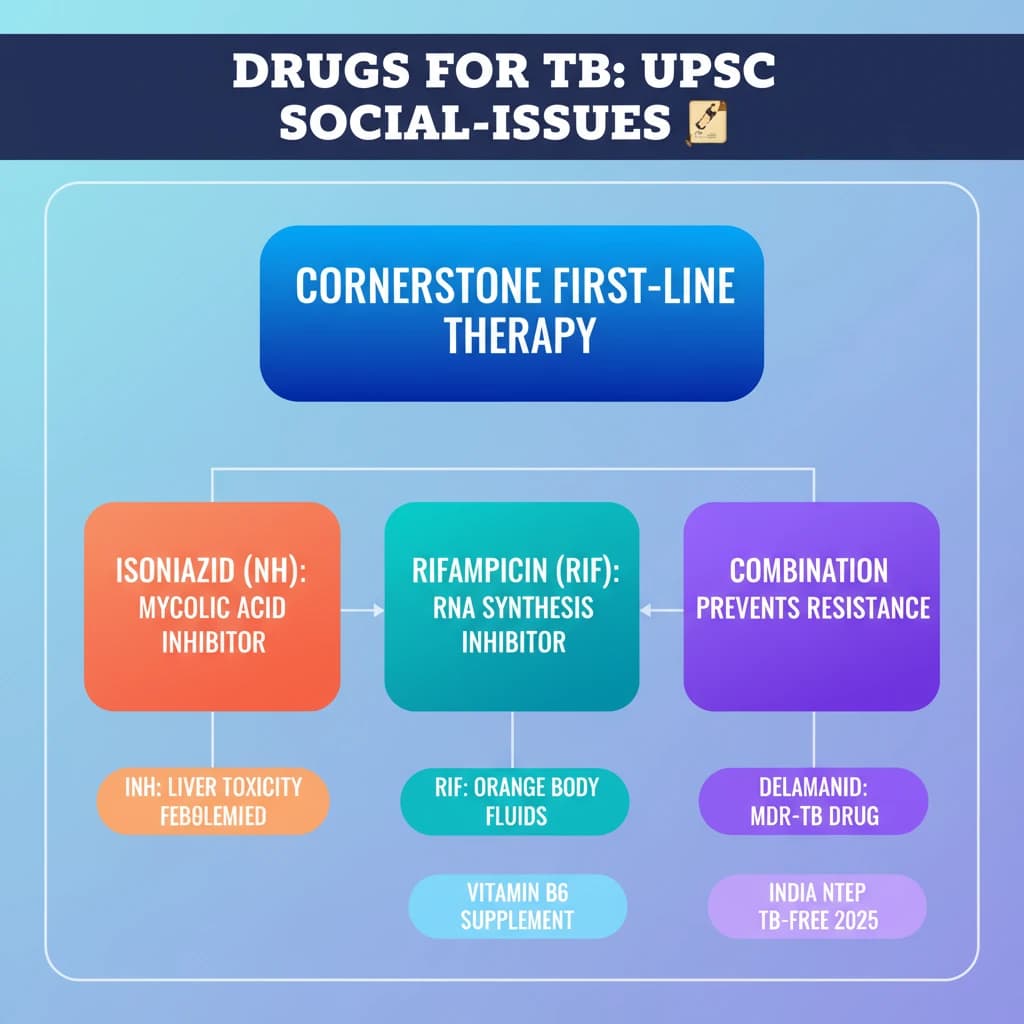
- •Isoniazid (INH) and Rifampicin (RIF) are cornerstone first-line drugs for TB treatment.
- •INH inhibits mycolic acid synthesis; RIF inhibits bacterial RNA synthesis.
- •Combination therapy with multiple drugs is essential to prevent drug resistance and ensure cure.
- •Delamanid is a newer drug specifically used for Multidrug-Resistant TB (MDR-TB).
- •India's National Tuberculosis Elimination Programme (NTEP) aims to eliminate TB by 2025, with a strong focus on drug management and combating resistance.
🧠 Memory Techniques
95% Verified Content