Loading page, please wait…
Social Issues: HIV/AIDS - Management via Antiretroviral Therapy - UPSC Social Issues
What is Social Issues: HIV/AIDS - Management via Antiretroviral Therapy in UPSC Social Issues?
Social Issues: HIV/AIDS - Management via Antiretroviral Therapy is a key topic under Social Issues for UPSC Civil Services Examination. Key points include: No cure currently exists for certain complex viral infections like HIV.. Antiretroviral Therapy (ART) is the primary method for managing these infections.. ART works by suppressing viral replication within the body.. Understanding this topic is essential for both UPSC Prelims and Mains preparation.
Why is Social Issues: HIV/AIDS - Management via Antiretroviral Therapy important for UPSC exam?
Social Issues: HIV/AIDS - Management via Antiretroviral Therapy is a Medium-level topic in UPSC Social Issues. It is tested in both Prelims (factual MCQs) and Mains (analytical answer writing). Previous year UPSC questions have frequently covered aspects of Social Issues: HIV/AIDS - Management via Antiretroviral Therapy, making it essential for comprehensive IAS preparation.
How to prepare Social Issues: HIV/AIDS - Management via Antiretroviral Therapy for UPSC?
To prepare Social Issues: HIV/AIDS - Management via Antiretroviral Therapy for UPSC: (1) Study the comprehensive notes covering all key concepts on Vaidra. (2) Practice previous year questions on this topic. (3) Connect it with current affairs using daily updates. (4) Revise using key takeaways and mind maps available for Social Issues. (5) Write practice answers linking Social Issues: HIV/AIDS - Management via Antiretroviral Therapy to related GS Paper topics.
Key takeaways of Social Issues: HIV/AIDS - Management via Antiretroviral Therapy for UPSC
- No cure currently exists for certain complex viral infections like HIV.
- Antiretroviral Therapy (ART) is the primary method for managing these infections.
- ART works by suppressing viral replication within the body.
- Effective ART allows CD4 immune cells to recover, strengthening the immune system.
- Disease management through ART has transformed these conditions into manageable chronic illnesses.
Social Issues: HIV/AIDS - Management via Antiretroviral Therapy
Medium⏱️ 6 min read
social issues
📖 Introduction
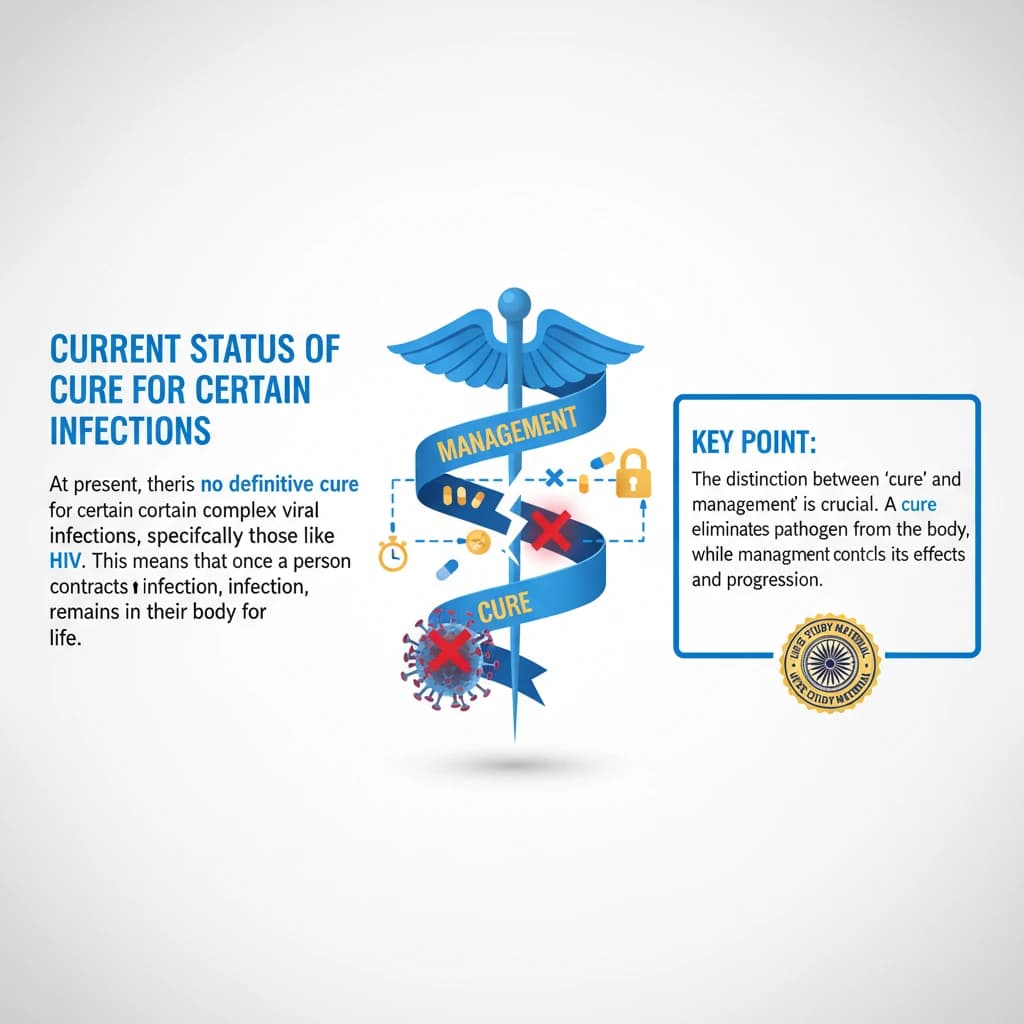
Current Status of Cure for Certain Infections
At present, there is no definitive cure for certain complex viral infections, specifically those like HIV, which was implicitly referred to in the source. This means that once a person contracts the infection, it remains in their body for life.
Key Point: The distinction between 'cure' and 'management' is crucial. A cure eliminates the pathogen entirely, while management controls its effects and progression.
Disease Management through Antiretroviral Therapy (ART)
Despite the absence of a cure, the disease can be effectively managed. This management relies heavily on a medical intervention known as Antiretroviral Therapy (ART). ART has revolutionized the lives of millions affected by such infections.
Definition: Antiretroviral Therapy (ART) is a regimen of medicines used to treat retroviral infections, most notably HIV.
Mechanism of Antiretroviral Therapy
The primary function of ART medicines is to suppress the replication of the virus within the human body. These drugs target various stages of the viral life cycle, preventing the virus from multiplying and spreading.
By halting viral replication, ART significantly reduces the viral load. This reduction is critical in preventing disease progression and transmission.
Impact on CD4 Immune Cells
When the virus's replication is suppressed by ART, it allows the body's immune system to recover. Specifically, the number of CD4 immune cells, which are crucial for immune function, begins to bounce back.
CD4 Cells: These are a type of white blood cell (T-helper cells) that play a vital role in the immune system. They are the primary targets of the HIV virus.
UPSC Insight: Understanding the difference between 'cure' and 'management' is important for questions on public health and disease control. Also, knowing the basic mechanism and impact of therapies like ART on immune markers like CD4 cells is essential for General Studies Paper II (Social Justice/Health).
💡 Key Takeaways
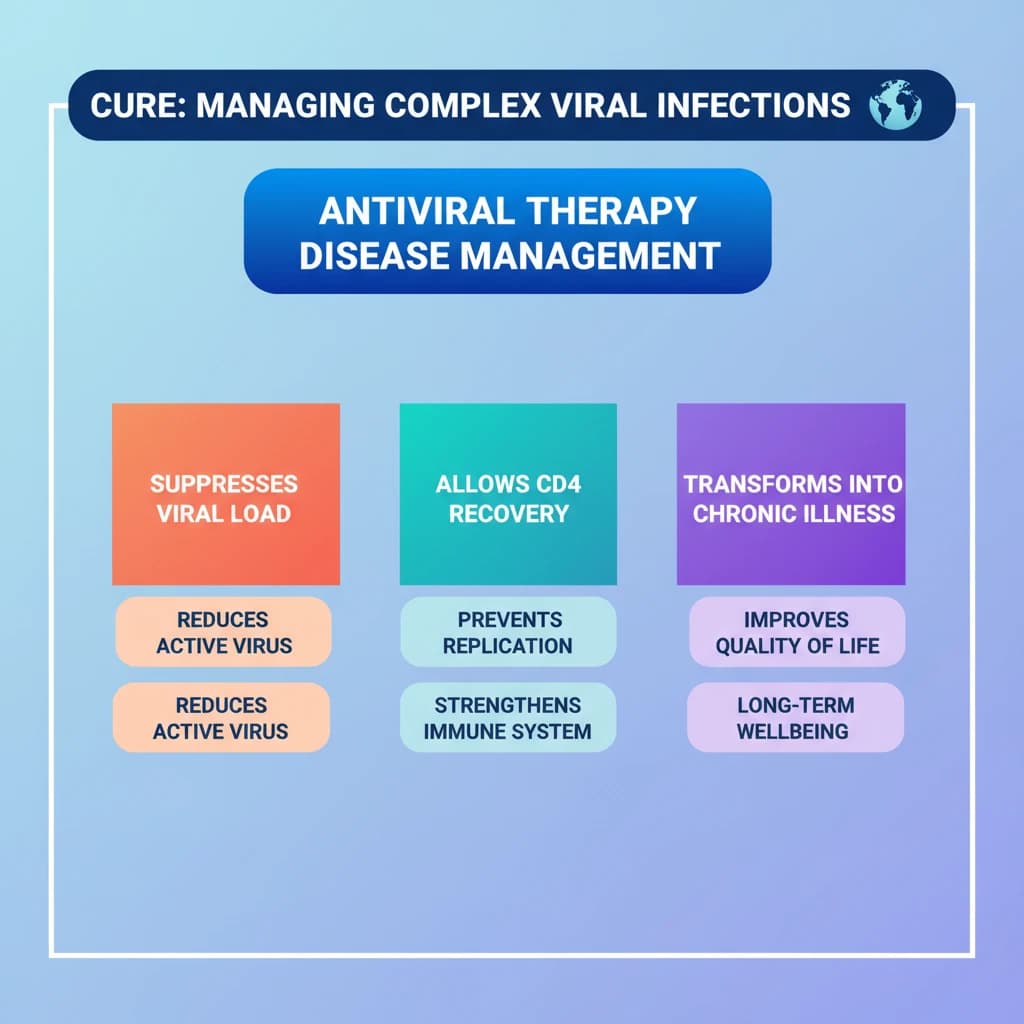
- •No cure currently exists for certain complex viral infections like HIV.
- •Antiretroviral Therapy (ART) is the primary method for managing these infections.
- •ART works by suppressing viral replication within the body.
- •Effective ART allows CD4 immune cells to recover, strengthening the immune system.
- •Disease management through ART has transformed these conditions into manageable chronic illnesses.
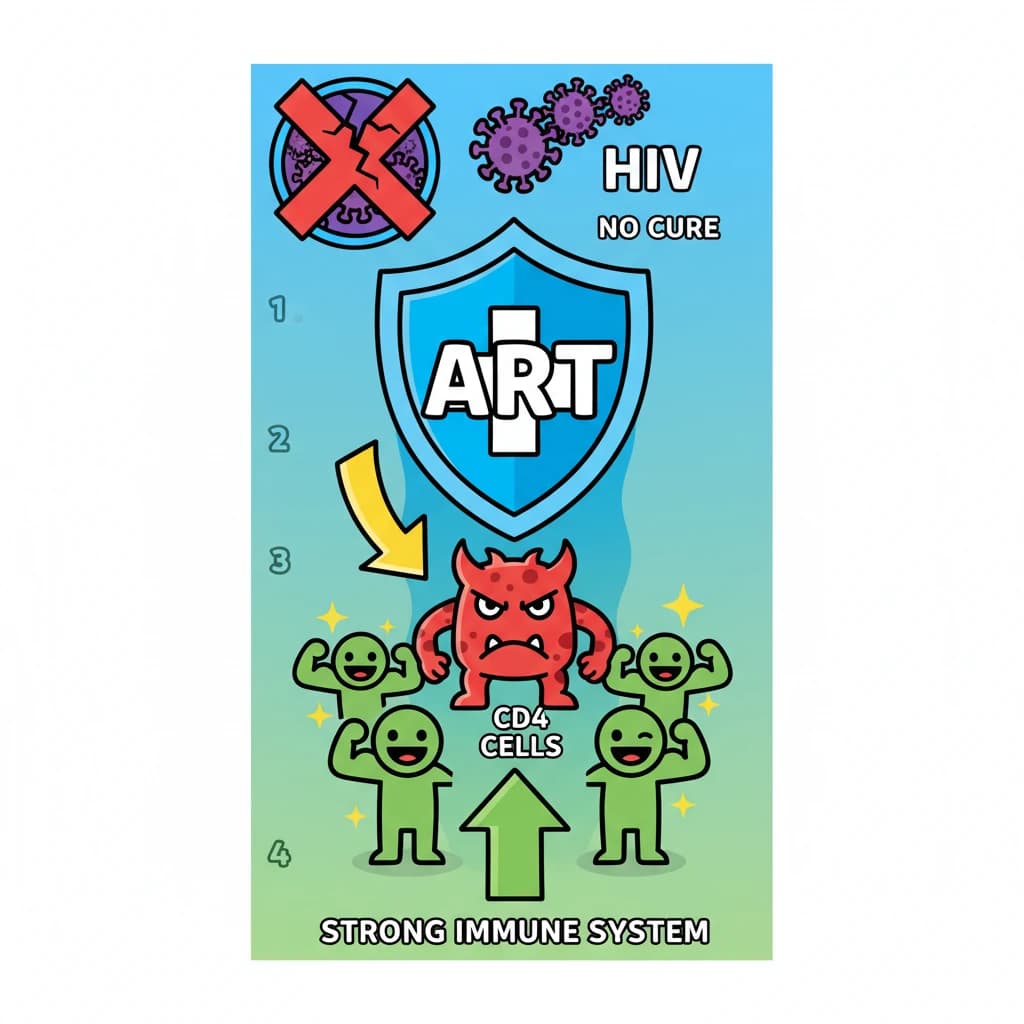
🧠 Memory Techniques
98% Verified Content
📚 Reference Sources
•World Health Organization (WHO) - HIV/AIDS Fact Sheets
•UNAIDS - Global HIV & AIDS statistics
•National AIDS Control Organisation (NACO), India - Annual Reports