Loading page, please wait…
HomeCurrent AffairsEditorialsGovt SchemesLearning ResourcesUPSC SyllabusPricingAboutBest UPSC AIUPSC AI ToolAI for UPSCUPSC ChatGPT

© 2026 Vaidra. All rights reserved.

PrivacyTerms
Vaidra Logo
Vaidra

Top 4 items + smart groups

UPSC GPT
New
Current Affairs
Daily Solutions
Daily Puzzle
Mains Evaluator

Version 2.0.0 • Built with ❤️ for UPSC aspirants

JNCASR and YRGCARE Sign MoU to Translate Infectious Disease Research into Clinical Solutions — UPSC Current Affairs | March 13, 2026
JNCASR and YRGCARE Sign MoU to Translate Infectious Disease Research into Clinical Solutions
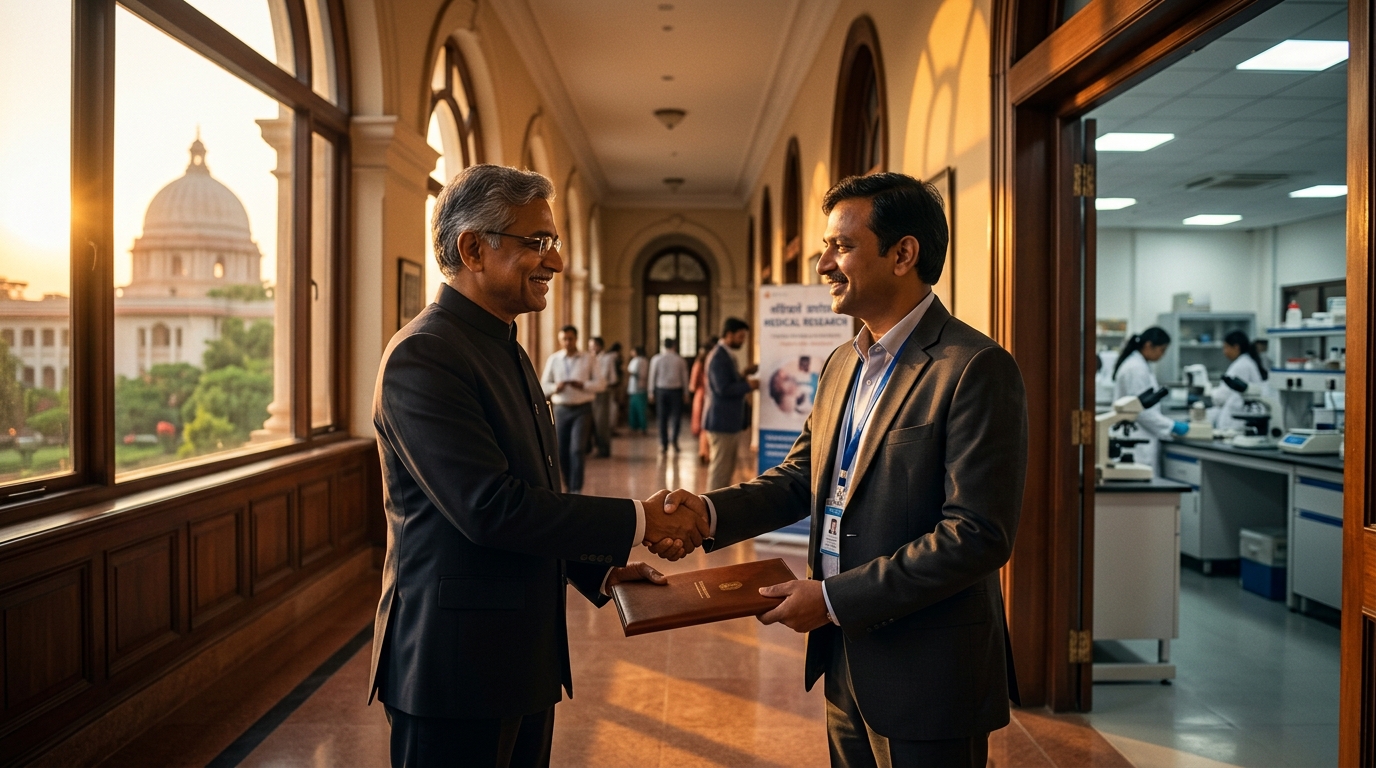
The <strong>Jawaharlal Nehru Centre for Advanced Scientific Research (JNCASR)</strong> and <strong>YRGCARE</strong> have signed a five‑year <span class="key-term" data-definition="Memorandum of Understanding (MoU) – A formal agreement between two or more parties to cooperate on specific objectives, often used in inter‑institutional collaborations (GS2: Polity).">MoU</span> to set up the Suniti Solomon Research Laboratory in Bengaluru. The collaboration aims to bridge basic research on <span class="key-term" data-definition="Infectious diseases — Illnesses caused by pathogenic microorganisms (bacteria, viruses, parasites) that can spread directly or indirectly, a major public health concern (GS3: Health).">infectious diseases</span> with clinical solutions, strengthening India’s public‑health research ecosystem.
JNCASR‑YRGCARE Collaboration to Bridge Bench‑to‑Bed Gap The Jawaharlal Nehru Centre for Advanced Scientific Research (JNCASR) and YRGCARE , the operational arm of the Y R Gaitonde Medical, Educational and Research Foundation, have entered into a five‑year MoU . The agreement seeks to create a dedicated research hub that converts basic science findings on infectious diseases into tangible clinical interventions for the Indian population. Key Developments Establishment of the Suniti Solomon Research Laboratory on the JNCASR campus, equipped with advanced instrumentation and clinical expertise. Creation of the YRGCARE–Suniti Solomon Distinguished Faculty Fellowship , a five‑year, women‑preferred faculty position funded by YRGCARE. Joint use of JNCASR’s multidisciplinary research environment and YRGCARE’s decades‑long experience in HIV/AIDS prevention, treatment, and cohort management. Focus on cohort‑based studies, interdisciplinary projects, and training of young scientists to address real‑world public health challenges. Important Facts Under the agreement, JNCASR will provide laboratory space, access to state‑of‑the‑art facilities, and academic programmes. YRGCARE will fund the laboratory set‑up, supply clinical research expertise, and manage cohort development. The partnership is anchored by the DST ‑linked institute, ensuring alignment with national science policy. UPSC Relevance This MoU exemplifies the Indian government’s push for public health innovation through academia‑industry collaboration, a recurring theme in GS‑III (Science & Technology) and GS‑IV (Health). Understanding the role of autonomous research bodies like JNCASR, and NGOs such as YRGCARE, helps answer questions on health‑sector reforms, research funding mechanisms, and the bench‑to‑bedside translation model. Way Forward The partnership aims to generate high‑impact publications, develop diagnostic/therapeutic prototypes, and nurture a new generation of scientists adept at handling clinical challenges. Monitoring outcomes—such as patents filed, clinical trials initiated, and trained personnel—will gauge the initiative’s contribution to India’s health security and its alignment with the Ministry of Science &amp; Technology ’s broader agenda of fostering translational research.
  1. Home
  2. Prepare
  3. Current Affairs
  4. JNCASR and YRGCARE Sign MoU to Translate Infectious Disease Research into Clinical Solutions
Login to bookmark articles
Login to mark articles as complete

Overview

Translational research MoU bridges labs and clinics, boosting India’s infectious disease response

Key Facts

  1. JNCASR and YRGCARE signed a five‑year MoU in 2024 to translate infectious disease research into clinical solutions.
  2. The MoU will establish the Suniti Solomon Research Laboratory on the JNCASR campus with state‑of‑the‑art instrumentation.
  3. A five‑year, women‑preferred YRGCARE–Suniti Solomon Distinguished Faculty Fellowship will be created under the agreement.
  4. JNCASR provides laboratory space, advanced facilities and academic programmes; YRGCARE funds set‑up, supplies clinical expertise and manages disease cohorts.
  5. The partnership leverages JNCASR’s DST‑linked multidisciplinary environment and YRGCARE’s decades‑long experience in HIV/AIDS prevention and cohort management.
  6. Key focus areas include cohort‑based studies, interdisciplinary projects, development of diagnostic/therapeutic prototypes, and training of young scientists.
  7. Expected outcomes are high‑impact publications, patents, clinical trials and a skilled workforce to strengthen India’s health security.

Background & Context

India’s health sector faces a persistent bench‑to‑bedside gap, limiting the translation of basic scientific discoveries into affordable diagnostics and treatments. The MoU exemplifies the government’s push for public‑private partnerships (PPP) in health R&D, aligning with DST’s policy to foster translational research and strengthen national health security.

UPSC Syllabus Connections

GS3•Developments in science and technology and their applicationsEssay•Science, Technology and SocietyEssay•Youth, Health and WelfareEssay•Economy, Development and Inequality

Mains Answer Angle

GS1 (Governance) and GS3 (Science & Technology) – Discuss how PPP‑driven translational research initiatives like the JNCASR‑YRGCARE MoU can bridge the bench‑to‑bedside gap, enhance health security, and align with national science policy.

Full Article

Read Original on pib

Analysis

Practice Questions

GS1
Easy
Prelims MCQ

Public‑private partnership in health R&D

1 marks
5 keywords
GS1
Medium
Mains Short Answer

Health sector reforms and research funding mechanisms

10 marks
5 keywords
GS3
Hard
Mains Essay

Developments in science and technology and their applications; health sector reforms

250 marks
6 keywords
Related:Daily•Weekly

Loading related articles...

Loading related articles...

Tip: Click articles above to read more from the same date, or use the back button to see all articles.

Explore:Current Affairs·Editorial Analysis·Govt Schemes·Study Materials·Previous Year Questions·UPSC GPT