Loading page, please wait…
State of Undertrial Prisoners in India - UPSC Social Issues
What is State of Undertrial Prisoners in India in UPSC Social Issues?
State of Undertrial Prisoners in India is a key topic under Social Issues for UPSC Civil Services Examination. Key points include: Undertrials form 75.8% of India's prison population (NCRB 2022).. 76.33% of incarcerated women are undertrials.. 8.6% of undertrials are imprisoned for over three years.. Understanding this topic is essential for both UPSC Prelims and Mains preparation.
Why is State of Undertrial Prisoners in India important for UPSC exam?
State of Undertrial Prisoners in India is a Medium-level topic in UPSC Social Issues. It is tested in both Prelims (factual MCQs) and Mains (analytical answer writing). Previous year UPSC questions have frequently covered aspects of State of Undertrial Prisoners in India, making it essential for comprehensive IAS preparation.
How to prepare State of Undertrial Prisoners in India for UPSC?
To prepare State of Undertrial Prisoners in India for UPSC: (1) Study the comprehensive notes covering all key concepts on Vaidra. (2) Practice previous year questions on this topic. (3) Connect it with current affairs using daily updates. (4) Revise using key takeaways and mind maps available for Social Issues. (5) Write practice answers linking State of Undertrial Prisoners in India to related GS Paper topics.
Key takeaways of State of Undertrial Prisoners in India for UPSC
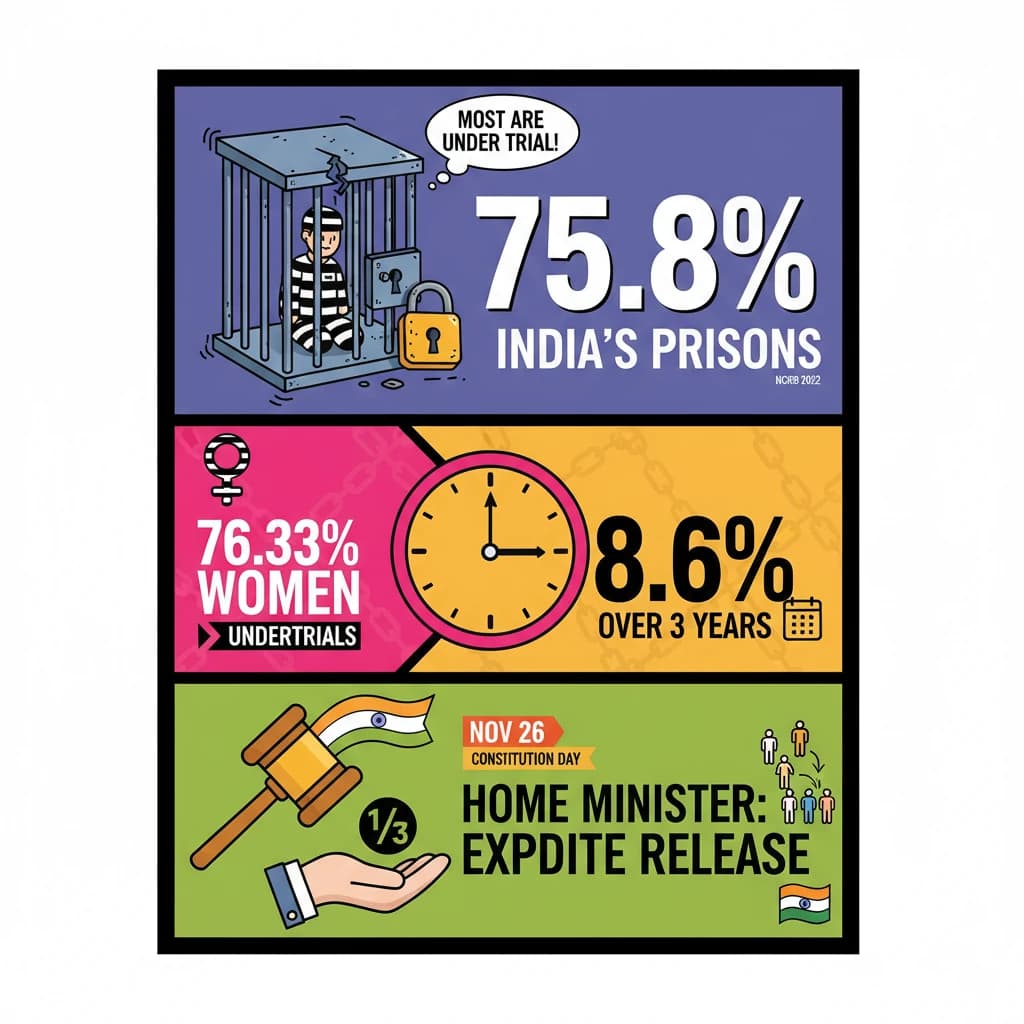
- Undertrials form 75.8% of India's prison population (NCRB 2022).
- 76.33% of incarcerated women are undertrials.
- 8.6% of undertrials are imprisoned for over three years.
- Union Home Minister urged expedited release for undertrials serving 1/3rd of maximum sentence by Nov 26 (Constitution Day).
- Bharatiya Nagarik Suraksha Sanhita (BNSS), 2023, introduces relaxed bail for first-time offenders.
- Prolonged undertrial detention violates the right to a speedy trial and exacerbates prison overcrowding.
State of Undertrial Prisoners in India
Medium⏱️ 8 min read
social issues
📖 Introduction
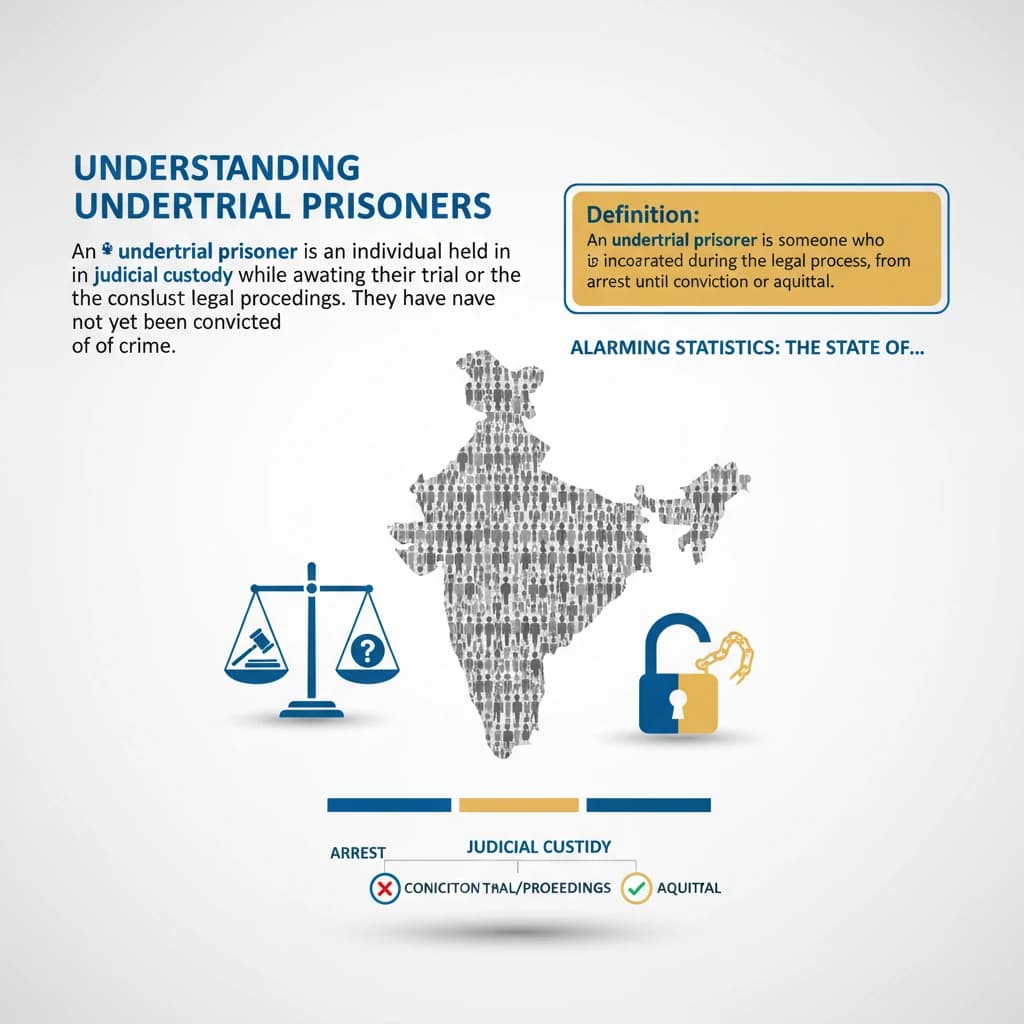
Understanding Undertrial Prisoners
An undertrial prisoner is an individual held in judicial custody while awaiting their trial or the conclusion of legal proceedings. They have not yet been convicted of a crime.
Definition: An undertrial prisoner is someone who is incarcerated during the legal process, from arrest until conviction or acquittal.
Alarming Statistics: The State of Undertrials in India
The National Crime Records Bureau (NCRB)'s Prison Statistics India 2022 report highlights a critical issue regarding undertrial prisoners in India.
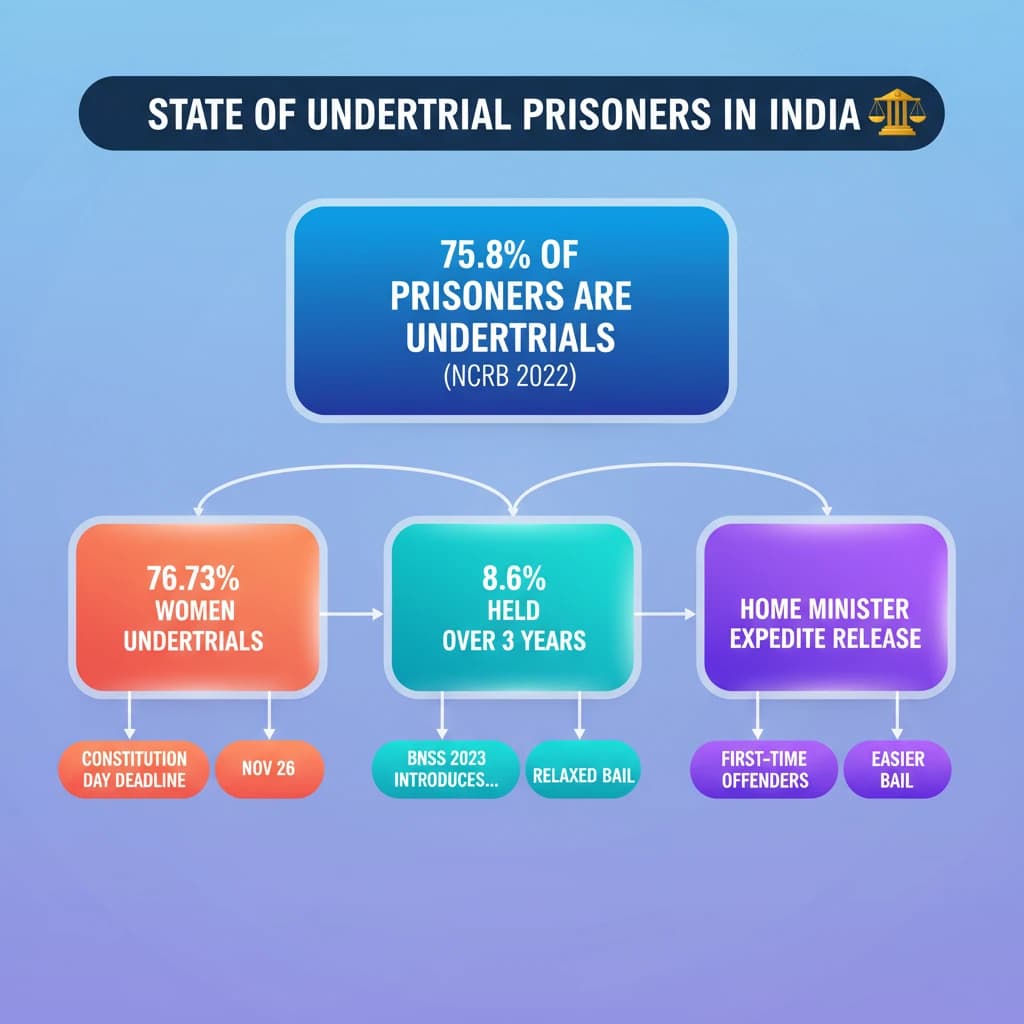
Key Statistic: Undertrials constitute a staggering 75.8% of India’s total prison population. This translates to 4,34,302 out of 5,73,220 inmates.
The situation is particularly dire for women inmates. Out of 23,775 incarcerated women, a significant 76.33% are undertrials.
Furthermore, a concerning 8.6% of all undertrials have been languishing in prison for over three years, awaiting their legal fate.
Recent Government Initiative to Expedite Release
Recently, the Union Home Minister underscored the urgent need to accelerate the release of eligible undertrial prisoners across the country.
The directive specifically targets undertrials who have already served more than one-third of their maximum possible sentence.
Target Date: The initiative aimed to expedite these releases by 26th November, commemorating Constitution Day.
Alignment with Bharatiya Nagarik Suraksha Sanhita (BNSS), 2023
This initiative aligns with the recently enacted Bharatiya Nagarik Suraksha Sanhita (BNSS), 2023.
The BNSS, 2023 introduces progressive provisions aimed at relaxing bail conditions, particularly for first-time offenders.
UPSC Insight: Understanding the provisions of BNSS, 2023, especially concerning bail reform and undertrials, is crucial for GS Paper II (Polity & Governance) and GS Paper III (Internal Security).
Contextual Note: Permissible Works and Restrictions
The source material also mentions specific categories of permissible works and associated restrictions, which may relate to broader rural development or prison reform contexts.
These works are characterized by their labor-intensive nature, with prohibitions on contractors and labor-displacing machinery.
- Water and Land Development: Includes conservation and harvesting initiatives.
- Afforestation and Drought Proofing: Focuses on tree plantation activities.
- Irrigation and Farm Infrastructure: Encompasses projects like canals, ponds, and other irrigation facilities.
- Rural Connectivity: Involves construction and maintenance of roads and culverts.
- Sanitation and Hygiene: Covers provision of latrines and effective waste management systems.
- Rural Infrastructure: Includes building community centers and storage facilities.
- Employment-Linked Projects: Such as composting, livestock shelters, and fisheries.
Restrictions: The use of contractors and labor-displacing machines is strictly prohibited for these works.
💡 Key Takeaways
- •Undertrials form 75.8% of India's prison population (NCRB 2022).
- •76.33% of incarcerated women are undertrials.
- •8.6% of undertrials are imprisoned for over three years.
- •Union Home Minister urged expedited release for undertrials serving 1/3rd of maximum sentence by Nov 26 (Constitution Day).
- •Bharatiya Nagarik Suraksha Sanhita (BNSS), 2023, introduces relaxed bail for first-time offenders.
- •Prolonged undertrial detention violates the right to a speedy trial and exacerbates prison overcrowding.
🧠 Memory Techniques
95% Verified Content
📚 Reference Sources
•National Crime Records Bureau (NCRB) Prison Statistics India 2022 report
•Bharatiya Nagarik Suraksha Sanhita (BNSS), 2023