Loading page, please wait…
The movement also influenced policy changes - UPSC Social Issues
What is The movement also influenced policy changes in UPSC Social Issues?
The movement also influenced policy changes is a key topic under Social Issues for UPSC Civil Services Examination. Key points include: Chipko Movement influenced policies for stricter anti-deforestation rules and indigenous rights.. It's iconic for women's collective mobilization, changing perceptions of their societal status.. Its principles of sustainability, community participation, and nonviolent resistance are highly relevant today.. Understanding this topic is essential for both UPSC Prelims and Mains preparation.
Why is The movement also influenced policy changes important for UPSC exam?
The movement also influenced policy changes is a Medium-level topic in UPSC Social Issues. It is tested in both Prelims (factual MCQs) and Mains (analytical answer writing). Previous year UPSC questions have frequently covered aspects of The movement also influenced policy changes, making it essential for comprehensive IAS preparation.
How to prepare The movement also influenced policy changes for UPSC?
To prepare The movement also influenced policy changes for UPSC: (1) Study the comprehensive notes covering all key concepts on Vaidra. (2) Practice previous year questions on this topic. (3) Connect it with current affairs using daily updates. (4) Revise using key takeaways and mind maps available for Social Issues. (5) Write practice answers linking The movement also influenced policy changes to related GS Paper topics.
Key takeaways of The movement also influenced policy changes for UPSC
- Chipko Movement influenced policies for stricter anti-deforestation rules and indigenous rights.
- It's iconic for women's collective mobilization, changing perceptions of their societal status.
- Its principles of sustainability, community participation, and nonviolent resistance are highly relevant today.
- Inspires grassroots action, women's inclusion, and local community involvement in environmental planning.
- A powerful reminder of collective action's impact on environmental challenges and social change.
The movement also influenced policy changes
Medium⏱️ 6 min read
social issues
📖 Introduction
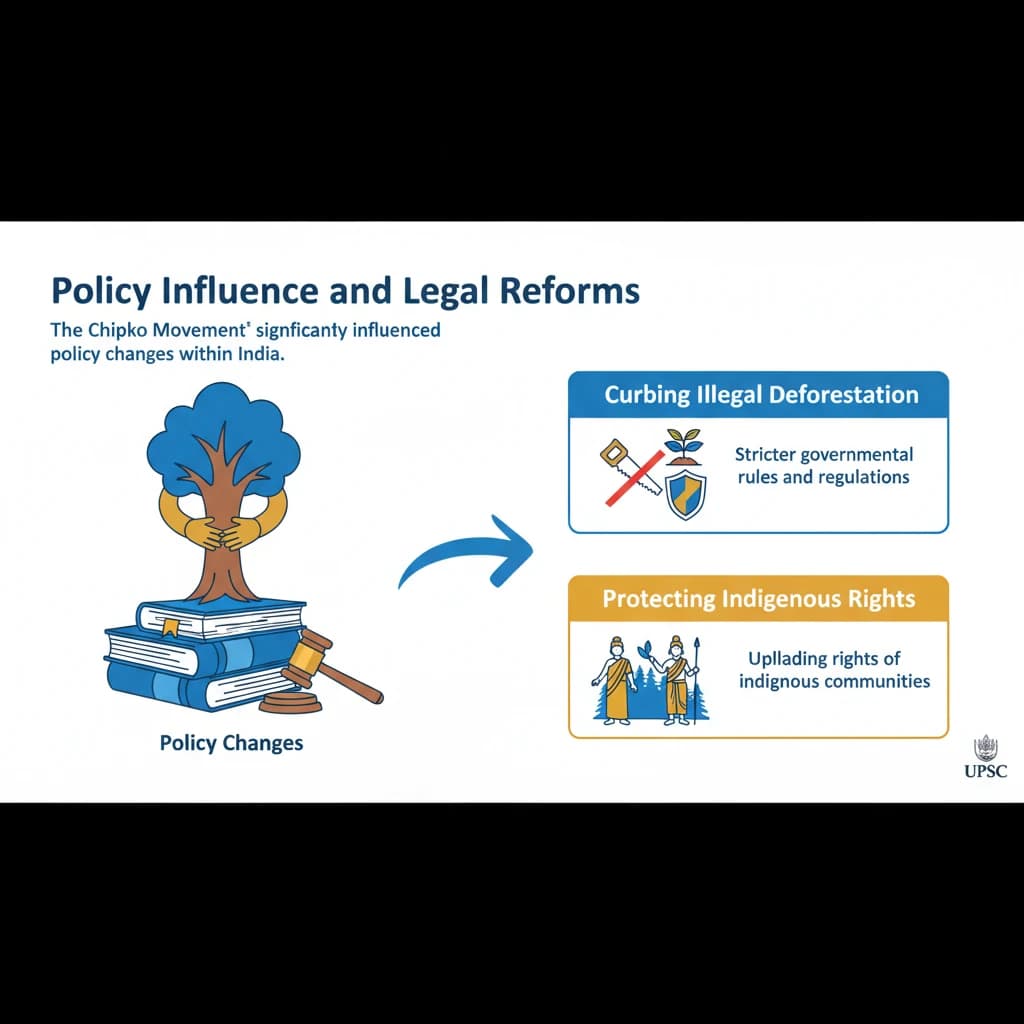
Policy Influence and Legal Reforms
The Chipko Movement significantly influenced policy changes within India. It played a crucial role in advocating for stricter governmental rules and regulations.
These new policies were primarily aimed at curbing illegal deforestation. They also sought to protect and uphold the rights of indigenous communities who were directly dependent on forest resources.
Key Policy Areas Influenced:
- Stricter regulations against illegal logging.
- Recognition and protection of indigenous communities' rights over forest land and resources.
Role of Women and Social Empowerment
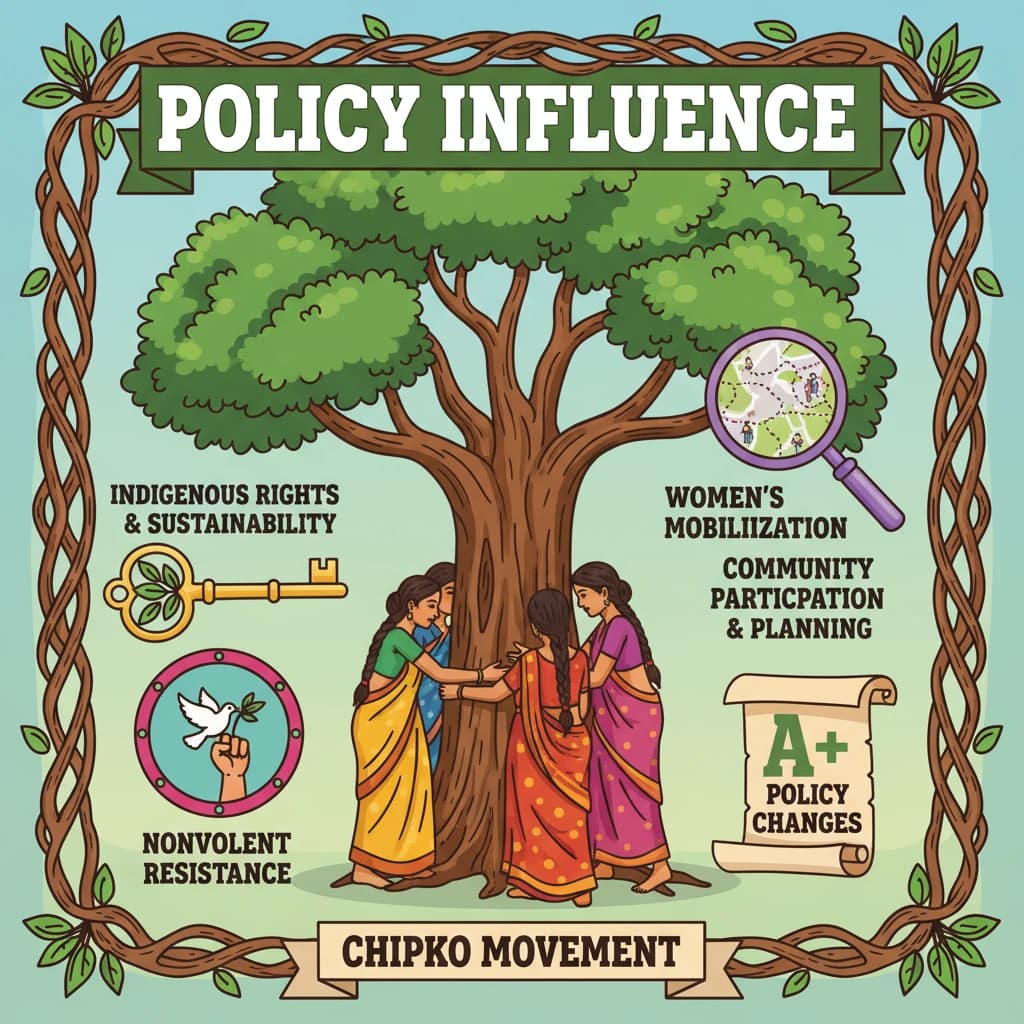
The movement is prominently remembered for the powerful collective mobilization of women. Women from local communities actively participated in preserving forests, often by literally hugging trees to prevent them from being felled.
This widespread participation not only achieved environmental goals but also brought about a significant change in attitude regarding women's own status in society. Their active role challenged traditional gender norms and highlighted their crucial contributions.
The Chipko Movement empowered women by providing them a platform for collective action, enhancing their visibility, and fostering a sense of agency and leadership within their communities.
Contemporary Relevance of Chipko Principles
Even in 2024, the Chipko Movement remains a profound source of inspiration. It serves as a powerful reminder of the immense potential of collective action in addressing complex environmental challenges.
Its core principles of sustainability, active community participation, and unwavering nonviolent resistance continue to be highly relevant. These principles are vital in the ongoing global fight against climate change and for the comprehensive protection of our fragile ecosystems.
Enduring Principles of Chipko:
- Sustainability: Emphasizing harmonious coexistence with nature.
- Community Participation: Empowering local populations in resource management.
- Nonviolent Resistance: Advocating peaceful means to achieve environmental justice.
Furthermore, the movement inspires contemporary grassroots-level actions globally. It underscores the critical importance of involving women and ensuring the genuine inclusion of local communities in all stages of environmental planning and conservation efforts.
UPSC Insight: When discussing environmental movements or women's empowerment, referencing the Chipko Movement provides a strong historical and conceptual foundation. Highlight its principles for answers on environmental ethics, sustainable development, and social justice (GS I, II, III).
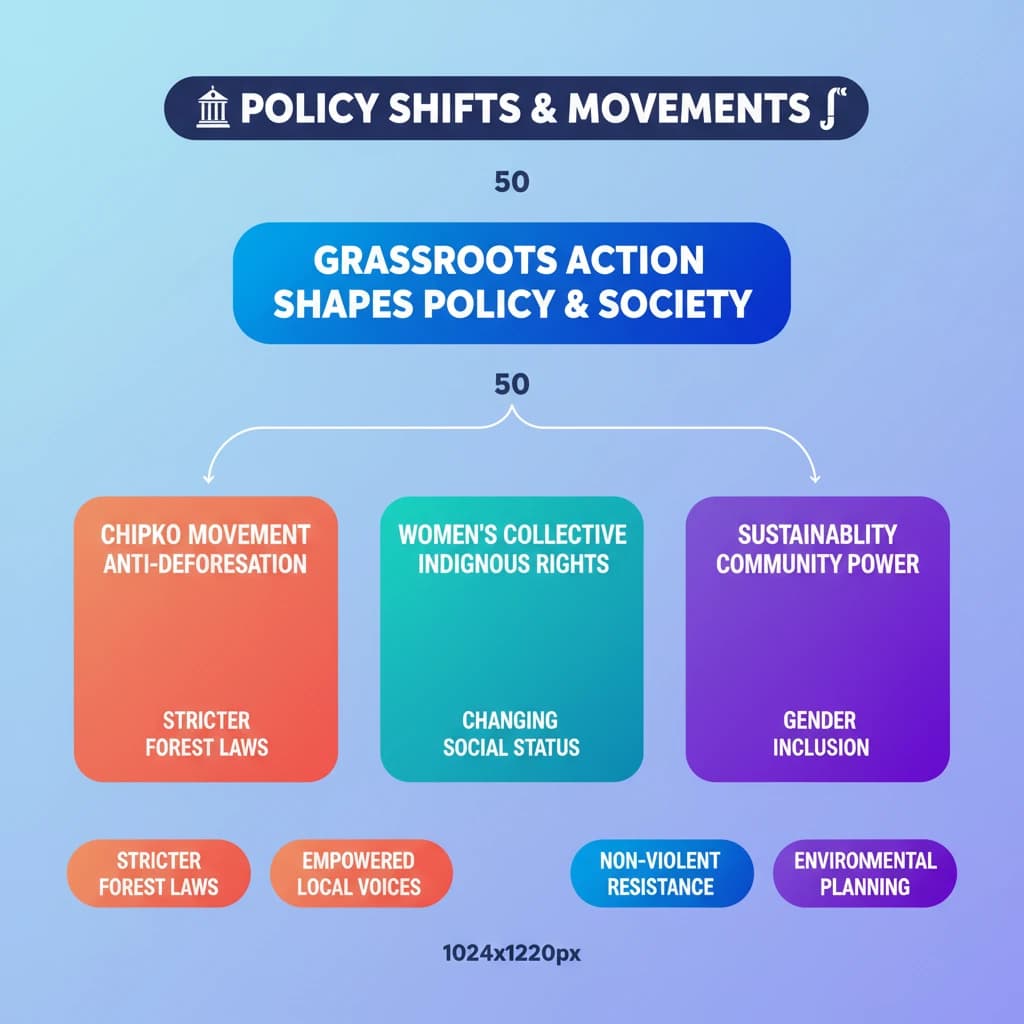
💡 Key Takeaways
- •Chipko Movement influenced policies for stricter anti-deforestation rules and indigenous rights.
- •It's iconic for women's collective mobilization, changing perceptions of their societal status.
- •Its principles of sustainability, community participation, and nonviolent resistance are highly relevant today.
- •Inspires grassroots action, women's inclusion, and local community involvement in environmental planning.
- •A powerful reminder of collective action's impact on environmental challenges and social change.
🧠 Memory Techniques
95% Verified Content
📚 Reference Sources
•Ministry of Environment, Forest and Climate Change (MoEFCC) reports
•NCERT Textbooks (Social Science)
•Academic articles on environmental movements in India