Loading page, please wait…
What are the Key Facts About the Nicobarese Tribe? - UPSC Social Issues
What is What are the Key Facts About the Nicobarese Tribe? in UPSC Social Issues?
What are the Key Facts About the Nicobarese Tribe? is a key topic under Social Issues for UPSC Civil Services Examination. Key points include: Nicobarese are a Mongoloid tribe inhabiting India's Nicobar Islands.. They are divided into six territorial groups, including the Shompen (inland).. Their social structure is a patriarchal joint family system called 'Tuhet'.. Understanding this topic is essential for both UPSC Prelims and Mains preparation.
Why is What are the Key Facts About the Nicobarese Tribe? important for UPSC exam?
What are the Key Facts About the Nicobarese Tribe? is a Medium-level topic in UPSC Social Issues. It is tested in both Prelims (factual MCQs) and Mains (analytical answer writing). Previous year UPSC questions have frequently covered aspects of What are the Key Facts About the Nicobarese Tribe?, making it essential for comprehensive IAS preparation.
How to prepare What are the Key Facts About the Nicobarese Tribe? for UPSC?
To prepare What are the Key Facts About the Nicobarese Tribe? for UPSC: (1) Study the comprehensive notes covering all key concepts on Vaidra. (2) Practice previous year questions on this topic. (3) Connect it with current affairs using daily updates. (4) Revise using key takeaways and mind maps available for Social Issues. (5) Write practice answers linking What are the Key Facts About the Nicobarese Tribe? to related GS Paper topics.
Key takeaways of What are the Key Facts About the Nicobarese Tribe? for UPSC
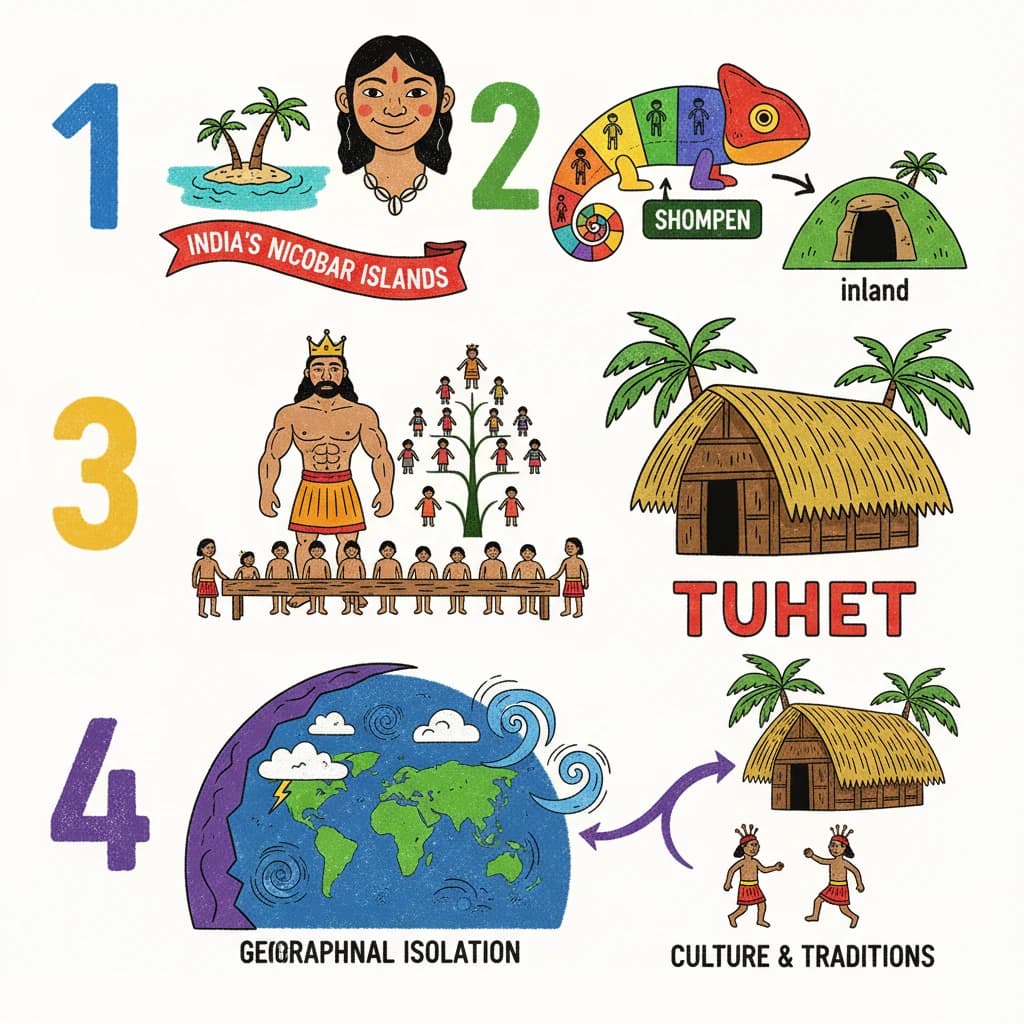
- Nicobarese are a Mongoloid tribe inhabiting India's Nicobar Islands.
- They are divided into six territorial groups, including the Shompen (inland).
- Their social structure is a patriarchal joint family system called 'Tuhet'.
- Geographical isolation has significantly shaped their culture and traditions.
- Conservation of their unique culture and environment is a contemporary challenge.
What are the Key Facts About the Nicobarese Tribe?
Medium⏱️ 8 min read
social issues
📖 Introduction
Geographical Location and Terrain
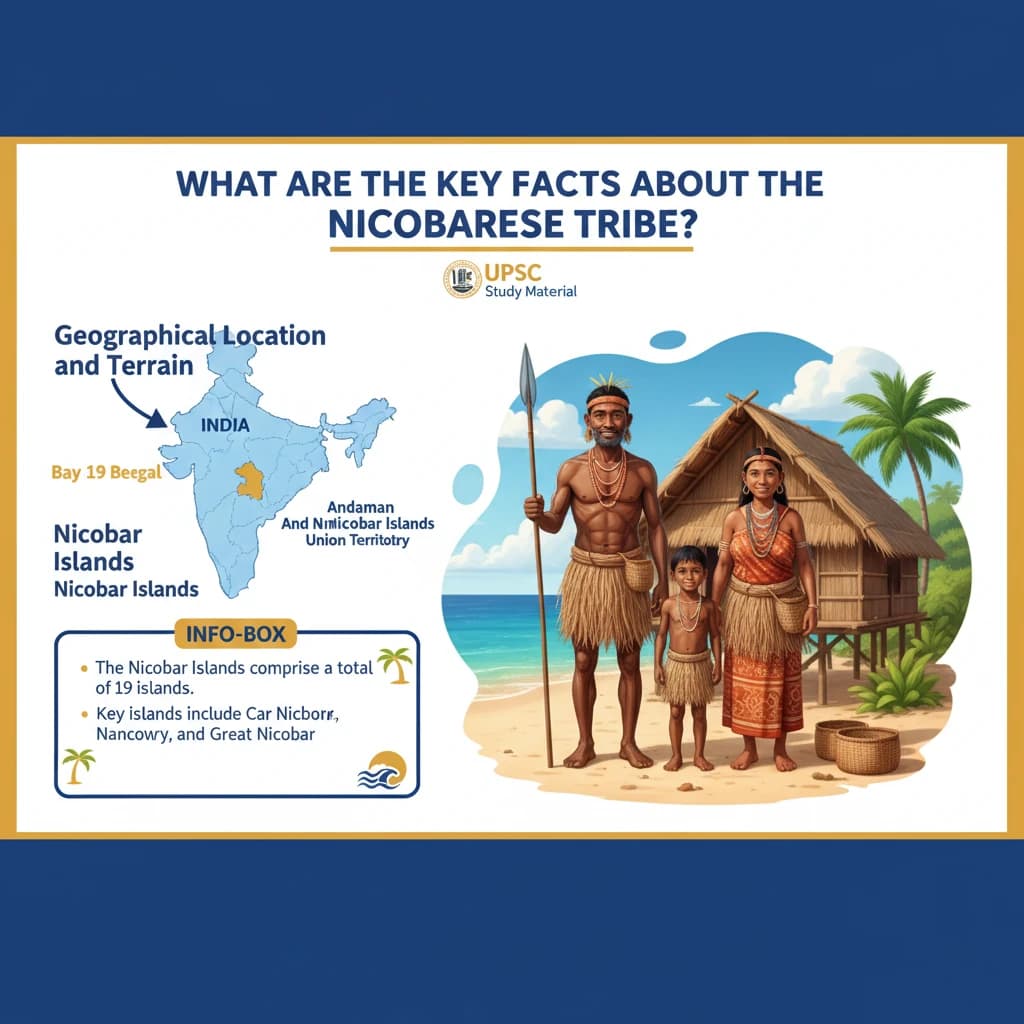
The Nicobarese tribe inhabits the Nicobar Islands, situated in the Bay of Bengal. These islands form a crucial part of India’s Andaman and Nicobar Islands Union Territory.
- The Nicobar Islands comprise a total of 19 islands.
- Key islands include Car Nicobar, Kamorta, Nancowrie, and Great Nicobar.
- The terrain varies, featuring both hilly and flat landscapes across the archipelago.
Great Nicobar holds the distinction of being the southernmost and largest island within the Nicobar group. Its strategic location is significant.
Ethnic Identity and Population
The Nicobarese are recognized as belonging to the Mongoloid ethnic group. This classification highlights their distinct anthropological characteristics.
- Current estimated population: Over 27,000 individuals.
Although not fragmented into multiple distinct tribes, the Nicobarese are organized into six primary territorial groups. This organizational structure reflects their geographical distribution and cultural variations.
The six territorial groups are:
- Car Nicobar Group
- Chowra Group
- Teressa with Bompoka Group
- Central Group
- Southern Group
- The Shompen (a distinct inland tribe primarily found in Great Nicobar)
Social Organization: The Tuhet System
The foundational unit of Nicobarese society is the patriarchal joint family system. This traditional structure plays a central role in their social and economic life.
This unique family system is formally known as Tuhet. The Tuhet typically comprises multiple generations living together under the authority of a male elder.
💡 Key Takeaways
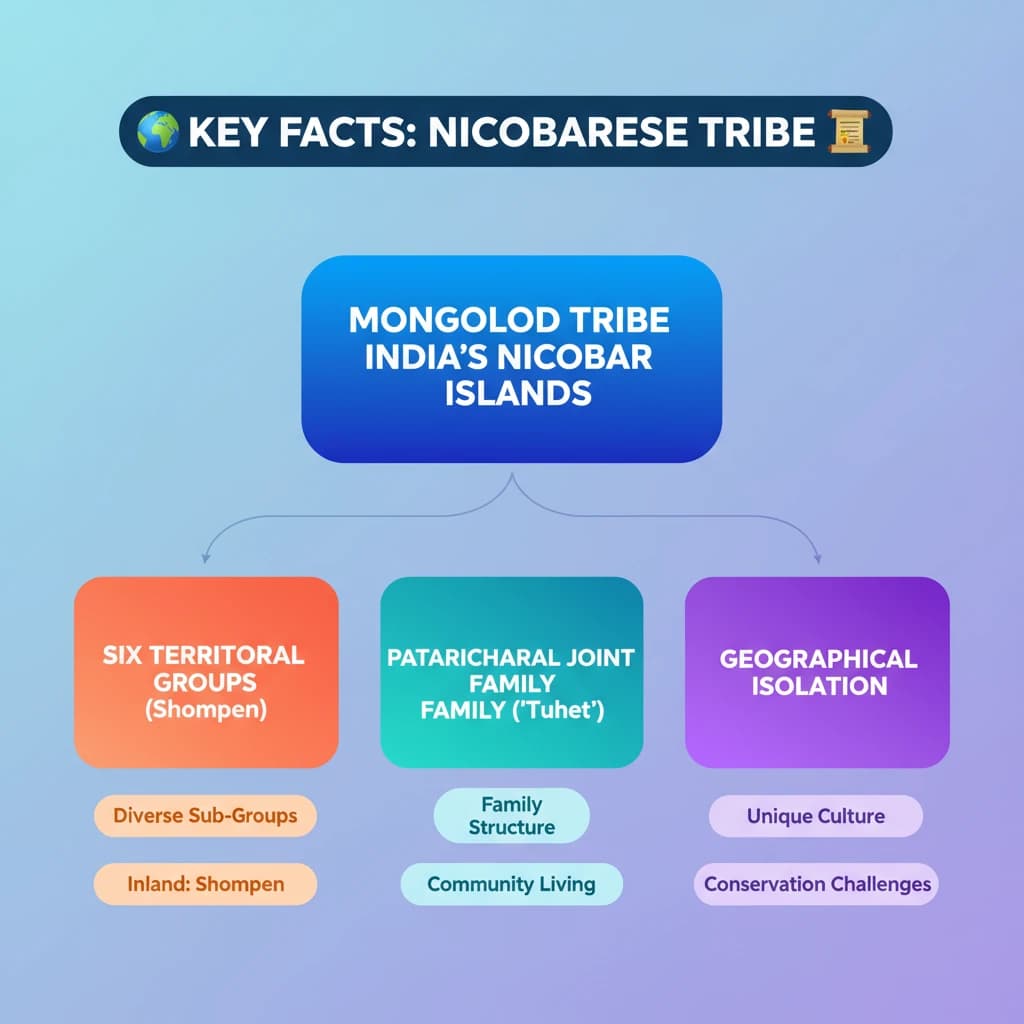
- •Nicobarese are a Mongoloid tribe inhabiting India's Nicobar Islands.
- •They are divided into six territorial groups, including the Shompen (inland).
- •Their social structure is a patriarchal joint family system called 'Tuhet'.
- •Geographical isolation has significantly shaped their culture and traditions.
- •Conservation of their unique culture and environment is a contemporary challenge.
🧠 Memory Techniques
95% Verified Content
📚 Reference Sources
•Ministry of Tribal Affairs reports (general knowledge)
•Anthropological Survey of India (general knowledge)